Delta Air Lines has announced a revised 2025 earnings forecast, reflecting market turbulence brought on by softened travel demand and an oversupply of flight capacity. While the company has scaled back its expectations from the initially optimistic projections made earlier this year, a surprising surge in summer travel bookings has offered a cushion against broader market uncertainties.
The airline now anticipates full-year adjusted earnings to land between $5.25 and $6.25 per share, a notable drop from the $7.35 per share outlook announced in January. Delta CEO Ed Bastian cited shifting consumer habits and macroeconomic factors—particularly tariffs and restrained discretionary spending—as key contributors to the downshift.
Despite this, Delta’s second-quarter financials delivered stronger-than-expected results, illustrating both the resilience of its operations and the strategic advantages of its premium business model.

Financial Results Underscore Resilience in a Volatile Market
In the face of external pressures, Delta posted adjusted Q2 revenues of $15.51 billion, a modest 1% year-over-year increase. But the highlight came from the bottom line: net profits surged to $2.13 billion, up 63% from the same period in 2024. This equated to $3.27 per share, far surpassing Wall Street estimates of $2.05.
While revenues showed only slight growth, the airline’s ability to beat profitability targets signals sound cost control and operational efficiencies. Adjusted earnings per share reached $2.10, just topping analyst forecasts.
Yet, the margin of improvement isn’t without concern. Analysts note that much of the second-quarter success may have been propped up by strong summer demand and seasonal travel highs—not necessarily indicative of sustainable trends.
Booking Patterns Shift Amid Capacity Glut
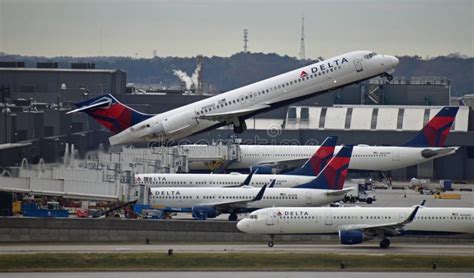
Delta has not been immune to the larger issues plaguing the aviation sector in 2025. A mismatch between available seat capacity and actual consumer demand has resulted in operational turbulence. Airlines overestimated travel appetite coming out of 2024, leading to excess inventory and diluted yields.
One of the key behavioral shifts noted by Bastian is the shrinking booking window. Travelers are no longer securing their trips months in advance. Instead, last-minute bookings have become the norm, upending traditional forecasting and revenue management models.
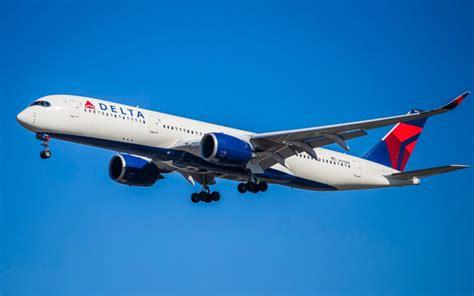
This trend has forced Delta to adopt what Bastian termed a “surgical reduction” in capacity post-summer, beginning mid-August. These cuts aim to realign supply with more realistic expectations, preventing overextension in a fragile demand environment.
Third-Quarter Guidance Paints Cautious Picture
Looking ahead, Delta has tempered expectations for Q3. Adjusted earnings per share are projected to fall between $1.25 and $1.75, slightly below Wall Street’s consensus of $1.31. Anticipated revenue growth remains flat to 4%, a range that, while higher than analyst expectations, still reflects significant caution.
Executives emphasized that while premium offerings are buoying overall revenue, standard economy bookings have declined by 5%. Conversely, demand for first-class and Delta One products has increased by the same margin, confirming a rising dependence on high-value passengers.
This dual-track trend underscores a market bifurcation, where leisure travelers remain hesitant, but affluent flyers and corporate clients continue to spend on upgraded experiences.
Delta’s Premium Strategy Shows Results
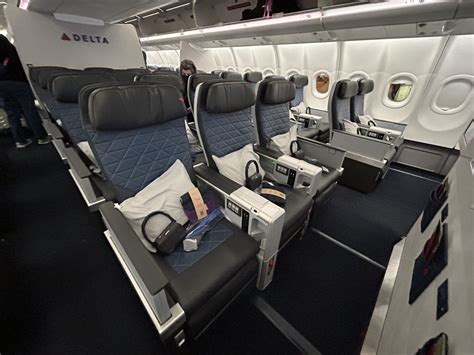
Delta’s commitment to upscaling its premium product is paying dividends. From refreshed lounges to enhanced onboard dining, the airline has heavily invested in an elite travel experience. These improvements cater to a demographic increasingly willing to pay more for exclusivity, comfort, and service.
CEO Bastian acknowledged that what was considered premium just five years ago is now insufficient for modern expectations. The airline’s continual product refresh has allowed it to retain and attract premium clientele, forming a crucial buffer against broader market challenges.

Strategic Partnership with American Express Strengthens Revenue Stability
One of the brightest spots in Delta’s earnings report came from its longstanding collaboration with American Express. In Q2 alone, revenue from this relationship surged by 10% year-over-year, totaling $2 billion.
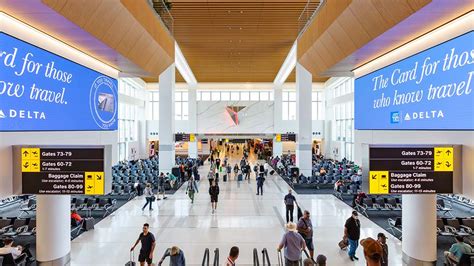
This partnership has proven essential not just as a financial lifeline, but as a pillar of loyalty and engagement. Delta’s co-branded Amex cards generate a steady stream of recurring revenue, while reinforcing customer retention through travel rewards and perks.
Executives pointed out that Amex-based income helps offset softness in other segments, particularly during unpredictable periods like Q2 and beyond. This arrangement represents a unique advantage Delta holds over many peers lacking such diversified revenue levers.
Business Travel Rebounds, But Recovery Lags
While corporate travel has stabilized, it continues to fall short of Delta’s projected 5-10% annual growth. Economic uncertainty, coupled with changes to internal travel policies, has prevented the full rebound initially anticipated.
Nonetheless, the stabilization of business travel—rather than its retraction—is seen as a positive sign. As more companies reassess in-person engagement strategies and global operations normalize, Delta expects incremental improvements in this segment over the coming quarters.
Navigating 2025 Through Flexibility and Focus
Delta’s decision to adjust its profit forecast is not an abandonment of ambition, but a pragmatic recalibration in light of a volatile macroeconomic landscape. From soft consumer sentiment to operational capacity mismatches, the airline faces a range of headwinds.
Still, the resilience of summer travel and the strength of its premium strategy offer real momentum. By emphasizing high-value services, optimizing capacity, and leaning on diversified revenue sources like the Amex partnership, Delta is crafting a multi-channel response to uncertainty.
The next few quarters will prove pivotal. If the airline successfully executes its post-summer capacity reductions and captures shifting demand patterns, it could end 2025 in stronger-than-expected shape—just not at the lofty levels envisioned earlier in the year.
Conclusion: Strategic Realignment Over Reactive Retrenchment
Delta Air Lines’ revised earnings forecast is a reflection of the realities of 2025’s travel climate, not a signal of fundamental weakness. While demand has failed to keep pace with overambitious capacity, the airline has outperformed in areas that matter most: premium revenue, credit card partnerships, and operational profitability.
As the year progresses, Delta will focus on surgical capacity reductions, sustained investment in premium experiences, and the stabilization of business travel. These strategies position the airline not just to weather current turbulence, but to emerge more agile and focused.
While Wall Street may view the revised forecast with skepticism, Delta’s internal discipline and strategic pivots tell a story of long-term strength over short-term setback.