Modern air warfare is increasingly defined by one capability above all others: survivability inside heavily defended airspace. In an era dominated by advanced surface-to-air missile systems, integrated radar networks, and long-range sensors, traditional fighter aircraft are becoming more vulnerable during high-intensity conflict. Stealth aircraft have emerged as the solution, giving major powers the ability to penetrate hostile airspace, strike strategic targets, and survive against sophisticated defenses.
The result is a dramatic transformation in global air power. While fourth-generation fighters still make up the majority of combat fleets worldwide, the balance is steadily shifting toward aircraft specifically designed around stealth principles. The United States remains overwhelmingly dominant in this category, but China is rapidly expanding its own stealth inventory at a pace that is reshaping the military balance in the Indo-Pacific.
By May 2026, the world’s operational stealth fleets are concentrated among a surprisingly small group of countries. The overwhelming majority of these aircraft are either American-made F-35 Lightning IIs or Chinese-built J-20 Mighty Dragons. Other nations, meanwhile, are racing to modernize before sixth-generation systems arrive later in the 2030s.
Understanding which countries possess the largest stealth fleets is not simply a matter of counting aircraft. It also reveals which militaries are preparing for future wars dominated by sensor fusion, electronic warfare, data networking, and long-range precision strike capabilities.
After decades of experimentation, stealth aviation is no longer a niche capability. It has become the foundation of modern air superiority.
What Actually Makes An Aircraft “Stealth”?
The word “stealth” is often used loosely, but in military aviation it has a far more precise meaning. Not every aircraft with a reduced radar signature qualifies as a true stealth aircraft. There is an important distinction between low-observable aircraft and aircraft genuinely designed around comprehensive stealth principles.
Low-observable fighters reduce radar detection in selected areas, usually through shaping or radar-absorbent materials. True stealth aircraft, however, are engineered from the very beginning to minimize detection across multiple spectrums simultaneously. Radar reduction is only one part of the equation. Infrared suppression, electronic warfare capability, emission control, internal weapons carriage, and sensor fusion all contribute to survivability.
Aircraft like the American F-35 and F-22 are designed to fight while remaining difficult to detect. They can share targeting data through secure networks, allowing one aircraft to guide weapons launched by another platform entirely. This dramatically reduces the need for active radar emissions that could expose their position.
Thermal management also plays a major role. Engine placement, exhaust design, and cooling systems help reduce infrared visibility against modern heat-seeking missiles and sensors. Meanwhile, advanced electronic warfare systems allow stealth aircraft to jam enemy radars, deploy decoys, and manipulate hostile tracking systems.
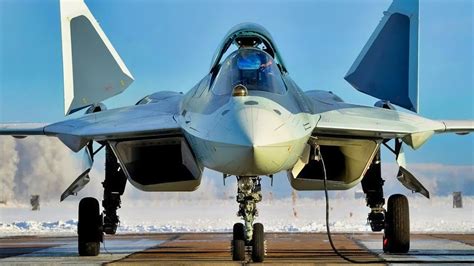
Russia’s Su-57 demonstrates why this distinction matters. Although frequently labeled a stealth fighter, its design philosophy prioritizes maneuverability, speed, and weapons flexibility over comprehensive low observability. Analysts generally consider it a low-observable aircraft with stealth features rather than a fully realized stealth platform comparable to the F-35 or F-22.
The evolution of stealth technology has fundamentally changed aerial combat doctrine. Modern stealth aircraft are no longer isolated fighters operating independently. They function as networked battlefield managers capable of directing entire formations while remaining difficult to track.
The United States Operates The World’s Largest Stealth Air Fleet
No country comes remotely close to matching the scale of the United States’ stealth aviation inventory. America currently fields more than 1,000 operational stealth combat aircraft, spread across the US Air Force, Navy, and Marine Corps.
This enormous fleet includes:
- F-22 Raptor air superiority fighters
- F-35A conventional takeoff fighters
- F-35B short takeoff and vertical landing fighters
- F-35C carrier-based naval fighters
- B-2 Spirit stealth bombers
- Early B-21 Raider test aircraft
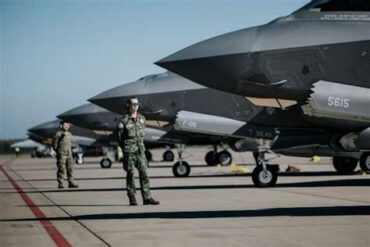
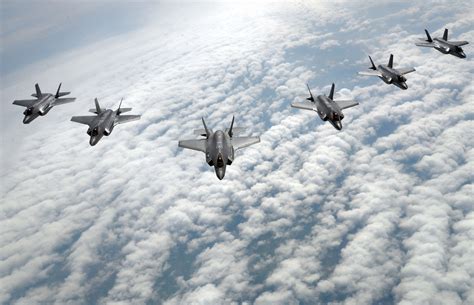
The F-35 program alone has transformed American airpower. By mid-2026, the United States operates close to 1,000 F-35 variants across all services, making it the single largest stealth fighter fleet in history.
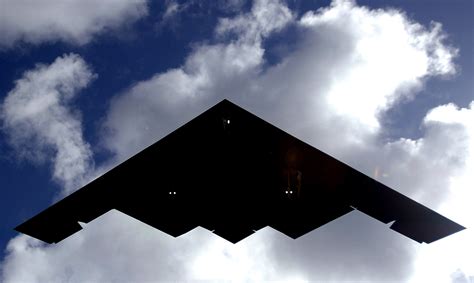
The US Air Force remains the dominant operator. It fields more than 500 F-35As alongside roughly 183 F-22 Raptors and the remaining operational B-2 Spirit bomber fleet. Although the B-2 inventory is small at just 19 operational aircraft, its strategic importance remains immense due to its nuclear capability and long-range penetration role.
The Marine Corps has aggressively embraced the F-35B variant, which can operate from amphibious assault ships and austere forward bases. This gives the Marines a uniquely flexible stealth capability unmatched by any other military force.
Meanwhile, the US Navy continues integrating F-35Cs into carrier air wings. Unlike previous naval fighters, the F-35C dramatically enhances carrier survivability in contested environments where long-range anti-ship missiles threaten traditional naval aviation operations.
One major factor behind America’s dominance is industrial scale. Lockheed Martin delivered nearly 200 F-35s during 2025 alone, an extraordinary production pace for such a sophisticated aircraft. Even accounting for temporary delays linked to TR-3 software upgrades, annual production remains stable at over 150 aircraft per year.
The upcoming B-21 Raider stealth bomber is expected to reinforce this advantage even further. Unlike the expensive and limited B-2 fleet, the B-21 is designed for larger-scale procurement. Although only test aircraft currently exist publicly, the Raider is expected to become the backbone of America’s future long-range strike capability.
America’s stealth dominance is not merely numerical. It is systemic. The US military has integrated stealth aviation into every branch, every doctrine, and every major warfighting scenario.
China’s Rapid Expansion Is Reshaping Global Air Power
China now possesses the world’s second-largest stealth combat fleet, and its expansion rate is among the most significant military developments of the past decade.
The backbone of China’s stealth force is the Chengdu J-20 Mighty Dragon, a large twin-engine fighter optimized for long-range air superiority and strike missions. Since entering service in 2017, production has accelerated dramatically.
Open-source intelligence analysts estimate that China now operates more than 300 J-20s, with some estimates approaching 350 aircraft or higher. Combined with the newly introduced J-35 stealth fighter, China’s total stealth inventory likely falls between 350 and 400 operational aircraft.
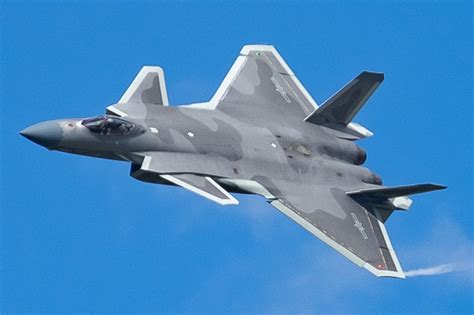
Unlike many earlier Chinese combat aircraft programs that relied heavily on foreign technology, the J-20 represents a substantial leap in domestic aerospace capability. The aircraft increasingly incorporates indigenous avionics, sensors, and engines, reflecting China’s determination to reduce dependence on imported military technology.
The introduction of the carrier-capable J-35 adds another layer to China’s ambitions. Designed for both naval and air force operations, the aircraft is expected to support China’s rapidly growing aircraft carrier fleet while expanding stealth coverage across the Western Pacific.
China’s military modernization strategy extends beyond simply building aircraft. The People’s Liberation Army Air Force is restructuring itself around fifth-generation operations. Older designs derived from Soviet-era MiG platforms are gradually being phased out or reassigned to secondary roles.
Some obsolete aircraft are reportedly being converted into unmanned attack platforms or decoys, highlighting China’s willingness to repurpose legacy systems creatively rather than retire them entirely.
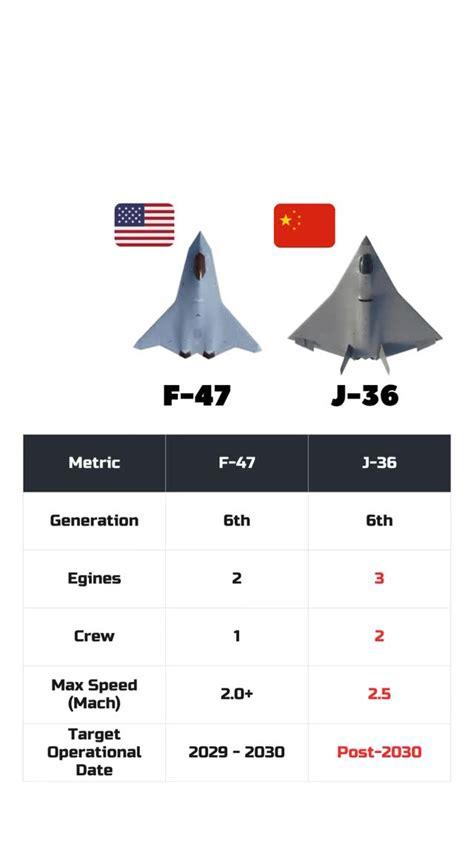
China is also aggressively pursuing next-generation combat aircraft. The tailless J-36 and J-50 prototypes have generated enormous speculation internationally. Although frequently described as sixth-generation fighters, their exact capabilities remain unclear. What is undeniable is the speed at which China now prototypes advanced aviation concepts.
For the first time since the Cold War, the United States faces a competitor capable of producing stealth aircraft at meaningful scale.
Australia Quietly Built One Of The World’s Largest Stealth Fleets
Australia’s position among the world’s largest stealth operators surprises many observers, yet the Royal Australian Air Force now fields one of the most modern fighter forces anywhere in the Asia-Pacific region.
Canberra completed deliveries of all 72 F-35A Lightning II fighters in late 2024, giving Australia the third-largest operational stealth fleet globally outside the United States and China.
This represents a profound transformation for Australian airpower. The F-35 replaced the aging F/A-18A/B Hornet fleet and introduced capabilities previously unavailable to the Royal Australian Air Force.
The aircraft’s advanced sensor fusion and long-range networking dramatically improve Australia’s ability to monitor and defend enormous stretches of maritime territory. In a region increasingly shaped by strategic competition between Washington and Beijing, stealth aviation has become central to Australia’s defense planning.
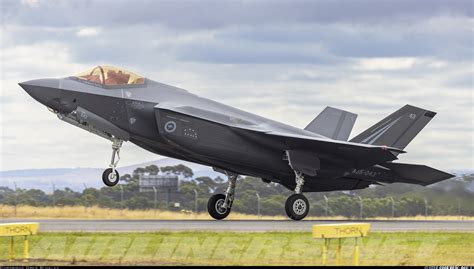
Interestingly, Australia canceled a planned follow-on order for an additional 28 F-35s that would have expanded the fleet to 100 aircraft. Instead, the government chose to maintain flexibility for future next-generation fighter programs such as the British-Japanese-Italian GCAP initiative, also known as Tempest.
Australia’s approach reflects a broader strategic calculation. Rather than investing exclusively in larger numbers of current-generation aircraft, Canberra appears increasingly interested in preserving resources for future sixth-generation technologies.
Despite its relatively small population, Australia now operates a stealth fleet larger than most European NATO members combined.
Norway, Israel, Britain, And Japan Continue Expanding Their Fleets
Several middle powers have rapidly modernized their air forces through F-35 acquisitions, creating a growing network of allied stealth operators.
Norway became the first international customer to complete its entire F-35 procurement program, receiving all 52 planned aircraft. The Norwegian fleet plays a critical role in monitoring Arctic and North Atlantic airspace, regions becoming increasingly important strategically due to Russian military activity.
Israel remains one of the most operationally experienced F-35 users. Its customized F-35I Adir fighters reportedly integrate unique Israeli electronic warfare and software systems, giving the country specialized capabilities tailored for Middle Eastern operations.
The United Kingdom currently operates 48 F-35Bs jointly between the Royal Air Force and Royal Navy. Additional orders are expected soon, eventually increasing the British fleet to 72 aircraft.
Japan and South Korea are also rapidly expanding their stealth inventories as regional tensions rise in East Asia. Japan’s acquisition program is especially notable because it includes both land-based F-35As and carrier-capable F-35Bs for operations from converted Izumo-class ships.
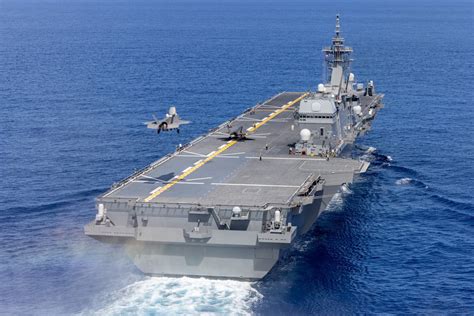
The spread of the F-35 across allied nations creates unprecedented interoperability. Pilots from different countries can share data seamlessly, coordinate targeting, and operate as part of a unified networked force structure.
This interoperability may ultimately prove more strategically important than raw aircraft numbers alone.
Russia’s Su-57 Program Remains Limited
Russia frequently promotes the Su-57 Felon as a competitor to Western stealth fighters, but the aircraft’s operational reality remains far more modest.
Current estimates suggest Russia possesses only around 20 operational Su-57s, placing it well behind not only the United States and China, but also several American allies.
Production delays, engine development issues, and limited procurement budgets have constrained the program for years. Analysts also continue debating whether the aircraft truly qualifies as a fifth-generation stealth fighter in the same category as the F-35 or F-22.
The Su-57’s design incorporates stealth shaping and internal weapons bays, but its overall configuration still emphasizes aerodynamic performance and maneuverability over extreme low observability.
Operational maturity remains another issue. Reports indicate that some planned systems and weapons integration efforts are still incomplete years after the aircraft formally entered service.
Russia’s broader aviation industry faces mounting pressure from sanctions, industrial bottlenecks, and wartime demands linked to the conflict in Ukraine. While additional Su-57 deliveries continue at a slow pace, production numbers remain extremely limited compared to American and Chinese manufacturing capacity.
Meanwhile, Russia’s proposed next-generation stealth bomber program appears uncertain. In contrast, Moscow has prioritized restarting production of the Soviet-designed Tu-160 strategic bomber, a decision many analysts interpret as evidence of industrial and financial constraints.
The Future Of Stealth Air Power
The global stealth race is entering a new phase. The first generation of operational stealth aircraft proved the concept. The second generation normalized it. The next phase will determine which countries can integrate stealth into massive, networked combat ecosystems.
America still dominates decisively, both numerically and technologically. China, however, is narrowing the gap faster than many Western analysts expected even five years ago.
At the same time, allied F-35 operators across Europe, the Pacific, and the Middle East are collectively creating an enormous multinational stealth network centered around shared systems and interoperability.
Future sixth-generation aircraft will likely emphasize artificial intelligence integration, optionally manned operations, collaborative drones, advanced electronic warfare, and even greater sensor fusion. Yet despite the excitement surrounding these future platforms, current fifth-generation aircraft may remain the backbone of global airpower well into the 2050s.
The reason is simple: stealth aircraft are extraordinarily expensive, technologically demanding, and difficult to replace at scale.
For now, the hierarchy of global stealth aviation remains clear. The United States sits firmly at the top. China is accelerating rapidly behind it. Everyone else is racing to keep pace in an era where invisibility increasingly defines military power.