The Boeing 737 MAX has become one of the most scrutinized and strategically important aircraft families in modern commercial aviation. After grounding crises, regulatory resets, and a painstaking return to service, the MAX is now firmly back at the center of airline fleet strategies worldwide. By 2026, the race to operate the largest MAX fleet is not just a vanity metric—it reflects network philosophy, cost structure, fleet renewal strategy, and long-term confidence in Boeing’s narrowbody roadmap.
In 2026, one airline stands decisively above the rest in terms of sheer Boeing 737 MAX fleet size: Southwest Airlines. The Dallas-based carrier is not only the world’s largest operator of the Boeing 737 family but also the airline with the largest active fleet of Boeing 737 MAX aircraft in service. Understanding how Southwest reached this position requires unpacking fleet strategy, aircraft economics, route deployment, and how competitors like Ryanair, United, and Alaska fit into the global MAX ecosystem.
The story of the 737 MAX in 2026 is not just about numbers—it is about airline philosophy expressed in aluminum, composites, and turbofan blades.
Southwest Airlines and the Boeing 737 MAX Fleet Supremacy
Southwest Airlines has built its identity on a radical simplicity principle: operate a single aircraft family to minimize training, maintenance, and operational complexity. This philosophy has allowed the airline to scale faster, cheaper, and more consistently than competitors operating mixed fleets.
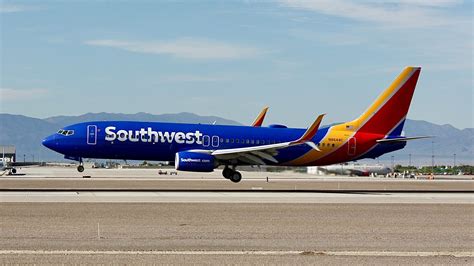
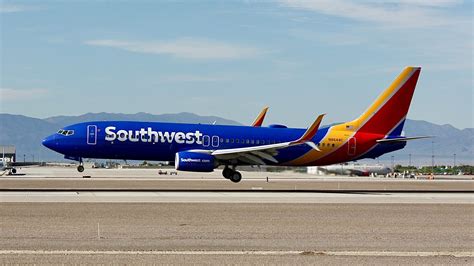
By 2026, Southwest operates the largest Boeing 737 family fleet in the world, with more than 800 mainline aircraft and hundreds more on order. Within that fleet, the Boeing 737 MAX 8 dominates, making Southwest the single largest operator of this subvariant globally.
The MAX 8 is the workhorse of the MAX family. With an advertised range of around 3,500 nautical miles—significantly longer than the older 737-800—it offers airlines flexibility for both short-haul and transcontinental routes. Typical two-class seating ranges from 162 to 178 passengers, while high-density configurations can exceed 200 seats. For Southwest, which favors dense layouts and rapid turnarounds, the MAX 8 fits like a glove.
Southwest’s decision to avoid fleet fragmentation is striking. Unlike many airlines that purchase multiple variants for different missions, Southwest historically limited itself to just two variants in each generation. In the Next Generation (NG) era, it operated the 737-700 and 737-800 while skipping the 737-600 and 737-900. The same philosophy continued with the MAX era, focusing on the MAX 7 and MAX 8, while avoiding the MAX 9 and MAX 10.
The Anatomy of Southwest’s MAX Fleet in 2026
By early 2026, Southwest has around 300 Boeing 737 MAX 8 aircraft in inventory, with nearly all active in service and more than 180 additional MAX 8s on order. The MAX 7, intended to replace the aging 737-700 fleet, remains delayed due to certification issues, leaving Southwest temporarily reliant on the MAX 8 as its only delivered next-generation model.
This makes the MAX 8 not just a transitional aircraft but the backbone of Southwest’s modern fleet. The airline’s older 737-700s are approaching two decades in average age, while the MAX 8 fleet averages just a few years. This generational shift highlights how aggressively Southwest is modernizing.
Boeing deliveries tell the story of scale. Southwest received dozens of MAX 8s annually throughout the mid-2020s, with delivery peaks exceeding 80 aircraft in a single year. No other airline has taken MAX deliveries at such volume and consistency, reinforcing Southwest’s role as Boeing’s most loyal narrowbody customer.
Why the MAX 8 Became Southwest’s Dominant Aircraft
The MAX 8 hits a strategic sweet spot. It offers a balance of capacity, range, and operating economics that works across Southwest’s network. Unlike legacy carriers that deploy narrowbodies across global route maps with multiple cabin classes, Southwest focuses on high-frequency domestic and near-international routes. The MAX 8’s range allows Southwest to fly coast-to-coast without payload penalties, while its fuel efficiency dramatically lowers per-seat costs.
The aircraft is powered exclusively by the CFM International LEAP-1B engine, a high-bypass turbofan designed for reduced fuel burn and lower emissions. For airlines operating hundreds of aircraft, even small efficiency gains translate into millions of dollars in annual savings. Southwest’s large fleet amplifies these savings into strategic advantage.
Hawaii: The MAX 8’s Island-Hopping Playground
One of the most fascinating deployments of Southwest’s MAX 8 fleet in 2026 is in Hawaii. While many airlines use narrowbodies for medium-haul routes, Southwest uses the MAX 8 extensively for inter-island flights, an unconventional but economically clever strategy.
Honolulu to Kahului (Maui) stands out as one of the busiest MAX 8 routes, with thousands of flights scheduled annually in each direction. These flights are barely 100 miles long—short enough that a turboprop could handle them—but Southwest’s strategy is to maximize aircraft utilization across its standardized fleet rather than introduce a separate aircraft type.
Other heavily served Hawaiian routes include Honolulu to Hilo, Kona, and Lihue. These flights illustrate how the MAX 8 is not just a long-range aircraft but a versatile workhorse capable of operating ultra-short segments efficiently when deployed at scale.
Mainland High-Frequency Routes and Network Strategy
Beyond Hawaii, Southwest’s MAX 8 fleet is heavily concentrated on high-density domestic routes. Orlando–Baltimore, Las Vegas–Dallas Love Field, and Denver–Phoenix are among the busiest. These routes are strategic arteries where frequency matters more than aircraft size.
Southwest’s network design favors point-to-point connections rather than traditional hub-and-spoke structures. The MAX 8’s economics make this model viable, enabling frequent departures with manageable unit costs. On longer domestic sectors, such as Chicago Midway to Phoenix or Las Vegas, the MAX 8 demonstrates its extended range capabilities, operating routes exceeding 1,500 miles with ease.
How Other Airlines Compare in the MAX Fleet Race
While Southwest leads in sheer numbers, several airlines are significant MAX operators with different strategic philosophies.
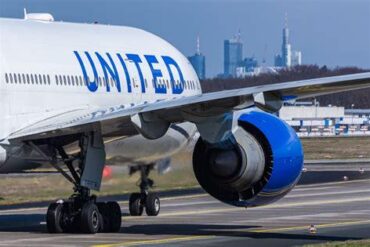
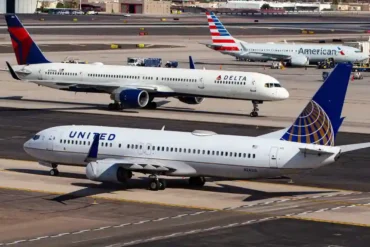
United Airlines is one of the largest MAX customers globally, operating MAX 8 and MAX 9 variants and placing substantial orders for MAX 10 aircraft. United’s fleet strategy emphasizes segment optimization—smaller aircraft for thin routes and larger MAX variants for trunk routes. Unlike Southwest, United maintains a mixed Airbus-Boeing narrowbody fleet.
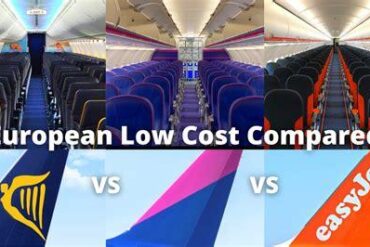
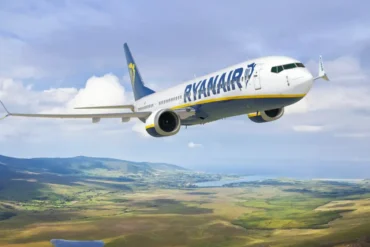
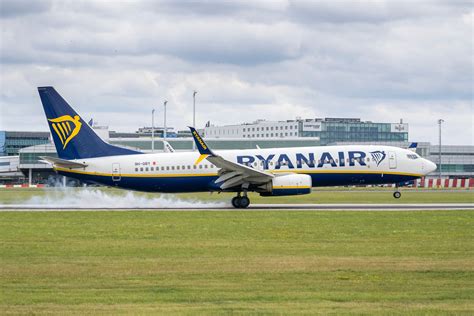
Ryanair, Europe’s largest airline, is another giant MAX operator. Its fleet focuses on the high-density MAX 8-200, a special version with up to 210 seats. Ryanair’s strategy is ultra-low-cost, pushing seating density to the limits of certification to achieve the lowest possible unit costs. Unlike Southwest, Ryanair has ordered the MAX 10, signaling its intent to grow capacity without expanding fleet diversity beyond the 737 family.
Alaska Airlines represents a hybrid approach. It operates multiple 737 variants, including the MAX 8 and MAX 9, while transitioning toward MAX 10 for higher-capacity routes. Alaska’s acquisition of Hawaiian Airlines and its incoming widebody aircraft add complexity, but the 737 remains the backbone of its domestic network.
Other notable MAX operators include American Airlines, Air Canada, flydubai, TUI Group, and Air India. However, none approach Southwest’s combination of fleet size, consistency, and reliance on a single variant.
Why Southwest’s Fleet Strategy Is So Unusual
In modern aviation, fleet diversity is common. Airlines tailor aircraft size to route demand, optimizing yield and load factors. Southwest’s refusal to diversify beyond a narrow set of variants is almost ideological. This strategy reduces pilot training costs, simplifies maintenance inventories, and improves dispatch reliability.
The downside is less flexibility in right-sizing aircraft. However, Southwest compensates with frequency. Instead of flying one large aircraft, it flies more smaller ones. The MAX 8, with its mid-sized capacity, sits perfectly in this philosophy, large enough for trunk routes and efficient enough for thinner markets.
The Historical Context: Boeing 737 vs Airbus A320
The dominance of the 737 in older low-cost carriers like Southwest and Ryanair reflects historical inertia. The 737 entered service in the 1960s, decades before the Airbus A320. This gave Boeing a massive installed base, trained crews, and a deep secondary market. Airlines that built their models around the 737 found switching costly and operationally disruptive.
Newer low-cost carriers founded after 2000, such as Wizz Air, IndiGo, and JetSMART, often chose the Airbus A320 family. Free from legacy constraints, they selected newer technology platforms with fly-by-wire systems and cockpit commonality across larger aircraft families.
Southwest’s continued commitment to the 737 is both tradition and economics. The airline’s infrastructure, culture, and operational DNA are built around this aircraft family.
MAX 7 and MAX 10: The Certification Wildcards
Southwest’s future fleet composition depends heavily on the certification timelines of the MAX 7 and MAX 10. Delays from regulators, especially the FAA, have postponed deliveries for years. As of 2026, the MAX 8 remains the only next-generation aircraft Southwest has in meaningful numbers.
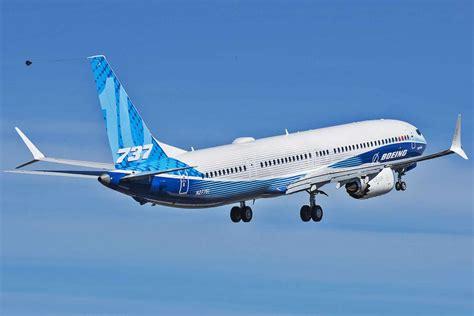
The MAX 7 is intended to replace the aging 737-700 fleet, offering improved efficiency on shorter routes. The MAX 10, the largest variant, targets higher-capacity missions but has no Next Generation predecessor. Ryanair and United see it as a potential A321 competitor, while Southwest has deliberately avoided it, sticking to its mid-capacity philosophy.
Operational Economics: Why Size Matters
Operating the largest MAX fleet in the world gives Southwest enormous purchasing power. Bulk orders allow the airline to negotiate favorable pricing, maintenance contracts, and engine support packages. This scale advantage compounds over time, creating a cost moat that competitors struggle to breach.
Fuel efficiency is another factor. The LEAP-1B engines and aerodynamic improvements, including split scimitar winglets, reduce fuel burn significantly compared to older 737NG aircraft. For an airline operating hundreds of aircraft, fuel savings translate directly into competitive ticket pricing.
Passenger Experience and Cabin Configuration
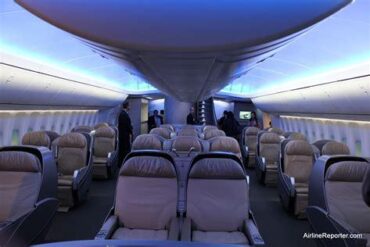
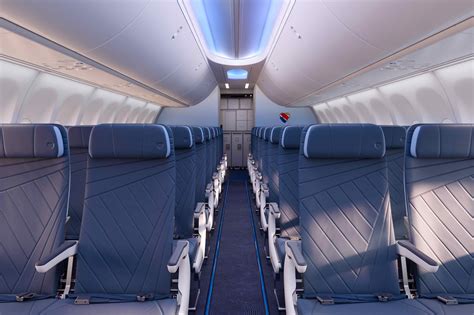
The MAX 8 is typically configured in a single-class layout for Southwest, maximizing seat count while maintaining legroom consistent with the airline’s brand. The cabin features larger overhead bins, modern LED lighting, and improved noise insulation compared to older 737 models.
From a passenger perspective, the MAX 8 feels like a generational leap in comfort, even within a low-cost framework. For Southwest, this modernization is crucial as the airline competes with legacy carriers and new low-cost entrants alike.
Global Implications of Southwest’s MAX Dominance
Southwest’s position as the largest MAX operator influences Boeing’s production planning, regulatory lobbying, and engineering priorities. As one of Boeing’s most loyal customers, Southwest’s feedback carries weight in design decisions and operational refinements.
The airline’s massive order book also provides Boeing with production stability, critical in the post-crisis recovery period. Each MAX delivered to Southwest represents not just revenue but a vote of confidence in the program’s future.
The Competitive Landscape in 2026
Despite Southwest’s lead, the MAX ecosystem is highly competitive. United’s mixed fleet strategy allows it to match capacity more precisely to demand. Ryanair’s ultra-dense configurations achieve industry-leading unit costs. American Airlines leverages scale across both Airbus and Boeing platforms. Air India and flydubai represent emerging market growth, using the MAX to expand long-haul narrowbody routes.
However, no airline matches Southwest’s pure scale and single-type operational focus. This makes Southwest a case study in how fleet strategy shapes corporate identity.
Strategic Risks and Opportunities Ahead
Operating the world’s largest MAX fleet is not without risk. Regulatory scrutiny remains intense, and any future technical issues could disproportionately impact Southwest. Dependence on a single manufacturer and aircraft family introduces systemic risk.
On the other hand, opportunities abound. As fuel prices fluctuate and environmental regulations tighten, newer, more efficient aircraft provide a competitive edge. Southwest’s aggressive modernization positions it well for carbon reduction targets and operational cost control.
The Psychology of Fleet Identity
Aircraft types often become symbolic of airline brands. The A380 symbolizes Emirates, the 787 symbolizes long-haul modernization, and the 737 symbolizes Southwest. The MAX era continues this symbolic identity, with the MAX 8 becoming the visual and operational signature of Southwest’s 2020s network.
For aviation enthusiasts, spotting a Southwest MAX 8 is now a global constant, from mainland US airports to Hawaiian island runways.
Conclusion: The Uncontested MAX Titan of 2026
In 2026, Southwest Airlines holds the title of the airline with the largest Boeing 737 MAX fleet in the world. With around 300 MAX 8 aircraft in service and hundreds more on order, it dwarfs competitors in sheer numbers and operational reliance on the type.
This dominance is not accidental. It is the result of decades of fleet philosophy, aggressive ordering, strategic simplicity, and confidence in Boeing’s narrowbody roadmap. The MAX 8, with its balanced capacity, extended range, and fuel efficiency, has become the backbone of Southwest’s network and a symbol of its low-cost, high-frequency strategy.
As certification of the MAX 7 and MAX 10 progresses and global aviation demand continues to rebound, the competition for narrowbody dominance will intensify. Yet, unless another airline radically shifts strategy and orders at unprecedented scale, Southwest’s position as the world’s largest Boeing 737 MAX operator will remain one of the defining fleet stories of the mid-2020s.
In the strange, beautiful ecosystem of global aviation, where strategy meets engineering at 35,000 feet, Southwest’s fleet is not just large—it is a living thesis on how simplicity, scale, and stubborn consistency can rewrite industry economics.