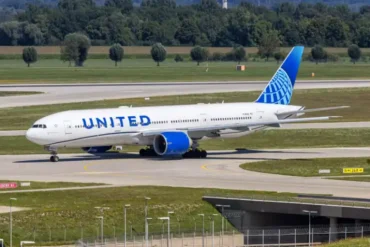
United Airlines occupies a peculiar and fascinating niche in global aviation. It is not the airline with the most aircraft overall, nor the carrier that flies the newest fleets on average. Instead, United has become something rarer and arguably more interesting: the world’s largest operator of a very specific, highly capable long-haul aircraft variant—the Boeing 777-200ER. That distinction is not accidental. It is the result of history, mergers, engineering trade-offs, and a deliberate willingness to extract maximum value from a proven airframe.
This story is not about marketing slogans or glossy renderings. It is about how an airline ended up stewarding the largest active fleet of a widebody aircraft that quietly shaped long-haul travel for more than two decades. The Boeing 777-200ER is no longer the star of airshows, yet at United, it remains deeply woven into the airline’s global strategy, connecting continents with a blend of brute strength and mature reliability.
The question of which aircraft United Airlines operates more than any other airline globally leads straight to this workhorse. While Emirates dominates the overall Boeing 777 family, United holds the crown for the 777-200ER specifically, operating 55 examples—more than any other carrier on Earth. That single fact opens a much larger story about fleet philosophy, operational inertia, and why some airplanes simply refuse to fade quietly into retirement.
United Airlines and the Meaning of “Largest Operator”
Being the “largest operator” of an aircraft does not mean owning the most jets wearing a logo. It means actively flying more of a specific type than any other airline, across scheduled commercial service, day after day. In the case of the Boeing 777-200ER, United Airlines has turned this variant into a backbone rather than a footnote.
The 777-200ER sits in an unusual middle ground. It is smaller than the 777-300ER, less futuristic than the 787, and older than most aircraft airlines showcase proudly. Yet it offers something rare: long range, heavy payload capability, and proven economics on demanding routes. United’s decision to keep such a large number of these aircraft flying reflects a strategic comfort with maturity over novelty.
United’s current Boeing 777 fleet numbers 96 aircraft, making it the second-largest 777 operator in the world after Emirates. However, unlike Emirates, whose fleet centers on the newer 777-300ER, United’s dominance comes from first-generation variants. Of those 96 aircraft, 55 are Boeing 777-200ERs, giving United an uncontested global lead for this specific model.
This concentration is not accidental, nor is it purely legacy inertia. It reflects how the airline’s long-haul network evolved, especially after one of the most consequential mergers in modern aviation history.
The Boeing 777-200ER: A Long-Range Original
The Boeing 777 program was conceived as a bridge between classic widebodies like the DC-10 and the next generation of long-haul aircraft. The original 777-200 was followed quickly by the 777-200ER, where “ER” stands for Extended Range. That extension changed everything.
With additional fuel capacity and a maximum takeoff weight of up to 297 tons, the 777-200ER transformed what twin-engine aircraft could do in the 1990s. It rivaled—and in many cases surpassed—the Airbus A340-300 and the McDonnell Douglas MD-11, both of which relied on three or four engines to achieve similar missions.
Airlines noticed. The 777-200ER went on to log 422 orders, outperforming its direct competitors combined. It became the default choice for carriers that needed intercontinental range without the operating penalties of extra engines.
United Airlines was deeply involved from the beginning. It was the launch customer of the original 777-200 in 1995, placing itself at the center of the program’s early operational learning curve. That early involvement laid the groundwork for what would later become the airline’s defining relationship with the 777-200ER.
How United Became the World’s Largest 777-200ER Operator
The defining moment in United’s 777-200ER story did not occur at a Boeing factory. It occurred in 2010, when United Airlines merged with Continental Airlines. That merger did more than combine route maps; it fused two long-haul philosophies built around the same aircraft.
Before the merger, United already operated a significant fleet of 777-200ERs. Continental, meanwhile, had quietly assembled one of the most capable 777-200ER fleets in the world, using the aircraft to push ultra-long-haul routes out of Newark and Houston. When the two fleets merged, United suddenly found itself holding an unmatched concentration of this variant.
Most of United’s 777-200ERs entered service between the late 1990s and early 2000s, with a smaller number delivered as late as 2010. This created a fleet with remarkably consistent performance characteristics but varying engine configurations, adding technical nuance rather than operational chaos.
Today, the 777-200ER represents United’s largest widebody subfleet, even as the airline aggressively grows its Boeing 787 Dreamliner numbers. That persistence speaks volumes.
Inside United’s 777-200ER Fleet Today
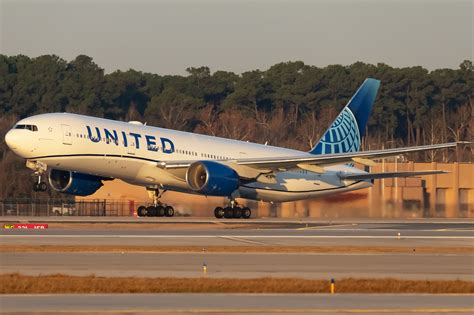
United currently operates 55 Boeing 777-200ER aircraft, making it the largest active fleet of this variant anywhere in the world. Age-wise, these aircraft span more than a decade and a half, with the oldest approaching 30 years of service and the youngest just over 15.
This longevity is not unusual in the United States, where carriers are known for extracting long service lives from airframes. What is unusual is how central these aircraft remain to United’s international operation, rather than being relegated to secondary roles.
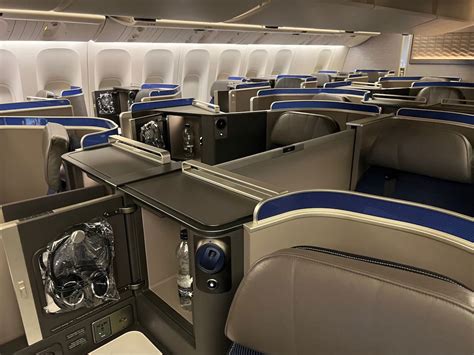
The fleet is split into two operational subgroups. The majority are configured for long-haul international service, featuring Polaris business class, Premium Plus, and economy cabins. A smaller number are fitted for high-density domestic missions, prioritizing capacity over amenities.
The international configuration seats 276 passengers, balancing premium demand with economy scale. The domestic version pushes that number beyond 360, illustrating how flexible the airframe remains even decades after its introduction.
What keeps these aircraft relevant is not nostalgia. It is capability.
Engines, MTOW, and Why They Matter
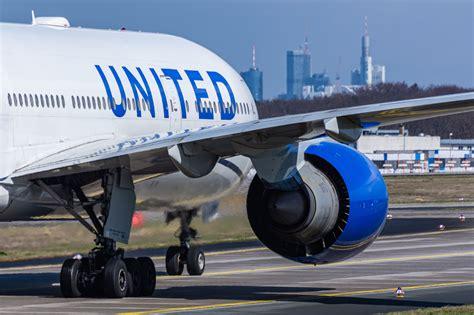
Not all 777-200ERs are created equal. One of the defining technical quirks of the first-generation 777 is that it offered three different engine options: the General Electric GE90, the Rolls-Royce Trent 800, and the Pratt & Whitney PW4000 series.
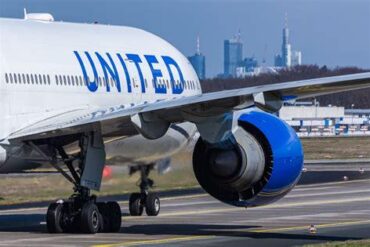
United’s fleet reflects this diversity. Legacy United aircraft primarily use Pratt & Whitney PW4000-112 engines, while former Continental aircraft are powered by General Electric GE90 variants. This split has real-world consequences.
Aircraft powered by GE90 engines can operate at the full 297-ton maximum takeoff weight, granting them longer range and greater payload flexibility. PW4000-powered aircraft, due to emissions certification limits, operate at a slightly reduced MTOW of 294 tons.
That difference may sound small, but on ultra-long-haul routes, it matters. Continental exploited this advantage aggressively, opening routes such as Newark–Delhi and Newark–Hong Kong—missions that defined the upper edge of the 777-200ER’s envelope at the time.
Even today, these aircraft quietly shoulder some of United’s most demanding routes, especially where payload reliability outweighs the allure of newer materials.
Cabin Strategy: Polaris, Density, and Flexibility
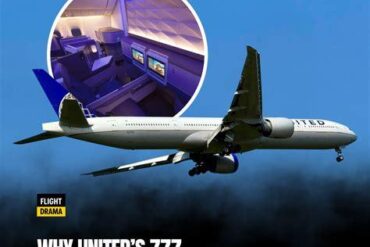
United’s 777-200ER cabins reveal an airline deeply aware of its network economics. The international configuration features 50 Polaris business class seats, a competitive Premium Plus cabin, and a dense but carefully optimized economy section. This layout reflects United’s confidence in sustained premium demand on long-haul routes.
The domestic-configured aircraft tell a different story. These jets strip away long-haul luxuries in favor of raw capacity, moving hundreds of passengers efficiently across the continent. Few aircraft can pivot so convincingly between these roles, which explains why the 777-200ER remains valuable despite its age.
The fact that United continues to invest in cabin consistency across aircraft inherited from two different airlines speaks to a broader philosophy: operational unity matters more than fleet novelty.
Why the 777-200ER Refuses to Retire
Many international airlines have already retired aircraft of similar vintage. United has not, and that decision is deliberate. The 777-200ER occupies a unique performance niche that newer aircraft do not perfectly replace.
The Boeing 787-9 offers greater range with lower fuel burn but sacrifices capacity. The 787-10 restores capacity but gives up range. The Airbus A350-900 offers range and efficiency but requires a long, expensive fleet transition. Each option solves part of the puzzle, not all of it.
For now, the 777-200ER remains a balanced solution, especially on routes where payload, seating, and operational resilience matter more than incremental fuel savings.
The Future: Replacement Without Erasure
United has placed orders for Airbus A350-900s and hundreds of Boeing 787s, signaling that the 777-200ER will eventually leave the fleet. However, the timeline is telling. Deliveries stretch into the 2030s, and replacement discussions increasingly point toward larger variants such as the A350-1000, not direct one-for-one substitutes.
That suggests something important: the 777-200ER did more than fill a slot. It shaped route structures, capacity planning, and network ambition. Replacing it is not about finding a newer airplane. It is about rebuilding a role.
Until that role can be replicated cleanly, the world’s largest 777-200ER operator will keep flying them.
Why This Distinction Matters
Being the largest operator of the Boeing 777-200ER is not a trivia answer. It is a window into how United Airlines thinks. It values durability over trendiness, flexibility over fashion, and proven engineering over marketing cycles.
In an era obsessed with what is next, United’s relationship with the 777-200ER is quietly radical. It treats aircraft as long-term assets, not disposable statements. That philosophy has allowed the airline to maintain global reach through economic cycles, fuel shocks, and industry upheaval.
The Boeing 777-200ER may not dominate headlines anymore, but at United Airlines, it still dominates the skies.