Britain’s flagship F-35 program is now at the heart of a growing national defense controversy. Once hailed as the crown jewel of the UK’s next-generation air power, the F-35B Lightning II fleet is now plagued by delivery delays, soaring costs, maintenance failures, and a disturbingly low readiness rate. With one jet still stranded in India following a mechanical breakdown, a new report by the UK National Audit Office (NAO) paints a grim picture of a project spiraling into dysfunction.
UK’s F-35 Procurement Stuck in a Holding Pattern
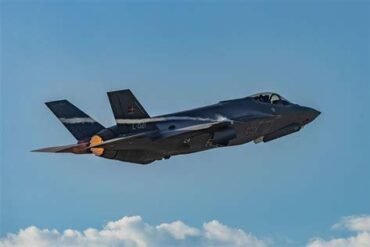
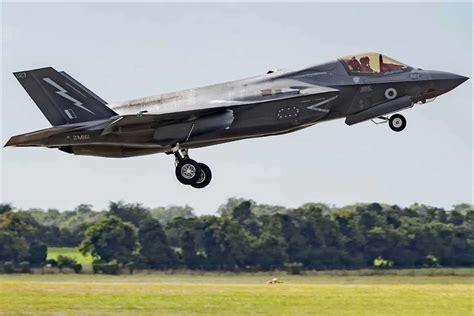
The UK Ministry of Defence (MoD) originally committed to acquiring 138 F-35 aircraft, focusing heavily on the STOVL (Short Take-Off and Vertical Landing) F-35B variant for Royal Navy and Royal Air Force operations. So far, only 38 units have been delivered, with one aircraft lost in a crash in 2021, bringing the current fleet to 37 operational aircraft.
The NAO report reveals that the UK government no longer expects to complete its first tranche of 48 jets until 2026, a full two years behind the already revised schedule. This latest delay stems from a combination of cost-cutting decisions by the MoD, global delays in Lockheed Martin’s Technology Refresh 3 (TR-3) software, and broader program mismanagement.
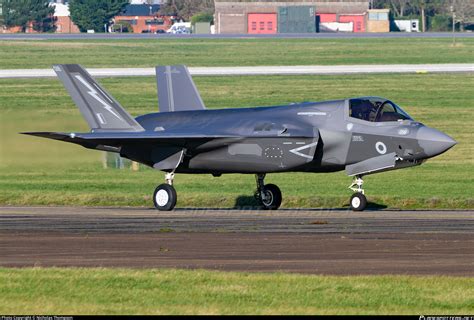
In 2016, the MoD pledged to have all 48 jets delivered by 2024. That target was moved to 2025 and now drifts toward late 2026, exposing the fragility of the UK’s acquisition timelines. The delays have a cascading effect, forcing the MoD to postpone the declaration of Full Operating Capability (FOC) for its F-35 fleet until the end of 2025, and even then, with significant operational shortfalls.
Stranded in India: The RAF’s $100 Million Headache
Perhaps the most emblematic failure of the program is the grounding of a British F-35B in India, which has now lingered at Thiruvananthapuram International Airport for nearly a month. The jet, deployed aboard HMS Prince of Wales during a joint exercise with the Indian Navy, made an emergency landing on June 14 due to low fuel and poor weather. Once on the ground, technicians discovered a critical hydraulic failure, rendering the aircraft inoperable.
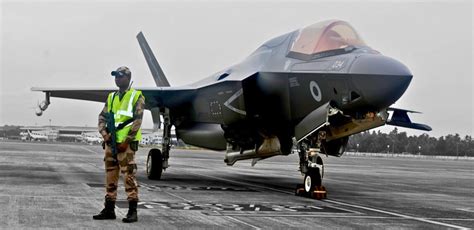
Security was promptly heightened. The stealth jet, which houses highly sensitive technologies, was kept under constant guard by India’s CISF and RAF technicians. A team of over 40 UK engineers, assisted by Lockheed Martin specialists, was later flown in with specialized equipment to repair the jet in an Air India MRO hangar. Reports suggest the aircraft may return to the UK soon, but the episode has raised serious doubts about the reliability and maintainability of the F-35 platform.
Readiness Crisis: Less Than Half of Required Capability
Beyond logistical headaches and repair fiascos, the NAO’s report highlights an even more worrying trend: the British F-35 fleet’s mission availability rate is shockingly low. While the Ministry of Defence set a mission-capable target that reflects the ability to conduct at least one of seven mission types, the UK fleet in 2024 achieved just half that goal.
This crisis mirrors global concerns. A U.S. Government Accountability Office (GAO) report earlier this year pegged the F-35A mission-capable rate at only 51.5%, far below the 75–80% benchmark. For the UK, the rate is even more dismal—though the exact percentage is classified.
The causes are manifold:
- Severe engineering staff shortages, particularly in supervisor roles
- Lack of trained pilots and flying instructors
- A global shortage of F-35 spare parts, exacerbated by production bottlenecks and over-dependence on the U.S. supply chain
- No sovereign capability to maintain stealth coatings or radar-absorbent materials, expected only in the 2030s
Critical Weapons Delayed Until Next Decade
Equally concerning is the program’s failure to integrate key UK-made weapons into the F-35 fleet. The SPEAR 3 air-to-surface missile and Meteor beyond-visual-range air-to-air missile, both developed in the UK, were initially scheduled to be operational by December 2024. That timeline has collapsed.
The NAO confirms these systems won’t be fully integrated until the early 2030s. In the interim, the MoD is scrambling to procure temporary stop-gap weapons to avoid complete combat capability degradation.
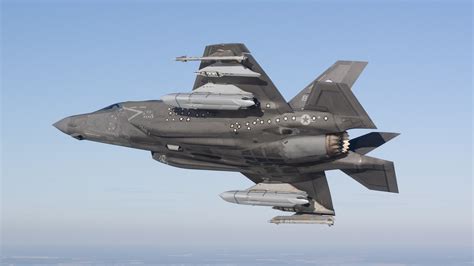
The delay is blamed on a mix of supplier underperformance, commercial contract mismanagement, and the low prioritization of Meteor integration by the F-35 global program.
Additionally, the F-35 lacks a long-range standoff weapon for attacking targets in contested airspace. This limitation significantly impacts the RAF’s operational flexibility, especially in high-threat environments where safe-distance strikes are essential.
Financial Black Hole: £71 Billion for 138 Aircraft
Though the MoD initially pegged the program’s cost at £18.76 billion ($25.02 billion) for the first 48 aircraft, the NAO calculates the real lifetime cost at a staggering £71 billion ($94.70 billion) for the full fleet of 138 jets. This figure includes costs related to infrastructure, training, fuel, maintenance, and personnel.
The NAO criticizes the MoD’s incomplete cost disclosures, noting that public transparency remains a major issue. Already, £11 billion has been spent, yet the RAF and Royal Navy do not possess the full combat capabilities originally envisioned.
Industrial Gains vs Military Shortfalls
Despite the spiraling costs and logistical failures, the UK’s early participation in the F-35 Joint Strike Fighter program has brought economic benefits. Approximately 15% of every F-35 globally is built by British firms, including BAE Systems, Rolls-Royce, and Leonardo UK. These contracts are estimated to be worth £22 billion.

However, the NAO warns that the industrial windfall does not offset the military underperformance. The audit describes the project as providing a “disappointing return” on the strategic defense goals originally laid out by the MoD.
Management Failures and Organisational Dysfunction
A core theme in the NAO’s findings is management breakdown. It cites short staff tenures, poor accountability, and financial rigidity within the MoD’s project oversight structure. The report calls for a complete overhaul of internal governance, as well as the development of a modern, independently-verified framework for measuring capability.
It insists the MoD must adopt a whole-life evaluation approach, accounting for long-term risks, sustainment costs, and readiness benchmarks.
A Program at a Crossroads
As it stands, the UK F-35 program is adrift, burdened by technical, logistical, and strategic shortcomings. The stranded jet in India is merely a high-profile symptom of a deeper malaise afflicting Britain’s most ambitious military procurement since World War II.
Without swift structural reforms, faster delivery schedules, robust engineering support, and timely integration of critical weapons, the program threatens to undermine the UK’s operational edge across both air and maritime battlefronts.
While the F-35 remains the most advanced jet ever flown by UK forces, its potential is being squandered by a mix of political compromise, industrial complacency, and bureaucratic inertia.
The window to correct course is narrowing.