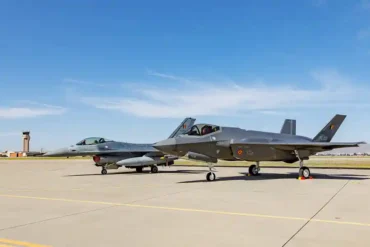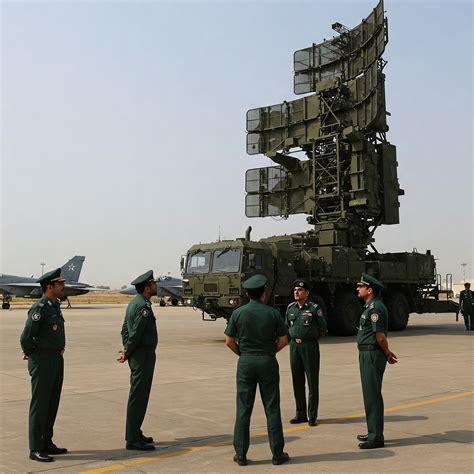
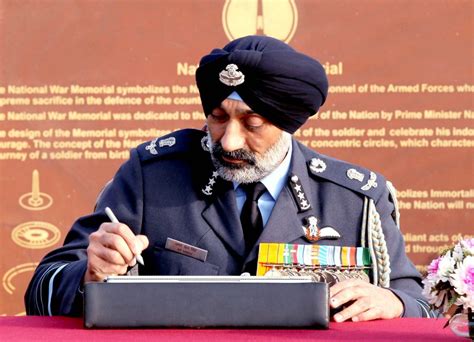
India’s military self-reliance ambitions, often lauded under the banner of atmanirbharta, face a critical stress test. At the heart of this reckoning lies a candid and unprecedented intervention by Air Chief Marshal A P Singh, who, unlike his predecessors, has openly acknowledged the systemic dysfunction plaguing the country’s defence aerospace sector. His remarks are not mere lamentations—they represent a piercing call to action against the inertia embedded in India’s high-tech defence ambitions.
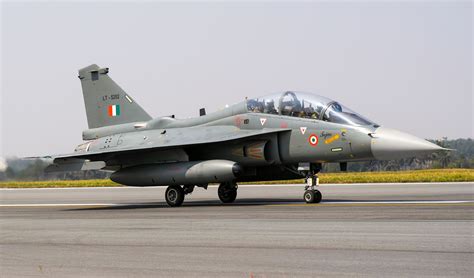
The catalyst for this scrutiny is the Light Combat Aircraft (LCA) Tejas project, long championed as a symbol of indigenous capability but perpetually delayed. India’s air power ambitions, despite their strategic imperative, are routinely let down by chronic delays, a lack of accountability, and monopolistic inefficiency within its state-run defence apparatus. The systemic issues laid bare by ACM Singh are not limited to HAL’s failings; they point to a wider rot that includes policy indecisiveness, bureaucratic inertia, and inadequate R&D prioritisation.
HAL’s Monopoly and the Captive Customer Crisis
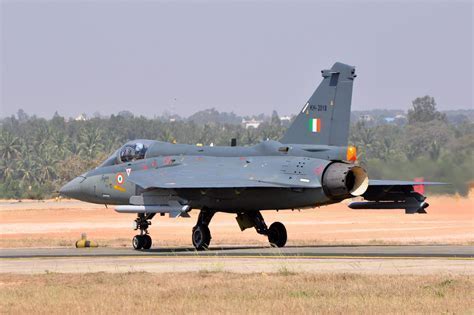
India’s Hindustan Aeronautics Limited (HAL), a state-run aerospace giant, has long held monopolistic control over the country’s combat aircraft manufacturing. This dominance has inadvertently converted the Indian Air Force (IAF)—its primary customer—into a captive entity, with little recourse to alternative sourcing. The case of the Tejas Mk-1A exemplifies this broken dynamic. Conceived in the early 1980s to replace the aging Soviet MiG fleet, the Tejas has suffered from delayed timelines, shifting goalposts, and underwhelming performance metrics.
Despite the LCA’s induction into service in 2015—three decades after its conceptualisation—the aircraft’s true combat readiness remains underwhelming. Even more troubling is HAL’s recent commitment to deliver 83 Mk-1A units, of which none were ready as of February 2025, despite assurances to the contrary. ACM Singh’s frustration was palpable when he declared a complete lack of confidence in HAL’s delivery promises. “Not even one is ready yet,” he said, underscoring how promises in contract stages are knowingly signed with no realistic execution horizon.
Strategic Paralysis at the Top
These delays are not HAL’s burden alone. The Cabinet Committee on Security (CCS), the apex policymaking body on defence matters, has also failed to instil the strategic urgency required to push projects forward. The historical precedent of the HF-24 Marut, India’s first indigenously developed fighter in the 1960s with German help, should have laid a strong design culture. Instead, India chose the path of licensed assembly over independent development, primarily relying on Soviet and Russian imports for decades.
The result? A hollowed-out ecosystem where assembling imported aircraft parts is celebrated as indigenisation, and deep design capabilities remain absent. HAL continues to operate without robust accountability mechanisms, while policy inertia at the defence ministry level impedes the formation of cohesive, long-term vision frameworks.
IAF’s Dilemma: Between Dependence and Deficiency
The IAF’s leadership has, for years, flagged issues of obsolescence and inventory depletion. However, ACM Singh’s remarks mark a rare moment of institutional honesty, as he spoke directly about the consequences of systemic inefficiencies on operational readiness. During Operation Sindoor, the IAF displayed commendable flexibility, but its effectiveness could have been significantly amplified with timely induction of promised platforms.
This situation puts the IAF in a cruel bind. It cannot procure foreign aircraft due to political pressures to prioritise domestic production. Simultaneously, it cannot rely on HAL to meet its defence timelines. This strategic cul-de-sac means India’s air superiority is increasingly theoretical—a dangerous situation in a region with volatile security dynamics.
R&D Investment: The Elephant in the Hangar
At the core of India’s aerospace shortfall lies chronic underinvestment in Research & Development. The numbers are telling. In 2023, India invested $71 billion in R&D, dramatically lagging behind the US ($784 billion), China ($723 billion), and Japan ($184 billion). This funding disparity is reflected in the limited success of indigenous technology platforms across all branches of defence.
Without serious fiscal commitment and the political will to restructure incentives for the private sector and academia, India’s ambition of reaching world-class aerospace standards will remain aspirational. The global norm—where governments play a leading role in facilitating defence innovation ecosystems—has yet to be internalised in India’s policy playbook.
The Culture of Optics Over Outcomes
A critical factor undermining India’s atmanirbhar mission is its preference for optics over outcomes. High-visibility summits, defence expos, and declarations of grand intent dominate headlines, but they mask the reality on the ground. The political class, focused on electoral capital, has shown limited appetite for pursuing hard structural reforms in defence manufacturing.
As ACM Singh wisely put it, these failings are “systemic” and not the fault of a few individuals. This statement calls attention to the absence of institutional integrity and technology-centric strategic culture. The system protects its inefficiencies under layers of bureaucracy, where performance metrics are vague, and responsibility is diffusely shared among stakeholders with misaligned incentives.
The Navy’s Divergent Path: A Model for Emulation
Interestingly, the Indian Navy offers a counter-example worth emulating. Despite budgetary constraints, the Navy has steadily advanced indigenous warship design, working closely with private and public sector players. Its collaboration with Indian shipyards has yielded credible platforms such as INS Vikrant, a locally built aircraft carrier.
This contrast stems from the Navy’s consistent investment in design bureaus, long-term planning, and professional autonomy. It shows what a clear doctrinal vision paired with a focused investment strategy can achieve. The Air Force, despite having a more pressing case due to the rapid pace of aerial warfare evolution, has not been empowered with similar ecosystem-building tools.
The Road Ahead: Embracing Hard Reforms
India’s path to a credible air power capability must begin with a brutal assessment of its current trajectory. ACM Singh’s honest diagnosis should serve as the foundation for institutional reform across the defence production ecosystem. These reforms must include:
- Breaking HAL’s monopoly by incentivising private sector participation with guaranteed procurement pipelines.
- Creating a joint design command structure between DRDO, HAL, and IAF to eliminate operational misalignments.
- Drastically increasing R&D spending, aiming for a near-term target of $150 billion with a roadmap to cross $250 billion by 2030.
- Enforcing delivery accountability through contractual penalties and real-time performance audits.
- Building a separate Aero-Design Authority, independent of HAL, to specialise in platform development and innovation.
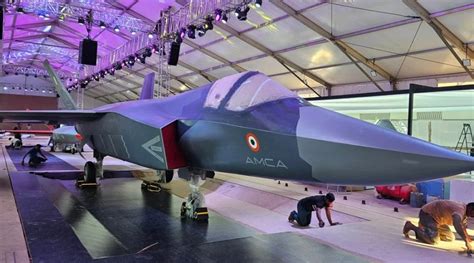
These steps are not theoretical luxuries—they are existential requirements. As China rapidly advances its stealth fighter programs and the US continues deploying next-gen air dominance strategies, India risks falling into a strategic irrelevance trap unless urgent corrective action is taken.
Conclusion: Heeding the Warning Before It’s Too Late
Air Chief Marshal A P Singh did what few in his position have dared to do. He fulfilled his svadharma, not merely by safeguarding airspace but by illuminating the murky institutional stagnation that threatens India’s defence future. His words are not the final warning—but they must be the first serious wake-up call.
India’s quest for atmanirbharta cannot be fulfilled through ceremonies and slogans. It demands political maturity, professional clarity, and institutional courage to overhaul what no longer serves national interest. The choice before the nation is stark—embrace hard truths and change course, or continue down a path of managed mediocrity masked by symbolic progress.
The consequences of ignoring these realities are not abstract. They will be felt in every delayed sortie, every underpowered airframe, and every missed opportunity to assert credible deterrence in an increasingly uncertain world.