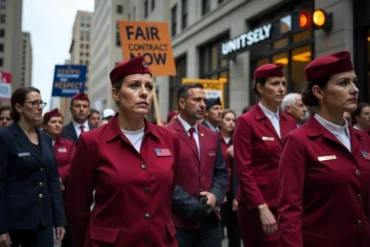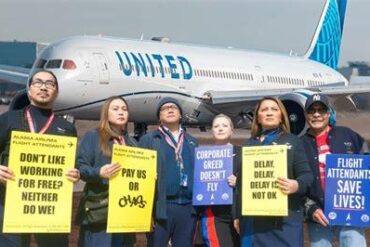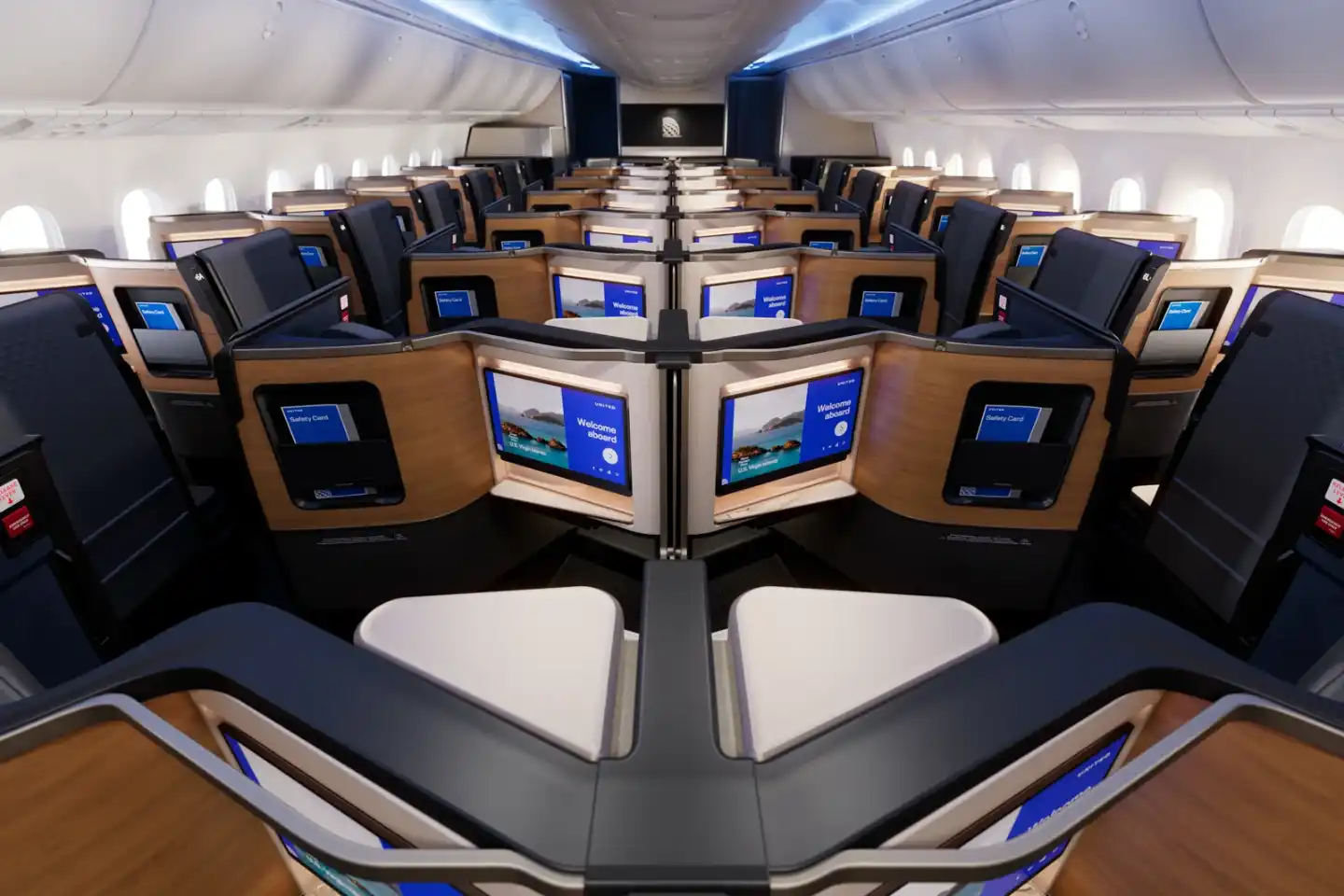
United Airlines’ high-profile media unveiling of its new Polaris business class cabin in Brooklyn was unexpectedly disrupted when a group of uniformed flight attendants stormed the stage, voicing demands for a long-overdue labor contract. The dramatic interruption, staged inside the Brooklyn Navy Yard venue before company executives addressed attendees, quickly shifted the spotlight from luxury air travel to unresolved labor tensions brewing within the airline for years.
A Public Interruption at a Private Showcase
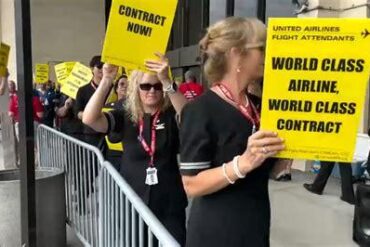
The event, designed to highlight United’s next-generation Polaris Studio aboard new Boeing 787-9 Dreamliners, took an unforeseen turn when around a dozen flight attendants clad in United uniforms walked boldly across the front of the main stage. Holding placards and chanting slogans such as “If we don’t get it, shut it down!” and “What do we want? A contract! When do we want it? Now!”, the employees transformed a tightly controlled PR event into a charged moment of labor activism.
Though the protest lasted less than two minutes before security intervened and removed the demonstrators, its impact rippled far beyond the walls of the venue. Eyewitnesses, including event guests and media, captured footage showing attendees stunned as chants echoed over the polished ambiance of a stage meant to project corporate luxury.
Flight Attendants Locked in Four-Year Contract Battle
At the heart of the protest lies a critical labor issue: United’s 28,000 flight attendants have been without a new contract since mid-2021, when their existing agreement became amendable. Represented by the Association of Flight Attendants-CWA (AFA), these workers have pressed United management for a contract that reflects industry parity, rising living costs, and the airline’s own financial resurgence.
In a pointed joint statement released in response to the Polaris event, AFA International President Sara Nelson and United AFA President Ken Diaz emphasized the disconnect between United’s marketing investments and its labor commitments:
“Service doesn’t happen without us. United has the money to invest in an industry-leading Flight Attendant contract with ‘premium’ compensation, work rules, and cabin interiors.”
“Scott Kirby can roll out all the new product announcements he wants — it means nothing without respect for the people who deliver it. A new aircraft cabin doesn’t pay rent or give us the schedule control we need to have a life.”
The statement did not hold back, accusing United CEO Scott Kirby of enriching himself while stalling on fair labor terms, framing the Polaris announcement as “insult to injury.”
A Harsh Economic Reality for United Crew
To understand the frustration driving these flight attendants, one must examine their working conditions in real terms. Entry-level pay for United flight attendants begins at $28.88 per flight hour. However, this wage model is fundamentally different from traditional employment. Flight attendants are typically only paid for flight hours, not for time spent during boarding, delays, or ground duty — resulting in an annual workload averaging 1,000 hours.
This effectively caps yearly income in the range of $30,000–$35,000 for new hires — a paltry sum when considering that many are based in cities such as New York, Chicago, or San Francisco, where housing, transport, and daily expenses are among the highest in the nation.
By contrast, even Emirates flight attendants, working for a foreign carrier, reportedly earn higher effective pay and enjoy employer-provided housing and transportation allowances, highlighting the growing disparity in working conditions.
Industry-Wide Contract Momentum Leaves United Behind
Several other major U.S. airlines have recently settled new labor agreements with substantial increases. American Airlines, for instance, ratified a contract that introduced boarding pay, schedule control improvements, and significant hourly wage increases. Industry insiders see this as a landmark deal that has reshaped what flight attendants can and should expect.
The principle of pattern bargaining—where carriers match the terms of competitors to remain attractive employers—has already played out among pilot unions at the “big three” carriers (Delta, American, United). Yet for some reason, United’s negotiations with AFA have remained stalled, with little transparency on which side is responsible for the impasse.
Profit Surge Raises Questions of Management Priorities
The backdrop to this prolonged labor standoff is United’s strong financial performance. With stock prices climbing, improved load factors, and capacity growth positioning United in the league of Delta, many in the workforce question why the company continues to delay contract ratification.
Labor economists and union analysts point to a possible financial incentive for delay. Without a new agreement, United avoids the immediate cost impact of higher wages and benefits — potentially saving the airline hundreds of millions annually. Critics argue this savings comes directly at the expense of frontline staff who endured the pandemic, facilitated recovery, and now support premium service like Polaris.
An Image Problem in the Making
While Polaris is intended to rebrand United as a leader in premium air travel, the contrast between its glitzy cabin interiors and its disgruntled workforce may undercut the intended message. Public perception is increasingly shaped by how companies treat their employees, especially in sectors like travel where customer experience is inextricably linked to service staff morale.
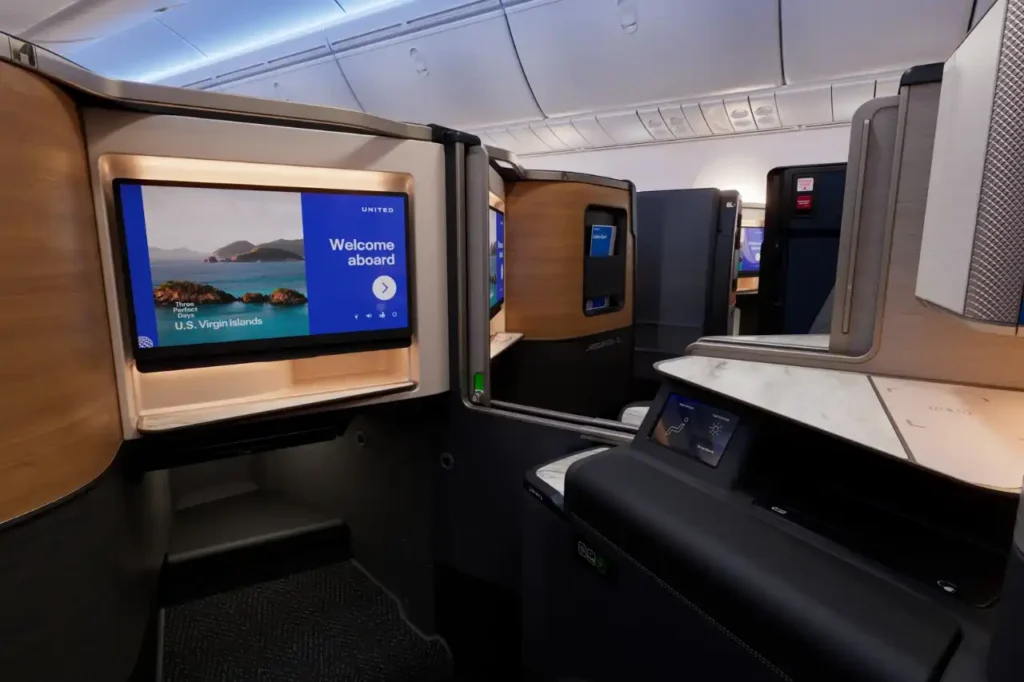
The AFA’s statement reinforces this link, asserting that without engaged, respected flight attendants, even the best seats in the sky will ring hollow:
“A new cabin interior doesn’t attract new applicants or allow us to come to work without stress. It doesn’t pay rent or provide schedule flexibility.”
These sentiments resonate with a growing number of travelers and investors who view Environmental, Social, and Governance (ESG) metrics as critical indicators of long-term corporate value. Ignoring workforce concerns may endanger more than just labor peace — it could threaten United’s brand equity.
Corporate Strategy vs. Human Capital
CEO Scott Kirby has made bold moves to elevate United’s fleet, expand international routes, and invest in next-gen technologies. But critics argue that investments in aircraft cannot replace investments in people. As United aspires to be a truly world-class airline, its internal misalignment with labor may prove a major strategic liability.
Aviation insiders note that no other major U.S. airline demanded concessions from flight attendants in this round of bargaining — yet United, the first legacy carrier to return to profitability post-pandemic, seems to be leveraging its bargaining power against its own staff.
The Call for Resolution Is Growing Louder
Labor unrest is not new to aviation, but United’s current situation stands out for its longevity and high-profile visibility. The flight attendant protest during the Polaris event may only have lasted 60 seconds, but it reflects four years of mounting tension, and a clear warning: public pressure is escalating.
With each media rollout or investor presentation, United risks more disruption unless meaningful progress is made at the bargaining table. The question is no longer whether a new contract is deserved — that case has been made thoroughly. The real question now is how much longer United leadership is willing to risk operational, reputational, and financial fallout to delay the inevitable.
Conclusion: Polaris in the Spotlight, But Labor in the Shadows
United’s unveiling of its refined Polaris product was meant to signal a forward-looking era of passenger luxury and onboard innovation. But the unscripted protest by flight attendants at the launch event underscored a sobering truth: that no product innovation can fly without people.
Until United delivers on a fair, industry-leading contract for the flight attendants who uphold its service standards daily, even the sleekest cabins and finest seats will be haunted by a fundamental imbalance — one that passengers and investors alike are beginning to notice.
The message from the front lines is clear: if United truly wants to be number one, it must first start by putting its people first.