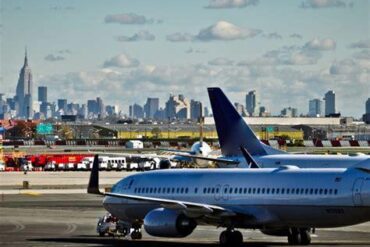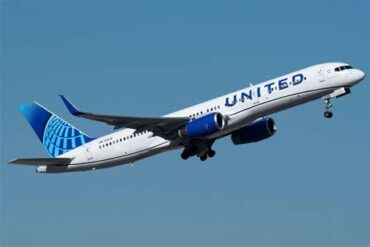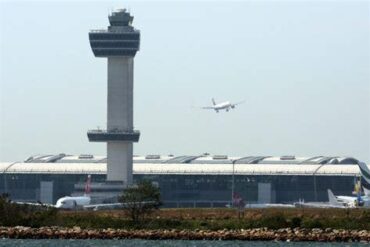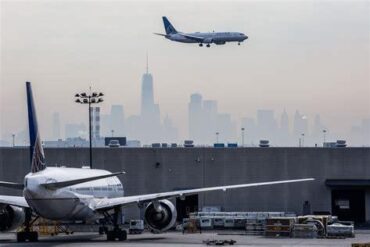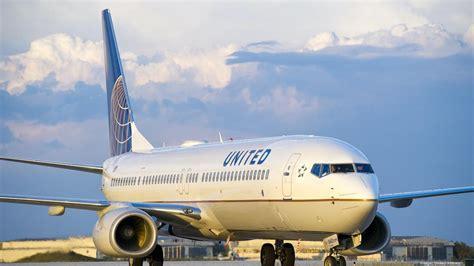
The aviation landscape surrounding Newark Liberty International Airport has reached a critical inflection point. United Airlines, the airport’s largest operator, has announced the elimination of 35 daily flights from its Newark schedule—a strategic decision driven by what the airline describes as a collapsing infrastructure of air traffic control (ATC) and chronic Federal Aviation Administration (FAA) mismanagement. These flight cuts account for nearly 10% of United’s round-trip domestic schedule at the airport and represent a significant disruption not only for passengers but also for national flight connectivity.
This development shines a harsh light on what many in the aviation industry have known for years: the U.S. air traffic control system, particularly in high-density airspaces like Newark, is outdated, overburdened, and understaffed.
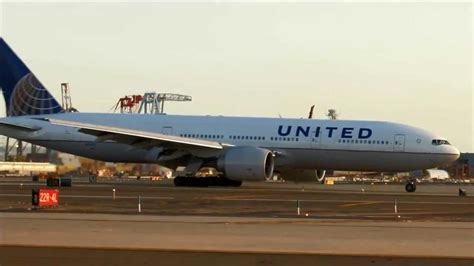
FAA Staffing Crisis Hits Boiling Point
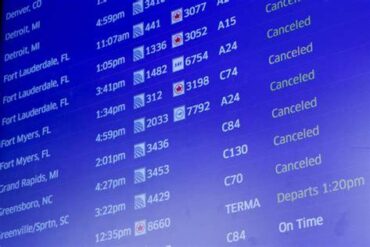
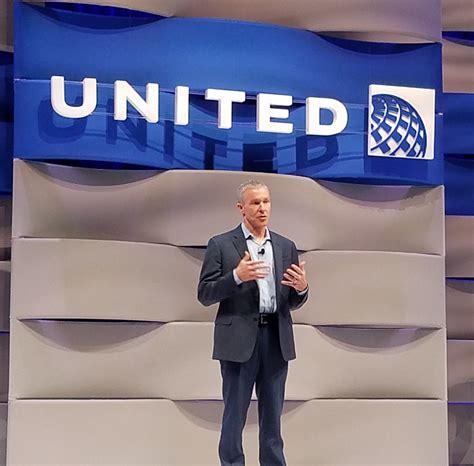
United Airlines CEO Scott Kirby minced no words in a candid letter to customers, stating that the technology managing flights at Newark had failed repeatedly in recent days. The fallout included flight delays, last-minute cancellations, and numerous diversions. But the situation became exponentially worse when over 20% of Newark’s air traffic controllers abruptly left their posts, exacerbating an already dire scenario.
Kirby’s remarks were unequivocal: “This particular air traffic control facility has been chronically understaffed for years and without these controllers, it’s now clear — and the FAA tells us — that Newark airport cannot handle the number of planes that are scheduled to operate there.”
The FAA’s own status updates echoed the magnitude of the problem. On the Saturday when United’s cuts went into effect:
- Arriving flights faced average delays of nearly two hours, with some approaching five-hour waits.
- Departures were held up by an average of 45 minutes in the morning, later easing slightly to 30 minutes in the afternoon.
A Ripple Effect Across the National Aviation Grid
The operational implosion at Newark did not remain localized. The repercussions quickly cascaded across the national aviation grid. According to FlightAware’s “misery map,” major U.S. airports in Los Angeles, Atlanta, Chicago, Miami, and Dallas experienced spillover disruptions.
This interconnected failure paints a sobering picture of how deeply Newark is embedded in the United States’ overall flight network. With United flying to 76 U.S. cities and 81 international destinations from Newark, even a temporary disruption creates a shockwave across domestic and international routes.
Technology Failures and a System “Long Overdue” for Overhaul
Beyond the staffing dilemma, equipment breakdowns have played a pivotal role in United’s decision. The outdated technology that powers ATC at Newark has reportedly failed multiple times within days. While stopgap fixes have been applied, United insists that these are no longer sufficient.
The National Air Traffic Controllers Association (NATCA) has echoed these concerns, stating that the system is “long overdue for technology and infrastructure upgrades.” These are not cosmetic enhancements, but mission-critical investments necessary for basic operational continuity.
Transportation Secretary Sean Duffy acknowledged the infrastructure failures, stating he had personally visited ATC teams to understand the “equipment outages caused by outdated technology.” Despite promises to “supercharge” hiring and retention efforts, industry experts remain skeptical.
United Airlines Takes Proactive Yet Painful Measures
From a strategic standpoint, United’s decision to slash 35 daily flights is less about cutting costs and more about preemptive damage control. By reducing the flight load, United seeks to stabilize its operations in the face of factors beyond its control.
It’s a significant decision that underscores the airline’s prioritization of reliability over volume. However, it’s not without consequences. Travelers departing from or arriving at Newark will face fewer flight options, more tightly packed schedules, and greater competition for available seats.
Moreover, the cuts come at a time of industry-wide uncertainty, exacerbated by the economic volatility introduced by ongoing trade tensions and the looming specter of recession. United, in an unusual move, recently issued two separate financial forecasts—one assuming an economic downturn and one assuming a stable market. Such hedging is rare and indicates deep-seated concerns within airline leadership.
A Political Undertone: The Trump Administration’s Role
The Trump administration has framed the ATC crisis as one of its key reform targets. Secretary Duffy’s program includes initiatives to recruit new air traffic controllers and offer retention incentives to delay retirements. While well-intentioned, these measures are inherently long-term solutions. They do little to mitigate the immediate crisis that United and its passengers are experiencing at Newark.
Despite public assurances, there has been no swift implementation of tangible fixes. The gap between policy proposals and on-the-ground outcomes continues to widen, frustrating both airline executives and passengers.
Construction Woes Add to the Turmoil
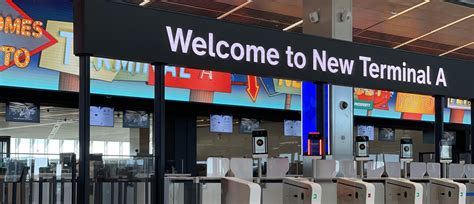
Further complicating the situation are construction activities at Newark Liberty International Airport. While necessary for future capacity expansion, these works have added another layer of disruption, reducing available gates, narrowing taxiways, and contributing to congestion.
In a public advisory issued last Thursday, the airport warned passengers of anticipated delays due to both staffing and construction-related congestion. The synergy of these two factors has proven overwhelming for the current infrastructure.
Passengers Left in Limbo
As with any operational crisis, the brunt of the impact has been borne by passengers. On the Saturday of United’s cutbacks:
- Dozens of travelers reported being stranded for hours on tarmacs and in terminals.
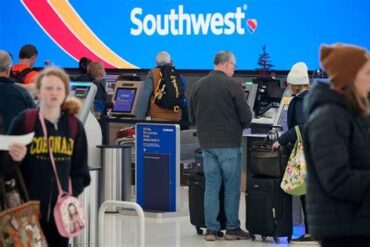
- Customer service desks were overrun with rebooking requests.
- Several passengers described their experience as “chaotic and disorganized,” citing a lack of real-time updates and limited staff support.
Social media posts amplified the narrative, with photos and videos of crowded terminals, luggage pile-ups, and frustrated families circulating widely.
Looking Ahead: A Call for Systemic Change
United’s decision to pull back at Newark is both a warning and a rallying cry. It signals the urgent need for systemic reform within the FAA and broader U.S. aviation infrastructure. Temporary fixes—like tweaking schedules or issuing political soundbites—can no longer sustain a system that is dangerously close to collapse.
As United recalibrates its operations, and as passengers demand better service and accountability, the spotlight is now firmly on the FAA, NATCA, and federal policymakers. A failure to act decisively could result in wider disruptions across the national airspace, greater financial losses for carriers, and declining trust among travelers.
This is not merely a Newark problem. It is a national aviation emergency in slow motion. And unless aggressive reforms are enacted now, the skies above America’s airports may soon become even more unpredictable.
Conclusion: A Pivotal Crossroads for U.S. Aviation
The events unfolding at Newark serve as a microcosm of the broader dysfunction within the nation’s aviation ecosystem. With its decision to slash 35 daily flights, United Airlines has taken a bold yet necessary step to preserve operational integrity and passenger trust. But the core problems—outdated systems, labor shortages, and piecemeal reforms—remain unresolved.
This moment demands more than incremental change. It calls for a comprehensive modernization of air traffic control, infrastructure investment, and workforce stabilization. Anything less would be a disservice not only to carriers like United but to the millions of passengers who rely on a functioning, reliable, and safe air travel system.
The turbulence may be in the skies, but the storm is clearly on the ground.