New York’s airspace is facing a full-scale operational crisis as dangerous thunderstorms continue to batter the region, halting operations at JFK, LaGuardia, and Newark International Airports. Major U.S. carriers—American Airlines, Delta Air Lines, and United Airlines—are under pressure as they juggle emergency responses, rerouting strategies, and customer chaos during what could become one of the most turbulent weather disruptions in recent memory.
Dangerous Storms Upend NYC Air Travel
Severe thunderstorms rolled into the New York City metro area early Tuesday, unleashing a combination of torrential rainfall, lightning, and low visibility that forced the Federal Aviation Administration (FAA) to impose multiple ground stops. LaGuardia and Newark Liberty were among the first to be frozen in place, with operations at JFK also stalling under the weather’s fury.
This is not just another rain delay. This is a system-wide storm that has turned three of the busiest airports in the U.S. into scenes of confusion and delay, affecting both domestic and international air traffic.
LaGuardia: The Epicenter of Morning Chaos
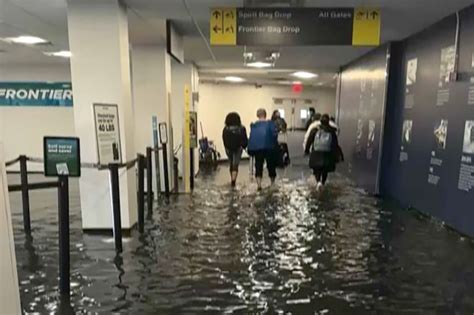
At LaGuardia Airport (LGA), conditions deteriorated swiftly. Rain poured across terminals while ramp crews were grounded due to lightning risk. Average departure delays surged past 50 minutes, and ripple effects quickly spread across connecting hubs.
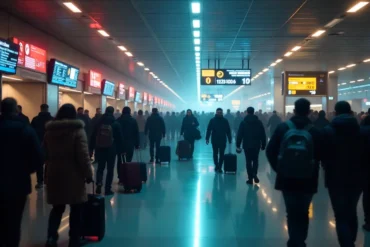
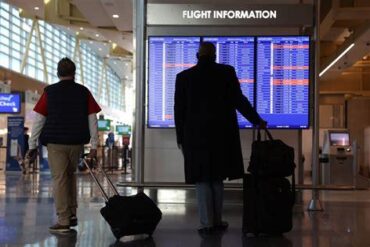
Travelers were stranded inside terminals, many without clear information about rebookings or gate changes. Airlines tried to juggle departure windows between storm cells, but the unpredictability of lightning strikes made scheduling nearly impossible.
Runways became saturated, pushing many aircraft into indefinite holding patterns. Passengers missed connections. Terminals swelled beyond capacity. And the scene turned from chaotic to borderline unmanageable.
JFK and Newark Struggle to Stabilize
Though JFK International (JFK) and Newark Liberty International (EWR) experienced less dramatic morning delays, both airports were placed under ground stops by mid-morning. By the afternoon, the FAA lifted formal restrictions, but delays and operational instability continued into the evening hours.
Meteorologists warned that weather would remain volatile until at least 10 p.m., prompting airlines to brace for extended disruption windows. United Airlines’ Newark operations were hit especially hard due to a tight afternoon schedule with incoming international traffic.
Airlines Respond: American, Delta, United Under Pressure
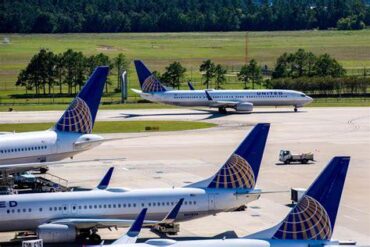
American Airlines took swift action early in the day, rerouting flights through Philadelphia and Boston where weather remained marginally better. Delta began consolidating departures, grouping nearby flights onto larger aircraft. United Airlines, Newark’s largest tenant, issued emergency waivers and activated contingency crew schedules to avoid cascading staffing shortages.
Each airline relied heavily on real-time analytics and meteorological data, but even the best predictive systems couldn’t keep up with the fast-changing conditions. The sheer concentration of affected routes through NYC meant even minor changes spiraled into national delays.
American’s JFK-based long-haul routes to Europe and South America saw heavy cancellations. Delta rerouted several transcontinental flights through Atlanta. United’s East Coast shuttles to Washington, Boston, and Chicago O’Hare were pared down aggressively.
Emergency Measures and Ground Operations Disrupted
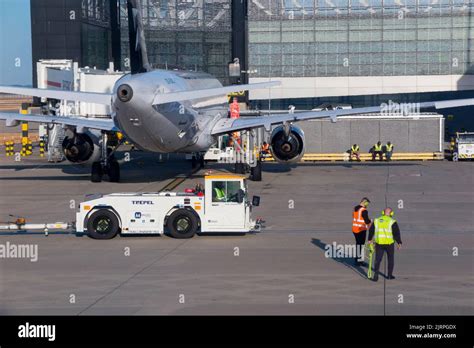
Behind the scenes, airport emergency crews raced to maintain infrastructure. Flood-prone taxiways at LaGuardia were closed repeatedly. Ramp closures due to electrical storms slowed luggage handling. Fueling operations were delayed, contributing to extended turnaround times.
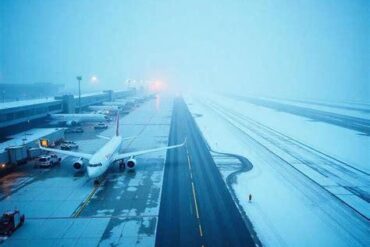
Crews also had to mitigate electrical and water pooling issues, especially near older terminal areas at JFK and Newark. Safety took priority: no aircraft could push back without clearance from both ramp control and weather command. The result? Dozens of aircraft lined up idle across every available tarmac inch.
System-Wide Ripple Effects Across the U.S.
Airspace over the New York-New Jersey metro is not just a local concern. These airports are central nodes in nearly every U.S. airline network. Delays in New York lead to missed crews in Dallas, delayed landings in Denver, and late departures in Los Angeles. The result is a nationwide slowdown.
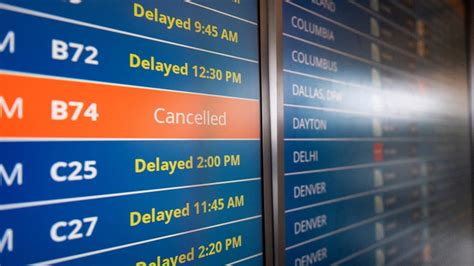
By Tuesday evening, at least 1,400 flights were delayed and more than 300 canceled, with Atlanta Hartsfield-Jackson, Charlotte Douglas, and Chicago Midway showing signs of network stress. American’s Texas operations and Delta’s southern network saw rerouted flights, while United’s West Coast evening push was delayed due to lack of inbound aircraft.
The human cost was immediately visible: frustrated travelers stranded far from home, gate agents under stress, and airport hotels rapidly overbooked.
Hotels, Rideshares, Transit Buckle Under Pressure
Hotels around JFK, LGA, and EWR saw booking platforms light up with emergency reservations. By 5 p.m., room availability was effectively zero within a 5-mile radius of LaGuardia. Rideshare platforms, including Uber and Lyft, surged in both pricing and wait times, with reports of 60-minute delays and surge pricing doubling typical rates.
Some passengers opted for Amtrak or regional buses to reach alternate airports or cities. New York’s Penn Station saw heightened activity as stranded travelers tried to make it to Philadelphia or Washington, D.C., to board alternate flights.
Industry Outlook: More Storms, Less Margin for Error
This event is not an isolated anomaly—it may be a preview of things to come. The FAA has issued warnings for increased storm activity throughout Summer 2025, driven by warmer oceans and unstable jet streams. Airlines must prepare for a more volatile operating environment.
While modern airlines have improved real-time decision-making with AI and satellite tracking, extreme weather still holds the upper hand. As the NYC situation proved, no algorithm can overcome the physical reality of a flooded runway or a lightning-streaked tarmac.
The aviation industry’s margin for error is shrinking, especially with record-high passenger volumes post-COVID. The combination of tight crew schedules, reduced backup aircraft, and record demand means that even short disruptions become systemic.
Advice for Travelers Caught in the Storm
For those flying in or out of the Northeast, vigilance is key. Use airline apps, push notifications, and FAA status alerts. Never assume a flight is operating just because it appears “on time.”
Pack critical items—chargers, medications, snacks—into your carry-on. Always allow extra time for security lines, rebooking desks, and gate changes. And consider trip insurance or refundable fares during the storm-prone summer season.
Airlines are offering waivers and no-change-fee policies, but availability dwindles quickly in major disruptions. Act early. Rebook smart.
Closing Thoughts: Beyond Delays, a Test of Human Resilience
This isn’t just a test of systems—it’s a test of people. Airport workers braved flooded ramps. Gate agents spent hours rebooking hundreds. Pilots waited patiently for pushback amid static-filled radios. Passengers shared outlets, snacks, and kindness amid growing frustration.
The weather will clear. The runways will dry. But the lessons learned—and the weariness felt—will linger.