The ability to move massive quantities of equipment, vehicles, and personnel across continents within hours is one of the defining advantages of modern military power. At the heart of this capability lies a rare class of aircraft—heavy airlifters engineered for extreme payload capacity. These machines are not just large; they are meticulously designed to balance structural strength, fuel efficiency, range, and operational flexibility under immense weight.
Payload capacity is more than a number on a specification sheet. It determines how many armored vehicles can be deployed in a single sortie, how quickly humanitarian aid reaches disaster zones, and how effectively a military can sustain operations far from home. The aircraft featured here represent the pinnacle of that capability—each one a flying logistics backbone.
While the legendary Antonov An-225 once dominated this category, its loss reshaped the hierarchy. Today, a new generation of heavy lifters and enduring workhorses continues to carry the weight—literally—of global mobility.
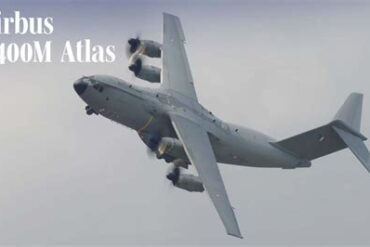
Airbus A400M Atlas: The Versatile Heavy Lifter Bridging Tactical and Strategic Roles
The Airbus A400M Atlas occupies a unique position in the world of military transport. It doesn’t aim to outmatch the heaviest lifters in raw payload, but instead delivers a carefully balanced combination of capacity, versatility, and operational flexibility. With a maximum payload of 81,571 pounds (37 tonnes), it fills the critical gap between smaller tactical transports and massive strategic airlifters.
Developed as Europe’s answer to evolving logistical needs, the A400M was designed to operate in environments where larger jets simply cannot. Its turboprop configuration allows it to take off and land on short, unprepared runways, making it invaluable for forward-deployed operations. This capability is not just a convenience—it’s often the difference between mission success and failure in remote or conflict-heavy regions.
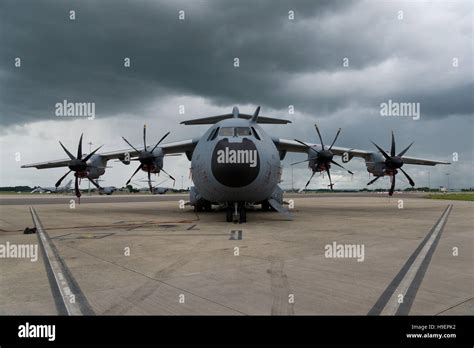
Beyond cargo transport, the A400M’s adaptability stands out. It can be rapidly reconfigured for medical evacuation, troop transport, aerial refueling, and even firefighting missions. Looking ahead, Airbus is pushing boundaries further with plans to transform the Atlas into a drone mothership, capable of deploying swarms of unmanned systems mid-flight. That’s not just evolution—it’s a glimpse into the future of networked aerial warfare.
Ilyushin Il-76: The Soviet-Era Workhorse Still Carrying the Load
Few aircraft have demonstrated longevity and resilience quite like the Ilyushin Il-76. Originally introduced during the Soviet era, this aircraft remains a cornerstone of strategic airlift operations across multiple countries. In its modernized Il-76MD-90A variant, it boasts a payload capacity of up to 132,000 pounds (60 tonnes)—a significant leap from earlier versions.
What makes the Il-76 remarkable is not just its capacity, but its global footprint. It serves in military and civilian roles alike, transporting everything from heavy machinery to humanitarian aid. Its rugged design allows it to operate in extreme climates and austere airfields, reinforcing its reputation as a dependable logistics platform.
However, the aircraft’s continued relevance hasn’t come without challenges. Recent years have seen operational losses and aging fleet issues, prompting efforts to ramp up production of newer variants. Despite these hurdles, the Il-76 remains deeply embedded in global airlift operations, proving that good engineering can outlast decades of geopolitical change.
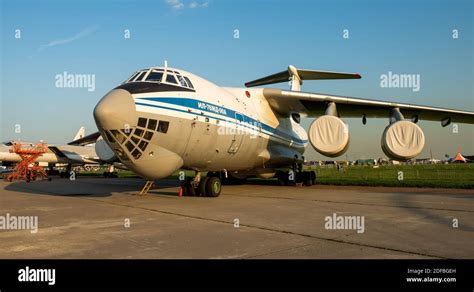
Its enduring presence is a testament to a design philosophy focused on function over finesse. While newer aircraft may boast advanced avionics and efficiency improvements, the Il-76 continues to deliver where it matters most—moving heavy loads reliably, under pressure, and across vast distances.
Xi’an Y-20 Kunpeng: China’s Strategic Airlift Powerhouse
The Xi’an Y-20 Kunpeng represents a turning point in China’s military aviation ambitions. With a payload capacity of 145,505 pounds (66 tonnes), it stands as the country’s first truly modern heavy transport aircraft, designed to rival Western counterparts like the C-17.
Introduced in 2016, the Y-20 symbolizes China’s determination to achieve self-reliance in aerospace technology. Early models relied on foreign engines, but newer variants are equipped with indigenous WS-20 turbofan engines, significantly improving performance and efficiency. This transition marks a critical step toward independence from external suppliers.
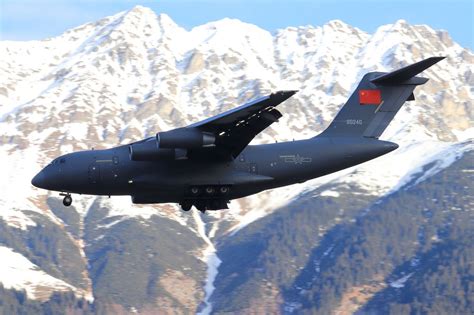
The Y-20 is more than a cargo hauler. It serves as a multi-role platform, with variants being developed for aerial refueling and airborne early warning and control (AWACS). This adaptability enhances China’s ability to project power and maintain situational awareness across vast regions.
Its growing fleet—estimated at around 100 aircraft—underscores its importance. As production continues, the Y-20 is set to become a central pillar of China’s global logistics and rapid deployment capabilities. In practical terms, that means faster troop movements, more efficient disaster response, and a stronger strategic presence beyond its borders.
Boeing C-17 Globemaster III: The Backbone of Western Airlift Operations
If there’s one aircraft that defines modern military logistics, it’s the Boeing C-17 Globemaster III. With a payload capacity of 170,900 pounds (over 77 tonnes), the C-17 combines heavy-lift capability with unmatched operational flexibility—a combination that has made it indispensable to multiple air forces worldwide.
What sets the C-17 apart is its ability to operate from short and austere airfields while carrying substantial loads. This dual capability allows it to deliver critical equipment directly into combat zones or disaster-stricken areas without relying on large, well-developed airports.
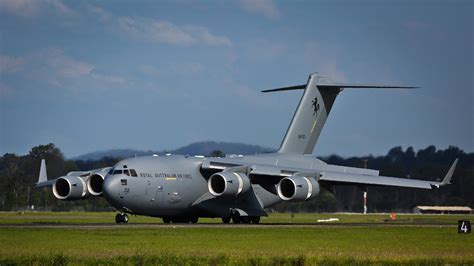
The aircraft’s design reflects a deep understanding of real-world operational demands. It can transport main battle tanks, helicopters, and multiple armored vehicles in a single mission. Its advanced avionics and powerful engines enable precise handling, even under challenging conditions.
Despite the end of production in 2015, the C-17 remains highly sought after. Discussions about restarting production highlight its enduring relevance. For many nations, it represents the gold standard in strategic airlift, balancing capacity, reliability, and versatility in a way few aircraft can match.
Lockheed C-5M Super Galaxy: America’s Largest Military Transport Aircraft
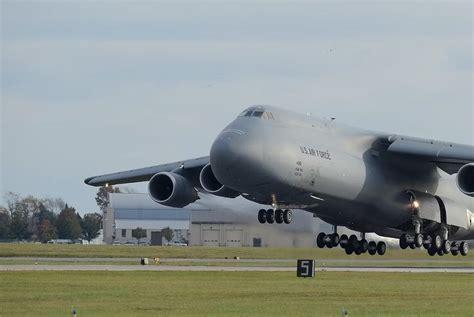
The Lockheed C-5M Super Galaxy is a study in sheer scale and capability. With a staggering payload capacity of up to 285,000 pounds (129 tonnes), it stands as the largest military transport aircraft in U.S. service. This is not just an aircraft—it’s a flying warehouse capable of intercontinental reach.
Originally developed in the 1960s, the C-5 faced early challenges, particularly with wing structural issues. However, subsequent upgrades transformed it into one of the most capable airlifters ever built. The modern C-5M variant features new engines, improved avionics, and enhanced reliability, dramatically increasing its operational effectiveness.
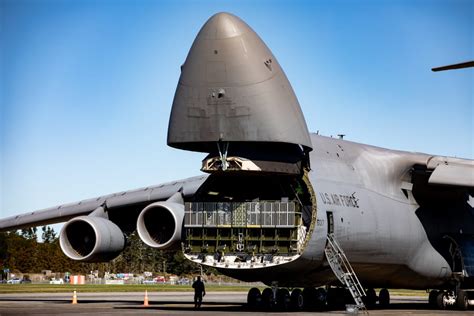
One of its defining features is the nose-opening cargo door, allowing vehicles to be driven directly into the aircraft. Combined with its enormous internal volume, this enables the transport of oversized cargo that simply won’t fit in other aircraft.
The C-5M excels in missions requiring maximum payload over long distances, often serving as the backbone of large-scale deployments. While it lacks the short-field capabilities of the C-17, its unmatched capacity ensures that when the mission demands moving the heaviest loads possible, the Super Galaxy is the aircraft of choice.
Antonov An-124 Ruslan: The Undisputed Payload Champion in Service
With the absence of the An-225, the Antonov An-124 Ruslan now holds the title of the largest operational military transport aircraft by payload capacity. Capable of carrying an astonishing 330,000 pounds (150 tonnes), it represents the pinnacle of heavy airlift engineering.
Developed during the final years of the Soviet Union, the An-124 was designed for missions that demanded extreme lifting capability. Its massive cargo hold, reinforced structure, and powerful engines allow it to transport industrial-scale equipment, military hardware, and oversized cargo across continents.
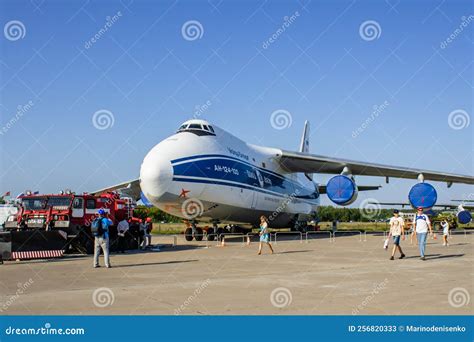
The aircraft has set numerous world records, including lifting extraordinarily heavy payloads to significant altitudes. These achievements are not just technical milestones—they demonstrate the aircraft’s ability to perform under conditions that would challenge any other platform.
Today, the An-124 continues to serve in both military and commercial roles, often stepping in for missions that no other aircraft can handle. Despite geopolitical complications affecting its operators, its unique capabilities ensure it remains irreplaceable.
Its enduring relevance comes down to a simple fact: when cargo exceeds the limits of every other aircraft, the An-124 is often the only viable solution.
Why Payload Capacity Defines Modern Military Power
The aircraft on this list are more than engineering achievements—they are strategic assets that shape global military capability. High payload capacity translates directly into operational efficiency. Fewer flights are needed to move the same amount of cargo, reducing cost, time, and logistical complexity.
But capacity alone isn’t enough. The most effective airlifters combine payload with range, adaptability, and access to challenging environments. That’s why aircraft like the C-17 and A400M remain so valuable despite not topping the payload charts—they deliver capability where it’s actually needed.
At the extreme end, aircraft like the C-5M and An-124 enable missions that would otherwise be impossible, from transporting entire military units to delivering massive humanitarian aid shipments in a single sortie. These capabilities don’t just support operations—they enable them at a strategic level.
As military needs evolve, so too will these aircraft. Emerging technologies, from autonomous systems to advanced propulsion, are already beginning to reshape the future of airlift. Yet one thing remains constant: the demand for moving more, faster, and farther.
And in that relentless pursuit, these giants of the sky continue to carry the world—one heavy load at a time.