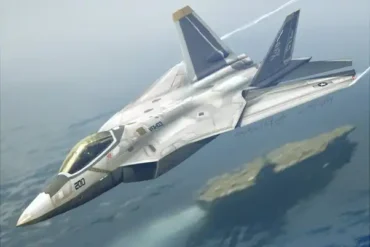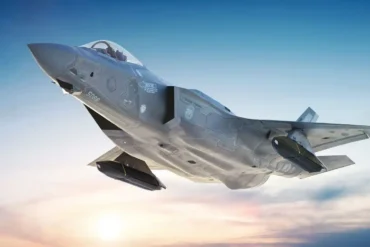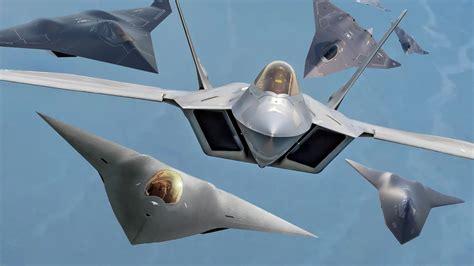
The F-22 Raptor, developed by Lockheed Martin, stands as one of the most advanced air superiority fighters ever constructed. Introduced into service in 2005, this fifth-generation stealth jet brought unmatched maneuverability, speed, and sensor fusion capabilities to the U.S. Air Force. Yet, despite its unrivaled air combat dominance, the U.S. Navy never adopted the F-22 into its carrier air wings. The reasons are not merely bureaucratic or budgetary—they are deeply rooted in engineering, logistics, and mission-specific doctrine.
The Raptor’s Design Is Incompatible With Naval Aviation
The most immediate issue with the F-22 Raptor operating from aircraft carriers is its physical unsuitability for carrier operations. Naval aviation presents a unique set of mechanical stresses that land-based aircraft are not engineered to endure. The F-22, with an empty weight of over 43,000 pounds, was designed exclusively for use on long, paved runways, not the compact, heaving flight decks of nuclear-powered carriers.
Carrier Landings: A Structural Nightmare
Landing an aircraft on a carrier is not just a matter of shortening the runway. It’s a brutal, high-impact procedure that places extreme stress on an aircraft’s landing gear, airframe, and tailhook systems. The F-22’s landing gear, optimized for airbases, lacks the reinforcement necessary to withstand carrier landings.
The arrested landing method—where jets catch a steel cable to stop abruptly—would place tremendous shock on the F-22’s undercarriage. Attempting to land a Raptor on a pitching deck at sea would risk catastrophic structural failure.
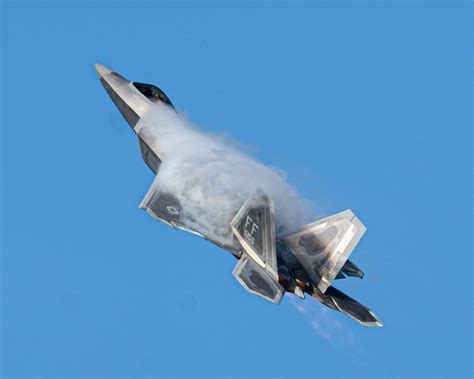
Catapult Launch: The Missing Reinforcement
Similarly, carrier takeoffs require a steam or electromagnetic catapult to launch jets within a few hundred feet. The F-22 was never built with this in mind. Its nose gear and forward fuselage lack the internal reinforcement necessary to absorb the acceleration forces during launch. Attempting to use an F-22 on a catapult system would compromise both pilot safety and airframe integrity.
What Modifications Would Be Needed—and Why They’re Unrealistic
In theory, the F-22 could be modified for carrier use, but doing so would effectively mean rebuilding the aircraft from scratch. These aren’t minor tweaks—they’re invasive, performance-altering reworks that would defy the original stealth and aerodynamic profile of the Raptor.
Airframe Redesign
To handle carrier landings and catapult launches, engineers would need to reinforce the entire airframe: from wings to landing gear to tailhook systems. This would also require a reduction in overall weight, possibly eliminating key stealth components or avionics just to meet carrier weight thresholds.
Foldable Wings for Deck Efficiency
Carrier-based aircraft often feature foldable wings to maximize storage on deck. The F-22, built for air dominance rather than storage efficiency, lacks this feature. Incorporating folding wings would require massive structural alterations, further complicating any retrofitting process.
New Training Regimes for Pilots
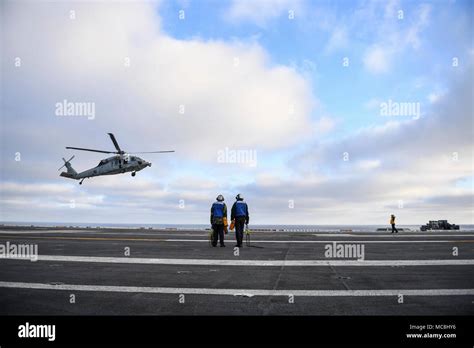
Another rarely discussed issue is pilot training. Navy pilots undergo rigorous instruction in carrier landings, a skill that differs significantly from land-based approaches. No current F-22 pilots are qualified for carrier ops. Introducing the Raptor to the Navy would necessitate entirely new training pipelines, simulators, and curricula.
Cost vs. Benefit Analysis
At a unit cost north of $150 million, the F-22 is already among the most expensive fighter jets ever made. To engineer a carrier-capable variant would push this cost even higher. Given that only 187 Raptors were ever built—and production lines have since closed—the logistics and economics simply don’t support such a drastic overhaul for a limited number of airframes.
The F-35C: Designed for the Sea from Day One
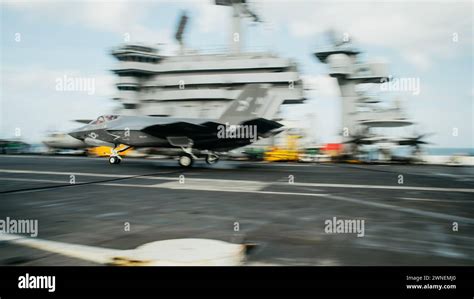
Instead of reworking the F-22, the U.S. Navy looked toward a purpose-built solution: the F-35C Lightning II. Also developed by Lockheed Martin, the F-35C is a carrier-optimized variant of the larger Joint Strike Fighter program, designed from its inception to meet the demands of naval aviation.
The F-35C features:
- Reinforced landing gear and tailhook system
- Larger wingspan and foldable wingtips for improved low-speed control and storage efficiency
- Enhanced structural durability for catapult launches and arrested landings
- A robust sensor suite with network-centric warfare capabilities
Unlike the Raptor, the F-35C can land on and take off from carriers without any compromise in safety or structural integrity.
Why the Raptor Still Matters—But Only in the Air Force
Although the F-22 never made it to sea, its combat legacy is unassailable. It remains the world’s premier air superiority fighter, with supercruise capabilities, unparalleled stealth performance, and razor-sharp agility. Its role is to secure air dominance, sweep enemy fighters from the sky, and neutralize threats before they’re even detected.
In the broader U.S. defense ecosystem, the F-22 fills a different niche than the multi-role, carrier-capable F-35C. Where the F-35C offers mission flexibility—ground attack, reconnaissance, and air superiority—the F-22 excels in pure air-to-air supremacy. That distinction ensures the Raptor continues to play a key role in strategic air operations, but exclusively under Air Force command.
Strategic Redundancy and Fleet Planning
Adding the F-22 to Navy operations would not only be expensive and technically difficult, but it would also introduce unnecessary redundancy. The Navy’s existing F/A-18 Super Hornets and F-35Cs already fulfill mission profiles relevant to carrier operations. Introducing the F-22 would add logistical strain with no corresponding tactical benefit.
Moreover, with the F-22 program having ended in 2012 and the Next Generation Air Dominance (NGAD) initiative underway, military focus has shifted to newer, sixth-generation concepts. The Navy and Air Force are both exploring complementary but distinct aircraft tailored to their operational domains. Any investment into navalizing the F-22 would be a step backward in this fast-evolving defense landscape.
Conclusion: Built for Different Battles
In the end, the answer is both straightforward and deeply nuanced. The F-22 was never meant for life at sea. Its design priorities, operational doctrine, and engineering architecture align with land-based air superiority missions, not the chaotic, space-constrained world of aircraft carriers. The cost and complexity of converting the Raptor for naval use simply don’t justify the effort—especially when purpose-built solutions like the F-35C already exist.
The F-22 Raptor is a legendary aircraft, a technological marvel that will remain iconic in the annals of U.S. Air Force history. But when it comes to naval aviation, the Raptor remains firmly grounded.