The 24-hour military time format is one of the most recognizable conventions in armed forces worldwide. Known for its clarity, precision, and universal applicability, this method of timekeeping eliminates ambiguity, streamlining communication in high-stakes environments where every second counts. Despite its now-ubiquitous status, the path to global military adoption was not immediate nor evenly paced.
Time, as abstract as it may be philosophically, becomes profoundly real and consequential in military contexts. Coordinating operations across different time zones, scheduling attacks, planning logistics, and preventing errors all demand a system that prevents misinterpretation. The standard 12-hour clock, dependent on “a.m.” and “p.m.”, leaves too much room for miscommunication—something armies cannot afford.
The Origins of 24-Hour Time: From Railroads to Regiments
The seeds of 24-hour timekeeping were sown not in the trenches but on the tracks. In 1886, the Canadian Pacific Railway began using the 24-hour clock to regulate its train schedules. This move wasn’t just practical—it was revolutionary. Trains, like armies, operate on unforgiving schedules. As this system proved effective, other countries began considering broader applications, particularly in industries where round-the-clock coordination was essential.
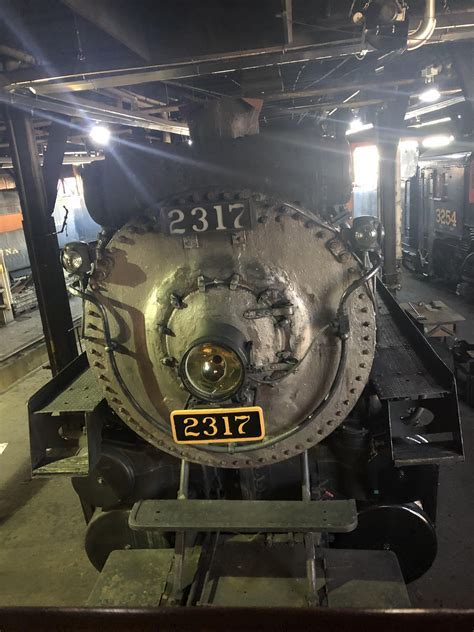
This railway-driven innovation caught the attention of military planners. The advantages were undeniable: removing the need to specify morning or evening, simplifying written orders, and aligning with international standards that were gaining traction. Still, militaries did not switch overnight. Adoption came in phases, varying by country and branch.
Early Adopters Among Military Forces
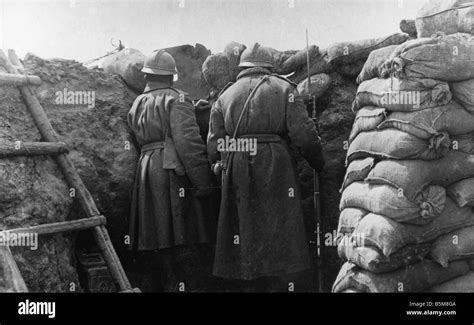
The French Army was among the first to embrace the change, switching to the 24-hour clock in 1909. The British Royal Navy followed in 1915, driven in part by the complexity of naval operations spanning oceans and time zones. Canada’s military adopted the format in 1917, and by 1918, even the British Army had transitioned.
The U.S. military, a global force known for its precision, surprisingly lagged behind. The U.S. Navy led the charge domestically, implementing military time in 1920. Yet, the U.S. Army didn’t officially make the switch until 0400 hours on July 1, 1942—right in the midst of World War II. This delay highlights how entrenched civil norms like 12-hour clocks can be, even in institutions known for their rigor.
The U.S. Air Force, formed as a separate branch in 1947, naturally adopted military time from its inception. Given its high-speed, time-sensitive operations, using anything less than a 24-hour system would have been unthinkable.
Why Military Time Became a Strategic Necessity
Military operations hinge on clarity and synchronization. When forces are deployed across continents, even a small timing error can lead to catastrophic results. The 24-hour clock removes the uncertainty of whether “6:00” means morning or evening—there is only one 0600 and one 1800 in military time.
Moreover, the 24-hour system dovetails perfectly with global time zone coordination. Initially grounded in Greenwich Mean Time (GMT), modern military timekeeping has shifted to Coordinated Universal Time (UTC). UTC is driven not by the rotation of the Earth but by atomic clock standards, offering a level of accuracy required for missile launches, satellite operations, and joint-force synchronization.
NATO Phonetics and Time Zone Designators
Beyond the clock itself, military time incorporates an additional layer of structure: time zone identifiers using the NATO phonetic alphabet. These letter-based designations assign each time zone a unique character:
- “Z” (Zulu) designates UTC+00:00 or GMT
- “A” (Alpha) designates UTC+01:00, covering regions like Central Europe
- “M” (Mike) stands for UTC+12, which includes Auckland, New Zealand
- “N” (November) through “Y” (Yankee) represent UTC-1 to UTC-12
- “J” (Juliet) typically refers to the local time zone
So when a military order references “1500Z“, it means the action is scheduled for 3:00 p.m. Zulu time, or 3 p.m. UTC.
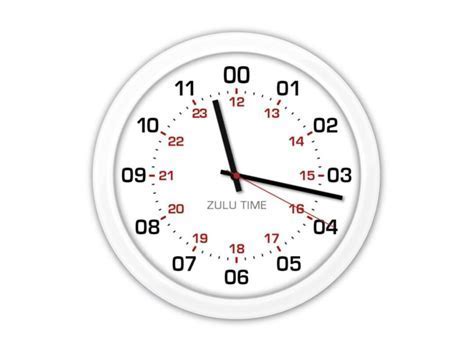
This system is also adopted by commercial pilots, especially for transcontinental flights, and continues to influence aviation and emergency response protocols globally. The linguistic clarity of saying “fifteen hundred Zulu” surpasses any civilian time format in high-stress environments.
From Concept to Code: Military Time in Practice
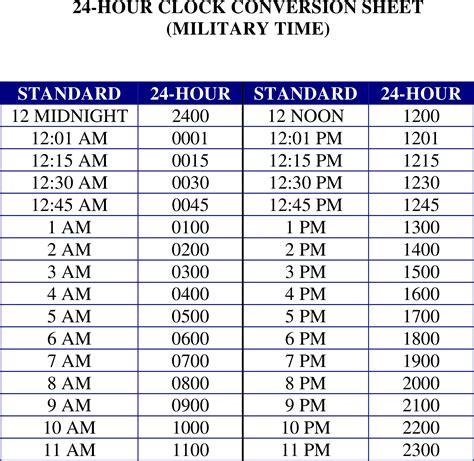
Military time is expressed using four digits:
- 0000 represents 12:00 a.m. (midnight)
- 1200 is noon
- 2359 is 11:59 p.m., the final minute of the day
There are no colons used, unlike civilian 24-hour time formats (e.g., 14:30). This absence of punctuation ensures consistency in written orders and avoids misreading. Every hour is represented uniquely, from 0100 (1 a.m.) to 2300 (11 p.m.), ensuring there’s no confusion about whether an order is for day or night.
Civilian Crossovers and Cultural Influence
As militaries embraced 24-hour time, so did many related institutions—emergency services, aviation, shipping, and telecommunications. These industries also operate around the clock and can’t afford miscommunication.
In some countries, such as Germany, France, and much of continental Europe, civilian populations also routinely use 24-hour time in daily life. Meanwhile, countries like the United States, Canada, and the United Kingdom still cling to 12-hour clocks in casual usage, despite their military branches using the 24-hour format exclusively.
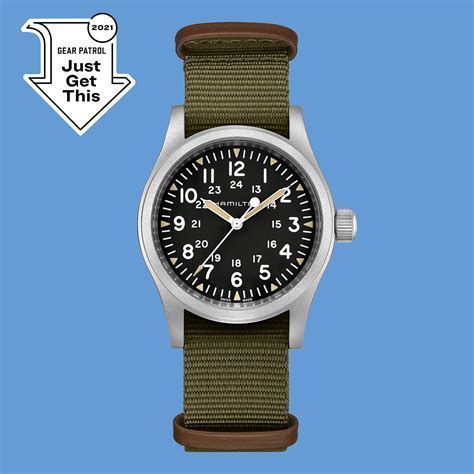
The result is a cultural split: civilians may hear “6:00 p.m.” while the military hears “1800.” This distinction sometimes causes humorous misunderstandings but also underlines the importance of standardized communication in operational fields.
Precision in the Atomic Age: The Role of UTC
Timekeeping has grown even more precise with the advent of atomic clocks. Coordinated Universal Time (UTC), established through these atomic standards, now guides everything from ballistic missile launches to global positioning systems (GPS). Each leap second added to synchronize Earth’s irregular rotation with atomic time is reflected instantly in military systems worldwide.
Modern command centers rely heavily on networked coordination with UTC at their core. In this context, the 24-hour clock is more than a convenience—it’s an integral part of the machinery that ensures mission success, whether it’s coordinating multi-nation NATO exercises or timing an orbital launch to the second.
Conclusion: A System Forged by Necessity, Sustained by Clarity
The military’s adoption of the 24-hour time format was not born out of convenience but necessity. In environments where miscommunication can cost lives, the need for precision, universality, and clarity becomes paramount. From the railways of Canada in the 1880s to modern satellite-guided warfare, the 24-hour clock has proven itself as a tool of discipline and reliability.
What began as a solution to train scheduling conflicts has become a global standard for military precision. Today, every “zero four hundred hours” uttered in a command tent or cockpit echoes over a century of strategic evolution—one that reshaped the way we count the hours that define victory, survival, and history itself.