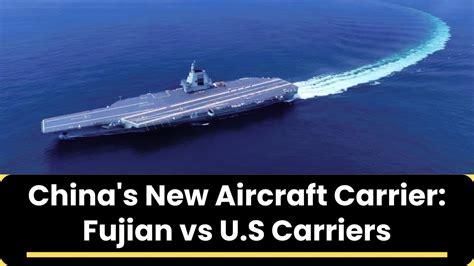
China’s rise as a maritime superpower has reached a pivotal moment with the unveiling of the Fujian aircraft carrier, a technological marvel that not only dwarfs its predecessors but also symbolizes Beijing’s strategic pivot toward global naval dominance. This behemoth vessel, currently undergoing sea trials in the Yellow Sea, is poised to redefine regional military dynamics and significantly amplify China’s ability to project power far beyond its shores.
A Colossus Emerges: The Scale and Scope of Fujian
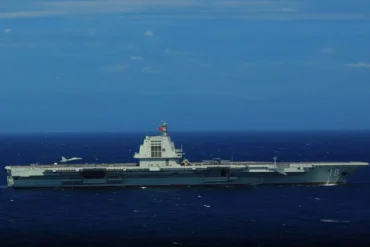
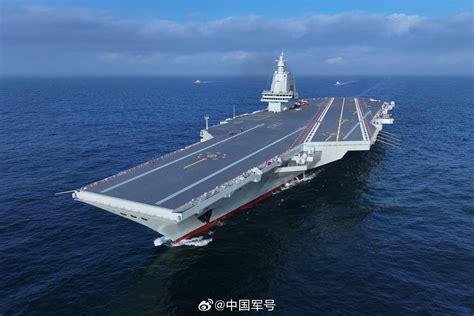
The Fujian (Type 003) carrier is an 80,000-ton giant, stretching approximately 1,036 feet in length and ranking as the largest conventionally powered aircraft carrier in the world. Unlike China’s previous carriers—the retrofitted Liaoning and domestically built Shandong—Fujian is a fully indigenous design, showcasing the country’s homegrown technological capability.
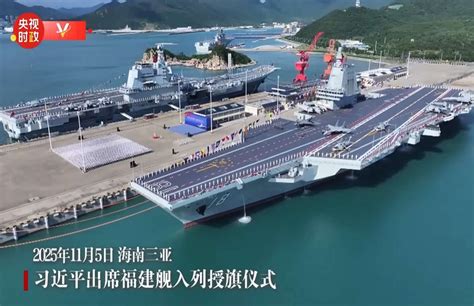
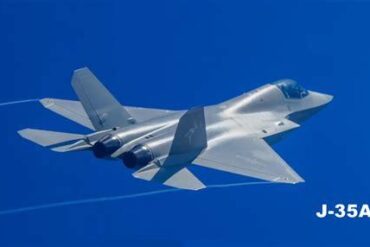
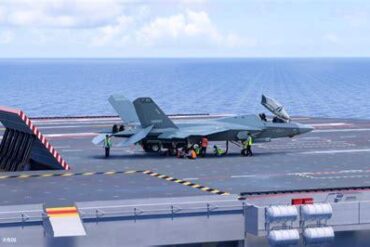
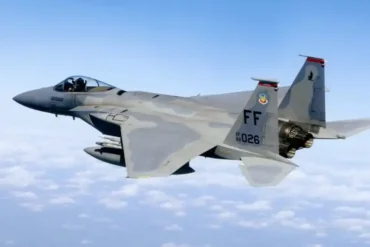
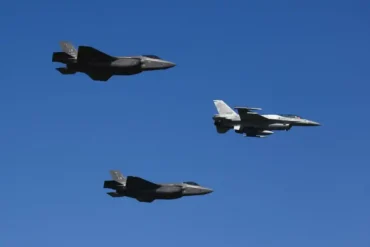
Its sheer scale enables it to host a full suite of fixed-wing and rotary-wing aircraft, with an estimated air wing of up to 60 aircraft. This includes the formidable J-15 Flying Shark, the stealthier J-35 fifth-generation fighters, and the KJ-600 early warning aircraft, an essential component for airborne battle management. This sophisticated mix signals a clear evolution from the ski-jump ramps of Liaoning and Shandong to the more capable flat-deck CATOBAR (Catapult Assisted Take-Off But Arrested Recovery) configuration.
Electromagnetic Catapults: China’s Leap Toward Carrier Parity
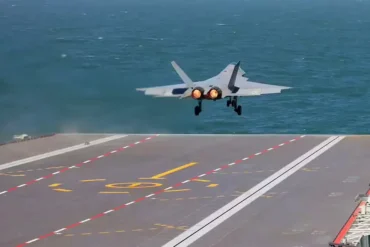
What sets the Fujian apart from its predecessors—and almost every carrier outside the United States—is its electromagnetic aircraft launch system (EMALS). Until now, only the USS Gerald R. Ford featured this advanced launch technology. The inclusion of EMALS in the Fujian allows for:
- Faster aircraft launch rates
- Reduced stress on airframes
- Compatibility with heavier or more fragile aircraft
These features drastically increase the carrier’s operational tempo, with analysts suggesting the Fujian could be China’s first with true deck load strike capability—an ability to launch large volumes of aircraft in rapid succession.
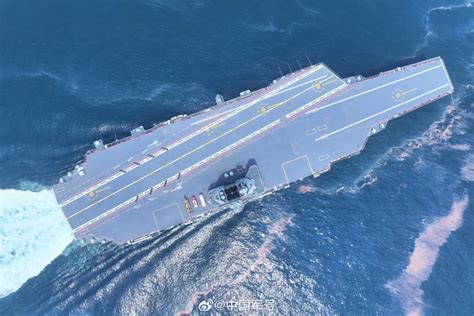
Such a capability enables the execution of Alpha strikes, massive multi-type aircraft operations involving coordinated sorties of fighters, support helicopters, and early warning aircraft. This evolution is central to China’s first-mover strike capability, allowing the PLA Navy to initiate conflict with overwhelming aerial force.
Armament and Defense: A Fortress at Sea
While details on Fujian’s onboard weaponry remain limited, satellite imagery and official footage suggest a robust close-range defense suite:
- At least four close-in weapons systems (CIWS)
- Four point-defense missile launchers, similar in function to the U.S. SeaRAM system
These systems provide essential protection against inbound missiles and low-flying aircraft, enabling the Fujian to operate independently or as the centerpiece of a larger carrier strike group. Its vast flight deck, sprawling hangars, and advanced radar arrays elevate it beyond a simple show of force to a fully realized command and control hub in contested zones.
A Strategic Pivot: From Coastal Defense to Global Presence
China’s rapid naval expansion is not simply a numbers game. While it now boasts the world’s largest navy by vessel count, its ambitions have grown bolder and more far-reaching. The Fujian is the clearest manifestation of that ambition—designed not just for deterrence, but for sustained power projection.
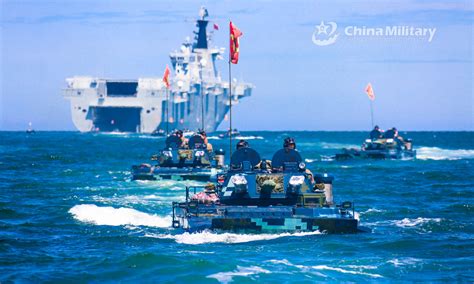
Until recently, the PLAN’s operations were largely confined to the first island chain, focusing on regional conflicts, particularly around Taiwan, the South China Sea, and East China Sea. However, the introduction of Fujian reflects a shift toward blue-water operations. This transition is supported by the construction of logistics vessels like the Fuyu-class fast combat support ship, and the Dakai- and Dafeng-class submarine tenders, which extend the PLAN’s reach significantly.
From the Drawing Board to the Ocean: Fujian’s Journey
The first hints of the Fujian project emerged in 2017, but it wasn’t until mid-2022 that the ship was officially launched at Shanghai’s Jiangnan Shipyard. Since then, it has undergone a series of intense sea trials in the Yellow Sea, fine-tuning its propulsion, aircraft handling systems, and onboard electronics.
As of May 2025, the Fujian had completed eight rounds of sea trials, with reports indicating high readiness and impressive performance metrics. The PLAN expects the ship to enter full operational service by the end of 2025, becoming a centerpiece of future joint exercises and potentially participating in extended missions across the Pacific and Indian Oceans.
Shadow of the Supercarriers: A Prelude to Nuclear Ambitions
The Fujian is not just an end, but a stepping stone. Experts believe its construction and operation provide China with critical experience in managing large-deck aircraft carriers—a prerequisite for what’s next: a nuclear-powered supercarrier.
Malcolm Davis of the Australian Strategic Policy Institute emphasizes this trajectory, noting that “Fujian is China’s big-deck dress rehearsal.” Learning from the challenges of managing a carrier of this scale—including maintenance logistics, crew coordination, and air wing integration—will enable China to design and field a nuclear vessel that can match or even surpass U.S. Nimitz- or Ford-class carriers.
Such a vessel would grant the PLAN nearly unlimited operational endurance, removing the need for refueling and further pushing the boundaries of global Chinese naval presence. This future carrier, sometimes referred to as Type 004, could feature integrated nuclear propulsion, larger air wings, and next-gen aircraft.
Fujian’s Regional Message: A Clear Signal to Rivals
Even before entering service, the Fujian’s symbolic and strategic weight is already reshaping military postures. In May and June 2025, China’s two active carriers—Liaoning and Shandong—conducted joint exercises near Taiwan, Okinawa, and even Guam, placing U.S. and allied forces on high alert. The message is clear: China intends to challenge the status quo in East Asia.
The deployment of Fujian in these regions would significantly tilt the balance, allowing China to:
- Sustain operations farther from its shores
- Conduct blockade scenarios or anti-access/area denial (A2/AD) strategies
- Disrupt U.S. and allied maritime logistics in wartime contingencies
Risks and Limitations: Power Projection Comes at a Cost
Despite its advantages, the Fujian is not invulnerable. Its lack of nuclear propulsion restricts range and requires a complex supply chain for extended operations. Operating such a carrier also demands massive crew training, logistical coordination, and integration into larger fleet systems—areas where the U.S. Navy has decades of experience.
Moreover, the carrier’s J-15 and J-35 fighters are still undergoing refinement. The J-15 is notoriously heavy and maintenance-intensive, while the J-35 is still emerging from its development cycle. In battle scenarios, these limitations could become vulnerabilities.
Nonetheless, the Fujian still marks a tectonic shift. It represents China’s clearest declaration that it seeks not just regional supremacy, but global maritime reach. And with its expected commissioning by late 2025, that ambition is no longer hypothetical—it’s steel, it’s moving, and it’s real.
Conclusion: Fujian as a Harbinger of a New Naval Order
The Fujian aircraft carrier is far more than just a ship. It is a strategic instrument, a technological landmark, and a symbol of intent. With its electromagnetic catapults, vast air wing, and unprecedented design for a non-nuclear power, it carves out a new echelon for China’s military forces.
As it prepares to join active service, the question is no longer whether China can build world-class carriers. The question is how the world—and particularly the United States and its Indo-Pacific allies—will respond to China’s growing appetite for maritime dominance.
And with the Type 004 nuclear supercarrier already rumored to be in the pipeline, the era of underestimating China’s naval prowess is over. The sea, long dominated by American steel, may soon echo with the unmistakable thrum of Chinese engines, launching wave after wave of jets from a new kind of dragon’s den.