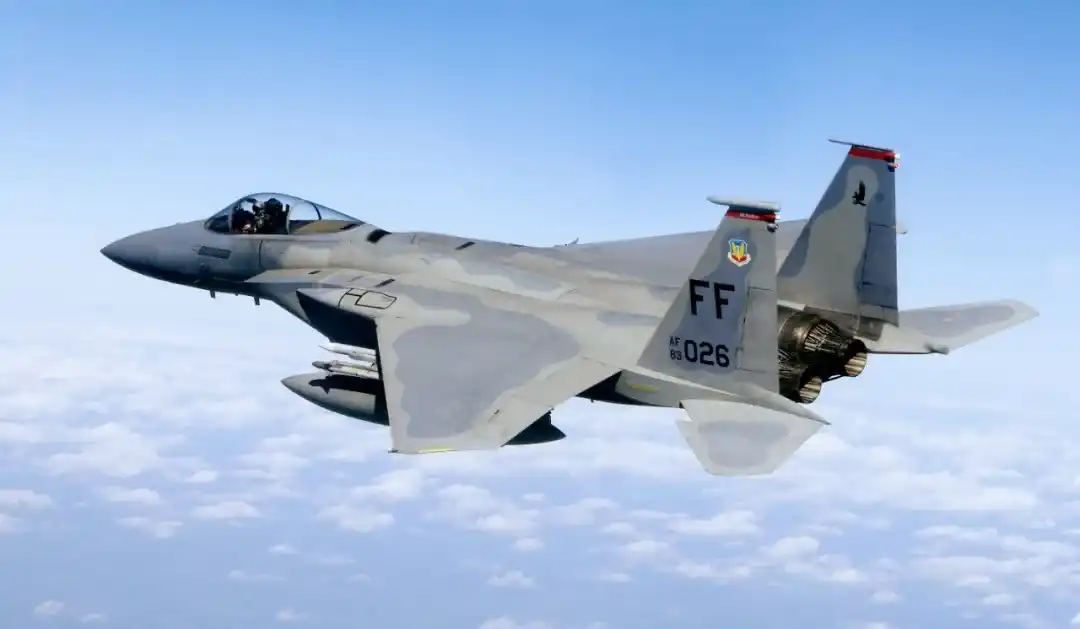
The F-15 Eagle series of fighter aircraft, particularly the F-15C air superiority model and the F-15E strike variant, played a pivotal role in the 1991 Gulf War (Operation Desert Storm), demonstrating unmatched performance and versatility. From dominating the skies to executing precision ground strikes, the F-15 proved itself as a force to be reckoned with. This article delves into the detailed capabilities, strategic impact, and lasting legacy of the F-15 Eagle during one of the most intense air campaigns in modern warfare history.
F-15C: The Ultimate Air Superiority Fighter
Air-to-Air Combat Dominance
During Operation Desert Storm, the F-15C was at the forefront of the U.S. Air Force’s air superiority efforts. Equipped with the AN/APG-63 radar and the AIM-7 Sparrow and AIM-9 Sidewinder missiles, the F-15C demonstrated its overwhelming capability in air-to-air combat. With a perfect kill-to-loss ratio, the F-15C scored 34 confirmed aerial victories, primarily against MiG-29 and Mirage F1 fighters from the Iraqi Air Force. This accounted for approximately 34 out of 37 total U.S. air combat victories, underscoring its dominance.
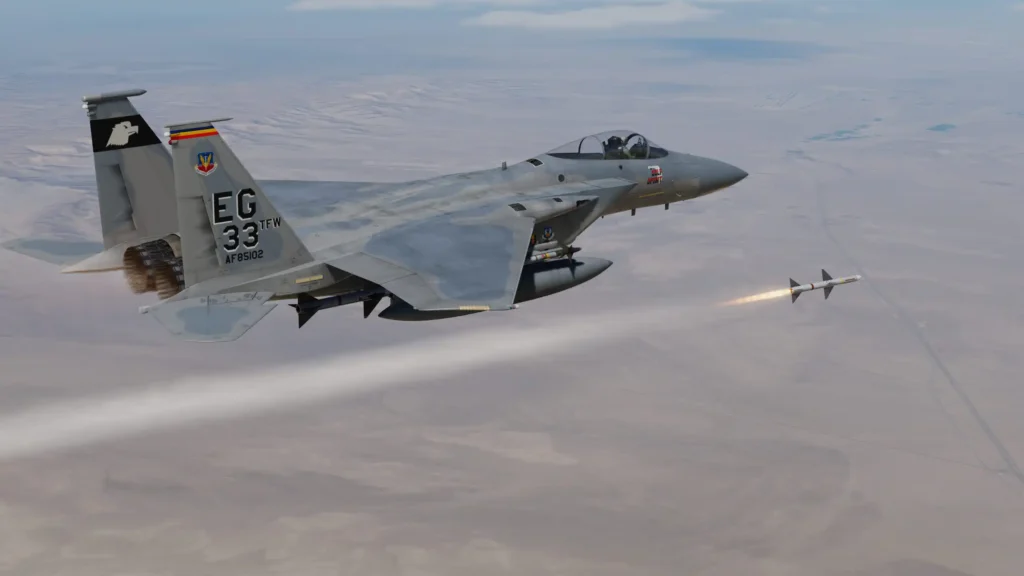
Its high speed, capable of reaching Mach 2.5, and superior thrust-to-weight ratio of greater than 1, made the F-15C a formidable adversary in both Beyond Visual Range (BVR) engagements and dogfights. The F-15C could outrun and outmaneuver most potential adversaries, giving U.S. pilots an edge in both combat scenarios.
All-Weather Combat Capability
The F-15C was not just a powerhouse in clear skies. Its all-weather combat capabilities, backed by electronic warfare systems like the AN/ALQ-135 jammer and the AN/ALR-56 radar warning receiver, allowed it to operate effectively in complex electromagnetic environments. This capability was essential for jamming and countering Iraqi air defense systems, ensuring the F-15C could maintain superiority even in heavily contested airspaces.
The F-15C’s versatility in various operational conditions made it a critical asset in both offensive and defensive missions, ensuring that U.S. forces maintained uncontested air superiority over the Gulf region.
F-15E: Precision Strike and Ground Attack Excellence
The “Slugger” in Precision Ground Strikes
The F-15E Strike Eagle, an advanced multirole strike variant of the F-15, provided a critical edge in precision ground attack during Desert Storm. The F-15E was armed with advanced systems, including the AN/APG-70 radar and the LANTIRN (Low-Altitude Navigation and Targeting Infrared for Night) targeting pods, enabling it to strike high-value targets with pinpoint accuracy, day or night.
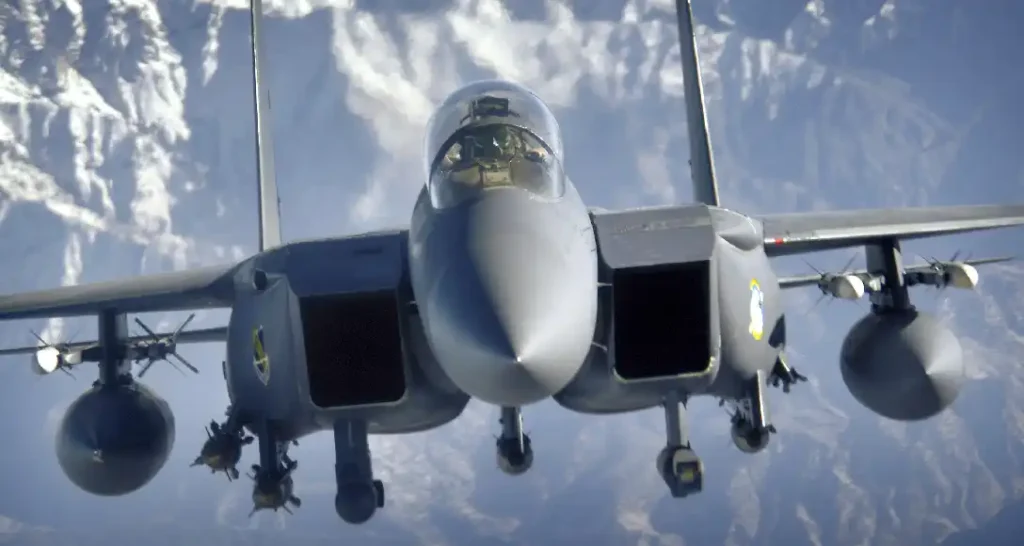
One of the most notable achievements of the F-15E was its role in eliminating Iraq’s mobile Scud missile launchers. Using the GBU-12 Paveway II laser-guided bombs and GBU-15 TV-guided bombs, the F-15E successfully destroyed multiple mobile launchers during the conflict, significantly degrading Iraq’s ability to strike regional targets. This precision capability highlighted the F-15E’s role as a modern “fighter-bomber”, capable of delivering decisive blows against critical infrastructure and military assets.
High-Intensity Mission Execution
The F-15E’s endurance and payload capacity proved invaluable in Desert Storm. With the ability to carry over 7.3 tons of ordnance, including Mk 80 series bombs, JDAM (Joint Direct Attack Munition), and other precision-guided munitions (PGMs), the F-15E became a key player in the air-to-ground campaign. The F-15E’s integration of conformal fuel tanks (CFTs) extended its range to over 2,500 kilometers, reducing reliance on forward-deployed bases and increasing its effectiveness in executing long-range strike missions.
Throughout the operation, the F-15E executed over 1,200 ground attack sorties, showcasing its flexibility in adapting to various mission types, from high-risk strikes on air defense systems to precision interdiction against ground targets. Despite the high-risk nature of these missions, the F-15E suffered only three losses, all attributed to ground-based anti-aircraft fire, further demonstrating its resilience and survivability in hostile environments.
Night Operations and Precision
One of the standout features of the F-15E was its ability to perform night operations, filling a critical capability gap left by the retirement of the F-111 strike bomber. The F-15E’s dual-seat configuration, with a dedicated weapon systems officer in the rear seat, allowed for efficient target acquisition and mission execution during night-time conditions. The advanced LANTIRN targeting pods provided excellent low-light and infrared imaging, allowing the F-15E to accurately strike targets even in challenging weather conditions or low visibility.
This capability was especially crucial for operations in Iraq’s heavily defended areas, where traditional daytime strikes would have been met with overwhelming resistance. The F-15E’s versatility ensured that the U.S. military maintained continuous pressure on enemy forces, even under the cover of darkness.
Strategic Impact and Technological Advancements
Proving the F-15’s Multirole Flexibility
Operation Desert Storm served as a validation of the F-15’s adaptability and ability to transition from a dedicated air superiority platform to a multirole fighter capable of performing both air-to-air and air-to-ground missions. This versatility paved the way for the development of the F-15EX variant, a more advanced version of the F-15 designed to carry a greater payload (up to 22 air-to-air missiles or 13 tons of bombs) and integrate more modern technologies, including AI-assisted targeting systems and advanced avionics.
The F-15EX, like its predecessors, continues to provide air superiority while supporting modern combat scenarios. The platform’s robust design and advanced capabilities ensure that it remains a cornerstone of U.S. and allied air forces.
Advancing Precision Strike Capabilities
The successful integration of JDAMs and other precision-guided munitions (PGMs) during Desert Storm marked a fundamental shift in U.S. military doctrine. The transition from carpet bombing to precision airstrikes represented a broader shift toward surgical warfare, where minimal collateral damage and maximum impact on the enemy’s capabilities were prioritized. The F-15E became a vital tool in this transformation, ensuring that the U.S. Air Force could strike at the heart of enemy forces with unprecedented accuracy.
Limitations and Lessons Learned
Despite the F-15 series’ exceptional performance, there were several lessons learned from the Gulf War that shaped future developments. The F-15E, while highly capable, had certain limitations. The high maintenance costs of the aircraft, with an estimated hourly flight cost of over $40,000, became a point of concern. This, coupled with its reliance on forward operating bases, highlighted the need for more rapid deployment and combat sustainability.
The U.S. military’s ACE (Agile Combat Employment) strategy, developed in the wake of Desert Storm, sought to address these challenges. This strategy aimed to create more flexible, dispersed, and resilient combat operations, often relying on stealth aircraft like the F-35 to complement the legacy F-15s.
Conclusion: The F-15 Eagle’s Enduring Legacy
The F-15 Eagle, particularly the F-15C and F-15E, was instrumental in achieving air superiority and executing precision ground strikes during Operation Desert Storm. Its performance in the conflict cemented its reputation as one of the world’s most capable and versatile fighter platforms. Even after more than three decades, the F-15 series remains a core component of the U.S. Air Force, with the F-15EX continuing to serve as a key player in modern air combat operations.
From its impressive kill record in air-to-air combat to its exceptional precision in ground strikes, the F-15 demonstrated its capability as both a defensive and offensive weapon system. Its continued evolution, from Desert Storm to the F-15EX, ensures that it will remain a critical asset in the global military landscape for years to come.