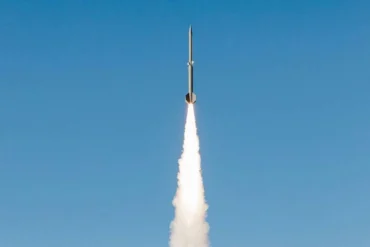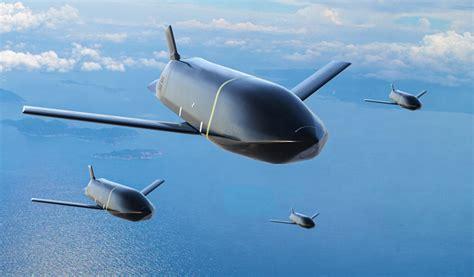
The United States is quietly but decisively strengthening its maritime strike capability. A $53.1 million contract modification awarded to Lockheed Martin signals a deeper strategic move by the Pentagon: expanding the industrial capacity required to produce the Long Range Anti-Ship Missile (LRASM) at higher volumes. While the dollar amount may appear modest compared to large weapons programs, the investment targets something more fundamental than buying additional missiles—it focuses on tooling, manufacturing infrastructure, and test equipment, the foundation of sustained missile production.
Announced on March 6, 2026, the contract modification supports Phase IV B activities tied to LRASM manufacturing expansion. Lockheed Martin’s Missiles and Fire Control division in Orlando, Florida, will lead the work under modification P00028 to contract FA8682-19-C-0008. With this adjustment, the overall value of the contract increases to $462,948,418, up from approximately $409.8 million, reflecting the growing importance of LRASM within U.S. military planning.
The timeline for the work extends through November 29, 2028, and the funding originates from U.S. Navy fiscal year 2025 production funds, while the Air Force Life Cycle Management Center at Eglin Air Force Base remains responsible for contract oversight. That dual-service involvement highlights a defining characteristic of the LRASM program: it is not tied to a single branch but forms part of a joint U.S. maritime strike architecture designed to operate across air and naval platforms.
The emphasis on manufacturing infrastructure reveals a strategic calculation that goes beyond simple procurement numbers. Modern conflicts—especially those involving advanced naval forces—can consume large quantities of precision weapons. The Pentagon’s investment in production tooling suggests planners are preparing for scenarios where sustained missile output becomes as critical as missile performance itself. In other words, the ability to build LRASMs quickly and reliably may prove just as important as the missile’s ability to evade defenses.
A Weapon Designed for the Most Dangerous Seas
The Long Range Anti-Ship Missile is a sophisticated evolution of the AGM-158 JASSM-ER (Joint Air-to-Surface Standoff Missile – Extended Range) family. While JASSM was originally designed for land targets, LRASM adapts the technology for the unique challenges of maritime warfare in heavily defended environments.
In naval combat, targeting an enemy vessel is not as straightforward as hitting a fixed structure on land. Warships maneuver, employ electronic countermeasures, and are typically surrounded by layered air defense systems. LRASM addresses these challenges through a combination of low-observable design, advanced sensors, and semi-autonomous guidance.
Instead of relying exclusively on continuous external guidance, the missile carries onboard target recognition systems capable of identifying and prioritizing targets even if communications links are disrupted. That autonomy is essential in an environment where GPS jamming, cyber interference, and electronic warfare may interfere with traditional guidance methods.
The missile also incorporates precision routing algorithms that allow it to navigate complex flight paths, minimizing exposure to radar coverage while approaching hostile ships from unexpected directions. Combined with its low-observable airframe, this capability helps LRASM slip through defensive networks that might defeat conventional anti-ship weapons.
At the business end of the missile sits a 1,000-pound blast-fragmentation warhead, powerful enough to severely damage or disable large surface combatants such as destroyers or cruisers. The weapon is therefore not designed for small patrol boats or lightly armed craft; its purpose is to threaten high-value naval assets that form the backbone of an enemy fleet.
Operational Deployment Across U.S. Combat Aircraft
LRASM has already transitioned from experimental concept to operational weapon. The missile is currently deployed on two key aircraft platforms:
- U.S. Air Force B-1B Lancer strategic bomber
- U.S. Navy F/A-18E/F Super Hornet carrier-based fighter
These platforms provide complementary advantages. The B-1B bomber, with its large payload capacity and long range, can carry multiple LRASMs and launch them from well outside the range of enemy air defenses. Meanwhile, the Super Hornet allows carrier strike groups to deploy the missile directly from the sea, extending the reach of naval aviation far beyond traditional anti-ship weapons.
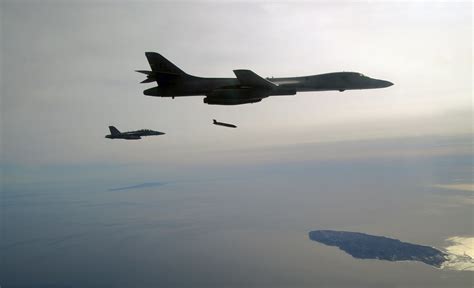
A notable demonstration occurred in 2018, when a B-1B successfully launched two LRASM missiles during a test over the Sea Range near Point Mugu, California. The missiles autonomously navigated toward a moving maritime target and struck it, validating the weapon’s core design principle: independent targeting capability in contested environments.
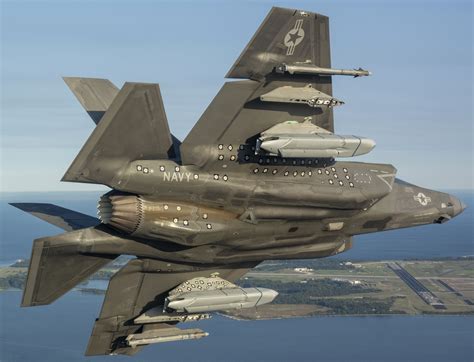
The Pentagon has not stopped there. Integration work is underway to bring LRASM to the F-35B and F-35C variants of the Joint Strike Fighter. These aircraft operate from amphibious assault ships and aircraft carriers respectively, meaning the missile could soon be carried by stealth fighters capable of penetrating contested airspace before launching long-range anti-ship attacks.
Why Manufacturing Capacity Matters in Modern Warfare
At first glance, a contract focused on tooling and testing equipment might seem less dramatic than a massive missile purchase. Yet in defense planning, such investments often signal deeper strategic intentions.
Missile stockpiles are finite, and modern high-intensity warfare can rapidly deplete them. A large naval conflict could require hundreds of long-range anti-ship missiles within weeks. Without sufficient production capacity, even the most advanced weapons systems risk becoming scarce at the moment they are most needed.
The U.S. Department of Defense has increasingly recognized this reality. Budget documents reveal that LRASM procurement is expected to grow sharply, with quantities projected to rise by more than 70 percent in fiscal year 2025 compared to 2024. The broader procurement framework covering FY2024 through FY2028 includes 477 missiles, underscoring the scale of planned expansion.

Expanding production infrastructure now ensures the supply chain can handle that demand. Tooling upgrades allow factories to increase manufacturing throughput, while additional test equipment ensures every missile meets stringent operational standards before entering service. These investments also strengthen the industrial base, making it possible to ramp up production quickly if geopolitical tensions escalate.
Strategic Context: Preparing for High-End Naval Conflict
The emphasis on LRASM reflects broader changes in global military planning. Naval forces today operate in an environment dominated by long-range sensors, advanced air defense systems, and electronic warfare capabilities. Traditional anti-ship missiles that rely heavily on external targeting data can struggle in such conditions.
LRASM is designed specifically for these scenarios. Its ability to detect, classify, and strike targets autonomously allows aircraft to launch the missile from long distances without needing to continuously guide it. This approach reduces the exposure of the launch platform while preserving the weapon’s effectiveness.
In strategic terms, this capability supports a concept often referred to as distributed maritime operations. Instead of concentrating firepower in a small number of platforms, the United States can distribute missiles across multiple aircraft and ships, complicating enemy defenses and increasing the likelihood that at least some weapons will reach their targets.
The Expanding Role of the F-35 in Maritime Strike
Another major driver behind increased LRASM production is the integration of the missile with the F-35 program. The stealth fighter is rapidly becoming the backbone of Western tactical aviation, with hundreds already in service across the United States and allied nations.
Testing milestones illustrate steady progress toward full integration. In September 2024, LRASM completed a successful flight test from the F-35C carrier variant, demonstrating compatibility with the aircraft’s avionics and weapons systems. A subsequent F-35B test in March 2025 further advanced the program under the Block 4 modernization effort.
Once integration is complete, the implications are significant. A stealth aircraft carrying LRASM can approach contested airspace with a far lower probability of detection, launch the missile, and withdraw before enemy defenses react. That combination of stealth platform and long-range anti-ship weapon dramatically expands operational possibilities for maritime strike missions.
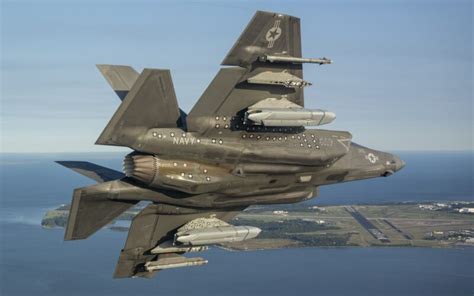
The presence of LRASM on F-35 variants could also influence allied capabilities. Many U.S. partners operate the F-35, and potential future adoption of LRASM among allied fleets would expand the network of aircraft capable of threatening hostile naval forces.
Industrial Endurance as a Strategic Asset
The deeper meaning of the $53.1 million contract modification becomes clear when viewed through the lens of long-term defense planning. Military power is not defined solely by advanced technology or individual weapons systems. It also depends on industrial endurance—the capacity to produce and replenish those systems during prolonged conflict.
By investing in the infrastructure behind LRASM production, the United States is strengthening that endurance. Factories equipped with modern tooling, reliable supply chains, and advanced testing systems can maintain output even during periods of intense demand.
In a future maritime confrontation, the decisive factor may not be which side launches the first missiles, but which side can continue launching them after the opening salvos. Through expanded LRASM production capacity, Washington is ensuring that its long-range maritime strike capability remains both technologically advanced and industrially sustainable.
The contract therefore represents far more than a routine procurement adjustment. It is part of a broader effort to align technology, manufacturing capability, and operational doctrine for the challenges of twenty-first-century naval warfare—where the reach of a missile, the stealth of its launch platform, and the resilience of the factory that builds it all matter just as much as the weapon itself.