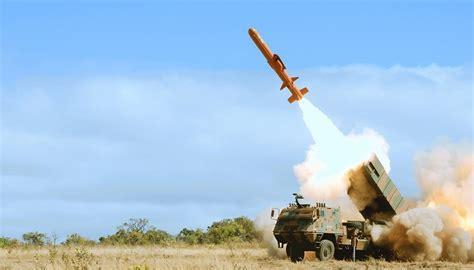
Brazil is repositioning its land forces for an era defined by long-range precision fires, elevated survivability, and operational depth. At the center of this transformation stands the ASTROS II multiple rocket launcher, a domestically developed system now being deliberately shaped into a national instrument of deterrence. Rather than treating rocket artillery as a supporting arm, Brazilian defense planners are integrating ASTROS II into a broader vision of deep-strike capability, strategic mobility, and sovereign industrial power.
The renewed emphasis on ASTROS II reflects a global recalibration of land warfare. High-intensity conflicts over the past decade have demonstrated that the side capable of striking first, farther, and with precision can impose decisive operational constraints. Brazil’s response is not merely to extend range, but to redesign how rocket artillery functions within its Army, evolving ASTROS II from a traditional launcher into a scalable strike ecosystem capable of influencing the battlefield well beyond tactical lines.
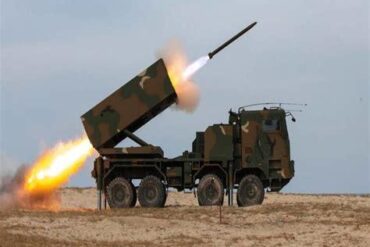
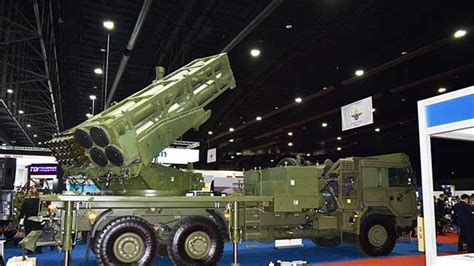
Originally conceived as a versatile multiple rocket launcher, ASTROS II has matured into a modular platform designed to support a wide spectrum of missions. Mounted on a wheeled chassis optimized for speed and endurance, the system delivers rapid shoot-and-scoot fire missions that reduce exposure to counter-battery threats. This mobility, combined with modular launch pods, allows commanders to tailor firepower without changing platforms, preserving tempo while expanding tactical choice.
ASTROS II and Brazil’s Strategic Reorientation Toward Long-Range Fires
The elevation of ASTROS II under the Astros 2020 program marks a turning point in Brazilian Army doctrine. Designated as a strategic defense priority, the program explicitly links rocket artillery modernization to national deterrence objectives. Initiated in 2012 and extending into the early 2030s, Astros 2020 is structured as a long-term capability build rather than a short procurement cycle, ensuring continuity in training, production, and system evolution.
Brazilian defense officials have framed ASTROS II as a response to both geographic reality and strategic uncertainty. Brazil’s vast territory, extensive borders, and dispersed infrastructure demand a land-based strike system capable of covering large distances without reliance on fixed bases. ASTROS II answers this requirement by combining road mobility with deep-range fire options, allowing the Army to project power across regions with minimal logistical footprint.
Modular Architecture and Multi-Caliber Flexibility
At the core of ASTROS II lies its modular, pod-based launcher architecture, a design philosophy that prioritizes adaptability. A single launcher can fire multiple rocket calibers and, in future configurations, long-range missiles, all without structural modification. This flexibility allows units to switch seamlessly between area saturation, precision strikes, and infrastructure denial, depending on mission demands.
The system supports engagement ranges from short-range suppression fires to distances approaching 300 kilometers, placing it firmly within the category of long-range artillery. This range spectrum enables commanders to conduct layered fires, shaping the battlespace by degrading enemy assets before contact while retaining the ability to provide close support when maneuver forces engage.
From an engineering standpoint, ASTROS II balances sophistication with robustness. Hydraulic elevation and traverse systems are paired with manual backups, ensuring operational continuity under combat stress. Crew requirements remain relatively modest, supporting rapid deployment and displacement while reducing personnel exposure during firing operations.
Digital Fire Control and Networked Survivability
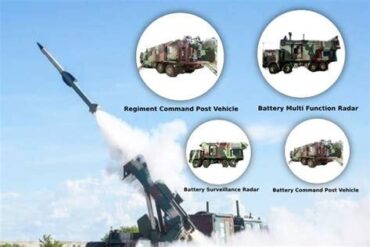
Modern battlefield survivability is inseparable from digital integration, and ASTROS II has undergone significant upgrades in this domain. Updated command-and-control systems incorporate satellite navigation, encrypted communications, and onboard fire-control computing, transforming each launcher into a networked node within a broader fires architecture.
This digital backbone allows dispersed batteries to receive targeting data electronically, calculate firing solutions in seconds, and relocate immediately after launch. In an environment dominated by counter-battery radars, drones, and precision munitions, such responsiveness is essential. ASTROS II’s ability to operate in a distributed posture enhances survivability while preserving massed effects through coordinated salvo firing.
The integration of digital fire direction also supports joint operations. ASTROS II can interface with intelligence, surveillance, and reconnaissance assets across the armed forces, enabling sensor-to-shooter loops that compress decision timelines and increase strike accuracy against time-sensitive targets.
Deep-Strike Evolution and the 300-Kilometer Threshold
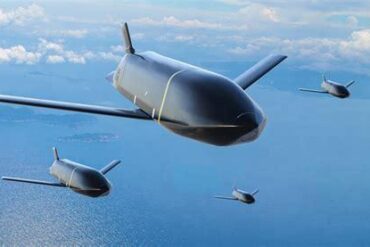
The most consequential aspect of ASTROS II’s evolution lies in its role as a launch platform for long-range missiles, including a domestically developed tactical cruise missile. With projected ranges in the 300-kilometer class, this capability elevates ASTROS II from a tactical artillery system to an operational-level strike asset.
Once fielded, such missiles would allow the Brazilian Army to hold adversary command centers, logistics hubs, and critical infrastructure at risk far beyond the forward edge of battle. This shifts the deterrence equation by introducing credible land-based strike options that complicate any potential adversary’s planning calculus.
Importantly, this capability remains under national control, reinforcing Brazil’s emphasis on strategic autonomy. By developing and integrating indigenous missiles, Brazil reduces dependence on foreign suppliers while preserving freedom of action in both peacetime signaling and crisis response.
Strategic Mobility and Rapid Force Projection
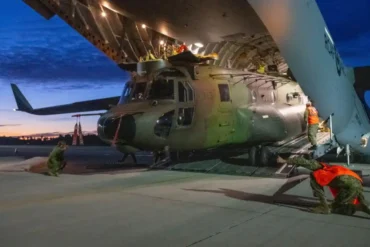
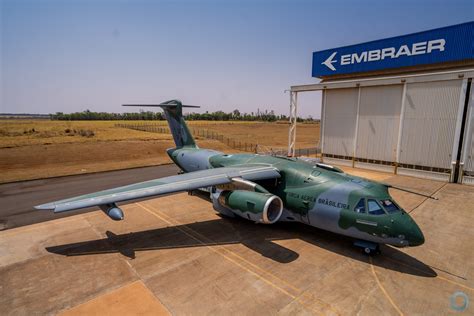
ASTROS II’s deterrent value is amplified by its strategic mobility. The system has demonstrated compatibility with the KC-390 Millennium transport aircraft, allowing rapid redeployment across Brazil’s vast interior. This airlift capability enables the Army to reposition long-range fires quickly, reinforcing threatened sectors or signaling resolve through visible force movement.
Such mobility supports joint and combined operations, allowing rocket artillery units to integrate with air and ground forces during contingencies. The ability to concentrate firepower rapidly, then disperse just as quickly, enhances both operational flexibility and strategic ambiguity, key elements of modern deterrence.
Industrial Sovereignty and Long-Term Challenges
Beyond battlefield performance, ASTROS II represents a pillar of Brazil’s defense industrial base. Sustaining a complex rocket and missile ecosystem requires stable funding, skilled labor, and consistent policy support. While launcher systems and conventional rockets are already operational, advanced missile components remain on a longer development timeline, requiring continued political and financial commitment.
The challenge lies not only in fielding capability, but in sustaining it. Training, doctrine refinement, and production continuity will determine whether ASTROS II fulfills its strategic promise or remains a partially realized ambition. Success would position Brazil among a select group of nations capable of integrating long-range precision fires into an army-controlled framework.
ASTROS II now stands as more than an artillery system. It is a statement of intent, signaling Brazil’s determination to shape its own deterrence posture through range, mobility, and sovereign technology. In a world where land warfare is once again defined by depth and precision, Brazil’s investment in ASTROS II underscores the enduring relevance of long-range fires as a foundation of national defense.