Qatar has taken a decisive step to strengthen its airspace sovereignty by ordering a new generation of French-built air surveillance radars from Thales, a move that significantly enhances the country’s ability to detect, track, and respond to complex airborne threats. The acquisition reflects a clear strategic intent: to transition from fragmented sensor coverage toward a layered, digitally integrated national air surveillance architecture capable of operating in a rapidly evolving threat environment.
Announced on January 28, 2026, the deal confirms that the Qatar Emiri Air Force has selected a mix of Ground Master 200 Multi-Mission All-in-one (GM200 MM/A) and Ground Master 400 Alpha (GM400α) radar systems. The announcement coincided with the opening of the Doha International Maritime Defence Exhibition and Conference (DIMDEX), a venue that has increasingly become a showcase for Qatar’s long-term defense modernization priorities rather than a platform for symbolic procurement.
The purchase comes at a moment when airspace security in the Gulf is no longer defined solely by high-altitude aircraft. Instead, it is shaped by the proliferation of low-observable drones, terrain-hugging cruise missiles, and emerging hypersonic systems, all of which demand persistent, high-resolution detection across multiple altitude and range bands.
Strategic Context Behind Qatar’s Radar Investment
Qatar’s decision to invest in both medium- and long-range radar systems reflects a sober assessment of the regional security environment. Over the past several years, Gulf states have faced a growing number of airspace violations, unmanned aerial system incursions, and missile-related incidents that exposed gaps in traditional air surveillance models. Legacy radars optimized for conventional aircraft are increasingly inadequate against small radar cross-section targets flying at low altitude or operating in swarms.
By procuring both the GM200 MM/A and GM400α, Qatar is deliberately constructing a multi-layered detection envelope. This approach ensures that no single class of threat—whether slow and low or fast and high—can exploit blind spots between sensors. It also signals a shift away from platform-centric defense toward network-centric airspace control, where sensors, command systems, and interceptors operate as a unified whole.
Ground Master 200 MM/A: Mobility Meets Multi-Mission Precision
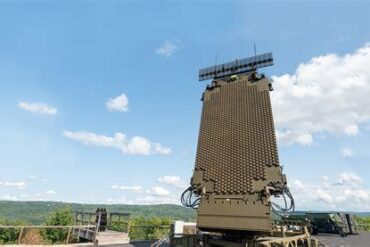
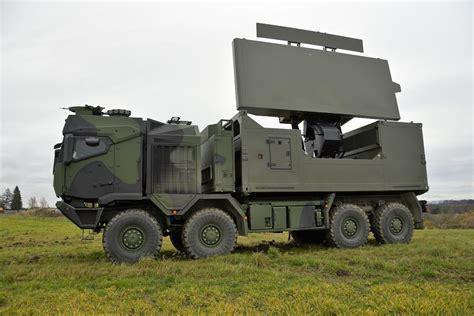
The Ground Master 200 MM/A is designed to operate at the tactical and operational levels, offering Qatar a radar that combines mobility with advanced detection performance. Housed within a single 20-foot ISO shelter, the system can be rapidly deployed by road, rail, or air, including transport by C-130-class aircraft. This mobility is critical for a country that must protect dispersed infrastructure, coastline approaches, and expeditionary assets.
Technically, the GM200 MM/A leverages 4D Active Electronically Scanned Array (AESA) technology operating in the S-band, delivering full 360-degree coverage with a detection range of up to 350 kilometers. The fourth dimension—target elevation—allows operators to build a more accurate three-dimensional air picture in real time. This capability is especially important for tracking low-flying cruise missiles, micro-UAVs, and loitering munitions, which often exploit terrain masking to evade detection.
Beyond surveillance, the GM200 MM/A is optimized for multi-mission roles, including air defense cueing and fire-control support. Its ability to track hundreds of targets simultaneously in cluttered environments makes it well suited for integration with surface-to-air missile batteries and short-range air defense systems already in Qatari service.
Ground Master 400 Alpha: Strategic Early Warning at Extended Range
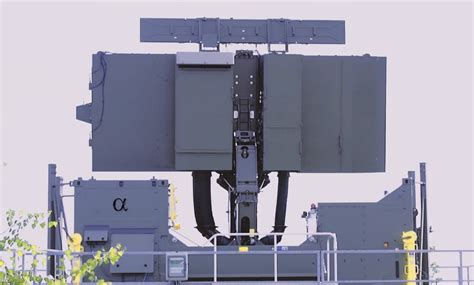
While the GM200 MM/A secures the tactical layer, the Ground Master 400 Alpha operates at the strategic level, providing Qatar with long-range early warning and persistent wide-area surveillance. The GM400α is Thales’ most advanced rotating long-range radar, engineered to detect targets at distances exceeding 500 kilometers while maintaining high track accuracy.
The radar’s digital beamforming and high-gain AESA architecture enable it to simultaneously monitor fast, maneuvering threats such as ballistic missile precursors and hypersonic glide vehicles, while also retaining sensitivity to slow-moving, low-altitude UAVs. This dual capability addresses one of the most difficult challenges in modern air defense: maintaining detection fidelity across vastly different target profiles.
A defining feature of the GM400α is its integration with Thales’ Secure Digital Integration Platform (SDIP). This open, software-defined architecture allows data from multiple sensors—including legacy and non-Western systems—to be fused into a single, coherent national air picture. For Qatar, this interoperability is not a technical luxury but a strategic necessity in a defense ecosystem built from diverse suppliers.
Building a Digitally Integrated Air Surveillance Network
The radar procurement extends well beyond hardware delivery. According to defense officials familiar with the program, the contract includes national-level radar supervision and maintenance systems, as well as a comprehensive training and sustainment package managed by Thales through 2036. This long-term commitment reflects Qatar’s emphasis on operational availability and human capital development rather than short-term capability gains.
Thales will expand its in-country presence by deploying specialized engineers and establishing a dedicated radar training facility in Doha. This center will train Qatari operators and technicians on system operation, maintenance, and software upgrades, ensuring that the Qatar Emiri Air Force retains sovereign control over its air surveillance capabilities. Over time, the facility could also serve as a regional training hub for allied and GCC partners.
Interoperability with Qatar’s Broader Air Defense Architecture
Qatar’s new radars are expected to integrate seamlessly with the country’s evolving integrated air and missile defense system, which already includes Western-made surface-to-air missile platforms, command-and-control nodes, and early warning sensors. The SDIP backbone will enable real-time data sharing across these assets, reducing sensor-to-shooter timelines and improving decision-making under pressure.
This level of integration is particularly valuable in scenarios involving electronic warfare and saturation attacks, where adversaries attempt to overwhelm defenses with large numbers of inexpensive drones or decoys. By fusing data from multiple radars and sensor types, Qatar can maintain situational awareness even in contested electromagnetic environments.
Thales and Qatar: A Longstanding Defense Partnership
Thales’ selection reinforces its status as one of Qatar’s most trusted defense partners. With more than 200 Ground Master radars deployed worldwide, including with NATO members and Indo-Pacific allies, the Ground Master family has built a reputation for reliability, adaptability, and continuous software-driven evolution.
For Qatar, the deal represents more than a procurement milestone. It marks a strategic transition toward autonomous, digitally enabled airspace control, aligned with the broader objectives of Qatar National Vision 2030. By investing in systems that can evolve through software updates rather than hardware replacement, Doha is positioning itself to adapt to future threats without constant platform turnover.
A Clear Signal in a Contested Air Domain
As the air domain becomes increasingly crowded, contested, and technologically complex, Qatar’s decision to deploy GM200 MM/A and GM400α radars sends a clear signal of intent. The country is not merely reacting to today’s threats but anticipating tomorrow’s, building a surveillance network designed to detect, classify, and respond to the full spectrum of airborne challenges.
In a region where airspace control is inseparable from national sovereignty, Qatar’s radar modernization underscores a broader truth: early warning and information dominance are now as critical as interceptors themselves. With Thales’ latest Ground Master systems, Qatar is ensuring that its skies remain visible, defensible, and firmly under national control well into the next decade.