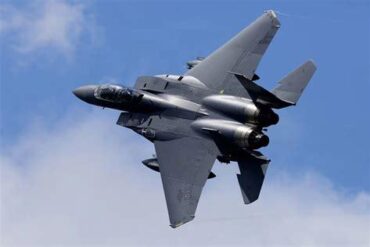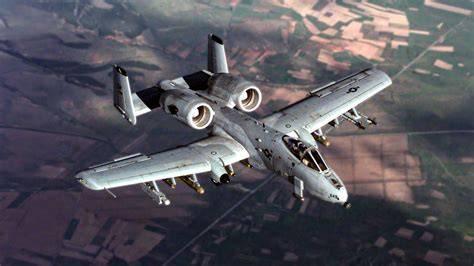
The night an F-15E Strike Eagle went down over Iranian territory, the rescue that followed became one of the most consequential combat search and rescue operations in modern American military history. Within it, the Fairchild Republic A-10 Thunderbolt II played a part that its defenders seized on instantly: the Warthog, long derided inside the Pentagon as a relic of Cold War tank-killing doctrine, flew cover for a multi-day hunt for a downed crew and came home as the story’s hero. Within months, the US Air Force announced it would keep the A-10 flying until Fiscal 2030, a decision many read as a dramatic reversal forced by combat reality. That reading is emotionally satisfying and politically useful, but it compresses a far messier truth about what actually happened over Iran, what the Air Force actually asked Congress for afterward, and why the Warthog’s reprieve is narrower than its legend.
Operation Epic Fury and the F-15E That Went Down Twice
The full record of the F-15E shootdown remains classified and fragmentary, but the outline is dramatic enough to sustain a feature film. During Operation Epic Fury, the 2026 air campaign against Iranian targets, an F-15E crew was brought down by Iranian air defense. The pilot aboard that jet had already been downed once earlier in the same conflict, struck by friendly Kuwaiti fire, a detail that gives the episode the improbable texture of fiction. The pilot was recovered relatively quickly. The Weapon Systems Officer, a Colonel and an unusually senior officer to be flying a combat sortie in the back seat of a Strike Eagle, was not. Injured in the foot during ejection and landing, the WSO spent multiple days evading capture on foot through mountainous terrain while Iranian forces and local militias searched for him. What followed was a manhunt and a counter-manhunt: a rescue package assembled at extraordinary speed and flown deep into hostile airspace to pull one man out.
The extraction force was built around assets chosen for reach, survivability, and the ability to put small helicopters into a landing zone far from friendly lines. Multiple MC-130J Commando II variants of the Super Hercules carried Little Bird helicopters, the light special operations rotorcraft that have become the signature tool of long-range penetration rescue. Around them flew a protective shell of fighter aircraft, MQ-9 Reaper drones, and A-10 Warthogs, tasked with suppressing threats, sanitizing the approach, and keeping Iranian forces off the isolated crew. The operation ended with the WSO recovered, but at a cost that reshaped the narrative: two MC-130Js and several Little Birds were destroyed in place rather than abandoned intact, and an A-10 was struck and went down.
How the A-10 Warthog Performed in the F-15E Rescue Mission
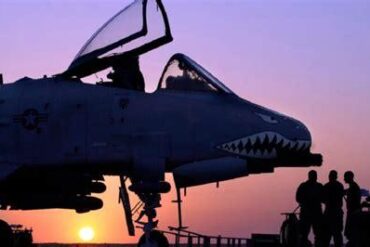
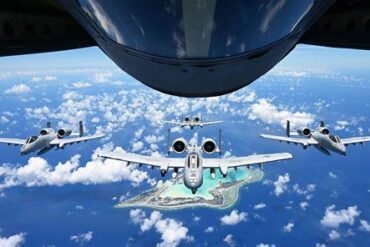
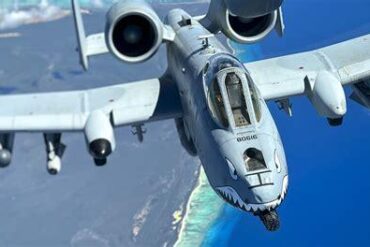
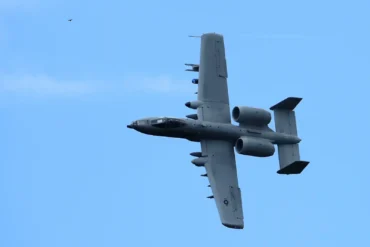
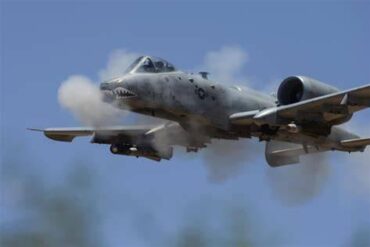
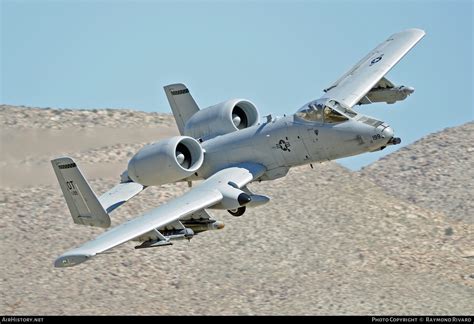
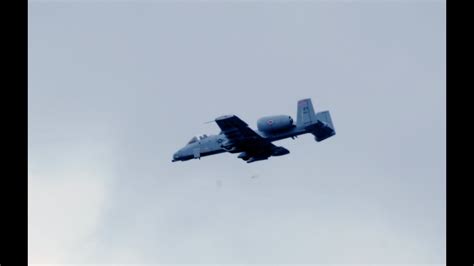
The A-10’s contribution to the rescue is where the story becomes genuinely complicated, and where careful readers should slow down. By every reasonable account, the Warthog provided valuable close air support during the effort to protect the downed WSO and the rescue package. Its endurance, its ability to loiter at low altitude for extended periods, its heavy gun, and its tolerance for austere forward basing are precisely the qualities that made it beloved by ground forces for four decades. In a scenario defined by a single isolated human being on the ground and a rescue force that could not afford to be surprised, an aircraft that can circle for hours and put precise fire on short notice is worth a great deal. The A-10 delivered that.
It also nearly made everything worse. The Warthog that was hit managed to limp into Kuwaiti airspace before the pilot ejected safely over friendly territory. Had it come down inside Iran instead, the rescue of the F-15E WSO could have become a second rescue of an A-10 pilot, pulling scarce special operations aircraft and crews back into contested airspace to recover another American. That is the Black Hawk Down dynamic in its purest form: a downed aircraft attracts rescue aircraft, which attract more fire, and the operation spirals. The comparison is not rhetorical. It is the structural risk that defines rescue in contested airspace, and the A-10’s survival was a matter of luck and geography as much as design. The Warthog’s advocates emphasize the close air support it delivered. Its skeptics emphasize that one was shot down in an environment where its slow speed and low-altitude profile are liabilities rather than virtues. Both are describing the same sortie.
The Platforms CENTCOM and the Air Force Actually Praised
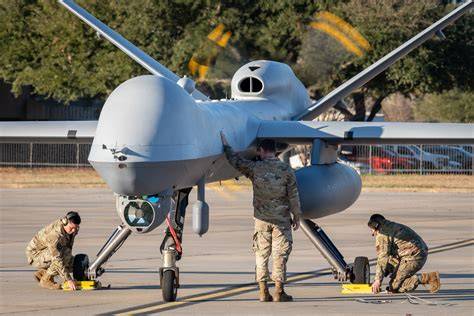
What the Air Force said after Operation Epic Fury matters as much as what the A-10 did during it. CENTCOM singled out the LUCAS one-way attack drone as “indispensable,” an almost comic word choice for a system engineered to be expended. LUCAS is a American reverse-engineered derivative of the Iranian Shahed family, costing roughly $35,000 per unit depending on variant, and it gave commanders a cheap, attritable way to put warheads on targets without risking aircrew or multimillion-dollar airframes. In a hearing before the House Armed Services Committee, Air Force Chief of Staff General Kenneth S. Wilsbach called the MQ-9 Reaper the MVP of the operation, despite each Reaper costing on the order of $30 million and despite the loss of at least two dozen of them during the conflict. Attrition at that scale would once have been scandalous. In 2026 it was absorbed as the price of persistent surveillance and strike.
The procurement signals that followed point in a consistent direction. The Air Force moved to double its planned purchase of F-15EX Eagle IIs to replace the Strike Eagles lost and worn out in the campaign, and it now intends to buy 267 F-15EXs to complement a growing fleet of F-35As. It also reversed course on the E-7 Wedgetail, an airborne early warning and control aircraft it had proposed canceling in 2025 in favor of space-based alternatives, then restored funding for after the Iran campaign exposed the gap. Each of these reversals adds capability the service considers essential. The Warthog is conspicuously absent from that list of priorities. The Air Force returned from the fight praising cheap drones, expensive drones, new-build Eagles, and airborne radar, and then asked Congress to cut its A-10 fleet roughly in half.
What the Air Force’s Fiscal 2027 Budget Actually Proposes for the Warthog
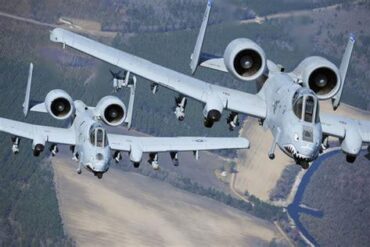
The retirement decision that headlines described as a reversal is better understood as a schedule. In Fiscal 2026, Congress allowed the Air Force to begin phasing out the A-10 while capping how many could be retired in any single year, a compromise that had stymied the service’s repeated attempts to divest the fleet outright. That budget took the inventory from 162 aircraft down to 103, divesting 59 examples, roughly a third of the force. The Fiscal 2027 request then seeks to retire another 49, leaving 54 in service by Fiscal 2028. The plan converges on three squadrons of 18 aircraft each: two at Whiteman Air Force Base in Missouri, one of them a Reserve squadron, and one at Moody Air Force Base in Georgia. Under the current proposal, the Reserve squadron at Whiteman retires in Fiscal 2029, leaving 36 Warthogs, and the remaining two active squadrons stand down in Fiscal 2030, with 18 retiring in Fiscal 2029 and the final 36 in Fiscal 2030.
Two facts sit awkwardly beside the “vindication” narrative. In April 2026, the Air Force graduated its final class of new A-10C pilots, and the service has begun winding down the training, maintenance, and supply enterprise that sustains the fleet. An aircraft with no pipeline for new pilots is not being preserved; it is being managed to a date certain. The second fact is political: the Fiscal 2027 proposal is being actively debated in Washington and could change. Reporting by Military Times suggests it has been well received, which is remarkable given that Congress spent years blocking precisely this drawdown. The A-10 is not being rescued. It is being given a graceful, extended exit that keeps two or three squadrons available until the end of the decade, and the reason that exit looks generous is that the alternative, an abrupt grounding, would have been politically radioactive after an operation in which the Warthog visibly mattered.
A Niche Role That Three Squadrons Can Cover
What the Iran campaign actually demonstrated is that the A-10 retains a niche use case, not a broad one. The Air Force’s own force-sizing decision is the clearest evidence: if the Warthog were indispensable across the spectrum of conflict, the service would not be planning to hold just 54 aircraft, then 36, then none. The niche it still fills involves low-risk environments such as operations against poorly armed militias, maritime missions where its long loiter time and gun are useful against small fast boats, and drone hunting, a mission it may have performed over Iran though public information is thin. The Warthog’s maritime work against Iranian speed boats was among the capabilities singled out during the campaign, and its strafing runs against Iraqi militias in earlier operations remain the template for what it does well.
The historical irony is that the Air Force never wanted the A-10 in the first place. The service received the final example in 1984 and has been trying to retire the type since that same year, according to reporting on the long fight over its fate. The A-10 survived the end of the Cold War, the post-9/11 counterinsurgencies, and repeated budget cycles because Congress, ground troops, and the public kept defending it. The AV-8B Harrier offers a useful contrast: the Marine Corps retired its final Harriers in mid-2026 after graduating its last pilots in 2024, but the Harrier had a direct successor in the F-35B, and it stayed in service only until enough amphibious assault ships had been refitted to operate the STOVL Lightning II. The A-10 has no such successor waiting. Its retirement is driven by doctrine and threat analysis rather than by a replacement aircraft arriving at the flight line.
Why the F-35A Cannot Replace the Warthog’s Gun
Critics of the retirement plan focus on the gun, and the numbers are stark. The F-35A carries a 25mm GAU-22/A with 182 rounds. The A-10 carries the 30mm GAU-8/A Avenger with 1,150 rounds, a weapon so large that the aircraft was famously designed around it. The Lightning II can perform limited strafing, but it is a stealth fighter meant to be flown as a stealth fighter, not as a persistent low-altitude gun platform. Presenting the F-35A as the A-10’s replacement is a category error that critics rightly refuse to accept, and it is the single strongest argument that the Warthog’s departure leaves an actual gap rather than a merely sentimental one.
Yet the deeper truth is that tree-top-level strafing in contested airspace is dead, and it has been for a long time. Even during Desert Storm, A-10s relied heavily on AGM-65 Maverick missiles alongside the gun rather than functioning purely as flying cannon, because modern air defenses punish aircraft that fly low, slow, and straight. The Air Force’s struggle is less technological than cultural. It is politically difficult to tell soldiers that the cavalry will no longer ride to the rescue in the classic image of a Warthog rolling in at treetop height, guns blazing. The A-10 is good for morale; it signals that the Air Force has the ground force’s back. But morale is not a force-design criterion, and the same shift is visible elsewhere. The Army has de-prioritized the AH-64 Apache in the close air support role, still available for CAS but no longer the treetop tank-buster of popular imagination, and is prioritizing deep strike, stand-off engagement, and manned-unmanned teaming instead.
The Future of Rescue and Close Air Support Without the Warthog
The missions the A-10 performed over Iran are being redistributed across a widening set of systems. Close air support will increasingly come from First Person View drones, Collaborative Combat Aircraft, precision artillery, and stealthy fast jets operating at stand-off range, none of which will carry anything resembling the GAU-8/A Avenger. Rescue itself is changing faster than the aircraft that fly it. In June 2026, an Iranian Shahed drone brought down a US Army AH-64 helicopter near the Strait of Hormuz, and in the first rescue of its kind, the crew was recovered by a Saronic Corsair uncrewed surface vessel. In Ukraine, wounded soldiers are increasingly evacuated by uncrewed ground vehicles and heavy-lift multicopters. The future of extraction, like the future of strike, is trending toward machines that can be risked.
The Warthog’s role in the F-15E rescue will be remembered as a vindication, and in a narrow sense it was one: the aircraft did what it was built to do, in the kind of permissive-to-contested environment where it still excels, and the crew it helped protect came home. But the Air Force’s response tells the more accurate story. It praised cheap attritable drones and expensive persistent ones, restored funding for airborne radar, doubled down on new Eagles, graduated its last Warthog pilots, and asked to halve the fleet before retiring it entirely by Fiscal 2030. The A-10 earned a reprieve measured in years and squadrons, not a reversal of policy. Its final chapter is a reminder that a weapon can be genuinely useful, deeply loved, and still not worth the cost of keeping, and that the legendary image of the rescue aircraft is sometimes built on the same sortie that nearly turned one rescue into two.