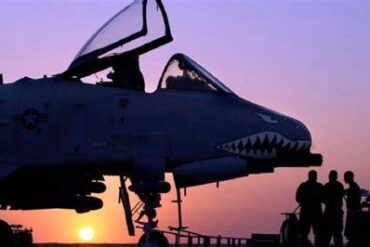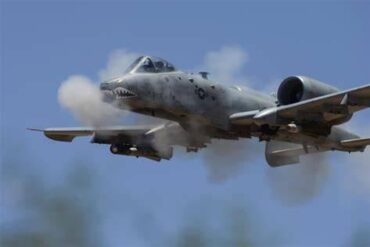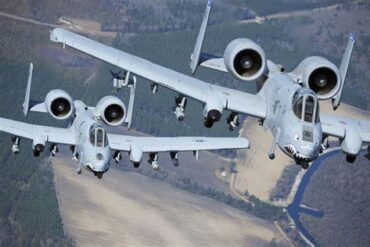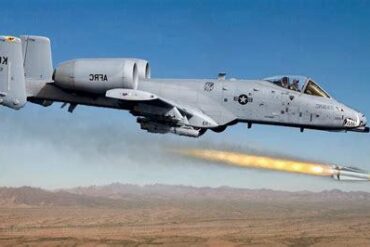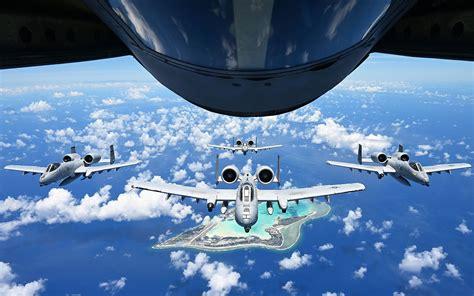
The Fairchild Republic A-10 Thunderbolt II has survived retirement attempts for decades, earning a reputation as one of the most beloved combat aircraft ever fielded by the United States Air Force. Yet few events in recent memory reignited debate surrounding the aircraft more dramatically than the rescue operation involving a downed F-15E Strike Eagle crew during Operation Epic Fury in 2026. The mission demonstrated both the enduring strengths and the painful limitations of the iconic Warthog, ultimately influencing the Air Force’s decision to keep a small number of aircraft operational until 2030.
The story quickly became wrapped in mythology. Enthusiasts declared the mission proof that the A-10 remained indispensable, while critics argued that the operation merely highlighted why the aircraft belongs to another era. The truth sits somewhere between those extremes. The rescue mission in Iran showed why commanders still appreciate the A-10’s capabilities, but it also revealed the dangers associated with using legacy close air support platforms in increasingly contested battlefields.
For decades, the Air Force repeatedly sought permission to retire the A-10 fleet. Congress frequently blocked those plans, insisting the aircraft remained vital to supporting troops on the ground. After finally receiving authorization to begin phased withdrawals, the service planned a gradual reduction. Then Operation Epic Fury occurred, creating headlines that suggested the Warthog had once again cheated death.
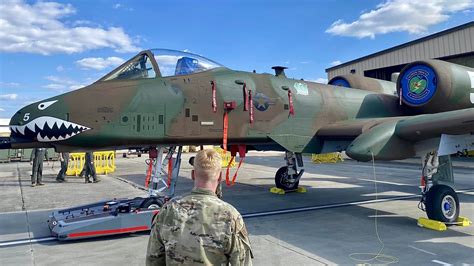
The F-15E Strike Eagle Shootdown That Triggered A Massive Rescue Effort
Many details surrounding the loss of the F-15E Strike Eagle remain classified, but enough information has emerged to paint one of the most remarkable combat rescue operations in modern military history. The aircraft was brought down by Iranian air defenses, forcing both crew members to eject inside hostile territory.
While the pilot was rescued relatively quickly, the Weapon Systems Officer faced a far more dangerous situation. Reports indicated that the officer was a Colonel, an unusually senior rank for someone flying a combat mission. Compounding the difficulty, the officer suffered injuries during the ejection and landing, making movement across mountainous terrain especially challenging.
What followed resembled scenes from both “Behind Enemy Lines” and “Black Hawk Down.” Search and rescue assets, special operations teams, drones, helicopters, and strike aircraft were assembled for an enormous recovery effort deep behind enemy lines. For several days, the isolated airman evaded capture while rescue planners coordinated a complex extraction under constant threat.
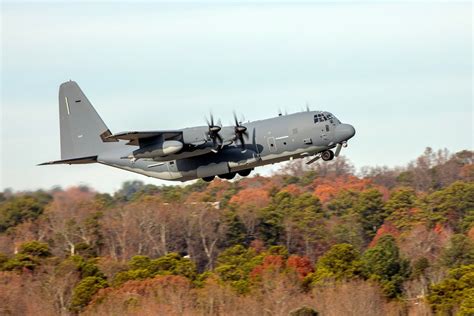
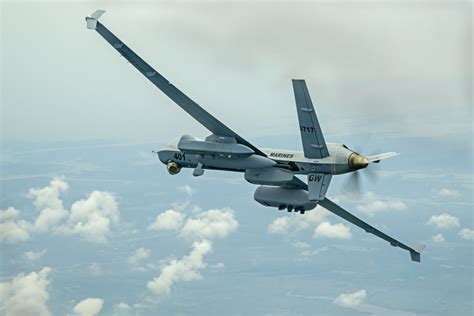
The operation demanded extraordinary coordination between specialized MC-130J aircraft, Little Bird helicopters, MQ-9 Reapers, fighter escorts, and A-10 Warthogs. Every platform had a role, and every decision carried enormous risk.
Why The A-10 Warthog Became Central To The Rescue Operation
The A-10 Thunderbolt II was designed for precisely the kind of mission that unfolded over Iran. Its ability to fly slowly, loiter for extended periods, identify targets visually, and deliver accurate close air support made it a natural asset for protecting rescue forces.
Unlike high-speed fighters optimized for air superiority, the Warthog excels at remaining over the battlefield. Its heavily armored cockpit and robust structure allow it to absorb punishment while continuing to fight. These characteristics have made the aircraft legendary among soldiers who often view the arrival of A-10s as reassurance that help has arrived.
During Operation Epic Fury, the aircraft reportedly provided cover for rescue assets while maintaining pressure against enemy forces threatening the extraction effort. Its ability to operate close to friendly troops made it particularly valuable in the chaotic conditions surrounding the mission.
Yet the operation also exposed a dangerous reality.
The Downing Of An A-10 Nearly Created A Second Disaster
As the rescue effort unfolded, one of the participating A-10s suffered battle damage severe enough to force its loss. Fortunately, the pilot managed to reach friendly airspace before abandoning the aircraft over Kuwait.
That fortunate outcome prevented what could have become a catastrophic chain reaction. Had the aircraft crashed inside hostile territory, commanders might have been forced to conduct an entirely new rescue mission while still recovering the isolated F-15E crew member.
Military historians immediately drew parallels with the 1993 Battle of Mogadishu. There, a single disaster evolved into a much larger crisis as additional assets became endangered during rescue attempts. Similar dangers existed during Operation Epic Fury.
The Warthog’s contribution to the mission was undeniable, but so was its vulnerability. In modern warfare, every downed aircraft risks multiplying the complexity of an operation and exposing even more personnel to danger.
Platforms That Earned The Highest Praise During Operation Epic Fury
Interestingly, Air Force leadership returned from the conflict emphasizing systems other than the A-10. General Kenneth S. Wilsbach described the MQ-9 Reaper as the “most valuable player” of the campaign. Despite the loss of numerous drones, commanders praised their persistence, intelligence gathering, and strike capabilities.
Another platform receiving extraordinary attention was the LUCAS one-way attack drone. Derived from reverse-engineered Iranian designs, these inexpensive systems delivered effects at a fraction of the cost associated with conventional aircraft.
The praise directed toward drones reflected a larger shift occurring throughout modern warfare. Commanders increasingly value systems that can absorb losses without risking pilots. Unmanned aircraft provide flexibility while reducing political and operational consequences associated with losing expensive manned platforms.
Meanwhile, requests for additional F-15EX Eagle II fighters and renewed funding for the E-7 Wedgetail demonstrated where Air Force priorities were moving.
The A-10 received admiration, but not major expansion plans.
Operation Epic Fury Showed Both The Strength And Weakness Of The Warthog
Supporters viewed the rescue mission as vindication. To many veterans and aviation enthusiasts, the Warthog once again proved why it remains one of the most respected aircraft ever built.
But military planners saw a more nuanced picture.
The aircraft performed effectively in several roles. Reports suggested it participated in maritime attacks against Iranian speedboats and potentially contributed to drone hunting missions. These tasks suited the Warthog’s strengths, particularly in environments where enemy air defenses were limited.
However, Iran’s integrated air defense network represented a different challenge. Unlike insurgents or lightly armed militias, modern opponents possess systems capable of threatening low-flying aircraft.
The A-10’s design originated during the Cold War when survivability depended on armor and redundancy. Today’s battlefields increasingly reward stealth, stand-off weapons, and unmanned systems rather than heavily armored attack aircraft operating at low altitude.
Operation Epic Fury demonstrated that the Warthog still has value, but it also underscored why commanders hesitate to rely upon it in highly contested environments.
Why The Air Force Delayed Retirement Until 2030
After the Iranian operation, headlines suggested the Air Force had reversed course and decided to preserve the A-10 fleet. In reality, the service merely slowed the timetable rather than abandoning retirement plans altogether.
The Fiscal 2026 budget reduced the fleet from 162 aircraft to 103. Under the Fiscal Year 2027 proposal, another 49 aircraft would leave service, leaving only 54 operational examples.
These remaining aircraft would be divided among three squadrons. Two would operate from Whiteman Air Force Base, with one assigned to reserve duties, while the third would remain active at Moody Air Force Base.
Current plans envision one squadron retiring in Fiscal 2029, followed by the final two squadrons standing down in Fiscal 2030.
This structure reveals an important truth. If Operation Epic Fury had truly transformed Air Force thinking, fleet reductions would likely have been halted or reversed. Instead, leaders continued moving toward retirement while preserving a limited number of aircraft to cover specialized missions.
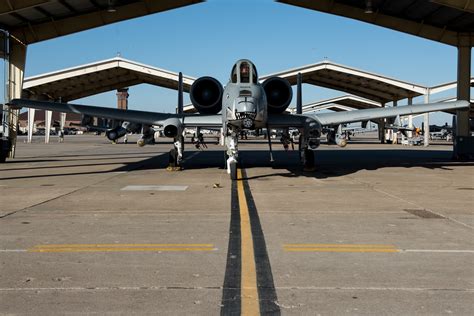
The Final A-10 Pilots Have Already Graduated
Perhaps the strongest evidence that the aircraft’s future is limited arrived in April 2026. That month, the Air Force graduated its final class of new A-10 pilots.
Training pipelines represent long-term commitments. Ending pilot production signals that planners no longer view the platform as part of future force structures.
Supporting infrastructure has also begun shrinking. Maintenance systems, logistics chains, and associated programs are gradually being dismantled. Such decisions are difficult to reverse because rebuilding expertise requires years and significant resources.
The message from Air Force leadership remains clear. The Warthog will continue flying for a few more years, but preparations for its eventual disappearance are already underway.
Why No Aircraft Truly Replaces The A-10
Critics frequently argue that the F-35A cannot replace the A-10 because its internal GAU-22/A cannon carries only 182 rounds compared with the Warthog’s massive GAU-8 Avenger ammunition load of 1,150 rounds.
Technically, they are correct.
The F-35 was never designed to duplicate the A-10’s classic strafing role. It is a stealth fighter intended to exploit sensors, networking, and precision weapons rather than descend to treetop level while firing thousands of rounds.
Even during Desert Storm, the A-10 relied heavily on AGM-65 Maverick missiles rather than its famous cannon alone. The romantic image of endless low-level gun runs does not accurately reflect modern warfare.
Close air support itself is evolving rather than disappearing.
Precision-guided munitions, drones, artillery systems, collaborative combat aircraft, and stealth platforms increasingly share responsibilities once dominated by specialized attack aircraft.
No single platform replaces the Warthog because modern doctrine distributes those missions across multiple systems.
Drones Are Becoming The Future Of Rescue And Close Air Support
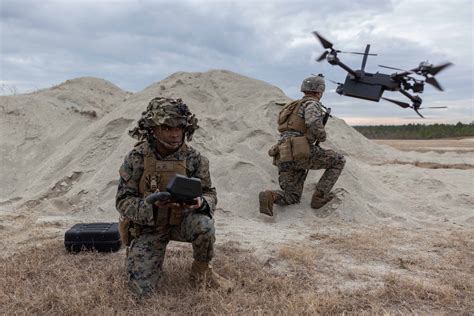
Another lesson from 2026 involved the growing importance of unmanned technologies. Following the loss of a U.S. Army AH-64 Apache near Hormuz, rescue efforts employed a Saronic Corsair uncrewed surface vessel to recover personnel.
Elsewhere, heavy-lift drones and unmanned ground vehicles are increasingly evacuating casualties in Ukraine.
These developments indicate a future where dangerous missions can be performed without exposing crews to enemy fire. Rescue operations, logistics, reconnaissance, and close support are gradually shifting toward autonomous or remotely operated systems.
The transformation resembles previous technological revolutions that rendered once-essential platforms obsolete. Battleships gave way to aircraft carriers, and gunfighters yielded to missiles. The A-10 may be experiencing a similar transition.
The A-10 Warthog’s Final Years Represent A Last Hurrah
Operation Epic Fury did not rescue the A-10 from retirement. Instead, it offered a reminder of why the aircraft earned legendary status in the first place. The Warthog still possesses capabilities unmatched by many platforms, particularly in low-threat environments where endurance and accurate close support matter most.
At the same time, the rescue mission highlighted vulnerabilities that become increasingly dangerous against modern adversaries. The aircraft’s near-loss during the operation illustrated how quickly success can turn into disaster.
By extending operations until 2030, the Air Force acknowledged that the A-10 retains niche usefulness. Yet the simultaneous reduction of squadrons, termination of pilot training, and continuing retirement proposals reveal that leaders view the aircraft as a bridge to a different future rather than a centerpiece of tomorrow’s force.
The A-10 Thunderbolt II may not disappear quietly. Its final years are likely to feature more debates, more congressional battles, and perhaps additional missions proving why troops continue to love the aircraft. But Operation Epic Fury ultimately showed that the Warthog’s greatest achievement was not reversing retirement plans.
It was reminding everyone why a machine built half a century ago became one of the most iconic combat aircraft in military history, even as the age that created it gradually comes to an end.