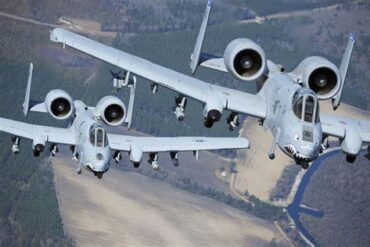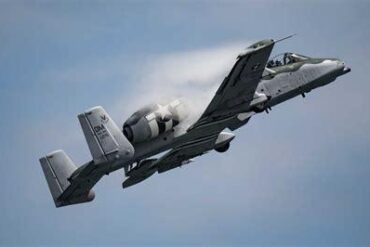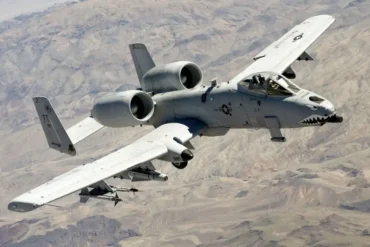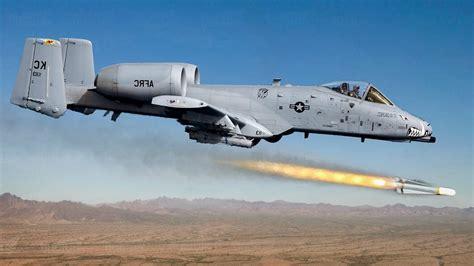
The Fairchild Republic A-10 Thunderbolt II, better known as the A-10 Warthog, was designed during the Cold War for a brutally simple purpose: destroy Soviet tanks advancing across Europe. For decades, the aircraft’s distinctive shape, thunderous GAU-8 Avenger 30mm cannon, and ability to survive heavy battlefield damage made it one of the most recognizable close-air-support platforms in military aviation. Yet in the 2020s, the aircraft once considered obsolete has found an unexpected new role—hunting drones in modern conflicts.
Rather than fading into retirement, the A-10 has become increasingly valuable as warfare shifts toward low-cost unmanned threats and asymmetric battlespaces. The aircraft’s rugged design, long loiter time, and ability to fly slowly at low altitude make it uniquely effective against targets that advanced fighters struggle to engage economically. While fifth-generation jets dominate high-end air combat, the A-10 is proving that older platforms can remain strategically relevant when paired with the right technology.
Recent combat operations in the Middle East have demonstrated exactly how adaptable the aircraft can be. With the integration of modern Precision Kill Weapon System II (APKWS II) laser-guided rockets, the Warthog has transformed from a traditional tank killer into a cost-effective anti-drone interceptor. This evolution has dramatically reshaped discussions about the aircraft’s future within the United States Air Force.
From Cold War Tank Killer to Modern Battlefield Survivor
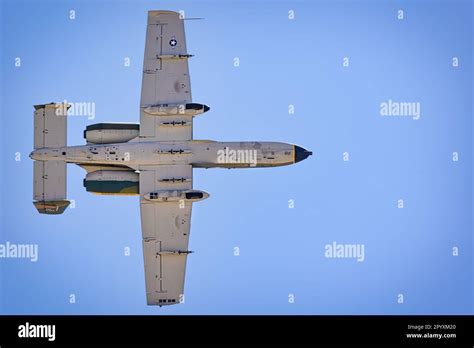
The A-10 Thunderbolt II first entered service in 1977, built specifically to counter the massive armored formations of the Warsaw Pact. Its design emphasized survivability and simplicity. Thick armor surrounding the cockpit—famously known as the titanium “bathtub”—protects the pilot from ground fire, while redundant flight systems allow the aircraft to continue flying even after severe damage.
Unlike high-performance fighter jets, the A-10 was intentionally designed to fly low and slow. This capability enables pilots to visually identify ground targets and deliver highly accurate fire support to troops below. The aircraft’s massive GAU-8 cannon, capable of firing nearly 4,000 rounds per minute, earned the Warthog its reputation as the ultimate armored-vehicle destroyer.
However, after decades of service in conflicts ranging from Operation Desert Storm to the wars in Iraq and Afghanistan, many defense planners began questioning whether the aircraft still had a role in modern warfare. The rise of stealth fighters such as the F-35 Lightning II and advanced multi-role aircraft created pressure to retire older platforms.
Yet the battlefield continued to evolve in ways that favored the A-10’s strengths rather than diminishing them.
The Rise of Drone Warfare and a New Mission
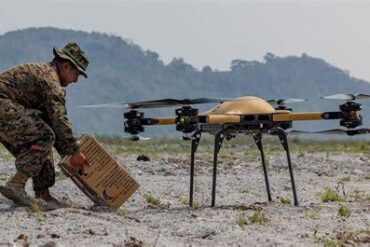
The rapid proliferation of cheap unmanned aerial vehicles (UAVs) has changed the strategic calculus of modern conflicts. Countries and non-state actors now deploy swarms of inexpensive drones capable of surveillance, loitering strikes, and harassment operations.
Among the most widely used systems are Iranian-designed Shahed drones, which are relatively slow propeller-driven aircraft but capable of causing serious damage when deployed in large numbers. These drones present a challenging problem for conventional air defense systems.
Traditional air-to-air missiles such as the AIM-120 AMRAAM or AIM-9X Sidewinder cost hundreds of thousands—or even over a million—dollars per shot. Using such expensive weapons against low-cost drones creates a severe cost-exchange imbalance, draining military stockpiles quickly.
This is precisely where the A-10 began to shine again.
APKWS II Rockets: The Technology Reviving the Warthog
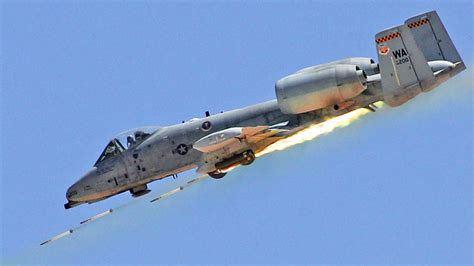
The turning point in the A-10’s modern relevance came with the integration of the APKWS II (Advanced Precision Kill Weapon System). This system converts standard 2.75-inch Hydra 70 rockets into precision-guided weapons by adding a laser guidance module between the rocket motor and warhead.
Originally designed for air-to-ground missions, the system proved surprisingly effective against aerial targets when paired with modern targeting pods. The concept is elegantly simple:
- A pilot or external platform designates a drone using a laser targeting system
- The APKWS rocket locks onto the reflected laser energy
- The rocket guides itself toward the target with high precision
Because the rockets are compact, they allow aircraft to carry far more ammunition than traditional missiles. A single rocket pod can contain seven guided rockets, meaning an A-10 can carry dozens of precision weapons on a single sortie.
The economic advantage is just as dramatic. Each APKWS rocket costs approximately $25,000 to $40,000, compared with more than $1 million for an AMRAAM missile. This cost efficiency allows the United States to counter drone swarms without exhausting its limited inventory of advanced interceptors.
Operation Epic Fury and the Return of the Warthog
The A-10’s new mission became particularly visible during Operation Epic Fury, a large-scale U.S. military campaign in the Middle East during 2026. During the conflict, American forces faced persistent drone threats targeting bases, ships, and regional infrastructure.
The Warthog quickly emerged as a valuable tool for defending personnel and facilities across the region. In addition to drone interception missions, A-10 aircraft carried out a wide range of operations including:
- Close air support for ground forces
- Maritime strike missions against hostile vessels
- Combat search and rescue support
- Defense of diplomatic facilities and military bases
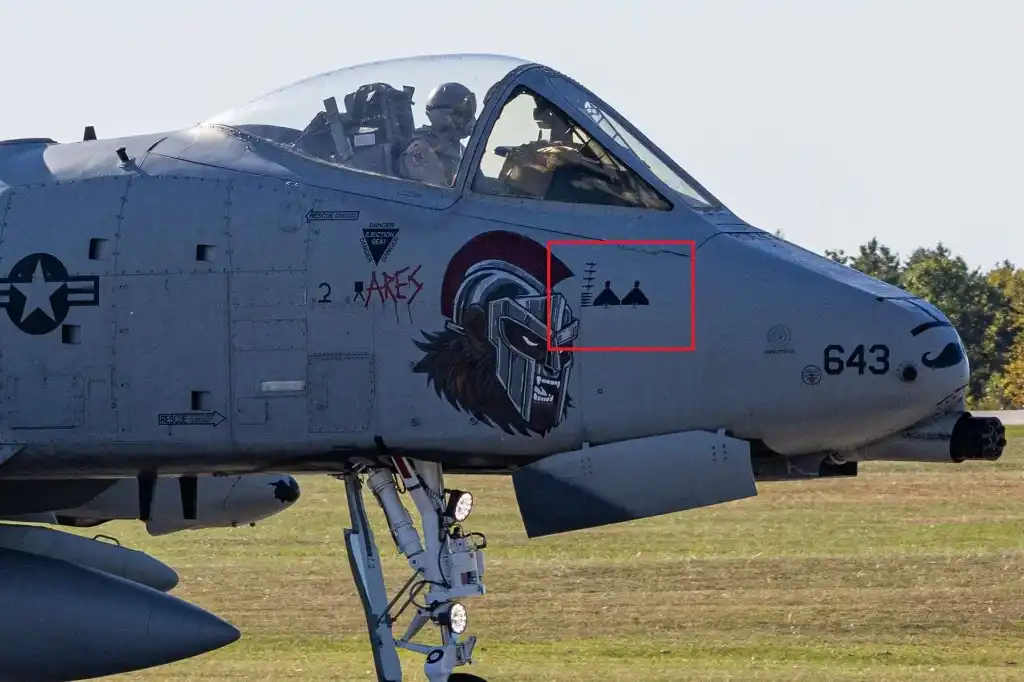
Reports from operational deployments even revealed Shahed drone silhouette kill markings appearing on the noses of some A-10 aircraft, highlighting the platform’s growing success in the anti-drone role.
Why the A-10’s Design Makes It Ideal for Drone Hunting
Ironically, the same characteristics that once made the A-10 perfect for destroying tanks now make it ideal for destroying drones.
The aircraft’s low-speed flight capability allows pilots to visually track small UAVs more effectively than pilots in high-speed fighters. Modern jets such as the F-15E Strike Eagle or F-16 Fighting Falcon can carry APKWS rockets as well, but their higher speeds make sustained low-altitude tracking more difficult.
Meanwhile, the Warthog’s ability to loiter over a battlefield for extended periods allows it to patrol areas where drone threats frequently appear. This endurance reduces response times and provides continuous aerial protection for troops and installations.
Additionally, the aircraft’s robust payload capacity means it can function as a flying arsenal of low-cost interceptors, capable of engaging multiple drones in a single mission without needing to return to base frequently.
The Strategic Importance of Low-Cost Air Defense
The resurgence of the A-10 is closely tied to a broader issue confronting the United States military: the depletion of high-end missile inventories.
Modern conflicts have revealed how quickly advanced munitions can be consumed. During the early stages of Operation Epic Fury, the United States and its allies reportedly spent nearly $30 billion in operations and munitions in just three weeks.
Some critical weapons stocks experienced dramatic reductions:
- Nearly 45% of Precision Strike Missile inventories expended
- Approximately 50% of THAAD interceptors used
- Around half of available Patriot missile stocks consumed
Replacing these sophisticated systems can take three to eight years, largely due to complex manufacturing processes and limited production capacity. By contrast, APKWS rockets can be produced quickly because they rely on existing Hydra 70 rocket supplies with an added guidance module.
This makes the system an essential part of a broader strategy to preserve expensive missiles for high-end threats such as enemy fighters or cruise missiles.
Extending the A-10’s Service Life to 2030
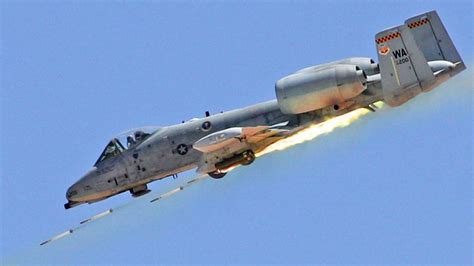
Recognizing the aircraft’s continued value, the Secretary of the Air Force announced that the A-10 fleet will remain in service until at least 2030, delaying earlier plans for retirement in 2026. The decision reflects a growing realization that advanced warfare requires a mix of high-end and low-cost solutions.
Future improvements to the APKWS system may further enhance the aircraft’s capabilities. Engineers are developing dual-mode guidance systems that combine laser tracking with passive infrared sensors, allowing rockets to maintain lock even if the laser designation stops during the final stage of flight.
There is also discussion about enabling fire-and-forget targeting, allowing pilots to launch multiple rockets simultaneously at different drones without continuous guidance.
These upgrades could transform the A-10 into one of the most efficient counter-UAV platforms in the world.
Why the Warthog Refuses to Disappear
For years, the A-10 seemed destined for retirement, replaced by stealth fighters and advanced multi-role jets. Yet every major conflict of the past two decades has revealed situations where the Warthog’s unique capabilities outperform more sophisticated aircraft.
Its combination of durability, simplicity, precision firepower, and operational affordability makes it exceptionally suited to modern warfare’s evolving challenges. As drone threats continue to expand across global battlefields, the need for platforms capable of neutralizing them efficiently will only grow.
The A-10 Warthog was once known primarily as a tank killer. Today, it has become something equally valuable—a cost-effective drone hunter that fills a critical gap in modern air power. Instead of fading into history, this iconic aircraft is proving that sometimes the most effective weapon is not the newest one, but the one that adapts best to the changing nature of war.