During the tumultuous days of World War I, as the skies over Europe buzzed with the rise of a new kind of warfare, few aviators etched their names into the annals of aerial legend quite like Willy Coppens, a Belgian pilot whose achievements were as extraordinary as they were daring. Amidst a war defined by mud, blood, and trench lines stretching from the North Sea to Switzerland, the cockpit of a fighter aircraft became a crucible of innovation and bravery. And it was in this crucible that Coppens achieved what seemed not just improbable—but downright impossible.
Born in 1892 in Watermael-Boitsfort, Belgium, Willy Coppens was no ordinary young man. As the war erupted, Belgium found itself under immediate threat from the German juggernaut, and Coppens, eager to serve, initially joined the army as an infantryman. Yet his destiny lay not on the ground but in the skies. Passionate and determined, Coppens paid for his own flying lessons in Hendon, England, an early aviation hub where the daring few learned to master machines that resembled canvas kites more than modern aircraft.
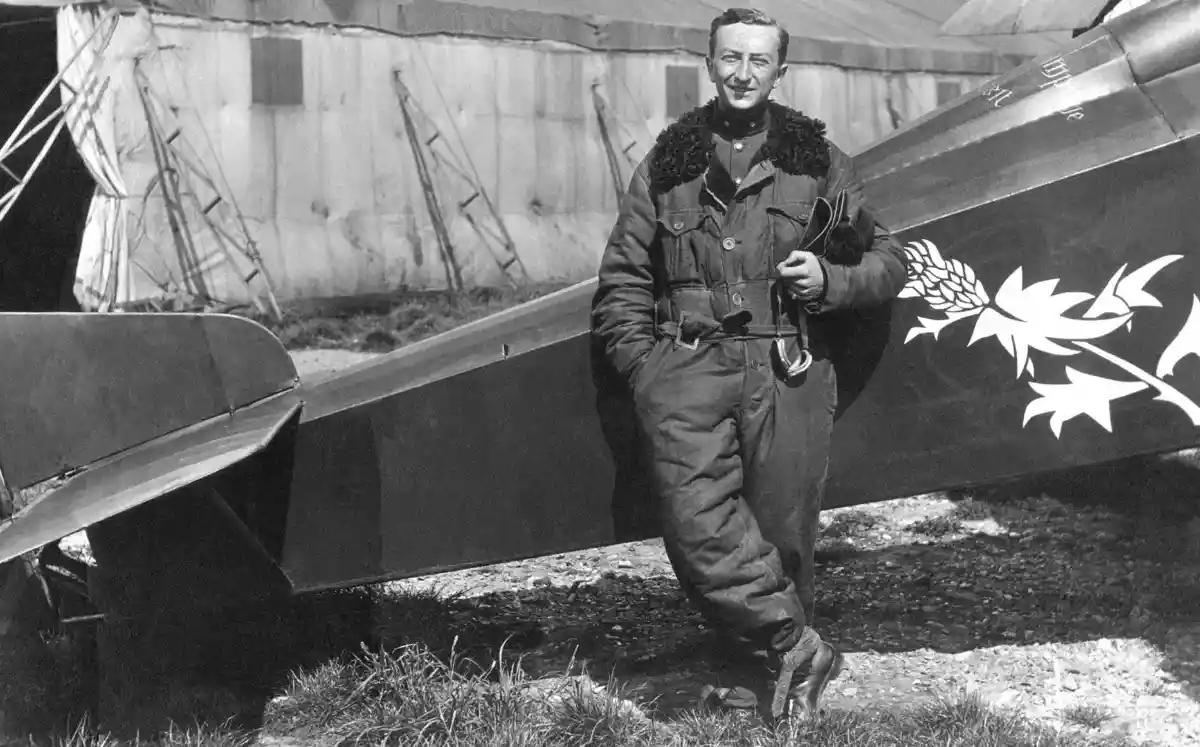
Coppens’ path to ace status wasn’t immediate. After his training, which included advanced instruction in France, he began flying two-seater reconnaissance aircraft, offering valuable support to ground forces. It was dangerous, monotonous work, and victories were few. But Coppens, ever the showman, loved to perform stunts in the air—rolling, diving, looping—while often evading enemy fire. He honed his reflexes and precision, attributes that would serve him when he transitioned into single-seat fighters, eventually making the Hanriot HD.1 his weapon of choice.
The Rise of the Balloon Buster
While many think of WWI dogfights when imagining early aerial combat, another deadly game played out above the trenches: the battle to destroy German observation balloons. These tethered hydrogen-filled behemoths were used by enemy forces to direct artillery fire with stunning accuracy. Eliminating them was crucial—but also incredibly dangerous. They were heavily defended by anti-aircraft guns, machine-gun nests, and even fighter patrols. Engaging them meant flying directly into a hornet’s nest.
It was into this perilous arena that Coppens entered, bringing both technical brilliance and fearless ingenuity. Dubbed a “Balloon Buster,” he specialized in these high-risk missions, using incendiary ammunition that could ignite the volatile hydrogen inside the balloons. But the danger wasn’t only from the enemy—these missions required flying at low altitudes, exposing pilots to small arms fire, and the blast from an exploding balloon could also damage the attacking plane.
Coppens, however, had a secret weapon: supreme confidence. He developed a unique tactic—firing at the balloon’s mooring cables, severing them and allowing the balloon to float upward, isolated and vulnerable. Then, he would climb, maneuver, and strike with pinpoint precision. Over time, he racked up an astonishing 37 confirmed kills against German balloons—more than any other pilot in the war.
The Most Impossible Landing in the Sky
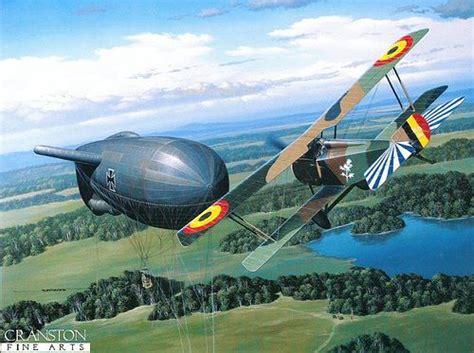
Among these 37 victories, one encounter stands far above the rest. In the haze of battle, sometime in 1918, Coppens spotted another enemy balloon moored on the edge of German lines. He employed his signature tactic, cutting the balloon’s tether lines, which sent the gas-filled colossus drifting into the sky. But what happened next defied all rules of aerial combat—and gravity.
Rather than destroying it outright with gunfire, Coppens calculated a bold move. As the balloon began to ascend, he pulled his Hanriot HD.1 up and over it, gradually lowering his aircraft until its undercarriage actually made contact with the crown of the balloon. What happened next has been described with incredulity by historians: Coppens landed his plane on top of the balloon.
For a brief moment, the fabric of the balloon held the weight of the biplane, sagging under the pressure. The German crew must have watched in shock as Coppens balanced atop their balloon like a hawk perched on prey. As the balloon began to sink under the strain, Coppens let gravity do its work. His aircraft slid off the side, and just as it seemed the stunt might end in disaster, he reengaged his engine, soared upward, and watched as the balloon burst into flames and collapsed to the earth.
The scene was surreal—something out of a dream or comic strip rather than the muddy, visceral horror of WWI. But it was real. Coppens had turned an aerial assassination into a spectacle of gravity-defying daring, and with that, etched his name into legend.
A Legend Sealed in Fire and Sacrifice
Coppens’ career did not end there. He continued flying sorties, engaging enemy balloons, and perfecting his audacious tactics. But even legends are not invincible. In October 1918, just weeks before the armistice that would end the war, Coppens embarked on what would be his final combat flight.
Flying over Northwestern Belgium, he targeted another balloon and made his approach. But this time, German ground gunners were ready. A hollow machine gun round tore through the cockpit, striking Coppens in the left leg. Miraculously, he managed to land his aircraft, bloodied but alive. He was rushed to medical care, where doctors found the damage to his leg too severe. The decision was made to amputate.
Though he would never fly in combat again, Coppens refused to be grounded in spirit. He remained with the military, later serving as a military attaché in countries including Great Britain, Italy, France, and Switzerland. His legacy, however, had been cemented in the skies over war-torn Europe. Few pilots ever matched his tally against balloons, and none dared to imitate his most impossible feat.
The Hanriot HD.1: Underrated but Deadly
Coppens’ preferred aircraft, the Hanriot HD.1, was not the flashiest or fastest fighter of the war. It was underpowered compared to the SPAD or the Sopwith Camel, and many nations passed over it. But Belgium adopted it enthusiastically, and in Coppens’ hands, it became a weapon of myth.
Constructed with wood and fabric, it had a single synchronized Vickers machine gun, enabling it to fire through the propeller arc. Lightweight and agile, it was ideal for the low-altitude precision work demanded of balloon busters. Coppens customized his aircraft, often painting it in vivid blue and white, and retrofitting it for his incendiary missions.
While the plane itself was not revolutionary, the way Coppens flew it was. He turned a mid-tier fighter into a deadly predator, using maneuverability, surprise, and audacity to dominate the skies.
A Century Later: Remembering a True Sky Warrior
More than 100 years have passed since Willy Coppens made that impossible landing. Yet the story endures, told in the hushed tones reserved for those few who push the boundaries of what is humanly possible. His life and legend remain an inspiration not just to aviators, but to all who face the odds with courage and ingenuity.
He died in 1986 at the age of 94—a witness to the birth of aerial combat and the world that followed. But for anyone who studies military aviation or the history of World War I, his name will always be associated with the balloon he turned into a runway, and the moment when gravity, war, and one man’s daring came together in an act that still seems impossible today.