In an industry that churns through models faster than a runway consumes runway lights, the Beechcraft Bonanza stands apart: in continuous production since 1947, with more than 17,170 Bonanzas and a 26,165-strong family of 35, 36, Debonair, Baron and Travel Air variants delivered. Yet its final chapter is written in single digits; in 2025 Textron Aviation announced that production of the Bonanza G36 and Baron G58 would end once the order book clears. The story of how the world’s longest-produced aircraft became a heritage product without ever becoming a museum piece explains both the loyalty and the decline.
A Radical Design for a Four-Seat Single
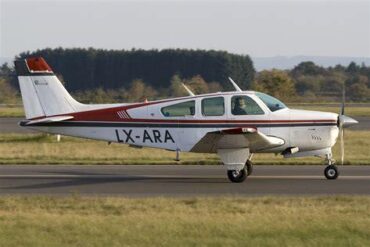
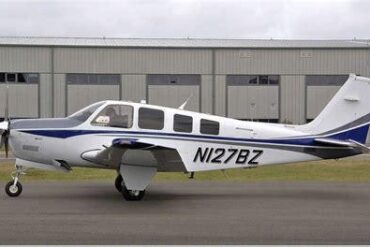
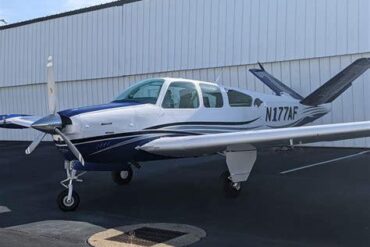
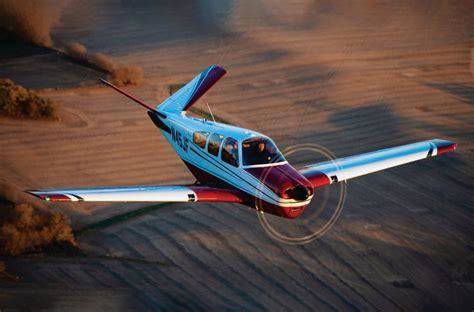
When Beech Aircraft Corporation introduced the Bonanza in 1947, the aircraft was a revelation: a smallish, all-metal four-seater with a distinctive V-tail that looked like nothing else in general aviation. The AOPA describes it as the ultimate piston single, a leader in style, speed and handling since its first appearance. That original design proved remarkably pliable. Beechcraft lengthened cabins, added a conventional tail option, raised horsepower, squeezed in two more seats and renamed the aircraft more than a dozen times over years of evolution.
From a Mass-Produced Aircraft to a Specialist Product
For decades, the Bonanza was the aircraft many pilots aspired to own. It became a premium product that never needed to match Cessna 172 volume to succeed. A new Bonanza G36 commands roughly $1 million, and buyers have paid that premium because the airframe’s fundamentals are genuinely sound: fast enough to shame a Cessna, simple and economical compared with a turboprop. That durable niche kept the program viable far longer than its order book alone would suggest.
A Community of Owners Who Bought the Same Plane Twice
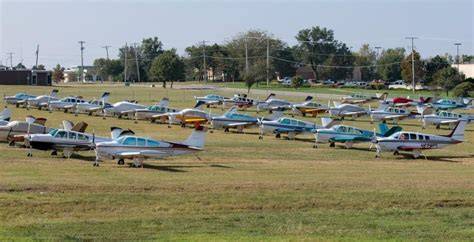
Beechcraft’s own longevity language returns again and again to its passionate legion of owners, an affinity base so organized that it feels closer to Harley-Davidson than to a typical aircraft type. The American Bonanza Society exists precisely because the airplane became a community and an identity. Critically, a loyal base does not want the newest, cleverest aircraft on the ramp. It wants the aircraft it already understands, trusts and belongs to. Largely because of that community, Beechcraft was never forced to redesign the airframe in ways that could alienate conservative customers and the $1 million price tag was never seriously threatened by a cheaper competitor.
The Improvement That Made Replacement Unnecessary
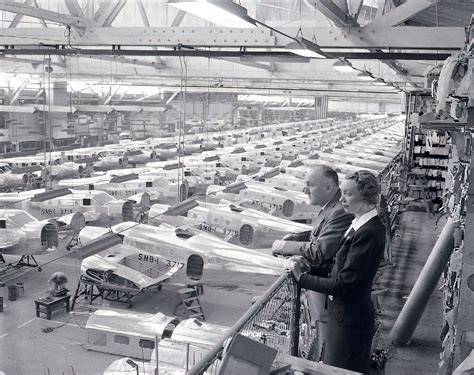
The aircraft’s greatest asset eventually became a marketing problem. Because the Bonanza is exceptionally well built, a 1980s airframe still flies with a modern powerplant after an overhaul, which means many owners never need to visit a dealer. At its peak, Beechcraft delivered hundreds of Bonanzas a year. It delivered 13 in 2017, none in 2021, three in 2022, and five more each in 2023 and 2024, while late-delivery aircraft still carried the full fixed cost of tooling, factory space, a dedicated line, specialized employees and management. Mass-production economics cannot sustain five aircraft per year.
When the Money Shifted to a Different Kind of Airplane
The Bonanza’s real competition was not a faster single; it was the shifting expectations of the affluent owner-pilots who once bought it. Cirrus Aircraft built the SR22 around a glass cockpit, a whole-airframe parachute, and Safe Return emergency autoland, making safety an explicit selling point and turning a capable four-seater into a product that feels like a modern appliance. In 2025, Cirrus delivered 691 aircraft across its SR20, SR22 and SR22T range; Textron’s Cessna delivered 311 piston singles and only five Bonanzas, while the Diamond DA50 RG, Piper M350, Cessna 182 Skylane and Cessna Turbo Stationair HD competed for the same hangar dollars.

A Heritage Program in Transition
Textron has promised that operators will keep receiving parts, maintenance and support, and some industry voices expect the final delivery around 2027, though the company has not confirmed it. In its public statement, Textron said it would end production of the Baron G58 and Bonanza G36 once current orders are fulfilled, calling the move a strategic shift that will let Textron Aviation focus on welcoming the Beechcraft Denali into its product portfolio. Order intake effectively stopped in late 2023 or early 2024, and just four Bonanzas and Barons were delivered in the first half of 2026.
Why the Longest Production Run Is Also a Cautionary Tale
The Bonanza proves that a strong loyal base can do something remarkable: it can keep a flightworthy, genuinely good airframe in production for nearly eight decades, across depressions, deregulation and the rise of the glass cockpit. But the loyalty that extended the program also protected it from the feedback it might have used to modernize sooner. A shrinking, aging base of enthusiasts protected the Bonanza from irrelevance while it quietly drifted out of relevance. When the last new Bonanza leaves Wichita, the aircraft will leave behind a rare record: an airplane that outlasted dozens of competitors while proving that heritage can hold a line open, and that heritage alone, eventually, cannot.