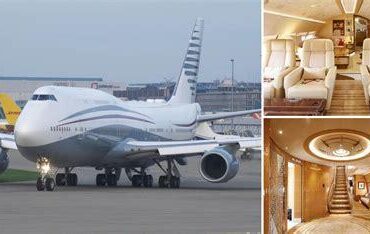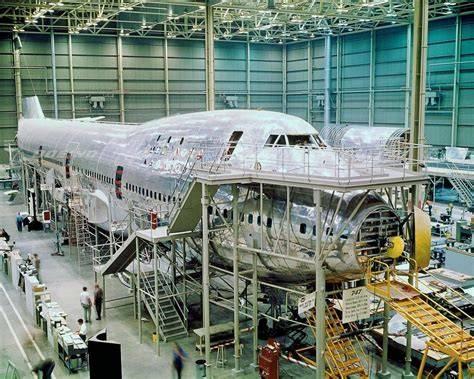
The Boeing 747 achieved something almost no other commercial aircraft has come close to matching: it remained in continuous production for 55 years. Boeing assembled the first 747 in 1968, flew the prototype for the first time in February 1969, and delivered the first production aircraft to Pan American World Airways before the type entered commercial service in January 1970. Production finally ended in 2023, after 1,573 aircraft had been ordered across the program.
That longevity is even more remarkable because the 747 was not simply a successful aircraft that survived unchanged. Boeing repeatedly modified the design to keep it relevant as airline economics, engines, passenger expectations, and long-haul networks evolved. The aircraft moved from being the world’s dominant high-capacity passenger jet to becoming an increasingly important freighter, allowing the program to survive long after most passenger demand for four-engine aircraft had disappeared.
The 747’s story therefore is not simply about an iconic airplane lasting for half a century. It is about how a remarkably adaptable design repeatedly found a commercially valuable role even as newer widebody aircraft became more efficient. The 747 ultimately outlasted every rival jumbo because it occupied several market niches at once, offered capabilities that competitors struggled to duplicate, and had one particularly important advantage: there was almost always another reason for an airline to need it.
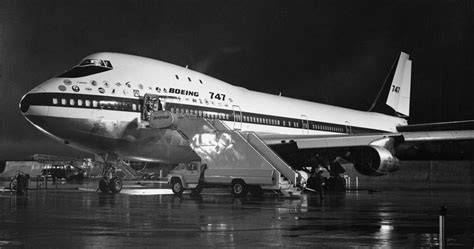
How the Boeing 747 Created the Jumbo Jet Era
The origins of the 747 can be traced to Juan Trippe, the legendary president of Pan American World Airways. Trippe wanted Boeing to build an aircraft roughly two and a half times larger than the airliners of the period while reducing costs per available seat mile by approximately 30 percent. Boeing accepted the challenge and developed an aircraft that was enormous by late-1960s standards.
The resulting 747 transformed the economics and visual identity of commercial aviation. Its twin-aisle cabin could accommodate far more passengers than earlier jets, with some configurations allowing up to 10 seats across in economy class. Airlines could spread operating costs over a much larger number of seats, while the additional capacity made lower fares economically possible. The 747 consequently became one of the aircraft most closely associated with the expansion of mass international air travel.
Yet sheer passenger capacity was only part of the equation. The original 747-100 did not possess spectacular range by modern standards, but Boeing continuously increased its maximum takeoff weight while engine manufacturers developed engines with greater thrust and better fuel efficiency. The 747-200, 747SP, and eventually the 747-400 gained extraordinary long-haul capability, allowing airlines to establish routes that were difficult or impossible with earlier aircraft.
That combination of capacity and range made the 747 unusually flexible. It could transport hundreds of passengers across oceans while also carrying substantial cargo beneath the passenger deck. For decades, airlines were not simply buying seats; they were buying an aircraft capable of opening an entirely new scale of international network.
The 747 Found a Market That Rivals Could Not Own
The enormous size of the 747 initially created a problem. Airlines were not always confident that they could fill such a large aircraft, particularly on routes with less predictable demand. That concern helped create the market for smaller widebodies such as the McDonnell Douglas DC-10 and Lockheed L-1011 TriStar.
Both aircraft offered twin-aisle cabins while using three engines rather than four. Their smaller capacity made them attractive for routes where a 747 would have been excessive, and later versions gained enough range for transatlantic operations. But the smaller widebody market quickly became crowded.
Only 386 DC-10s were sold to civilian customers, while Lockheed delivered 250 L-1011s. Neither program achieved the commercial success required to remain a major long-term competitor to Boeing. Airbus then introduced the twin-engine A300, while the later A310 and Boeing 767 strengthened the middle of the widebody market.
This created an unusual situation. Smaller widebodies had a much larger overall market than the 747, but several manufacturers were competing within that space. The 747, by contrast, effectively owned the very-large-aircraft category. Airlines seeking a massive long-range aircraft had few alternatives, especially when range and payload mattered simultaneously.
The aircraft’s position became even stronger because the most capable 747 versions could fly significantly farther than competing trijets. Boeing therefore did not need the 747 to dominate every widebody sale. It only needed to remain the aircraft that airlines selected when capacity, range, and payload were more important than having the lowest possible trip cost.
Why the 747-400 Became the Defining Version
Boeing’s approach to improving the 747 was not always universally appreciated by airline customers. Over the years, the company introduced multiple variants with different combinations of range, weight, engines, and cabin characteristics. While each change addressed a particular requirement, airlines increasingly wanted one aircraft that combined the latest improvements rather than continuing to manage a growing collection of closely related versions.
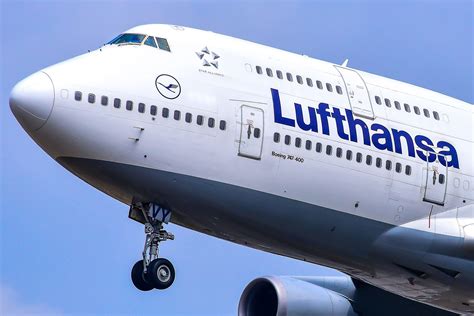
The answer was the 747-400, launched in 1985 and introduced into service in 1989. It brought together many of the program’s most important developments. It carried more payload than the 747-200, offered greater range than the 747SP, incorporated the stretched upper deck associated with the 747-300, and featured a significantly more modern flight deck and operating system.
The 747-400 became the most commercially successful version of the family by a considerable margin. Boeing received 694 orders for the 747-400, approximately 44 percent of all orders for the entire 747 program. Its success demonstrated that the basic 747 architecture still had considerable value more than 15 years after the first aircraft entered service.
More importantly, the 747-400 arrived at exactly the right point in aviation history. International travel was expanding rapidly, airlines were developing enormous global networks, and long-haul routes continued to demand aircraft capable of carrying substantial numbers of passengers over very long distances.
Range and Payload Kept the 747 Competitive
During the 1990s, the 747 finally encountered aircraft that could exceed some of its range capabilities. The McDonnell Douglas MD-11, Airbus A340-300, and later Boeing 777-200ER offered airlines increasingly capable alternatives.
However, range alone did not determine the 747’s usefulness. The critical advantage was its enormous payload capacity. A long-range aircraft can technically fly a great distance, but airlines make money by transporting passengers and cargo. An aircraft that reaches its maximum range only after sacrificing a substantial amount of payload may be less useful on demanding long-haul missions than an aircraft with greater structural capacity.
The 747-400 was significantly larger than the A340-300 and 777-200ER, and its combination of size and range meant it remained attractive to airlines that needed to transport large payloads over long distances. The 777-200ER ultimately became a hugely successful aircraft, but the passenger 747-400 still narrowly outsold it.
The same logic was even more important in the cargo market. Boeing had designed the 747 with freight operations in mind from the beginning, anticipating a future in which supersonic passenger aircraft might eventually replace conventional long-haul jets. That prediction did not materialize, but the freighter strategy proved invaluable anyway.
Boeing sold 166 747-400 freighters and 61 combi aircraft. The 747’s enormous fuselage, high payload capability, long range, and distinctive nose cargo door made it particularly useful for transporting oversized freight. In the cargo market, there was no direct aircraft offering the same combination of characteristics.
The Airbus A380 Was Not Enough to End the 747
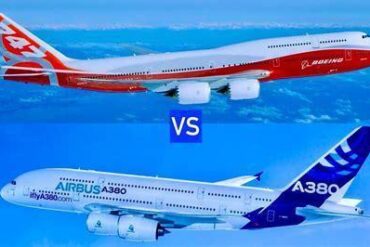
The most obvious attempt to challenge the 747 came from Airbus. The Airbus A380 entered commercial service in 2007 as an aircraft even larger than the 747. Its double-deck configuration offered enormous passenger capacity, while its design promised extremely low costs per seat on routes with sufficient demand.
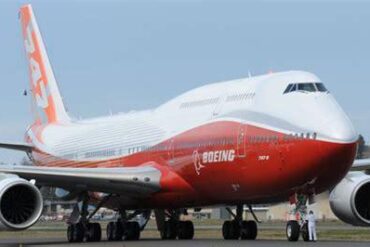
On paper, the A380 was the natural successor to the jumbo jet. It could carry more passengers, offered greater payload capability, and provided greater range than earlier 747 variants. Boeing responded with the 747-8, launched in 2005 and incorporating a longer fuselage, new engines, improved aerodynamics, and updated systems.
But the aviation market was changing faster than either aircraft could adapt. Airlines increasingly preferred frequency and flexibility over simply putting more passengers on one flight. The economics of operating four engines also became increasingly difficult as advanced twin-engine aircraft became more capable.
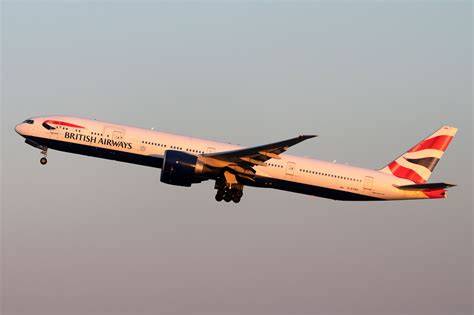
The decisive aircraft was not actually the A380. It was the 777-300ER.
Introduced in 2004, the 777-300ER offered a compelling middle ground. It could carry nearly as many passengers as a 747 on many configurations while using only two engines. It also offered excellent range and substantially lower fuel consumption than a four-engine aircraft. Most importantly, its actual fuel-burn performance exceeded many expectations, making it even more attractive to airlines.
The 777-300ER did not need to replace every capability of the 747. It simply needed to provide enough capacity and range at a much lower operating cost. That changed the economics of the entire large-aircraft market.
Why the 747-8 Could Not Save the Passenger Jumbo
Boeing launched the 747-8 as the final major evolution of the design. The aircraft was longer than the 747-400 and incorporated modern engines and aerodynamic improvements. For cargo operators, it remained highly attractive. For passenger airlines, however, the business case had become much harder to justify.
The passenger 747-8 received only 48 orders, an extraordinary contrast with the hundreds of orders secured by the 747-400. Boeing delivered the final passenger 747 to Korean Air in 2017, effectively ending the aircraft’s career as a mainstream passenger airliner.
The A380 had squeezed the 747 from above by offering greater capacity, while the 777-300ER attacked it from below with dramatically better operating economics. The 747-8 occupied an increasingly narrow space between those two concepts.
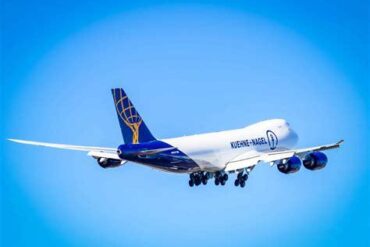
Yet the freighter version remained useful. Boeing received 107 orders for the 747-8F, more than twice the number of passenger 747-8s. The aircraft’s payload capacity and nose-loading capability gave cargo operators something that neither the 777-300ER nor A380 could easily replicate.
This distinction explains why the 747 survived even after passenger demand collapsed. Its final customers were not primarily buying an iconic jumbo jet. They were buying an exceptionally capable large freighter.
Cargo Operations Extended the Boeing 747’s Life
The 747’s freighter role was arguably the single most important reason the aircraft reached 55 years of production. Boeing had originally protected the program against a possible shift toward supersonic passenger travel by designing the aircraft to work exceptionally well as a cargo platform.
Ironically, the failure of supersonic transports to replace conventional long-haul aircraft meant that the 747 remained a passenger icon for much longer than anticipated. But once efficient twin-engine aircraft became dominant, the freighter concept that Boeing had developed decades earlier became the aircraft’s lifeline.
The 777F was smaller than the 747 and therefore could not completely duplicate its capacity. For years, the 747 remained the only large long-range freighter offering its particular combination of volume, payload, range, and loading flexibility.
Only newer designs such as the Airbus A350F and Boeing’s 777-8F began to provide alternatives capable of approaching the capabilities that made the 747 so valuable to cargo operators. Even then, the 747-8F retained an advantage in maximum payload because it was effectively the largest evolution of a design built around heavy long-range transportation.
The End of a 55-Year Production Run
Boeing’s decision to end 747 production was therefore not caused by a sudden failure of the aircraft. The opposite is closer to the truth. The aircraft had successfully evolved through multiple generations until the market around it had fundamentally changed.
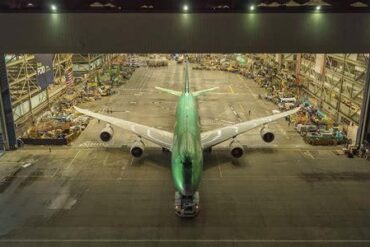
The final 747 was delivered in 2023, marking the end of 55 years of continuous production. More than 1,500 aircraft had been ordered, passenger airlines had used the type to connect continents, cargo operators had transformed it into a heavy-lift workhorse, and the aircraft had survived the arrival of trijets, twin-engine widebodies, the A380, and increasingly sophisticated long-range aircraft.
Its production run surpassed that of every other widebody airliner. The Boeing 767, which ranks second, reached roughly 45 years of production. The gap demonstrates just how unusual the 747’s longevity really was.
The Boeing 747 outlasted every rival jumbo because it was never dependent on a single role. Its enormous passenger capacity made it revolutionary in the 1970s, its long range kept it relevant through the 1980s and 1990s, the 747-400 restored its competitiveness with a comprehensive redesign, and its freighter capability kept production alive after passenger airlines had largely moved toward twin-engine aircraft.
The Queen of the Skies eventually lost the commercial battle to more efficient designs, but it did so only after changing the aviation industry and remaining useful for more than half a century. Few aircraft have ever combined size, range, payload, versatility, and adaptability so successfully. That is why the 747 was not merely the most recognizable jumbo jet. It became one of the longest-lived commercial aircraft programs in aviation history.