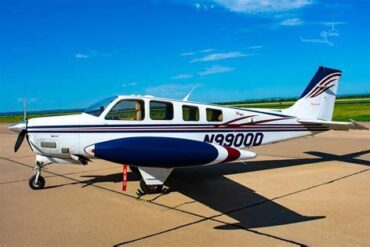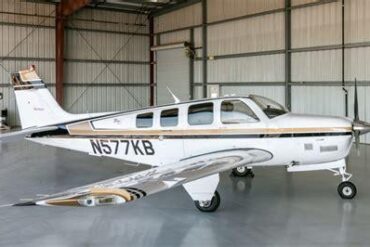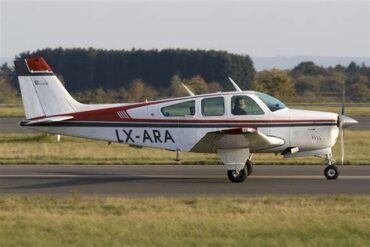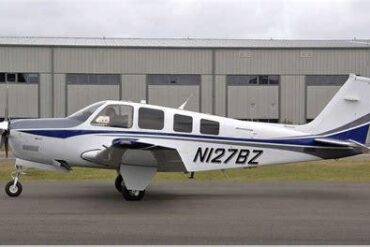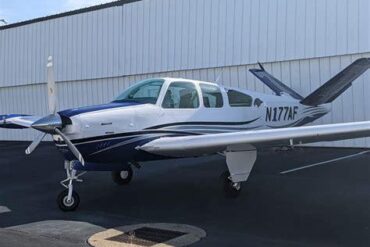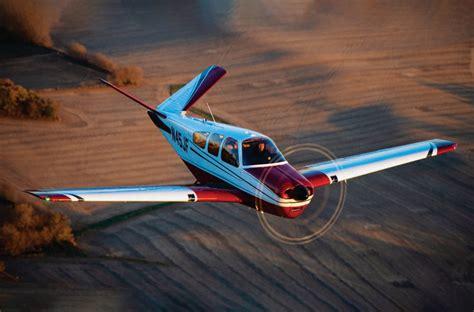
The Beechcraft Bonanza V-tail, introduced in 1947 as the Model 35, remains one of the most iconic aircraft designs in general aviation. Its distinctive V-tail configuration, which sparked both fascination and controversy, made it a standout on airfields and a symbol of postwar engineering innovation. Over the decades, it underwent numerous refinements, leading to the development of the A36 Bonanza, a more utility-driven evolution of the original platform. In this article, we examine the legacy, performance, structural engineering, market value, and pilot sentiment surrounding these two models—the V-tail Bonanza and the A36—to understand why each continues to command attention in the aviation world.
Evolution of the Beechcraft Bonanza
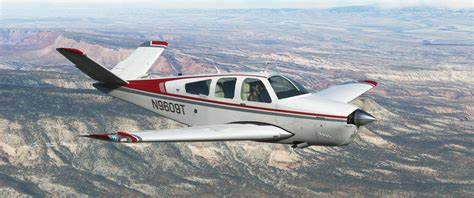
The original Beechcraft Model 35 made its debut just two years after World War II, signaling a new era for civilian aviation. Designed to be lighter, faster, and more modern than the taildraggers that dominated the market, it featured a revolutionary tricycle landing gear, a laminar-flow wing, and most notably, the V-tail, also known as the “ruddervator.” This radical tail structure reduced drag and weight, promising better speed and handling.
The aircraft was powered initially by a 165-hp Continental E-185 engine, giving it respectable performance for its class. However, this was just the beginning. Beechcraft continued to refine the V-tail design through the decades, producing sub-models such as:
-
C35: Featured a 205-hp engine and increased gross weight.
-
J35: Upgraded to a 250-hp IO-470-C engine and larger cabin windows.
-
N35: Introduced a redesigned instrument panel and strengthened structure.
-
P35 and S35: Brought in fuel-injected engines, tip tanks, and advanced avionics.
These iterations marked an effort to balance performance improvements with the unique handling characteristics—and in some cases, structural concerns—introduced by the V-tail configuration.
The V-Tail Controversy and Structural Legacy
The V-tail was initially touted as a design innovation, but by the late 1950s and early 1960s, concerns over in-flight breakups began to emerge. These were attributed not just to the design itself but also to pilot misapplication of controls and aerodynamic loading during turbulence. The FAA mandated structural reinforcements, and Beechcraft conducted wind tunnel testing, resulting in significant tail modifications. Still, the V-tail earned an unfair moniker—the “Doctor Killer”—due to high-profile accidents involving affluent but undertrained private pilots.
However, it’s critical to clarify: pilot error and inadequate training, not inherent design flaws, were responsible for most incidents. Properly maintained and flown within limits, the V-tail remains a fast, stable, and rewarding aircraft.
Rise of the A36: Practicality Over Panache
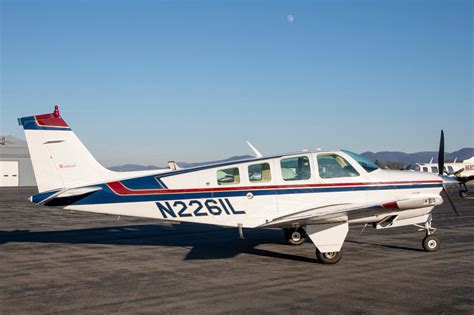
In the 1970s, Beechcraft introduced the A36 Bonanza, a complete rethink of the platform focused on utility and market demand. While it shared the Bonanza name and basic wing design, it featured a conventional tail, a stretched fuselage, and room for six seats—more akin to a flying SUV than a sports coupe.
Performance-wise, the A36 was powered by a 300-hp Continental IO-550-B engine, offering greater climb rates and range. The fuselage stretch allowed for club seating in the rear, appealing to business travelers and families. The cargo door, absent in the V-tail models, made it better suited for mission-specific tasks like medical transport, aerial photography, and charter operations.
Handling and Flight Dynamics
The V-tail Bonanza’s handling is often described as “lively.” Its aerodynamics produce a responsive, almost sporty feel. However, this can demand more of the pilot, especially during turbulence or when flying on instruments. Rudder and elevator inputs are combined through the V-tail’s ruddervator system, requiring a nuanced touch.
The A36, by contrast, is forgiving and balanced. Its conventional tail stabilizers isolate pitch and yaw control, making it a better platform for instrument flying and long-haul missions. In terms of cross-country comfort, the A36 wins—hands down—thanks to its roomier cabin, superior sound insulation, and better climate control.
Instrumentation and Avionics Progression
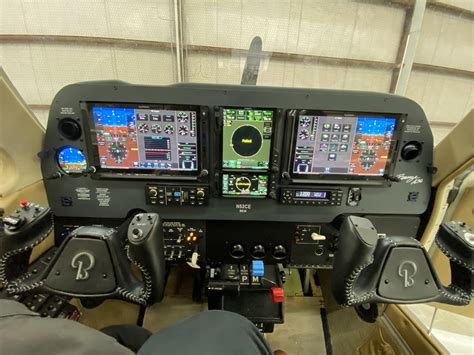
Early V-tail Bonanzas came equipped with the minimal instrumentation of the late 1940s, though many have since been retrofitted with modern glass cockpits. Models from the mid-60s onward incorporated dual NAV/COMs, transponders, and autopilots, a necessity as general aviation aircraft were increasingly used for complex airspace navigation.
The A36, especially post-1984 versions, came standard with integrated avionics suites, including GPS, IFR-certified autopilots, and digital engine monitoring. It became the platform of choice for owners looking to step into light IFR operations or commercial pilot training.
Market Comparison: V-Tail vs A36
In today’s used aircraft market, the price spread between V-tail Bonanzas and A36s is considerable:
-
V-tail Model 35 (late variants like the S35) can be found from $80,000 to $150,000, depending on engine hours, avionics, and condition.
-
A36 Bonanzas typically range from $200,000 to over $500,000, particularly those upgraded with Garmin G1000 panels and low-time engines.
Pilots like Ben Younger, an accomplished director and licensed pilot, favor the V-tail for its retro charm and performance per dollar. Conversely, Jonathan Welsh, a contributor to aviation publications, notes that for frequent travel, cargo needs, and family flying, the A36 remains unbeatable.
Maintenance and Long-Term Support
One of the few challenges facing V-tail owners today is parts availability and structural support, especially for models pre-dating the mid-60s. The swage buckle corrosion issue, found in specific serial numbers, poses a known maintenance hurdle and must be addressed through inspections and compliance with airworthiness directives.
A36 aircraft benefit from a larger installed base, continued aftermarket support, and standardized parts chains. They are easier to insure and maintain, and more mechanics are trained on their systems due to their operational similarity to newer aircraft.
Environmental Concerns and the 2030 Fuel Shift
As the aviation industry prepares for unleaded avgas transitions by 2030, both models face uncertainty. However, Bonanzas equipped with modern fuel-injected engines are better positioned for compliance with future fuels. The A36, particularly with its IO-550-B, has broader STC support for alternative fuels, while many older V-tails may require engine retrofits or fuel system modifications.
Final Verdict: Which Bonanza Fits the Mission?
Choosing between the V-tail Bonanza and the A36 comes down to mission profile, budget, and pilot preference. The V-tail is ideal for:
-
Pilots seeking vintage style and responsive handling.
-
Enthusiasts with mechanical knowledge or access to specialized maintenance.
-
Budget-conscious owners seeking performance at lower acquisition cost.
The A36, however, stands out for:
-
Operators needing six seats and long-range comfort.
-
IFR flight and cross-country travel.
-
Commercial or utility flying needs.
Ultimately, both aircraft embody Beechcraft’s engineering excellence, but cater to distinct aviation identities—the V-tail as a symbol of 20th-century innovation, the A36 as a refined, enduring workhorse of the skies.
FAQs
What is the main advantage of the V-tail Bonanza?
The V-tail Bonanza offers a unique combination of aerodynamic efficiency, lower drag, and iconic styling. Its light control feel and cruise speed performance remain attractive to pilots seeking a retro, yet capable flying experience.
Is the V-tail Bonanza safe to fly today?
Yes, provided it is maintained to FAA standards and flown within its design envelope. Many of the original design concerns have been mitigated through structural upgrades and pilot education. Pre-buy inspections and AD compliance are essential.
Why do pilots choose the A36 over the V-tail Bonanza?
Pilots prefer the A36 for its greater cabin space, conventional tail for easier handling, and better support infrastructure. It’s the superior option for families, business travelers, and those flying long distances regularly.