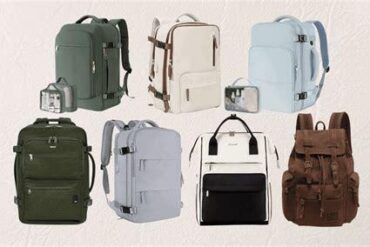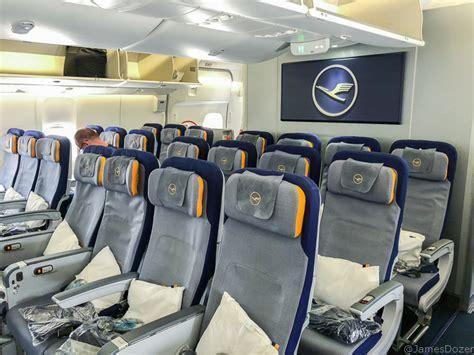
Lufthansa’s latest economy fare change is doing more than reducing the amount of baggage passengers can bring onto European flights. The introduction of Economy Basic changes the meaning of the cheapest Lufthansa ticket by removing something that many travelers have traditionally considered a normal part of flying with a major full-service airline: a cabin-sized carry-on bag. On selected short- and medium-haul European routes, passengers buying the lowest fare are now limited to a small personal item that must fit under the seat, while a conventional cabin bag becomes an additional purchase.
That change is significant because Lufthansa is not simply trimming a minor perk. A carry-on bag can be one of the most useful elements of a short-haul airline ticket, particularly for passengers traveling for two or three days who do not want to check luggage. Under the new structure, the advertised fare can look attractive at first glance, but travelers who need more packing space must pay extra. The result is a fare that increasingly resembles the stripped-down model associated with low-cost airlines, despite Lufthansa remaining one of Europe’s major traditional full-service carriers.
More surprisingly, the new restrictions affect many passengers who might normally expect their loyalty status to protect them from the most restrictive baggage rules. Most Miles & More and Star Alliance elite travelers do not receive a carry-on exemption when booking Economy Basic, meaning that choosing the cheapest fare can override privileges that frequent flyers have historically associated with their status. HON Circle Members and Senators remain exceptions and receive a larger carry-on allowance, but the change still represents a notable shift in how Lufthansa connects loyalty benefits with the fare actually purchased.
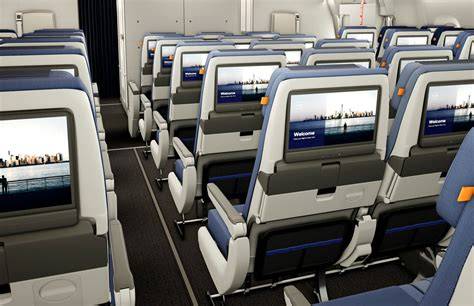
What Lufthansa Economy Basic Actually Includes
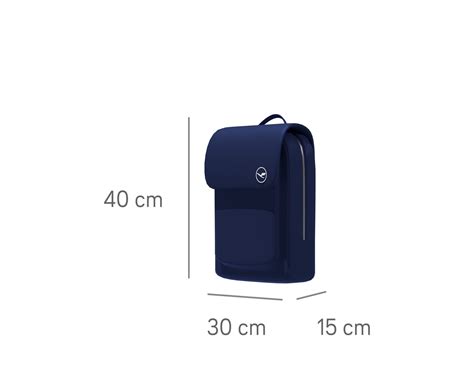
The central feature of Lufthansa’s new Economy Basic fare is its unusually small free baggage allowance. On covered European short- and medium-haul flights, passengers receive only one personal item measuring approximately 16 × 12 × 6 inches (40 × 30 × 15 cm). That item has to fit beneath the seat in front, making it substantially smaller than the standard cabin trolley many travelers associate with European economy travel.
The difference becomes obvious when considering the amount of space available. Lufthansa’s permitted personal item provides roughly 1,100 cubic inches, or about 18 liters, of capacity. That is enough for a compact backpack, handbag, or similarly sized bag, but it is considerably less than what many passengers can comfortably use for a short trip. A traveler carrying shoes, several changes of clothing, toiletries, electronics, and a jacket could quickly find the available space exhausted.
The important point is that Lufthansa has not eliminated cabin baggage altogether. Instead, it has moved the conventional carry-on bag outside the basic fare. Passengers who need a standard cabin bag weighing up to 8 kilograms, or roughly 18 pounds, can add one for a fee that typically starts at around €15 when purchased in advance. The precise cost can vary depending on circumstances, but the principle is straightforward: the bag that was once bundled into the economy experience is now an optional paid service for Economy Basic travelers.
This creates a different purchasing calculation. Someone comparing Lufthansa with another airline may initially see the lowest Economy Basic fare and assume the difference is relatively small. Once a carry-on is added, however, the real price can move much closer to a higher Lufthansa fare that already includes more flexibility. Travelers therefore have to evaluate not only the advertised ticket price but also what they actually need to take onboard.
Lufthansa Economy Basic Is Limited To European Flights
The new baggage restriction is not applied throughout Lufthansa’s global network. It is focused on short- and medium-haul European services, creating a clear distinction between the airline’s European economy product and its long-haul offering.
On long-haul flights, Lufthansa continues to provide a more traditional economy package, including a cabin bag and checked baggage under the applicable fare conditions. That difference is important because it shows that Lufthansa is not abandoning the traditional full-service model across its entire network. Instead, it is targeting the part of the business where passengers are particularly sensitive to price and where competition from low-cost carriers is strongest.
Short-haul European aviation has become one of the most aggressively segmented parts of the airline industry. Passengers can often choose between numerous airlines operating similar routes, and fare comparison websites place enormous emphasis on the lowest available headline price. A carrier that removes baggage from its cheapest ticket can therefore advertise a lower starting fare while retaining the ability to charge passengers who want additional services.
For Lufthansa, Economy Basic fits naturally into that environment. The airline can maintain a highly visible low entry price while preserving more inclusive products for travelers willing to pay more. The strategy is particularly relevant on routes where passengers may be choosing between Lufthansa and budget competitors based primarily on the initial fare shown in a search result.
Lufthansa’s Personal Item Is Smaller Than Ryanair And easyJet
One of the most striking aspects of the new policy is how Lufthansa’s free personal-item allowance compares with some of Europe’s best-known low-cost airlines. The traditional assumption is that a full-service carrier should provide a more generous baseline than an ultra-low-cost competitor. Lufthansa’s Economy Basic challenges that assumption.
Ryanair allows a personal item measuring up to 40 × 25 × 20 cm, while easyJet permits a considerably larger item measuring up to 45 × 36 × 20 cm under its standard allowance. Although dimensions do not translate perfectly into usable capacity because bags have different shapes, the approximate volumes illustrate the gap. Ryanair’s allowance is around 24 liters, while easyJet’s is approximately 32.4 liters. Lufthansa’s 18-liter allowance is therefore noticeably smaller.
That difference matters in practical travel situations. An 18-liter backpack can work perfectly well for a passenger traveling with minimal belongings, especially during a summer weekend when clothing is light. But adding a second pair of shoes, a laptop, heavier clothing, or additional toiletries can make the restriction much more consequential. The passenger may have to pack more carefully, leave items behind, or pay for the larger cabin bag.
The irony is that passengers choosing Lufthansa because they associate it with the benefits of a traditional network carrier can discover that its cheapest European fare offers less free cabin capacity than some low-cost alternatives. This does not mean Lufthansa has become a low-cost airline. Its overall network, onboard service, connecting hubs, loyalty program, and higher fare products remain fundamentally different. But at the lowest fare level, the distinction becomes much less obvious.
Why Lufthansa Elites Do Not Automatically Escape The Restriction
The most consequential part of Economy Basic may not be the baggage limit itself but the way it interacts with Lufthansa’s loyalty program. Frequent flyers generally accumulate status because they expect that status to provide meaningful benefits across different journeys. Priority services, lounge access, additional baggage, and other privileges can make elite membership valuable even when the passenger purchases a relatively inexpensive ticket.
Economy Basic introduces a significant limitation to that expectation. For most elite travelers, status does not restore the standard carry-on allowance when this fare is purchased. Instead, the passenger remains subject to the Economy Basic baggage restriction unless they qualify for one of the specified exceptions or purchase the additional cabin bag.
That creates an important distinction between being a loyal Lufthansa customer and buying a fare that Lufthansa considers sufficiently premium to include additional benefits. The passenger may have flown the airline extensively and earned a high level of status, yet the cheapest ticket can still impose restrictions that a higher fare automatically removes.
HON Circle Members and Senators receive more favorable treatment, which means the policy is not completely uniform across the loyalty hierarchy. Nevertheless, the broader change sends a clear signal: elite status is no longer an automatic guarantee of every basic economy convenience.
For frequent travelers, that can influence how they approach fare selection. Saving a relatively small amount on the initial ticket may not make sense if the passenger subsequently has to buy a carry-on bag, select a seat, or accept other restrictions. At the same time, travelers who genuinely need nothing more than a small personal item may welcome the ability to purchase a lower base fare without paying for services they do not use.
Economy Basic Gives Lufthansa More Opportunities To Upsell
The structure of the fare also fits into a broader airline strategy built around unbundling. Rather than selling one economy product that automatically includes a wide range of services, airlines increasingly create multiple fare levels and allow passengers to assemble their preferred experience through additional purchases.
Lufthansa’s Economy Basic fare provides a particularly clear example. The airline can offer a low starting price while retaining the opportunity to sell a cabin bag to passengers who need one. A traveler who wants more flexibility may instead move to a higher fare that includes baggage and potentially other benefits.
This approach changes the psychology of airline pricing. The cheapest fare becomes a starting point rather than necessarily representing the price most passengers will ultimately pay. The strategy can be commercially attractive because travelers who initially choose the lowest fare are effectively divided into different groups: those happy with the restricted product and those willing to spend more to restore convenience.
For Lufthansa, this also creates a way to compete in online searches. A lower headline fare can make the airline more visible when customers sort flights by price, while optional extras provide opportunities to increase the amount each passenger ultimately spends. The model has become increasingly common across the industry because it gives airlines more flexibility over how they monetize different customer preferences.
What The Change Means For Lufthansa’s Full-Service Image
The bigger question is what Economy Basic means for Lufthansa’s brand positioning. Full-service airlines have traditionally differentiated themselves from low-cost carriers by providing a broader package of services within the ticket price. That difference has become less absolute as traditional airlines have adopted increasingly restrictive basic fares.
Lufthansa’s new product demonstrates how far that evolution can go. When a passenger on the cheapest fare receives a smaller free personal-item allowance than a passenger flying on some low-cost competitors, the old distinction between full-service and budget travel becomes harder to define purely through baggage policy.
That does not erase the differences between the airlines. Lufthansa continues to operate a major European network, offer connecting opportunities through its hubs, maintain multiple cabin classes, and provide a loyalty program with benefits that go far beyond a baggage allowance. But the entry-level economy experience is becoming increasingly modular, and passengers have to pay closer attention to exactly what their chosen fare contains.
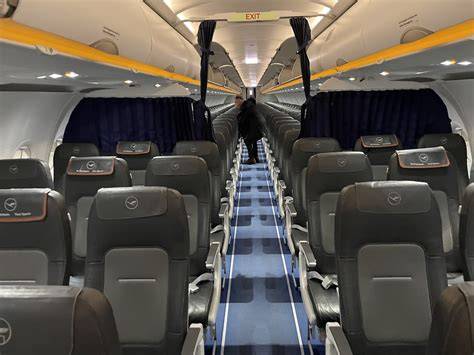
For Lufthansa, this may also create a communication challenge. Travelers who are familiar with older fare structures may not immediately realize that the cheapest ticket no longer includes the cabin bag they previously expected. A passenger discovering the restriction only after booking can perceive the fare differently from someone who understood the conditions before purchasing.
That makes transparency increasingly important. As airline products become more complicated, the difference between a genuinely cheap ticket and a ticket that merely has a low starting price can depend on how carefully the traveler reads the baggage and fare conditions.
Lufthansa’s Economy Basic Fare Changes The Meaning Of Cheap Travel
Lufthansa’s Economy Basic is ultimately part of a much larger transformation in European air travel. Airlines are increasingly separating the traditional economy ticket into individual components, allowing passengers to decide which services they are prepared to pay for. The model can produce lower headline fares, but it also means passengers must understand the restrictions before deciding which ticket represents genuine value for their trip.
For travelers who can fit everything into an 18-liter personal item, Economy Basic may provide exactly what they want: a lower fare without paying for baggage they do not need. For passengers accustomed to traveling with a standard cabin suitcase, however, the economics are different. The additional carry-on fee becomes part of the real cost of the journey, potentially changing which Lufthansa fare makes the most sense.
For frequent flyers, the issue is even more significant because the policy changes the relationship between loyalty status and fare benefits. A traveler can hold substantial status within the Lufthansa or Star Alliance ecosystem and still face the Economy Basic cabin-baggage restriction, with HON Circle Members and Senators receiving the notable exception. That represents a departure from the idea that elite status alone should guarantee a consistent baseline of convenience.
The result is a Lufthansa economy product that looks increasingly like a menu rather than a single package. The airline sells the seat first, then allows passengers to decide how much additional convenience they want to purchase. That may be a rational response to intense competition in European short-haul aviation, but it also means that the cheapest Lufthansa ticket now demands more attention than ever.
The new Lufthansa Economy Basic fare therefore matters for more than the size of a backpack. It illustrates how a major European network carrier is redefining its cheapest product, how traditional loyalty privileges are becoming more closely tied to fare type, and how the boundary between full-service and low-cost airline pricing continues to disappear. For passengers, the headline fare is only the beginning of the calculation. The real question is what that fare includes once the suitcase, seat, flexibility, and other essentials are added back into the journey.