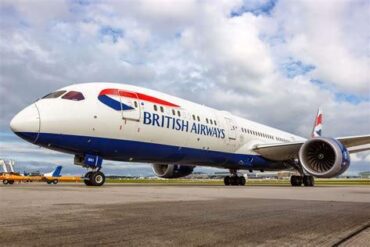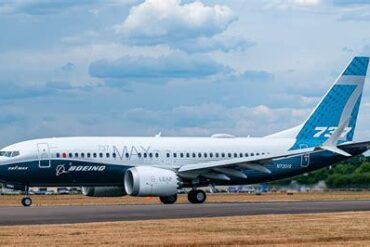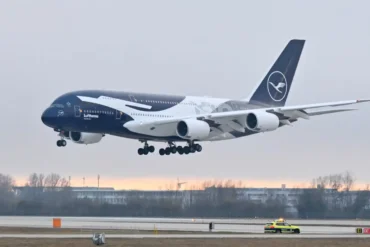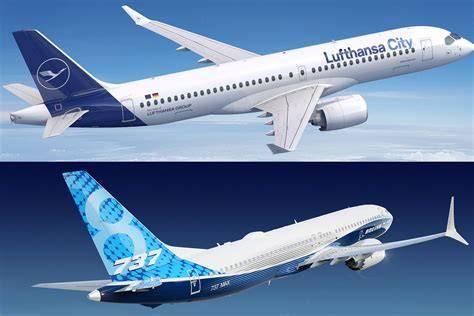
For a carrier that spent years building an increasingly Airbus-centered narrowbody fleet, Lufthansa’s renewed commitment to the Boeing 737 represents a notable change in strategy. The German flag carrier has now exercised options for another 20 Boeing 737 MAX 10 aircraft, taking Lufthansa Group’s firm 737 MAX order book to 60 aircraft. The move is particularly significant because Lufthansa retired its last Boeing 737 roughly a decade ago and subsequently operated an all-Airbus narrowbody fleet for many years.
The latest agreement is also about more than simply bringing a familiar aircraft family back into the group. Lufthansa is facing the enormous challenge of renewing hundreds of aircraft while manufacturers struggle with production backlogs, engine supply constraints and certification delays. The 737 MAX 10, which accounts for the latest 20-aircraft commitment, is not yet certified, while Lufthansa has indicated that deliveries are not expected until the early 2030s. That gives the group considerable time to decide exactly where the aircraft will be deployed.
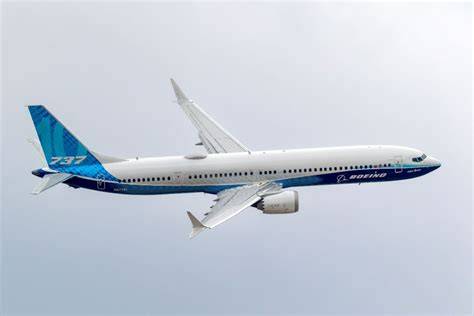
The decision therefore sits at the intersection of fleet modernization, capacity planning and the increasingly valuable delivery positions available through existing purchase options. Lufthansa is not simply switching its narrowbody strategy overnight. Instead, it is gradually adding Boeing aircraft to a group whose fleet remains overwhelmingly Airbus in the single-aisle category. The 737 MAX orders are a relatively small part of a much larger renewal program, but they mark an important reversal from the strategy Lufthansa pursued after retiring its final 737.
Lufthansa Orders 20 More Boeing 737 MAX 10 Aircraft
Lufthansa Group’s latest move originated from a 2023 Boeing agreement covering 40 firm Boeing 737 MAX 8 aircraft and options for another 60 aircraft. In September, the group’s supervisory board approved the exercise of options for 20 Boeing 737 MAX 10s. Boeing assigns a combined list value of approximately $3.4 billion to those aircraft, although that figure should not be interpreted as the actual transaction price.
Commercial aircraft orders are normally negotiated at prices substantially different from published list prices. Airlines with large fleets and manufacturers seeking long-term relationships can negotiate significant discounts, while delivery schedules, maintenance agreements, financing arrangements and other contractual conditions can also influence the final economics. The $3.4 billion figure therefore provides a useful indication of the scale of the commitment rather than a precise measure of Lufthansa’s expenditure.
More important is what the order accomplishes operationally. Lufthansa said the additional aircraft will contribute to the gradual replacement of aging Airbus A320 family aircraft across the group while providing greater flexibility in capacity. That flexibility becomes especially important when an airline group operates several subsidiaries with different network structures, business models and aircraft requirements.
The original 737 MAX 8 order has already demonstrated how Lufthansa intends to use this flexibility. All 40 aircraft from the initial firm order are destined for Eurowings, Lufthansa Group’s low-cost subsidiary, where they will replace older A319s and A320s. The MAX 10s could follow a similar group-wide allocation strategy, although Lufthansa has not yet publicly confirmed which individual airline will operate them.
Boeing 737 MAX 8 and MAX 10 Bring Different Capabilities
The decision to take both the 737 MAX 8 and 737 MAX 10 gives Lufthansa Group two different capacity points within the same modern Boeing family. According to Boeing’s published specifications, the MAX 8 typically accommodates 160 to 180 passengers in a two-class configuration and has a maximum range of approximately 3,500 nautical miles, or 6,480 kilometers.
The larger MAX 10 is designed for higher capacity rather than maximum range. Boeing lists a typical two-class capacity of 185 to 210 passengers, while maximum range is approximately 3,100 nautical miles, or 5,740 kilometers. The aircraft can therefore offer more seats while sacrificing some range compared with the MAX 8, a tradeoff that can make particular European and regional routes more economically attractive.
The MAX 10 is also substantially larger than the early 737s that Lufthansa once operated. At 43.8 meters long, it is more than eight meters longer than the original 737-100, while its maximum seating capacity can reach 230 passengers in a high-density configuration. Both the MAX 8 and MAX 10 are powered by CFM International LEAP-1B engines and incorporate the aerodynamic and propulsion improvements associated with the MAX generation.
For Lufthansa, the economic argument is particularly important. The group has stated that the 737 MAX 10 consumes around 30% less fuel than the older aircraft it is intended to replace, while its greater seating capacity can reduce unit costs by approximately 20%. Those gains are valuable in a European market where fuel prices, airport charges, labor costs and intense competition place constant pressure on margins.
The Boeing 737 Is Returning After a Decade Away
Lufthansa’s relationship with the Boeing 737 stretches back much further than the MAX program. The airline was an important early operator of the type and introduced the Boeing 737-100 in 1967, only about a year after the first example of the aircraft family entered service. Lufthansa became closely associated with the early 737, including the airline’s nickname for the aircraft, the City Jet.
The original aircraft was dramatically smaller than today’s MAX variants. The 737-100 could carry roughly 90 to 100 passengers and had a range of approximately 1,620 to 1,782 nautical miles. It was designed for the short-haul environment of the era, making it particularly well suited to European city connections where Lufthansa needed a compact jet capable of frequent operations.
Over the decades, Lufthansa accumulated a substantial Boeing 737 fleet. The airline ultimately placed 148 orders for different 737 variants before its relationship with the type came to an end. Its last 737-300 aircraft were retired in 2016, after which Lufthansa increasingly standardized its narrowbody operations around the Airbus A320 family.
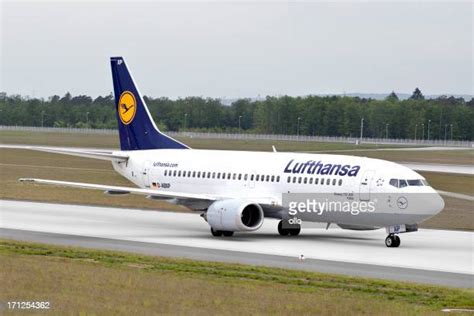
That decision reflected a broader fleet philosophy. Standardizing around the A320 family offered commonality in pilot training, maintenance, spare parts and operational planning. Lufthansa had little reason to introduce another narrowbody family after establishing Airbus as the backbone of its short-haul fleet. The 2023 Boeing order therefore represented a meaningful strategic shift rather than a routine fleet purchase.
The irony is that the 737 is returning to the Lufthansa Group precisely as Airbus aircraft remain deeply embedded throughout the organization. The Boeing order does not signal a wholesale rejection of Airbus. Instead, it suggests that the group increasingly values access to additional aircraft capacity and delivery positions enough to reintroduce a second narrowbody family.
Eurowings Provides the First 737 MAX Destination
The clearest destination for Lufthansa Group’s initial Boeing return is Eurowings. The subsidiary will receive all 40 of the 737 MAX 8s from the original 2023 order, using them to modernize a fleet that includes older A319 and A320 aircraft.
The age profile of those aircraft helps explain the decision. At the time referenced in the fleet data, Eurowings’ A319s averaged around 17.9 years old, while its A320s averaged approximately 14.2 years. Replacing these aircraft with new-generation jets can produce meaningful savings not only through fuel efficiency but also through reliability, maintenance and seating capacity.
The MAX 8 also gives Eurowings a modern narrowbody aircraft without requiring the group to abandon its existing Airbus fleet. That distinction matters because Lufthansa Group operates several airlines, each with different fleet structures. A new aircraft type can be assigned where its economics are strongest without forcing every subsidiary to adopt the same fleet strategy.
The future MAX 10 allocation is less certain. Its higher capacity could make it attractive for dense European routes, but its shorter range compared with the MAX 8 means network planners will need to match the aircraft carefully with the missions it is expected to perform.
Lufthansa Group Is Undertaking a Massive Fleet Renewal
The 60-aircraft 737 MAX commitment should be viewed against the scale of Lufthansa Group’s wider modernization program. The group’s fleet includes a mixture of Airbus narrowbodies, Airbus widebodies, Boeing 747s, Boeing 787s, Boeing 777-family aircraft, regional jets and other aircraft types.
As of the cited June fleet figures, the group operated 740 aircraft, including 178 A320s, 75 A320neos, 75 A321s and 31 A321neos. Its narrowbody fleet also includes 81 A319s. This enormous installed base means that replacing older aircraft is a long-term process rather than a single procurement decision.
Lufthansa expects to receive more than 250 new aircraft by 2035, with deliveries distributed across its various subsidiaries. The scale of that plan illustrates why securing aircraft early has become increasingly important. Even when an airline knows exactly what aircraft it wants, obtaining those aircraft on the desired timetable is no longer guaranteed.
Aircraft Backlogs Are Changing Airline Fleet Planning
The commercial aviation industry is dealing with exceptionally large aircraft backlogs. The cited market data placed the combined active commercial aircraft order backlog at Airbus and Boeing at more than 16,000 aircraft, including 9,216 for Airbus and 6,814 for Boeing.
Those numbers help explain why airlines increasingly place orders well before they have finalized every operational detail. Production capacity is constrained, while engine shortages, supply-chain disruptions, shortages of skilled workers and prolonged certification processes can all push deliveries further into the future.
For Lufthansa, the 737 MAX 10 illustrates this new reality. The airline can secure aircraft and delivery positions today even though the precise operating plan may not be finalized until much closer to delivery. In a supply-constrained market, waiting until every detail is known could mean losing valuable production slots.
That is where purchase options become strategically powerful. An option allows an airline to preserve the right to order additional aircraft under agreed conditions without immediately committing to the full quantity. Lufthansa’s 2023 agreement gave the group exactly that flexibility, and exercising 20 of its options now allows it to expand its Boeing commitment while retaining options for another 40 MAX-family aircraft.
The Biggest Question Is When the 737 MAX 10 Will Arrive
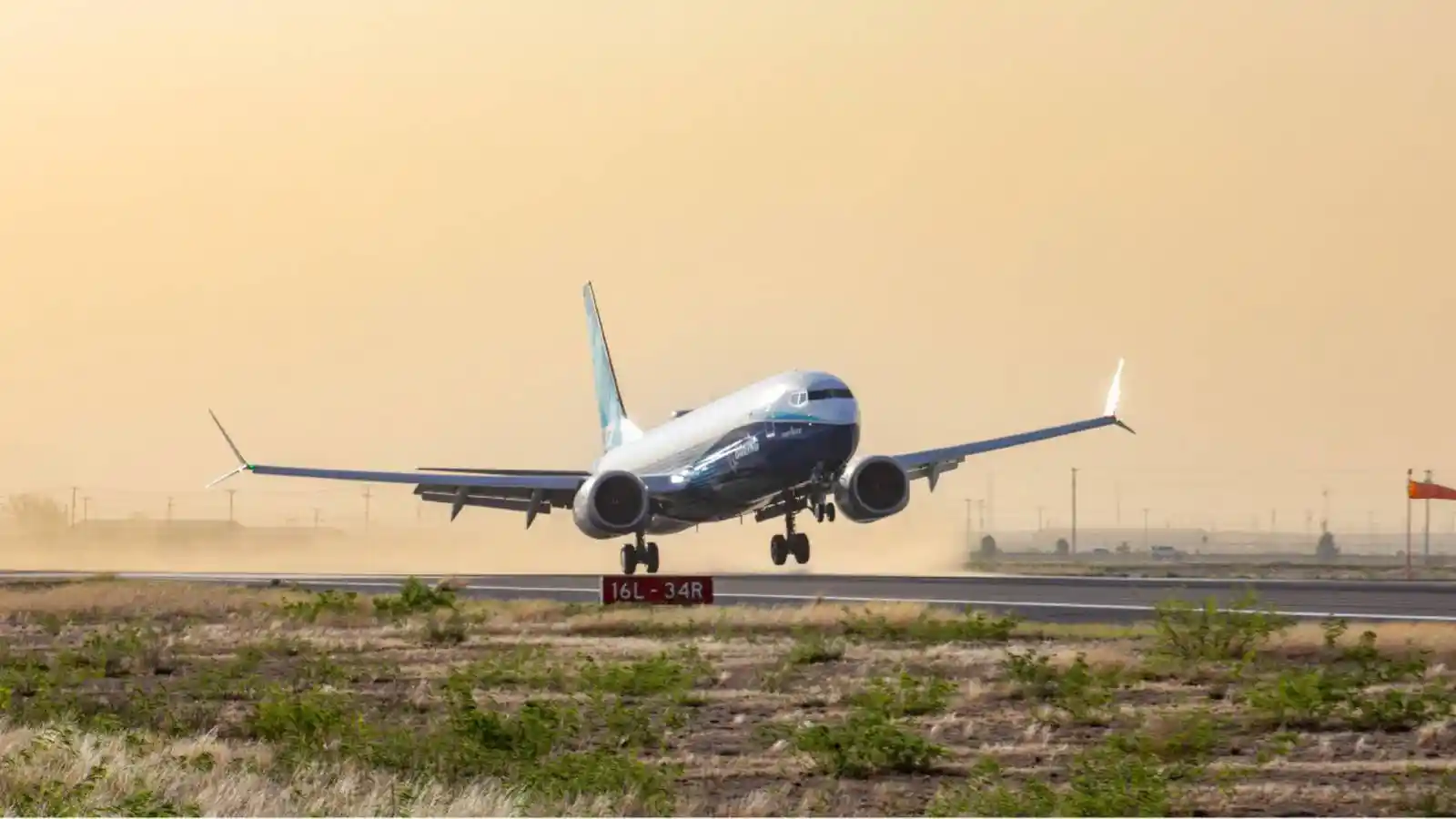
The most important uncertainty surrounding Lufthansa’s latest Boeing order is the certification of the 737 MAX 10. Boeing completed the aircraft’s test-flight campaign in late July, but regulatory approval from the Federal Aviation Administration remains necessary before commercial operations can begin.
Boeing chief executive Kelly Ortberg indicated in September that certification work would be completed “very soon,” but the exact timing remains dependent on the regulatory process. Lufthansa itself does not expect the aircraft to arrive before 2030, meaning there is still considerable time between the order decision and the first potential delivery.
That delay could ultimately work in Lufthansa’s favor. The group has years to determine which subsidiary needs the additional capacity, which A320-family aircraft should be retired, and how network demand evolves. By the time the MAX 10 arrives, the aircraft can potentially enter service as part of a carefully planned replacement cycle rather than as an isolated fleet addition.
The return of the Boeing 737 to Lufthansa Group is therefore about much more than nostalgia for an aircraft family that once played a central role in the German carrier’s history. It reflects the realities of modern fleet planning, where airlines must balance aircraft commonality against economics, capacity requirements and access to scarce production slots.
Lufthansa spent roughly a decade without the 737 after retiring its final 737-300, building a predominantly Airbus narrowbody operation in the process. Now, the group has committed to 60 Boeing 737 MAX aircraft, with another 40 options still available. If certification and production proceed as expected, the 737 MAX 10 could finally bring the type back to Lufthansa Group operations in the early 2030s, closing one chapter of the airline’s fleet history while opening a surprisingly different one.