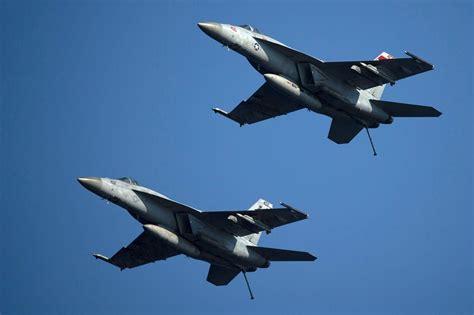
For more than a decade, the US Air Force has given some of its F-16 pilots a technological safety net that can take control of a fighter when disaster is only seconds away. The US Navy, however, is only now preparing to bring a comparable capability to its F/A-18E/F Super Hornets, with installation scheduled to begin in 2027. The delay is striking because Automatic Ground Collision Avoidance System, or Auto-GCAS, has already demonstrated that it can prevent fatal controlled flight into terrain accidents.
The technology was never intended to replace pilots or normal flight-control systems. Instead, it was designed as a final layer of protection for situations in which a pilot becomes disoriented, loses situational awareness, becomes incapacitated, or simply cannot react quickly enough to an approaching surface. For high-performance fighters flying at low altitude or under intense workload, the difference between recognizing danger and acting on it can be measured in seconds.
The Navy’s delay therefore has less to do with a lack of appreciation for aviation safety than with the technical architecture of its Hornet fleet. The original F/A-18A-D lacked the electronic throttle architecture needed for the same type of automatic engine-power control used by Auto-GCAS on aircraft such as the F-16. The Super Hornet and EA-18G Growler programs eventually created a path forward, but the Navy still needed funding, integration work, testing, and a formal acquisition plan.
Why Auto-GCAS Matters To Fighter Pilots
Controlled Flight Into Terrain, commonly abbreviated as CFIT, occurs when an aircraft under the pilot’s control unintentionally collides with terrain, water, or an obstacle. The particularly dangerous feature of CFIT is that the aircraft can remain mechanically capable of flight while the person flying it does not realize that a collision is approaching. Loss of situational awareness, spatial disorientation, excessive workload, or incapacitation can turn a recoverable flight into an unrecoverable emergency.
Auto-GCAS was developed specifically to address that narrow but potentially catastrophic gap. The program grew from work involving Lockheed Martin Skunk Works, the Air Force Research Laboratory, and NASA, with development stretching back to the 1980s. Rather than simply warning a pilot that terrain is nearby, the system continuously evaluates whether the aircraft’s current trajectory is likely to result in an impact.
It does this by combining navigation information, aircraft performance data, flight-path calculations, and a digital terrain database. When the system determines that a collision is imminent and that the pilot has not initiated an adequate recovery, Auto-GCAS can intervene automatically. The aircraft is commanded toward a safer attitude, rolling toward wing level and then applying a powerful recovery maneuver intended to clear the terrain.
The Air Force Learned The Value Earlier
The US Air Force had a particularly strong reason to prioritize Auto-GCAS. By 2014, according to Air Force statistics cited in the development program, CFIT accidents represented 26% of aircraft losses and 75% of F-16 pilot fatalities.
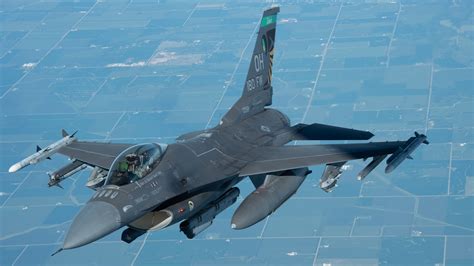
Auto-GCAS began entering the F-16 fleet in late 2014. Its impact became measurable within only a few years. By around 2020, the system was operational on more than 600 F-16 Block 40/50 aircraft worldwide. Around the same period, the technology had already been credited with saving 13 pilots, including 12 F-16 pilots.
The Air Force did not stop with the F-16. Auto-GCAS integration and flight testing for the F-35 Lightning II were completed by 2018, with fielding planned for 2019. Lockheed Martin projected that the technology could eventually be installed across more than 3,200 F-35s, extending the concept from a successful F-16 safety upgrade into a broader fighter-aviation protection system.
That history explains why the Navy’s timetable has attracted attention. The underlying technology is not experimental. It has been operating on American fighters for years, while its purpose is straightforward: prevent a pilot’s momentary loss of awareness or ability from becoming a fatal collision.
The F/A-18 Created A Technical Problem
The key obstacle was the F/A-18’s throttle architecture. The legacy F/A-18A-D Hornet did not have an electronic throttle that could allow the system to automatically command engine power in the same way as the F-16. That limitation meant simply transferring the Air Force implementation to the Navy’s Hornets was not technically practical.
This is an important distinction because the aircraft’s flight-control system could still be used to move the fighter away from terrain. The challenge was determining how the emergency recovery should work when automatic engine-throttle control was unavailable. Navy and Marine Corps planners therefore looked toward a modified approach that could use automatic flight-control inputs while accounting for the pilot’s manual control of engine power.
In 2018, Capt. David Kindley, then the F/A-18 and EA-18G program manager, described the throttle issue as a central reason the Navy’s solution would need to differ from the Air Force implementation. The service was not simply declining to install a proven safety system; it was dealing with a fighter whose hardware imposed different boundaries on what the software could command.
That distinction helps explain why the safety gap lasted so long. Military aviation upgrades are rarely a matter of downloading new software and switching on a feature. A system that can autonomously command a fighter during an emergency must interact predictably with flight controls, engines, navigation equipment, mission computers, displays, and certification and testing procedures. The consequences of a bad intervention are potentially as serious as the consequences of no intervention.
Why The Super Hornet Can Finally Receive Auto-GCAS
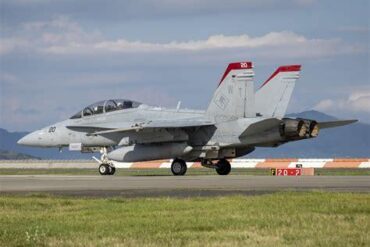
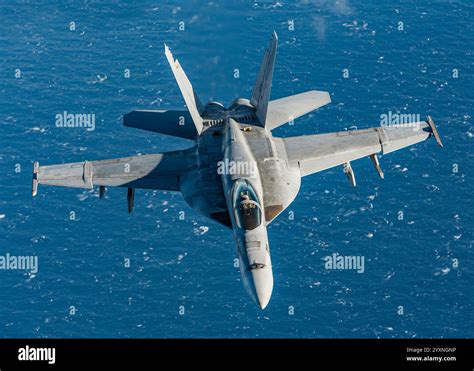
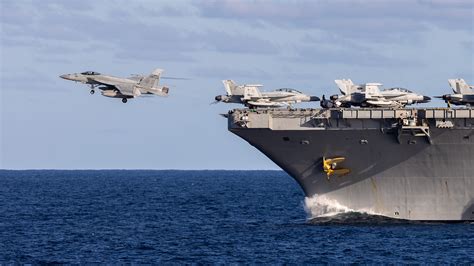
The Navy’s current plan is focused on its newer F/A-18E/F Super Hornets rather than attempting to force an identical solution onto every generation of Hornet. Installation is scheduled to begin in 2027, while the EA-18G Growler is expected to receive the system in 2028.
It is powered by two General Electric F414-GE-400 turbofans, each producing about 22,000 pounds of static thrust. The aircraft has a maximum takeoff gross weight of approximately 66,000 pounds, a top speed above Mach 1.8, and a service ceiling above 50,000 feet.
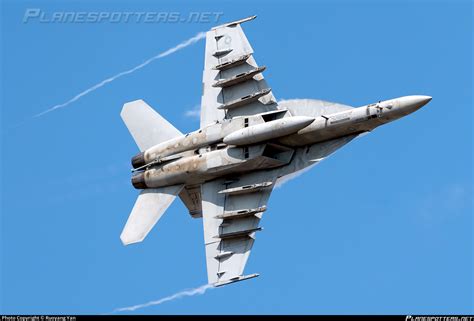
Those specifications underline the environment in which the system operates. A Super Hornet can travel extremely fast while carrying substantial fuel, weapons, and mission equipment. At those speeds, a pilot who becomes incapacitated or severely disoriented may have almost no opportunity to recognize the problem and recover manually.
The Navy’s plan also includes the EA-18G Growler, the electronic-attack derivative of the Super Hornet. Its inclusion matters because Growler crews conduct demanding missions involving electronic warfare, sensors, communications, and tactical coordination. Adding an automatic ground-collision recovery capability provides another safety layer for an aircraft whose crews can face intense workload during operations.
Congress Pushed The Navy Toward A Timeline
The FY2026 House bill H.R. 3838 directed the Secretary of the Navy to provide congressional defense committees with a report explaining plans to integrate Auto-GCAS into F/A-18E/F and EA-18G aircraft.
The Navy’s FY2026 budget included approximately $18 million for the effort. That investment is modest compared with the cost of developing and operating a modern fighter fleet, but its significance lies in what the money enables: integrating and validating a system whose purpose is to intervene during a potentially unrecoverable emergency.
Navy Mishaps Keep The Safety Question Relevant
The case for additional collision-avoidance technology remains connected to the Navy’s broader aviation safety record. Through May 19, 2026, the service had recorded four Class A flight mishaps involving manned aircraft, compared with seven during the same period in 2025. The service recorded 11 Class A flight mishaps across all of fiscal year 2025, while the 10-year average was 8.2.
Through May 19, the Navy’s Class A flight mishap rate was 0.88 per 100,000 flight hours, compared with 1.48 during the corresponding period of 2025 and a 10-year average of 1.00. These figures cover the Navy’s entire manned aircraft fleet, rather than the Super Hornet alone, so they cannot be used to establish a Super Hornet-specific accident trend.
The Decade-Long Delay Was About Integration, Not Invention
The story of Auto-GCAS and the Super Hornet is ultimately less about the Navy ignoring a proven technology and more about the difficulty of adapting sophisticated automation to different generations of aircraft. The Air Force could deploy Auto-GCAS relatively quickly on F-16s because the aircraft’s digital flight-control and throttle architecture supported the required intervention. The legacy Hornet did not offer the same path.
That difference created a long safety gap. While the Air Force accumulated years of operational experience and documented pilot saves, the Navy had to pursue a different technical route for its Hornets. The arrival of ATAWS on legacy aircraft and Auto-GCAS on Super Hornets and Growlers represents a gradual effort to close that gap across the fleet.
The most important feature of Auto-GCAS is also its most unusual one: the system is designed to take control at precisely the moment when a pilot may be unable to do so. It does not eliminate the risks of fighter aviation, and it cannot prevent every type of accident. What it can do is create a final barrier between a dangerous flight condition and terrain.
For Super Hornet crews, that barrier is finally rapidly approaching after years of development, funding decisions, engineering work, and testing. Beginning in 2027, the Navy’s carrier-based fighter will start receiving a capability that has already proved its value elsewhere in the US military. The decade-long wait shows how complicated fighter modernization can be, but it also demonstrates why autonomous safety systems are becoming an increasingly important part of modern military aviation.