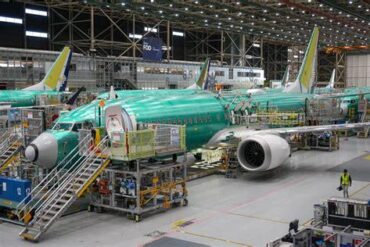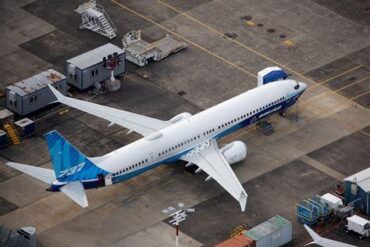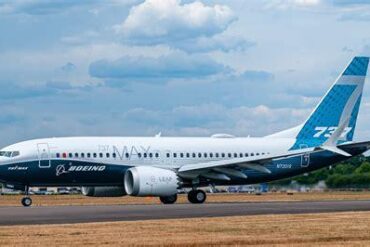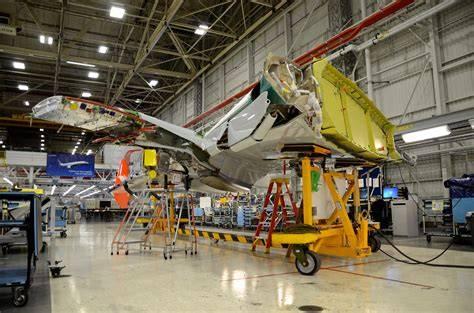
Boeing’s plan to increase 737 MAX production is running into a problem at one of the most fundamental stages of aircraft manufacturing: building the wings. The company has reached a production rate of roughly 47 aircraft per month, but CEO Kelly Ortberg says Boeing has not yet stabilized that level, making the next planned increase to 52 jets monthly more difficult than expected. Beyond that sits an even more ambitious possibility of producing as many as 63 737 MAX aircraft per month, but that figure remains a longer-term prospect rather than an immediate production target.
The difficulty is particularly important because Boeing produces all of its 737 MAX wings at its Renton, Washington, facility. Every completed MAX moving through final assembly ultimately depends on a steady flow of wings arriving at the right time. If wing production cannot keep pace, increasing activity on the final-assembly lines simply shifts the bottleneck rather than increasing the number of completed aircraft.
Boeing’s wider commercial aircraft recovery has already involved a series of production disruptions, regulatory restrictions and supply-chain challenges. Ortberg indicated that the broader 737 MAX supply chain is in good shape, but the expected improvement in wing production has not occurred as quickly as Boeing had anticipated. The result is a production system that has reached 47 aircraft per month but cannot yet treat that rate as reliably sustainable.
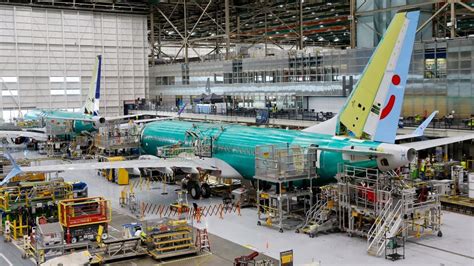
Boeing 737 MAX Production Rate Stuck Between 42 and 47 Aircraft
The move from 42 aircraft per month to 47 was supposed to represent another step in Boeing’s gradual production recovery. Instead, the transition has taken longer than expected. That distinction matters because aircraft production depends on repeatable industrial processes rather than simply achieving a particular number during a strong month.
A temporary output of 47 jets does not necessarily mean Boeing can consistently manufacture 47 aircraft every month. Production must remain synchronized across structures, systems, engines, interiors and final assembly. In the case of the MAX, the wing operation at Renton has become the critical constraint. Until that flow becomes more predictable, Boeing has limited room to accelerate final assembly without creating shortages elsewhere in the manufacturing process.
The company therefore has a clear sequence ahead. First, it needs to stabilize the 47-aircraft monthly rate. Then it plans to increase output toward 52 aircraft per month, while preparing its newer production infrastructure to support the additional volume. The longer-term figure of 63 aircraft monthly is dependent on successfully completing those intermediate steps.
Everett North Line Adds 737 MAX Capacity
Boeing’s new North Line at Everett, Washington, is expected to play an important role in that strategy. Boeing began 737 production at Everett in July 2026, marking the first time in more than five decades that the 737 has been manufactured outside Renton.
The new facility gives Boeing additional final-assembly capacity and greater flexibility as it attempts to expand MAX production. It also reduces the company’s dependence on a single final-assembly location. However, Everett cannot solve every problem by itself. Adding another final-assembly line does not remove the requirement for a reliable supply of completed wings.
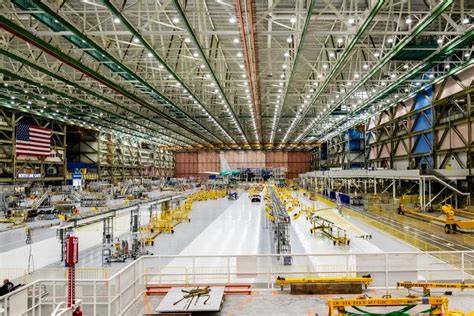
The relationship between the two facilities illustrates why Boeing’s production ramp cannot simply be accelerated by opening more assembly space. If Renton remains unable to deliver wings at the required rate, additional final-assembly capacity could sit partially underutilized. Boeing therefore needs the wing production flow and final assembly system to develop together.
The company’s enormous 737 MAX backlog provides a strong reason to increase output when the manufacturing system is ready. Demand extends production well into the 2030s, but that backlog does not automatically translate into a higher monthly production rate. Boeing still has to build each aircraft through a tightly coordinated industrial process.
52 and 63 Monthly Jets Remain Future Production Targets
Boeing’s production roadmap can be viewed as a series of increasingly demanding milestones. The previous rate was 42 aircraft per month, the current level is around 47 but remains to be stabilized, and 52 aircraft monthly represents the next planned increase. Up to 63 aircraft per month is a longer-term possibility rather than a rate Boeing is preparing to achieve immediately.
That staged approach reflects the practical difficulty of rebuilding production after years of disruption. Pushing output too quickly can create shortages, quality problems or additional instability, potentially undermining the very recovery Boeing is trying to achieve. Stabilizing each stage before moving higher gives the manufacturer a more controlled path toward sustained production.
737 MAX 10 and 777X Add More Pressure to Boeing
The MAX production challenge is unfolding alongside major certification work elsewhere in Boeing’s commercial aircraft portfolio. The 737 MAX 10 has completed its required flight and ground testing, with Boeing working through the documentation needed for FAA certification. The aircraft is therefore approaching another major milestone as Boeing prepares for its eventual entry into service.
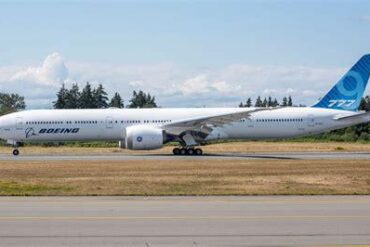
The 777-9, however, remains on a more complicated certification path. Boeing has not yet received approval to begin ETOPS testing, while additional work remains connected with the GE9X engine’s mid-seal certification issue. Some 777-9 flight testing could extend into 2027, even though Boeing continues to target deliveries during that year.
The 787 Dreamliner program presents another production challenge of a different kind. Boeing has stabilized production at approximately eight aircraft per month and is targeting 10 monthly by the end of 2026, but passenger-seat supply and certification issues can still affect deliveries.
Together, these programs show why Boeing’s production recovery is not controlled by one factory or one aircraft line. For the 737 MAX, the immediate obstacle is wing production at Renton. Until that bottleneck is stabilized and the Everett North Line is fully operational, Boeing’s ambitions for 52 and eventually 63 aircraft per month will remain dependent on how successfully it can turn additional manufacturing capacity into consistently higher output.