Jet lag is one of the most taxing challenges faced by cabin crew in the modern aviation era. As airlines push the boundaries of ultra-long-haul travel with flights exceeding 20 hours, the physical and mental toll on flight attendants continues to mount. These professionals must not only function but also excel in demanding, safety-critical environments while coping with extreme circadian disruption. As the aviation industry evolves, so too must the strategies used by cabin crew to combat the biological consequences of flying across multiple time zones.
Understanding Jet Lag and Its Impact on Cabin Crew Health
Jet lag, clinically known as desynchronosis, is a physiological condition that occurs when the body’s internal clock (circadian rhythm) is out of sync with the external time at the destination. For cabin crew, jet lag is not an occasional inconvenience—it’s a persistent reality. Unlike passengers who might fly internationally a few times a year, cabin crew can cross continents multiple times in a week. This repeated circadian disruption accumulates and leads to chronic fatigue, cognitive sluggishness, digestive problems, and mood disturbances.
Scientific studies confirm that jet lag significantly affects performance. Crew members suffering from jet lag experience diminished alertness, reduced reaction time, impaired decision-making, and short-term memory issues. In an occupation where safety, customer service, and quick thinking are paramount, this presents a substantial occupational hazard. Compounding the issue is the fact that many long-haul shifts extend beyond 24 hours, including ground preparation, boarding, inflight service, and post-landing duties.
Furthermore, chronic disruption of the sleep-wake cycle elevates cortisol levels in cabin crew, which can have long-term health consequences. This hormonal imbalance is associated with stress, suppressed immunity, and metabolic disorders—risks that make fatigue management essential not only for performance but also for wellbeing.
Strategic Scheduling: The Science Behind Crew Rosters
Flight schedules are not random; they are meticulously planned with fatigue science in mind. Airlines use Fatigue Risk Management Systems (FRMS) to regulate duty hours and rest periods, aligning crew schedules with established Flight Time Limitations (FTLs). These systems account for direction of travel, time zones crossed, and recovery requirements to minimize fatigue-related errors.
Flying westward is generally less taxing on the body because it extends the day, aligning more naturally with the body’s internal rhythm. Cabin crew rosters often reflect this by scheduling westward legs in succession. Eastbound travel, on the other hand, compresses the day and requires the body to fall asleep earlier than usual—a much harder adjustment. For instance, routes like London-Singapore-Sydney demand faster circadian adaptation and present greater physiological stress compared to a London-New York route.
Typically, eastbound flights are spaced out with longer recovery windows, often 48 hours, while westbound flights may allow for shorter rest periods of just 10 hours. These roster strategies aim to harness the body’s natural tendencies to adapt more easily when extending wakefulness rather than shortening it.
Crew Rest: Bunks, Bubbles, and Time Capsules
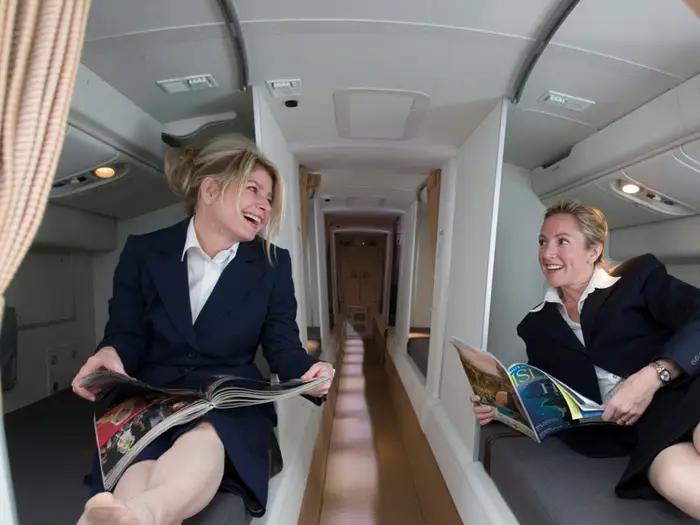
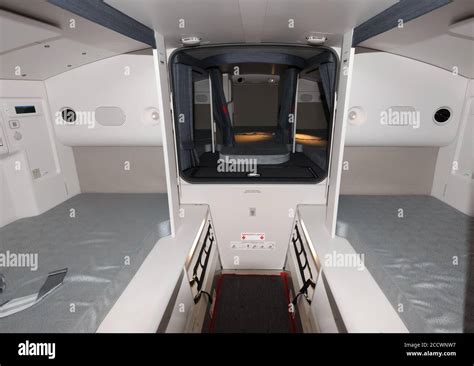
Modern long-haul aircraft, such as the Airbus A350 and Boeing 787 Dreamliner, come equipped with dedicated crew rest compartments. These spaces are vital sanctuaries in the sky where crew members can nap, reset, or simply disconnect from the cabin environment. Designed with comfort and circadian regulation in mind, these areas are often tucked into discreet sections of the aircraft—either above the main cabin or near the tail section—and include bunk beds outfitted with seatbelts, blackout curtains, pillows, and blankets.
Typically, inflight rest is split into two rotations lasting from one to three hours each, depending on the duration of the flight. While it’s not always possible to fall asleep on demand, even 45 to 90 minutes of quality rest can significantly reduce fatigue. Some crew members bring personalized sleep aids, such as compact hot water bottles or essential oils, to make these tight quarters more sleep-conducive.
Still, the environment presents challenges. Noise, aircraft vibration, low humidity, and pressure variations can disrupt rest. Therefore, even partial sleep or quiet rest with eyes closed is seen as valuable. Newer aircraft address these issues by maintaining a lower cabin altitude (around 6,000–8,000 feet) and higher humidity levels, which contribute to more restful onboard sleep and reduced dehydration.
Hydration, Nutrition, and Circadian Recalibration
Cabin crew are trained to manage their physiological needs proactively. Hydration is paramount, as dry cabin air can dehydrate the body quickly. The golden rule followed is to drink at least 0.25 liters of water per hour in flight. Crew members often limit caffeine intake to avoid sleep disturbances, opting instead for water or electrolyte-rich beverages.
In terms of nutrition, light meals are preferred over heavy or salty foods that can worsen bloating and fatigue. Some crew members prepare their own travel snacks, focusing on natural, energy-sustaining options like fruits, nuts, and lean proteins. After the flight, eating in accordance with local mealtimes helps reset the body clock more quickly.
Many seasoned crew members adhere to the principle of “following the sun”—staying awake during daylight at the destination and sleeping at local night. Exposure to natural light is a potent tool for recalibrating circadian rhythm, and even a short outdoor walk can significantly enhance the speed of adjustment. Others choose to remain on home-base time, especially during short layovers, to avoid the physical strain of full circadian resets.
However, there is no one-size-fits-all solution. Some crew find solace in hotel gyms at 2 AM, others in blackout curtains at noon. The key is flexibility and knowing what combination of light exposure, sleep timing, and activity suits one’s unique circadian profile.

Recovery and Rest Between Duties: The Invisible Pillar of Performance
Recovery does not end when the flight does. In fact, post-flight rest is one of the most critical components in the fatigue management cycle. Jet lag symptoms tend to peak after multi-sector trips or back-to-back long-haul flights, when cumulative sleep debt and circadian desynchrony reach their highest levels.
It generally takes about 24 hours per time zone crossed to recover fully. This means that after an intercontinental flight spanning 6–8 time zones, a crew member might need up to a week of adequate rest to fully return to baseline. Unfortunately, schedules often demand a faster turnaround, with recovery compressed into 48-hour windows.
Smart scheduling of off-days, rest-oriented hotel accommodations, and minimizing household or personal tasks immediately after return are strategies that allow for deeper recovery. In many cases, these off-duty hours are the only time crew can truly reset their internal clocks, both physically and mentally.
Technology and Aircraft Design: Allies in the Battle Against Jet Lag
Aircraft manufacturers are increasingly prioritizing crew health in the design of modern jets. Both the Airbus A350 and Boeing 787 feature advanced LED lighting systems that mimic natural daylight cycles. These systems gradually shift hue and intensity during different phases of the flight to ease the transition between time zones.
Additionally, larger windows let in more natural light and help reduce the sensation of confinement. HEPA air filtration systems improve onboard air quality, reducing symptoms like dry eyes, headaches, and nasal irritation—all of which exacerbate feelings of fatigue.
These innovations do not eliminate jet lag, but they do create a more human-friendly flying environment that makes fatigue easier to manage. As flight durations increase and new ultra-long-haul routes are developed, such technologies will become even more essential.
Ultra-Long-Haul Flights: The Future of Fatigue Management
The industry is already looking ahead to a future where 24-hour duty windows become the norm. Airlines like Qantas, with its ambitious Project Sunrise, are preparing for 19+ hour direct flights connecting cities like Sydney and London or New York. This new era of aviation presents complex questions about human endurance, performance, and health.
To meet these demands, airlines are considering augmented crew models, where extra flight attendants are onboard to allow for extended rest periods mid-flight. More generous layovers, advanced biometric tracking of fatigue, and AI-assisted scheduling tools may also emerge as ways to manage the new normal.
Yet, no matter how advanced the systems become, the human factor will remain central. Cabin crew must remain vigilant about their own well-being, advocate for adequate rest, and continuously refine their individual coping strategies to maintain high performance in the sky.
Conclusion: A Constant Balancing Act Across Time Zones
Jet lag is more than just an inconvenience—it is a persistent occupational hazard for cabin crew that affects performance, safety, and health. The key to mastering it lies in a multifaceted approach combining science, self-awareness, and systemic support. From fatigue-informed scheduling and innovative aircraft design to personal hydration habits and strategic exposure to natural light, every component plays a role in managing the strain of long-haul duties.
As long-haul flights become longer and more complex, cabin crew will continue to adapt and innovate in their fight against jet lag. While total eradication may not be possible, effective mitigation is well within reach—and essential to keeping aviation not just operational, but exceptional.