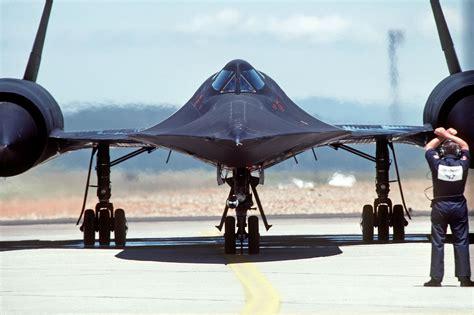
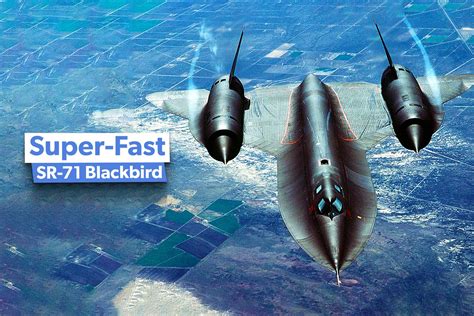
The SR-71 Blackbird, a marvel of Cold War aerospace engineering, wasn’t just any reconnaissance aircraft. Its extreme performance capabilities pushed the very boundaries of materials science, propulsion systems, and fuel chemistry. While commercial jets comfortably cruise at subsonic speeds with conventional Jet A fuel, the Blackbird operated in a stratospheric realm—flying at Mach 3+ speeds and soaring at altitudes above 85,000 feet. These demanding conditions rendered standard aviation fuels utterly inadequate.
To meet these punishing requirements, the SR-71 couldn’t rely on ordinary jet fuel. Instead, it demanded a specially formulated high-stability fuel, known as JP-7, tailored specifically to endure the searing temperatures and enormous stresses the aircraft encountered at the edge of space.
Why Conventional Jet Fuel Was Never an Option
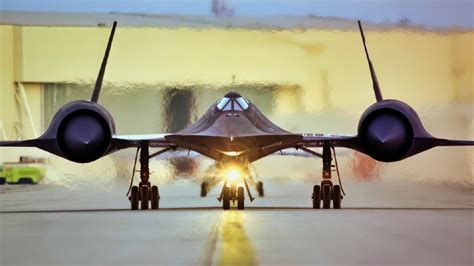
Modern commercial aircraft and many military planes operate effectively on Jet A, Jet A-1, or JP-8. These fuels are designed with cold-weather flow properties, combustion efficiency, and moderate performance ranges in mind. However, the SR-71’s engine bays and fuel tanks reached temperatures so extreme during flight that conventional fuels posed significant hazards.
For example, JP-4, a predecessor to JP-8, had a lower flash point and would begin to vaporize or spontaneously ignite under the temperatures generated during sustained high-speed flight. The Blackbird’s skin could reach over 600°F (316°C) due to air friction alone, making JP-4 not just unsafe but entirely unusable. This led to the development of JP-7, a new fuel that could resist these extreme conditions while still allowing for stable and reliable combustion.
The Birth of JP-7: Engineering a Fuel for the Edge of Possibility
JP-7 (PWA 535) was engineered with an extremely high flash point—over 140°F (60°C)—making it exceptionally stable under high thermal loads. This characteristic made it far less volatile than traditional jet fuels, and thus ideal for an aircraft that routinely encountered intense aerodynamic heating. But creating such a stable fuel introduced new challenges.
Too much thermal stability, and the fuel would not ignite easily. The engineers had to walk a tightrope: crafting a fuel that was resistant to heat-induced decomposition, but still capable of being ignited in a cold engine during startup.
To meet this need, Triethylborane (TEB) was introduced as an ignition agent. TEB ignites spontaneously upon contact with air, allowing it to provide a reliable spark to ignite JP-7, even under the most extreme conditions. A small amount of TEB was injected into the combustion chambers each time the engines started or re-lit, acting as a controlled chemical match.
The Technical Specs of JP-7: Why It’s Not Just Fuel, But A Material Solution
The formulation of JP-7 wasn’t just about preventing combustion at the wrong moment; it also had to resist chemical breakdown while flowing through the aircraft’s systems. Inside the SR-71’s airframe, fuel served a dual role—not only was it burned for thrust, it also acted as a heat sink, absorbing thermal energy to cool sensitive components.
According to the SR-71A Flight Manual, JP-7 had to prevent the formation of coke and varnish in the fuel system—undesirable by-products that could clog or damage precision-engineered pathways. Furthermore, the manual highlighted a need for controlling sulfur impurities, as these could also damage internal components under the combined stress of heat and pressure.
This meant that JP-7 had to meet the following criteria:
- High thermal stability (resists decomposition at high temperatures)
- Minimal sulfur content
- Low volatility (high flash point)
- Compatibility with advanced materials like Waspaloy
The Role of the J58 Turbojet Engine: A Powerhouse Matched to Its Fuel
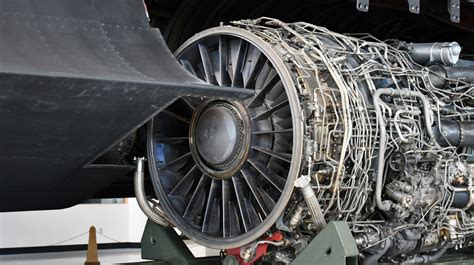
The Pratt & Whitney J58 engine, originally developed in the early 1960s, was a masterpiece of engineering, purpose-built to harness the unique qualities of JP-7. This turbojet engine with afterburning capability wasn’t just responsible for propelling the Blackbird at over Mach 3—it also incorporated an advanced bleed-air bypass system that allowed part of the airflow to skip the turbine and be ejected directly into the afterburner.
This system accomplished two things:
- Reduced stress on the turbine by limiting airflow at extreme speeds
- Boosted thrust while cooling critical components with bypassed air
At Mach 3.2, only about 20% of the total thrust came from the turbojet itself; the rest came from ramjet-like compression and bypassed air, a hybrid design that blurred the line between jet and scramjet propulsion.
Fuel Management at High Speed: A Liquid Balancing Act
Fuel consumption in the SR-71 was staggering. According to retired pilot Col. Richard Graham, fuel flow was measured in thousands of pounds per hour. Even on a short mission, the aircraft might consume upwards of 80,000 pounds of JP-7. But the challenge wasn’t just how much fuel it used—it was also where the fuel was within the aircraft.
As the aircraft flew and its structure expanded due to thermal stress, engineers had to carefully manage fuel distribution to maintain aerodynamic balance. Special inert pressurization systems were used to prevent combustion in the tanks, and fuel had to be moved between them to manage center of gravity, optimize engine performance, and aid in thermal dissipation.
JP-7 Logistics: Storage, Delivery, and Challenges
Because JP-7 was not a standard fuel, logistics presented a considerable challenge. It had to be:
- Manufactured in small quantities at select refineries
- Transported with specialized equipment to avoid contamination
- Stored in designated containers lined for chemical compatibility
Moreover, since it was only used by the SR-71 and a few of its testbed predecessors like the A-12 and YF-12, military infrastructure had to support a dedicated supply chain for a single aircraft family. This included tanker aircraft—modified KC-135Q Stratotankers—that were specifically outfitted to carry and offload JP-7 midair.
A Legacy of Innovation and Endurance
Despite its retirement in the late 1990s, the SR-71 Blackbird’s influence endures. Not only does it remain the fastest air-breathing manned aircraft ever flown, but it also represents an era where materials science, thermodynamics, and propulsion design coalesced into a singular, iconic platform.
The innovations that went into JP-7 laid groundwork for later fuels used in high-performance aerospace projects, and its unique chemistry continues to be studied by engineers seeking inspiration for hypersonic flight and reusable spaceplane concepts.
Conclusion: Fuel as the Forgotten Enabler of Flight
To understand the SR-71 is to understand that every component—from fuselage to flame—was engineered to survive and thrive in the most punishing envelope of flight ever attempted. And at the core of its design was a fuel that did more than burn—it cooled, stabilized, lubricated, and protected an aircraft flying beyond the grasp of conventional engineering.
In aviation, it’s often said that speed is life, but for the SR-71 Blackbird, fuel was survival. Without JP-7 and its unique chemistry, the Blackbird’s story would not have soared so high, nor flown so fast. It wasn’t just the airframe or the engine that made it legendary—it was also the fuel, carefully crafted, rigorously tested, and forever remembered as the lifeblood of America’s most extraordinary spy plane.