A Radical Leap in Personal Aviation
The Jetson ONE eVTOL represents a seismic shift in how we think about flight. At just 253 pounds, this electric vertical takeoff and landing aircraft (eVTOL) slips deftly under the weight limit set by FAA Regulation Part 103 for ultralight aircraft—bypassing the need for a pilot’s license. This single metric, combined with carefully calibrated speed and occupant constraints, has enabled Jetson to legally offer the experience of personal flight with fewer barriers than ever before. And while the vision is thrilling, the implications are deeply unsettling.
The Jetson ONE: Born for the Sky and Legal Loopholes
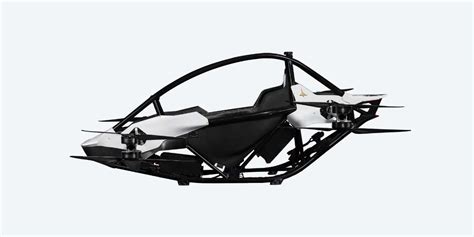
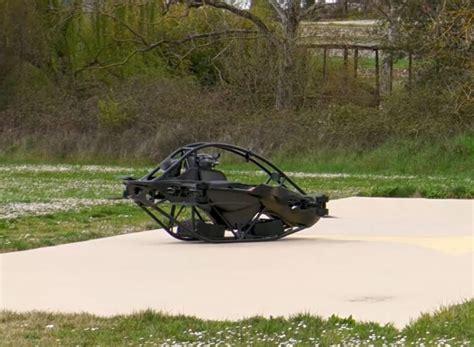
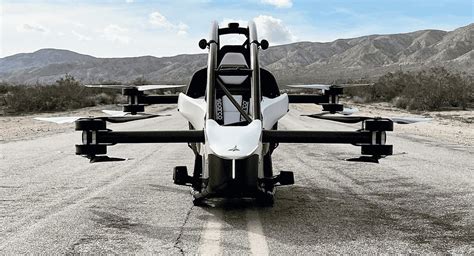
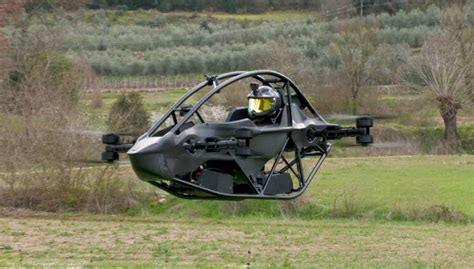
The Jetson ONE is a technological marvel cloaked in simplicity. Crafted from lightweight aluminum and carbon fiber, it operates with eight electric motors, can hover unaided, and hits a top speed of 63 mph. Its ceiling is capped at 1,500 feet, and it boasts a 20-minute flight time—parameters that seem modest, but are precisely aligned with FAA Part 103 rules.
These FAA guidelines dictate that an ultralight aircraft must:
- Weigh less than 254 pounds.
- Have a top speed under 55 knots (approximately 63 mph).
- Be built for a single occupant.
- Operate strictly in uncongested airspace, away from towns and crowds.
Jetson’s engineers didn’t merely stumble into these requirements—they designed the ONE to skate right along their edges. By doing so, they’ve legally opened the skies to everyday thrill-seekers without requiring formal aviation training or licensing. The implications of that decision are both exhilarating and alarming.
Five-Minute Flight Training: Accessibility or Absurdity?
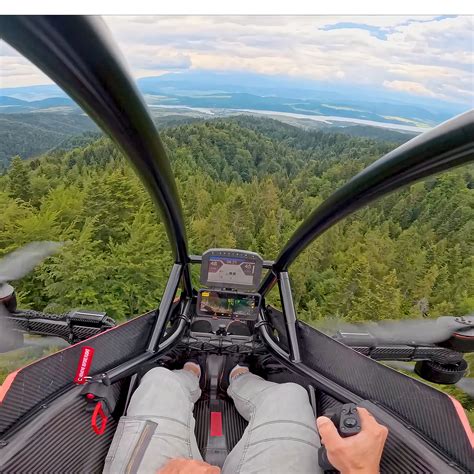
Jetson claims that a complete beginner can learn to fly the ONE in under five minutes. The system uses a simple joystick and throttle combination and is backed by flight control software that manages stability and hover dynamics. In the company’s own words, it’s a “Formula One car for the sky”—fast, responsive, and intuitive.
And yet, therein lies the paradox: while the mechanical act of flight may be simplified, the situational judgment required to operate any aircraft safely cannot be compressed into five minutes of joystick training. Wind shear, spatial awareness, terrain considerations, and emergency response are critical competencies that experienced pilots spend years mastering. Without them, even the most advanced aircraft becomes a flying liability.
Palmer Luckey and the Rise of the Jetson Revolution
Palmer Luckey, the mind behind Oculus, is among the first to own a Jetson ONE. His public endorsement reflects the unit’s appeal among tech pioneers and futurists—those drawn to disruptive potential over cautious evolution. The company has received over 600 orders for its $148,000 machine, with its entire 2026 and 2027 production runs already sold out.
But as the skies begin to fill with privately-owned eVTOLs, we must ask: are we truly prepared for widespread personal aviation? The current FAA rules were never designed to account for mass-market aerial vehicles capable of real-time urban mobility. They were written with basic ultralights in mind—far simpler than the Jetson ONE.
Safety Systems: Enough to Reassure, or Merely to Comply?
To Jetson’s credit, the ONE does not disregard safety entirely. The frame includes a racecar-style safety cell, offering increased crash survivability. There’s also a ballistic parachute system, similar to those used in Cirrus aircraft, which can deploy in emergencies to slow descent. Additionally, the eVTOL can remain stable in hover even after losing a motor—a key redundancy in multirotor aircraft.
These systems make the ONE technically safer than many other ultralight-class aircraft. But the deeper concern lies not with the machine, but with the operator. Unlike Cirrus pilots, Jetson users are not required to log hours, pass exams, or even demonstrate basic competency beyond internal company recommendations.
Flying in a Legal Grey Sky
What makes the Jetson ONE especially fascinating is that its legality is not a loophole in the traditional sense—it’s compliance to the letter, but perhaps not the spirit, of FAA Regulation Part 103. This rule set, established in the early 1980s, was designed with home-built ultralight gliders in mind, not computer-stabilized electric vehicles capable of matching highway speeds in the air.
Jetson isn’t breaking the law. Instead, they’re showing how technological advancement outpaces regulation. By building an aircraft that satisfies all defined metrics while delivering the flight experience of something much more advanced, Jetson is now pioneering a new—and deeply underregulated—class of flight.
The question is no longer “Can they do this?” but “What happens when everyone else does?”
Why You Won’t See Them Above City Skylines (Yet)
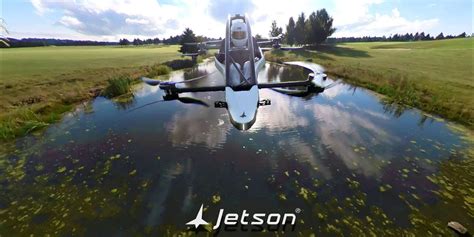
Despite their compliance, Jetson aircraft cannot legally fly over congested areas, stadiums, or any place with open-air assemblies. These restrictions make urban commutes—perhaps the most compelling use case—impossible under current regulations. For now, the Jetson ONE is largely relegated to rural properties, private airstrips, and experimental zones.
Still, the market’s appetite for Jetson-like craft is clearly growing. We are approaching an inflection point where regulators will have to choose: adapt the law or restrict innovation.
The Future: Disruption, Innovation, and Regulation Collision
The Jetson ONE is not just a product; it’s a provocation. It challenges the status quo in a way few technologies can. By reducing the barrier to flight to something on par with operating a jet ski, Jetson opens the possibility of personal aviation at scale. But that vision comes with tremendous risk, not just to those in the cockpit, but to the people living beneath their flight paths.
If regulators fail to evolve, we may face a future where the sky becomes the next frontier for consumer chaos—a patchwork of flying machines operated by the enthusiastic but undertrained. And when that happens, it won’t be a technical failure that causes the first major accident, but a regulatory one.
Final Thoughts
Jetson’s innovation deserves praise for its audacity, but also scrutiny for its implications. As eVTOL technology advances, the frameworks around them must mature just as quickly. Because while anyone might be able to fly in five minutes, it takes far longer to truly understand the weight of that freedom.