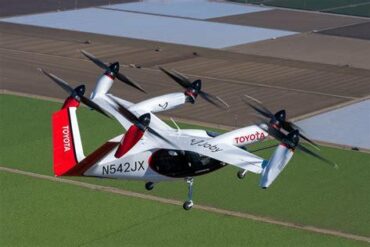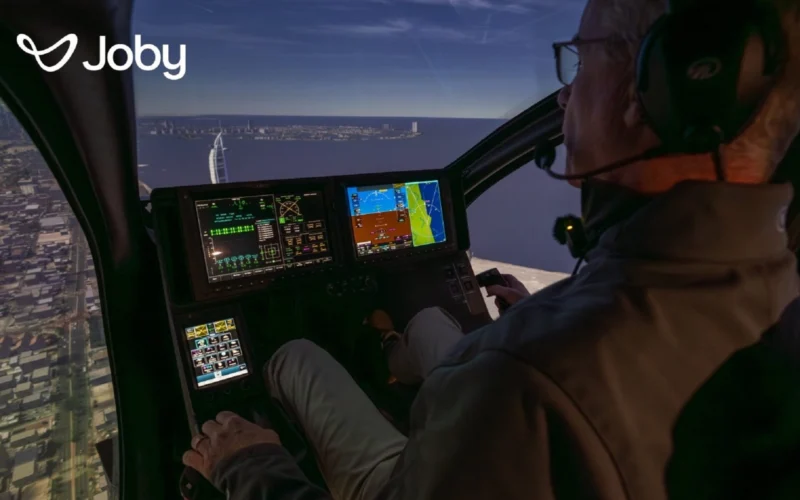
Joby Aviation has taken a bold leap toward making urban air mobility a mainstream reality by receiving the first of its electric vertical takeoff and landing (eVTOL) flight simulators developed in collaboration with CAE. The high-fidelity simulator represents a significant milestone as the company gears up for its inaugural commercial operations, laying the groundwork to train up to 250 eVTOL pilots per year.
Joby’s Strategic Leap Toward eVTOL Pilot Readiness
With the arrival of its first fixed-base 3000-series training simulator, Joby is no longer just designing futuristic aircraft—it’s designing the infrastructure to support them. The simulator will be installed at the company’s expanded Marina, California training and manufacturing facility, where its pilot training efforts will be centralized.
This installation is more than a technical milestone—it is a strategic enabler. Joby anticipates that its second simulator, expected later this year, will be a Level C full-motion flight simulator, fully capable of replicating the dynamic forces encountered during real eVTOL flights across all axes. The pair of simulators will form the backbone of Joby’s Part 135 training program, essential for compliance with FAA commercial flight regulations.
Simulators Designed for FAA Excellence and Urban Reality
Both simulators are designed to meet some of the highest FAA classifications: Level 7 Flight Training Device for the fixed-base unit, and Level C for the full-flight simulator. These classifications ensure that training conducted on these devices directly contributes to the FAA certification pathway. The simulators feature a 300-by-130-degree visual field, offering pilots an immersive experience that mirrors what they’ll see in real-world operations.
But what truly sets these simulators apart is the underlying technology. Powered by CAE’s Prodigy Image Generator and built on Unreal Engine by Epic Games, the visual environments mimic bustling urban landscapes where air taxis will most likely operate. The attention to detail is extraordinary: terrain textures, atmospheric effects, vibration cues, and even the hum of the rotors have been modeled with stunning precision.
From Digital Twin to Real-World Readiness
Bonny Simi, President of Operations at Joby, emphasized that these simulators aren’t just training tools—they’re digital twins of Joby’s actual eVTOL aircraft. Each detail, from cockpit controls to aerodynamic feedback, replicates the aircraft’s operational profile. The simulators have been through rigorous development stages, tested across multiple Joby facilities in Marina, Santa Cruz, San Carlos, and the company’s Costa Rica software development center.
This extensive, multi-site development ensures redundancy, realism, and accuracy. The simulators will not only train new pilots but will also serve as platforms for FAA certification testing, compliance demonstrations, and operational scenario planning for Joby’s envisioned high-density urban transport networks.
Why the Timing Is Critical: FAA Certification and Early Operations
Timing plays a pivotal role in Joby’s flight simulation rollout. As of now, the company is in the final stages of the FAA’s rigorous certification process. Having finalized its G-1 certification basis, Joby is undergoing the Type Inspection Authorization (TIA) stage—where FAA pilots evaluate the aircraft directly.
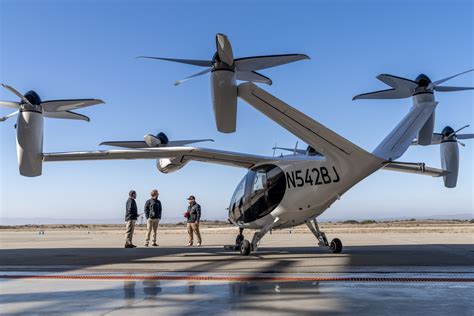
The flight simulators are instrumental to this process. By replicating real-world flying conditions, they allow for safe, repeatable test scenarios that complement real flight testing. Joby can demonstrate aircraft behavior under a variety of conditions without putting a physical aircraft or pilot at risk. This is especially important for urban air mobility, where precision, safety, and scalability are paramount.
The Vision: Launching a New Class of Urban Aviators
Joby’s partnership with CAE dates back to 2022 and reflects a shared ambition: to create an entirely new generation of eVTOL pilots. These are not your traditional aviators. They will navigate vertically layered cityscapes, manage autonomous systems, and operate in tightly regulated air corridors shared with drones and helicopters.
By 2026, Joby intends to train 250 pilots annually, and these simulators will be the primary gateway. Unlike conventional airline training, eVTOL programs must address:
- Short-hop urban routing
- High-frequency operations
- Vertical takeoff and landing protocols
- Real-time coordination with air traffic control in dense urban settings
Each of these skills is honed through scenario-based training modules built into the simulation platforms.
The Air Taxi Talent Race Is On
Joby’s aggressive pilot training strategy comes at a time when competition is intensifying. Rivals like Archer Aviation are also racing to establish pilot pipelines and secure regulatory approval. But with its simulators already in place—and CAE’s global expertise at its side—Joby may well have taken a commanding lead.
Training infrastructure is not just a regulatory necessity—it’s a competitive advantage. The ability to train pilots at scale will determine who can operate the first eVTOL fleets and who will be stuck in the certification backlog. The air taxi market, estimated to reach $1.5 trillion by 2040, demands speed, safety, and scalability—three things that Joby’s simulator program delivers in spades.
Joby’s First eVTOL Flights: From Simulation to Certification
Last year, Joby made headlines when it became the first eVTOL company to fly a piloted air taxi between two public airports, operating under the same FAA air traffic control procedures as a commercial airline. The flight was a stunning showcase of both technical maturity and regulatory collaboration.
This demonstration validated Joby’s aircraft performance under real-world constraints, and it positioned the company as a frontrunner for early-stage passenger operations. Under the FAA’s eVTOL Integration Pilot Program (eIPP), Joby is slated to begin limited operational deployments even before full type certification.
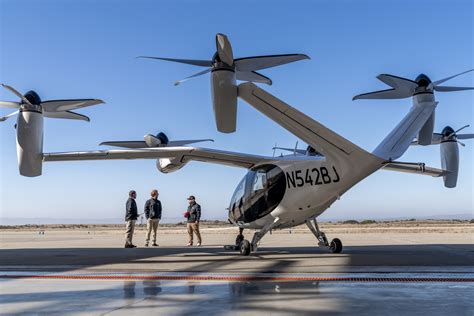
These flights will test eVTOL viability across a spectrum of real-world use cases:
- Passenger mobility in congested urban areas
- Emergency response missions in remote or disaster-affected zones
- Cargo logistics in areas lacking runway infrastructure
By bridging simulator training with actual airspace integration, Joby is moving rapidly toward commercial viability.
Conclusion: Flight Simulators as a Launchpad for the Future
The delivery of Joby Aviation’s first eVTOL flight simulator marks more than a technological achievement—it signifies the birth of a new aviation ecosystem. Every pixel rendered in the simulator, every vibration reproduced through its seat shakers, and every button replicated in its cockpit, serves a single, bold purpose: to prepare for a world where air taxis are as common as Ubers.
As Joby finalizes its FAA approvals and begins pilot training, the urban air mobility revolution inches closer to reality. And thanks to these state-of-the-art simulators, the skies of tomorrow are no longer hypothetical—they’re being practiced today.