Airbus faces a pivotal moment in 2025 as a sudden drop in deliveries forces the manufacturer to revise its annual target. The shift comes at a particularly sensitive time, with year-end pressure building and supply-chain cracks resurfacing in an industry still finding its post-pandemic rhythm. The downward adjustment—from an already ambitious 820 aircraft to around 790—has raised urgent questions about production stability, supplier oversight, and Airbus’ ability to sustain financial performance while navigating operational turbulence.
The November delivery data paints a revealing picture. Airbus handed over 72 aircraft, a noticeable decline from the 84 delivered in November last year, and down from October’s 78, which had briefly represented the manufacturer’s high point for 2025. The slowdown is tied directly to a quality issue involving fuselage panels on the A320 family—an issue significant enough to disrupt dozens of near-completed aircraft and halt the momentum Airbus had hoped to carry into December.
The Supplier Issue Behind Airbus’ Revised 2025 Target
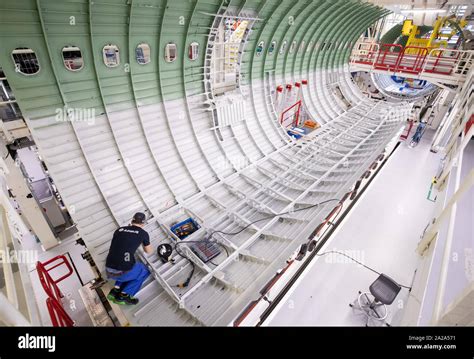
Airbus’ downward revision follows the discovery of an incorrect thickness in metal fuselage panels supplied by Sofitec Aero. Internal documentation shared with airlines indicates that 628 A320-family aircraft are now subject to inspection. The scale of the issue is notable: 168 aircraft already in service, 245 on final assembly lines, and 215 in earlier production phases.
The problem’s reach is broad enough to disrupt assembly flow, especially for jets nearing delivery but suddenly forced back into inspection and potential rework. Airbus has emphasized that in-service aircraft pose no immediate safety risk, but schedule reliability has been compromised. The manufacturer’s updated statement was blunt: the new target of around 790 aircraft reflects unavoidable disruptions in A320-family output, even as Airbus insists its annual financial guidance remains unchanged.
The admission reflects a pragmatic recognition of production realities at a time when narrowbody aircraft constitute the backbone of Airbus’ commercial operations. Even temporary disturbances to the A320 family resonate across the manufacturer’s performance metrics for the entire calendar year.
November 2025: A Detailed Look at Delivery Performance
The most visible impact of the supplier issue emerged in November’s delivery mix. A320-family output fell sharply to 54 units, down from 62 in October. The interruption countered what should have been a stabilizing phase heading into the year’s busiest delivery month.
But the news wasn’t entirely bleak. The A220 program, long viewed as a growth pillar for Airbus’ future, hit a monthly high with 10 deliveries, edging closer to the manufacturer’s plan to reach 12 per month by mid-2026 and 14 by 2027. Widebody deliveries remained modest, with four A330neos and four A350s delivered.
The November tally by type:
- A220: 10
- A319neo: 1
- A320neo: 18
- A321neo: 35
- A330neo: 4
- A350: 4
- Total: 72
Year-to-date, Airbus has delivered 657 aircraft to 87 customers, reinforcing the scale on which the delivery shortfall will hinge on December’s output. Three airline customers have emerged as particularly significant recipients: IndiGo with 41 A320-family aircraft, China Southern with 39, and Delta Air Lines with 35 across four aircraft types.

The Uphill Challenge: 133 Deliveries Needed in December
Meeting the revised target of 790 aircraft requires an extraordinary 133 deliveries in December. To place this into context, Airbus’ strongest month in 2025 has delivered only 78 aircraft, and its all-time monthly record stands at 138 aircraft, achieved just once—in December 2019.
Reaching 133 is difficult but not implausible. Historically, Airbus has leaned on aggressive year-end surges, benefiting from customer scheduling flexibility, accumulated inventory, and the industry’s longstanding December delivery culture. But this year’s situation is structurally different. The A320-family bottleneck cannot be resolved simply by ramping up overtime or accelerating logistics; it depends on completed inspections and timely replacements of faulty panels.
Supplier-related uncertainty introduces a variable Airbus cannot easily control. Even a minor delay in component shipment or inspection turnaround could push the target out of reach. Yet the manufacturer insists its financial outlook remains stable, signaling that margins—likely buoyed by strong widebody pricing and high demand for the A321neo—can withstand the temporary volume pressure.
November Highlights: A Rare A330-800 and Milestones for Air France
Beyond the headline figures, November included several noteworthy moments. Among them was the delivery of an unusually rare A330-800, handed over to a private customer. Airbus holds only 12 orders for the type, with eight previously delivered, making each delivery an event in itself. The remaining four aircraft were originally destined for Garuda Indonesia, though industry sources indicate those commitments have been withdrawn.
Air France enjoyed a milestone month, taking delivery of its 50th A220 and 40th A350. These deliveries form part of the carrier’s sweeping long-term fleet renewal plan. The A220 continues replacing aging A318s and A319s, now down to just four of each variant in the fleet. The A350 addition strengthens Air France’s widebody backbone, with more than 50 A350s still on order, including both the -900 and -1000 variants.
Will Airbus Hit Its Target?
Airbus faces a narrower and more technically constrained path than in past years. The December target is within historical limits but must be achieved against a backdrop of supply-chain disruption. The A320-family inspection effort represents a structural headwind that cannot be resolved through conventional end-of-year delivery acceleration.
Still, Airbus enters December with strong customer demand, a large backlog nearing 8,000 jets, and a financial posture durable enough to absorb short-term production turbulence. If inspection workflows move cleanly and supplier corrections stay on track, Airbus could still close the year with a result near its revised goal.
The month ahead will reveal whether disciplined industrial management can overcome an unexpected mid-stream disruption—and whether Airbus’ long-term expansion plans remain on the trajectory it has fought to rebuild.