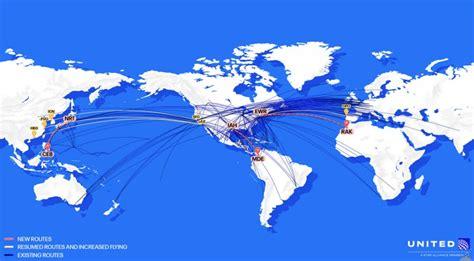
United Airlines is surging forward in the competitive transatlantic travel arena with seven new European routes in June 2025, marking its most aggressive summer expansion yet. This network growth comes even after the quiet discontinuation of the Newark-Tenerife route. With a projected 4.2% year-on-year increase in European capacity (measured in available seat kilometers), United Airlines is cementing its position as the U.S. carrier with the broadest selection of nonstop transatlantic routes.
The airline now operates 719 weekly flights to Europe, outpacing both Delta and American Airlines in frequency, although Delta retains a slight edge in total seats. United’s approach prioritizes route diversity and nonstop access to underserved or unique international destinations — a strategic move that reflects evolving traveler preferences post-pandemic.
Newark Adds Four Exotic European Getaways
Four of the seven new routes originate from Newark Liberty International Airport (EWR), United’s major East Coast hub. These flights now link Newark with Bilbao (BIO), Faro (FAO), Madeira (FNC), and Palermo (PMO) — each representing either a new or reintroduced U.S. connection.
The Newark to Faro and Madeira routes are particularly significant. With Faro located in Portugal’s Algarve region and Madeira a volcanic island in the Atlantic, both destinations offer seasonal tourism potential. United now operates three weekly flights to Madeira, becoming the only U.S. airline to do so, after Azores Airlines ceased its own seasonal service.
Flights to Bilbao, the cultural heart of Spain’s Basque Country, mark another debut. Data from OAG showed more than 53,000 passengers flew indirectly from nine U.S. airports to Bilbao over the previous year, highlighting strong latent demand. United’s 757-200 launched the service on May 31, satisfying a growing market for off-the-beaten-path European cities.
Palermo, the sun-drenched Sicilian capital, is no stranger to transatlantic links but hasn’t had consistent U.S. service since 2017. United’s reentry coincides with growing interest in Southern Italy and Mediterranean beach escapes. With a 767-400ER operating the route, United is positioned to offer both capacity and comfort on these midsized leisure markets.
Washington Dulles Gains Venice and Nice
From Washington Dulles International Airport (IAD), United inaugurated two new routes: Venice Marco Polo Airport (VCE) and Nice Côte d’Azur Airport (NCE). These additions deepen the carrier’s reach in Italy and France, targeting leisure travelers bound for Northern Italy’s art cities or the French Riviera’s luxury coastline.
These seasonal summer routes come with earlier start dates in 2025 to extend tourism windows. The Venice connection particularly supports growing demand from the U.S. East Coast to Italy’s northeast, a region underrepresented in U.S.-Europe aviation markets.
Denver to Rome: A Landmark Connection
The seventh new route emerges from Denver International Airport (DEN) to Rome Fiumicino (FCO). Launched on May 1, this is Denver’s first nonstop link to Italy in over two decades. United’s 787-9 Dreamliner services this route, offering passengers a modern long-haul experience with enhanced fuel efficiency and comfort.
Phil Washington, CEO of Denver International, described the route as addressing “a significant unserved market.” Given Denver’s increasing role as a central U.S. gateway, this connection bridges a crucial transatlantic gap.
The Sole Exit: Tenerife Route Ends Quietly
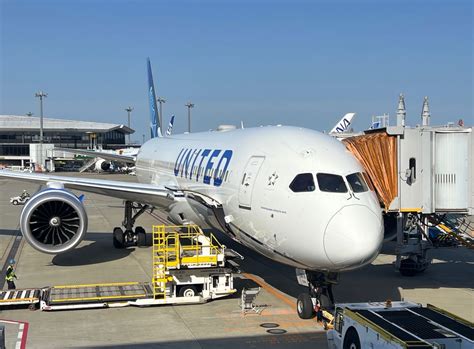
While United celebrated new additions, it also quietly retired its Newark–Tenerife (TFS) route. Launched in 2022, the seasonal connection failed to gain lasting traction, ending officially on May 1. DOT data shows load factors averaging only 63.87%, peaking at just above 83% during peak summer — a suboptimal performance by transatlantic standards.
United’s decision underscores its pragmatic network strategy: while it’s willing to explore niche destinations, it doesn’t hesitate to cut underperforming routes. With profitability as a key driver, route churn — even in an expansion year — reflects careful demand evaluation.
A Glimpse Into United’s European Network Strategy
With the summer 2025 changes, United now operates 80 routes to 32 European cities, backed by its eight U.S. hubs. Of the 719 weekly departures, nearly 140 serve London Heathrow (LHR) — reflecting the enduring strength of U.S.–U.K. business and tourism travel.
Frankfurt (FRA) stands as United’s second-busiest European destination, underscoring its deep ties with Lufthansa through the Star Alliance and the A++ joint venture. This alliance provides extensive onward connectivity from Germany’s busiest hub and maximizes feeder traffic through shared codeshare and schedule alignment.
More than 78% of transatlantic departures originate from United’s East Coast strongholds — Newark, Chicago O’Hare, and Washington Dulles. These hubs anchor United’s European strategy, with Chicago’s strategic location serving as both a Midwestern hub and a critical connecting point for West Coast travelers.
Financial Tailwinds from the Atlantic Market
In Q1 2025, United Airlines earned $1.8 billion from its Atlantic operations, up $56 million from the prior year despite a 1.1% decrease in passengers. The key: a 5.8% increase in yields, showcasing stronger per-passenger revenue. Even during slower winter months, the transatlantic market is stabilizing as a year-round revenue stream, shedding its past dependence on summer peaks.
This financial resilience offers critical support for further expansion and justifies United’s continued exploration of new European destinations with rising U.S. appeal.
Strategic Implications: United’s Competitive Edge
By launching routes to emerging leisure markets such as Faro, Madeira, and Palermo, United Airlines demonstrates a sharp understanding of post-pandemic travel trends. American travelers are increasingly seeking authentic experiences, coastal destinations, and non-traditional gateways — a trend United is leaning into with its latest rollout.
While Delta edges United slightly in weekly transatlantic seat volume (173,119 vs. 170,042), United’s broader spread of city pairs gives it a more flexible and risk-diversified portfolio. Furthermore, the airline’s focus on earlier seasonal starts for Mediterranean routes gives it a competitive edge in maximizing summer travel windows.
Outlook: A Blueprint for Global Growth
United Airlines’ European expansion in June 2025 reflects a larger international growth strategy, rooted in hub strength, alliance partnerships, and route experimentation. As airline competition heats up, particularly with European carriers like British Airways and Lufthansa maintaining strong frequencies, United’s unique value lies in destination breadth and nonstop novelty.
As Quayle emphasized, United is committed to offering “the most choice and variety” for U.S. travelers. With 2025 shaping up to be the busiest transatlantic season in its history, United is not just competing — it’s commanding attention across the skies.