As tensions escalate in the Middle East during the summer of 2025, the question on many Western minds is both urgent and chilling: Can Iran launch a missile strike that reaches the United States? With missile salvos already exchanged between Iran and Israel, and U.S. involvement confirmed after strikes on Iranian nuclear sites, concern has spread like wildfire. Iran’s known missile arsenal is extensive, triggering fears about its ability to launch a long-range offensive that might reach American soil.
Iran’s Missile Arsenal: A Sizeable but Regionally Limited Force
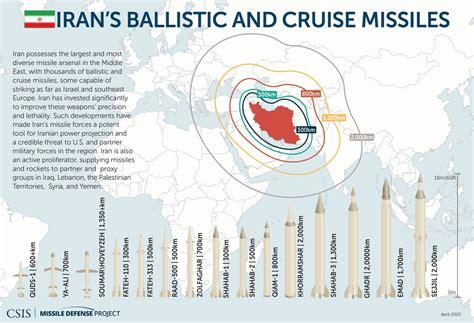
Iran possesses a ballistic missile inventory estimated at over 3,000 units, spanning short-range, medium-range, and cruise missile classifications. These include the Shahab, Sejjil, and Khorramshahr missile families, among others. Despite this massive arsenal, it’s important to emphasize a crucial technical limitation: Iran currently lacks any intercontinental ballistic missile (ICBM) capability. That fact alone significantly reduces the likelihood of any missile reaching the continental United States.
The most advanced system Iran has publicly tested is the Khorramshahr medium-range ballistic missile (MRBM). With a range of up to 1,864 miles, this system poses a serious threat to regional adversaries, including U.S. military bases in the Middle East, Southern Europe, and parts of Asia. But in comparison to the 11,687-mile minimum range required to strike Lubec, Maine—the closest point in the U.S. to western Iran—the MRBM falls dramatically short.
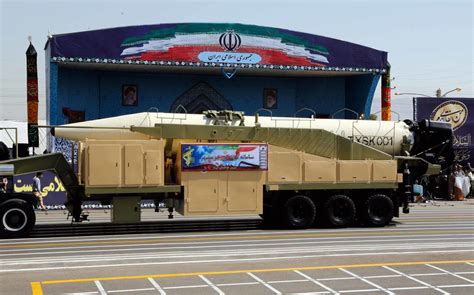
Even when fired from Iran’s westernmost region, such as West Azarbaijan Province, the missile range gap is massive. Iran would need to increase its missile range by over 500% to even come close to threatening the American East Coast. So far, there’s no reliable public evidence that Iran has developed, tested, or deployed any long-range missile with such capability.
Why Iran’s Cruise Missiles and Satellite Launchers Fall Short
Iran has also invested heavily in land-attack cruise missiles, but these are generally subsonic and optimized for regional warfare. With ranges rarely exceeding 1,000 miles, they are not designed for intercontinental use. Some observers have speculated that Iran’s space launch vehicles might one day be repurposed into ICBMs. While technically possible, such conversions are neither simple nor guaranteed.
Satellite launch vehicles, such as the Simorgh, have launched light payloads into orbit, but they lack reentry guidance systems, hardened warhead containers, and targeting technology necessary for precision strikes against military or civilian targets in the U.S. To make them viable ICBMs would require a leap in engineering complexity Iran hasn’t yet demonstrated.
Iran’s Navy: Not a Viable Platform for Long-Range Missile Deployment
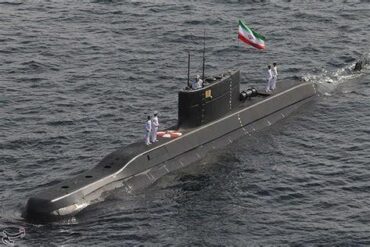
Some have raised the possibility that Iran’s naval forces could project missile firepower closer to U.S. territory. But this too appears strategically implausible. Iran’s navy is a green-water force, primarily designed for operations in the Persian Gulf, Arabian Sea, and Eastern Mediterranean. It lacks the blue-water navy capabilities—such as nuclear submarines or missile destroyers—needed to approach and strike targets across the Atlantic or Pacific Oceans.
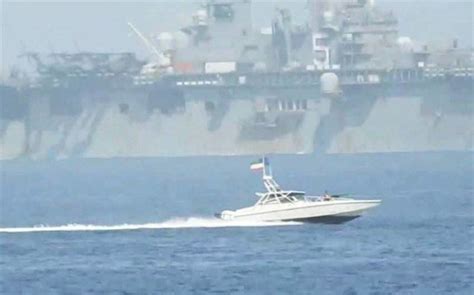
Missile systems currently deployed on Iranian naval vessels are typically anti-ship or air-defense platforms, such as the Noor or Qader systems, which are wholly unsuitable for land strikes at intercontinental distances. The logistics of moving missile-capable ships undetected across oceans is a task far beyond Iran’s reach under current conditions.
U.S. Homeland Remains Safe—But Overseas Assets Are in Range
The U.S. mainland remains outside the strike envelope of Iranian missiles in 2025. However, that assurance does not extend to the 43,000+ American military personnel and extensive logistical infrastructure across the broader region. In June 2025, Iran launched MRBM salvos against Al Udeid Air Base in Qatar—a move designed to send a warning, not inflict maximum casualties. Although air defense systems intercepted the missiles, the event underscored how U.S. assets in the region remain exposed.
U.S. installations in Bahrain, Kuwait, the UAE, Saudi Arabia, Iraq, Jordan, Turkey, and Israel are all within easy reach of Iranian MRBMs. Beyond that, targets in Southern and Western Europe, parts of Eastern Africa, and significant portions of India and Central Asia also fall within striking distance. This wide radius puts military personnel, civilians, diplomats, and infrastructure in harm’s way.
A Calculated Threat: Psychological and Strategic Messaging
Though incapable of directly striking American soil, Iran leverages its missile arsenal for strategic deterrence. The June 2025 retaliatory strike following U.S. attacks on Iranian nuclear facilities was not random—it was an intentional reminder that American actions in the region have consequences. The missiles did not cause casualties, but they demonstrated capability, resolve, and a willingness to escalate.
Iran’s missile doctrine is primarily asymmetric and retaliatory. In the absence of nuclear weapons, the regime depends on its ballistic arsenal to maintain strategic leverage. These weapons are also used as tools of psychological warfare—forcing adversaries to consider the cost of intervention or aggression.
Could Iran Develop ICBMs in the Future?
While the current assessment rules out Iranian ICBM capability, it would be irresponsible to believe that situation is permanent. Iran has displayed a persistent interest in expanding its missile reach and investing in space technology, which provides dual-use benefits.
Key challenges Iran would face in developing an ICBM include:
- Designing and manufacturing a missile capable of traveling over 6,000 miles with high accuracy.
- Creating a reentry vehicle that can withstand atmospheric pressures and heat.
- Mastering guidance systems to ensure precision strike capability.
- Scaling up warhead miniaturization to fit a nuclear or conventional payload into an ICBM chassis.
Currently, there is no verified program that indicates Iran has crossed any of these technical thresholds. Moreover, any such development would likely be detected early by U.S. satellite surveillance, cyber-intelligence, or human intelligence assets, triggering diplomatic or kinetic countermeasures.
Conclusion: The Threat Is Real—but Not Intercontinental
As of mid-2025, Iran’s missile threat to the United States is serious but limited to overseas assets. The Islamic Republic does not possess an ICBM and cannot hit targets on U.S. soil. However, its 3,000-strong missile arsenal remains a formidable force in regional conflict zones, threatening U.S. military personnel, allies, and infrastructure from the Levant to East Africa and South Asia.
The balance of power depends not just on the raw number of missiles, but on range, accuracy, payload, and delivery systems. Iran excels at creating regional disruption through these systems, but without ICBMs or a navy capable of blue-water projection, its reach remains confined. That said, military analysts and defense agencies must stay alert. Technological evolution is often sudden, and strategic surprises are possible—especially when geopolitics incentivize military escalation.
The U.S. may not yet be within Iranian missile range, but its regional footprint is, and that makes understanding and countering this evolving threat more urgent than ever.