Iran’s naval strategy has long relied on asymmetric warfare, and its submarine fleet sits at the center of that doctrine. Estimating the exact number of submarines in service is challenging, but defense assessments consistently point to a fleet designed for stealth, regional dominance, and strategic disruption rather than direct parity with global naval powers.
How Many Submarines Does Iran Have in 2026?
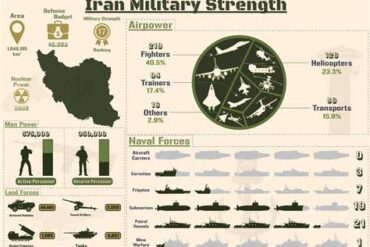
Current intelligence estimates suggest that Iran operates between 28 and 30 submarines, making it one of the more submarine-heavy fleets in the Middle East. While this number pales in comparison to the United States’ fleet of roughly 70 submarines, sheer quantity is only part of the equation. Iran’s naval planners prioritize coastal defense, chokepoint control, and surprise attack capabilities, especially in the strategically vital Strait of Hormuz.
Unlike major naval powers, Iran does not possess nuclear-powered submarines, largely due to decades of international sanctions. Instead, its fleet is composed entirely of diesel-electric submarines, which are quieter in shallow waters and well-suited for operations close to shore.
Submarine Classes in the Iranian Navy
Iran’s submarine force is divided into four operational classes, each tailored to specific mission profiles. These include the Tareq, Fateh, Nahang, and Ghadir classes, with a fifth class still under prolonged development.
Tareq-Class: Iran’s Heavyweight Submarines
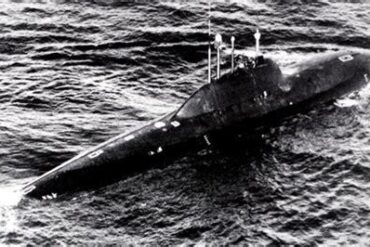
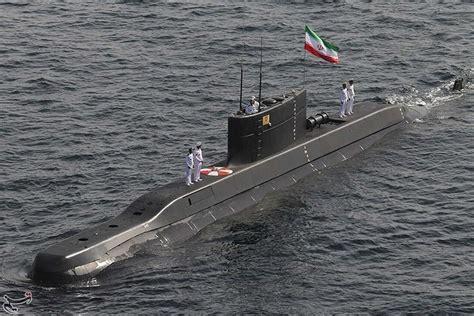
The Tareq-class submarines form the backbone of Iran’s blue-water capabilities. Originally built in Russia and derived from the Kilo-class design, these three vessels—Taregh, Noah, and Yunes—are the largest and most heavily armed in the fleet.
Each submarine stretches roughly 242 feet in length and is equipped with six 533mm torpedo tubes, capable of launching torpedoes, anti-ship cruise missiles, and naval mines. Their endurance is particularly notable, with the ability to remain submerged for up to 45 days and travel over 6,000 miles.
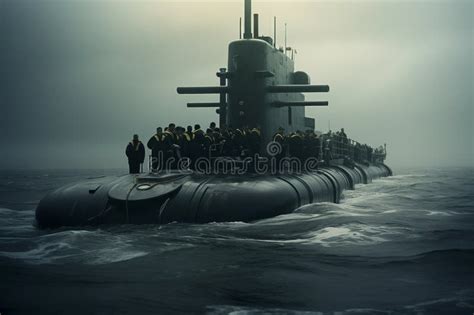
A defining feature of this class is its anechoic tile coating, which absorbs and distorts sonar waves. This stealth capability has earned the submarines the nickname “Black Hole,” reflecting their ability to evade detection in contested waters.
Fateh-Class: Indigenous Innovation
Iran’s push toward self-reliance is evident in the Fateh-class submarines, its most advanced domestically designed boats. With three units currently in service, these submarines represent a significant technological step forward.
Measuring about 157 feet long with a displacement of around 600 tons, the Fateh-class combines moderate size with versatile firepower. Like the Tareq-class, they feature six torpedo tubes and can deploy naval mines, making them adaptable for both offensive and defensive missions.
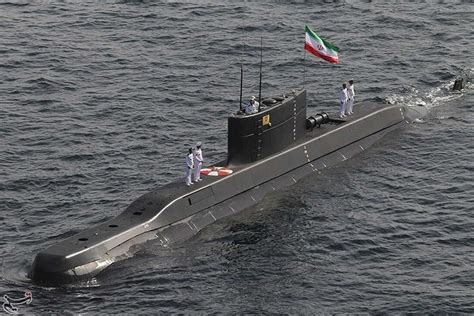
Their speed, estimated between 14 and 23 knots, allows them to operate effectively in both open waters and tighter maritime environments, reinforcing Iran’s layered naval defense strategy.
Ghadir-Class: The Silent Majority
The most numerous component of Iran’s submarine fleet is the Ghadir-class, accounting for approximately 23 mini-submarines. These compact vessels are specifically designed for operations in shallow and confined waters such as the Persian Gulf.
At just 95 feet in length, the Ghadir-class emphasizes stealth and maneuverability over endurance. Each submarine is armed with two 533mm torpedo tubes, capable of firing advanced munitions such as the Hoot supercavitating torpedo, known for its extreme speed underwater.
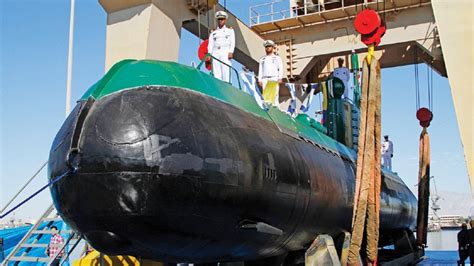
Their small size makes them difficult to detect, allowing them to perform ambush attacks, mine-laying missions, and coastal patrols with high effectiveness. This class embodies Iran’s focus on asymmetric naval tactics.
Nahang-Class and Special Operations Role
The Nahang-class submarine is a unique addition, with only a single unit believed to be operational. Unlike other submarines in Iran’s arsenal, it lacks traditional torpedo tubes and is primarily configured for special operations missions.
Its role likely includes the deployment of naval commandos, covert insertion, and underwater reconnaissance, adding another layer of versatility to Iran’s maritime capabilities.
Strategic Implications of Iran’s Submarine Fleet
While Iran’s submarines may not match the technological sophistication of Western fleets, their design and deployment reflect a clear strategic vision. By combining a small number of larger submarines with a large fleet of agile mini-subs, Iran creates a force capable of disrupting shipping lanes, threatening larger vessels, and complicating enemy naval operations.
The overall structure of the fleet highlights a doctrine centered on denial rather than dominance, leveraging geography, stealth, and numbers to offset technological limitations.