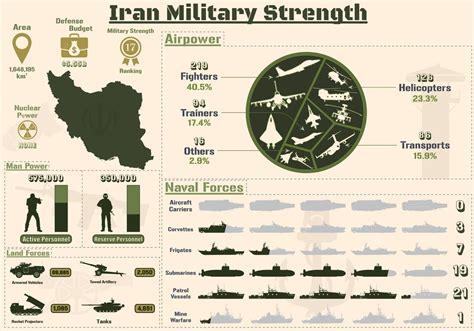
Iran entered 2026 with one of the largest armored forces in the Middle East, a legacy built through decades of imports, reverse engineering, and domestic production. As tensions escalated into full-scale conflict, the true question was not just how many tanks Iran possessed, but how capable and modern that fleet actually was. The answer reveals a force that was numerically significant, yet technologically uneven.
Before the outbreak of war in late February 2026, estimates suggested Iran operated approximately 1,900 tanks, spread across a wide range of aging foreign platforms and newer domestically developed models. This figure, largely derived from defense intelligence assessments, remains the most credible benchmark despite the opacity surrounding Iran’s military structure. With limited recent large-scale armored engagements prior to the conflict, these estimates stood largely uncontested.
Iran’s armored forces were divided between two primary commands: the Islamic Republic of Iran Army Ground Forces and the Islamic Revolutionary Guard Corps (IRGC) Ground Forces. While organizationally distinct, both relied on overlapping inventories of tanks and armored systems, creating a layered but somewhat redundant force structure that emphasized quantity over uniform modernization.
Core of the Fleet: Soviet Legacy and T-72 Dominance
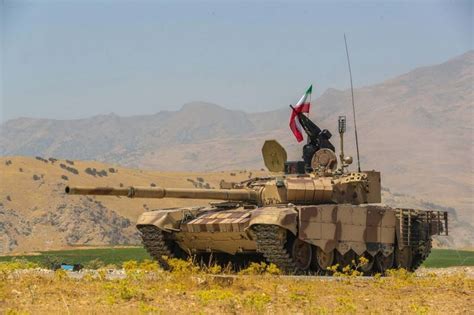
The backbone of Iran’s tank arsenal rested firmly on the Soviet-designed T-72 main battle tank, a platform that defined its armored doctrine for decades. Iran reportedly maintained over 500 T-72 units, many of which had undergone incremental upgrades to improve fire control systems, armor protection, and mobility. Despite these enhancements, the T-72s remained fundamentally rooted in Cold War-era design principles.
These tanks provided Iran with its most credible conventional armored capability. However, their effectiveness against modern Western tanks was highly questionable. Limitations in thermal imaging, targeting systems, and composite armor meant that even upgraded variants struggled to match the battlefield survivability of more advanced counterparts.
Western Holdovers: Chieftain and M60A1 Tanks
Iran’s fleet also included remnants of its pre-1979 alliances, most notably the British-built Chieftain tanks and American M60A1s. The Chieftains had been extensively modified into the Mobarez configuration, incorporating localized upgrades intended to extend their operational lifespan. Meanwhile, roughly 50 M60A1 tanks remained in service, though their relevance in modern armored warfare had significantly diminished.
These platforms reflected a broader pattern within Iran’s military: adapting aging equipment rather than replacing it entirely. While cost-effective, this approach resulted in a patchwork fleet with inconsistent capabilities and maintenance challenges.
Domestic Innovation: Zulfiqar and Karrar Tanks
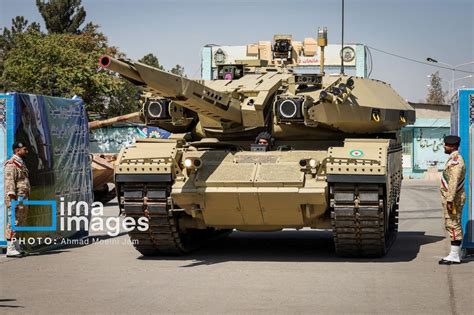
To reduce reliance on foreign suppliers, Iran invested heavily in indigenous tank development. The Zulfiqar series, inspired by both the T-72 and M60, became a central pillar of this strategy. Estimates placed the Zulfiqar fleet at around 250 units, though precise numbers remained uncertain due to limited transparency.
Even more significant was the introduction of the Karrar main battle tank, widely viewed as Iran’s most advanced domestic design. With an estimated 100 units in service, the Karrar featured improvements in armor, optics, and firepower, drawing comparisons to modern Russian designs. Despite these advancements, skepticism persisted regarding the true effectiveness of its systems under combat conditions.
Light Armor and Specialized Units
Beyond its main battle tanks, Iran also fielded lighter armored vehicles such as the Tosan light tank, a domestically produced platform weighing under 10 tons. While not designed for direct engagement with heavy armor, these vehicles played roles in reconnaissance and rapid deployment operations, particularly in difficult terrain.
Iran’s broader ground forces also incorporated self-propelled artillery, towed guns, and multiple launch rocket systems, forming a comprehensive combined-arms structure. However, tanks remained the symbolic and tactical centerpiece of its conventional land power.
Strength in Numbers, Weakness in Modernization
The sheer size of Iran’s tank fleet suggested formidable ground capability at first glance. Yet a deeper analysis revealed a critical imbalance: numerical strength overshadowed by technological gaps. Many of Iran’s tanks lacked modern battlefield integration, including advanced targeting systems, active protection measures, and network-centric warfare capabilities.
Compared to cutting-edge platforms like the American M1A2 Abrams, Iran’s tanks faced significant disadvantages in armor protection, sensor technology, and overall combat effectiveness. This disparity raised serious questions about how well Iran’s armored forces could withstand sustained engagement against technologically superior adversaries.
Ultimately, Iran’s pre-war tank fleet represented a hybrid force shaped by necessity, blending legacy systems with ambitious domestic innovation. While the total number—nearing 1,900 tanks—projected strength, the underlying reality was far more complex: a military power defined as much by its limitations as by its scale.