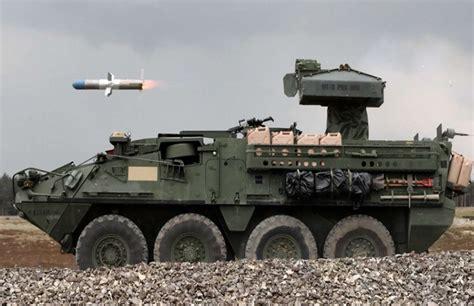
The U.S. Army has taken a deliberate and strategically significant step to secure its long-term anti-tank warfare capability by extending production of the TOW anti-armor missile through a major contract modification awarded to Raytheon. Valued at $193.7 million, the award ensures continued manufacturing at Raytheon’s Tucson, Arizona facility and confirms that the Army sees enduring value in a weapon system that has adapted, survived, and remained relevant across multiple generations of warfare.
Announced on January 27, 2026, the contract modification supports missile production through September 30, 2028, with funding drawn from both fiscal year 2024 and fiscal year 2025 Army procurement accounts. That multi-year funding profile is not an administrative detail; it reflects a stable, predictable demand signal from the Army and a clear intention to maintain industrial continuity for a core ground combat capability.
The contracting activity is being managed by the Army Contracting Command at Redstone Arsenal, Alabama, a hub for complex weapons procurement. Together, these elements point to a long-term planning decision rather than a short-term replenishment buy, positioning the TOW system as a foundational component of U.S. and allied anti-armor strategy well into the latter half of the decade.
The decision arrives at a moment when armored warfare has reasserted its relevance globally. Modern battlefields have demonstrated that tanks and infantry fighting vehicles remain decisive tools for maneuver, protection, and shock action. Equally clear is the continued need for reliable, long-range systems capable of stopping them.
The Tube-launched, Optically Tracked, Wireless-Guided (TOW) missile occupies that role with a maturity few systems can match.
A Proven Missile System Built for Modern Battlefields
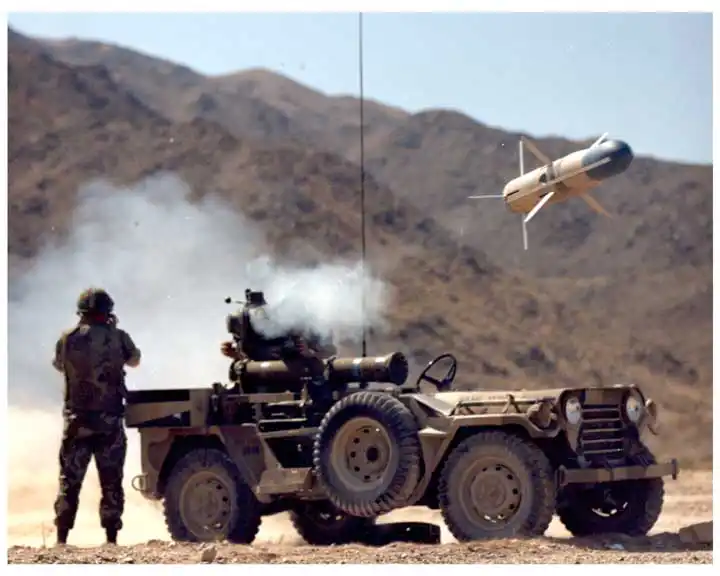
The TOW missile’s longevity is not the result of nostalgia or inertia. It persists because it works. Designed as a command-to-line-of-sight weapon, TOW requires the operator to maintain visual tracking of the target while the launcher and missile handle guidance corrections. This design avoids reliance on satellite navigation or autonomous seekers, a feature that has gained renewed importance as electronic warfare and GPS denial become standard tools of modern conflict.
As long as the gunner can see the target, the missile remains controllable. In an era of jamming, spoofing, and degraded networks, that simplicity is a strength rather than a limitation.
Historically guided by a physical wire, later TOW variants transitioned to radio frequency guidance, expanding operational flexibility and allowing integration on a wider range of platforms. This evolution preserved the missile’s core engagement philosophy while removing constraints that no longer made sense for modern maneuver forces.
Engagement ranges typically reach 3.75 kilometers, with extended-range variants pushing beyond four kilometers, enabling TOW crews to dominate key terrain, avenues of approach, and urban corridors long before armored threats can respond effectively.
Industrial Continuity and the Strategic Value of Production Stability
One of the most important aspects of the new contract is not the missile itself, but the sustained production line behind it. Weapons manufacturing is not easily restarted once it goes dormant. Skilled labor, specialized tooling, qualified suppliers, and certified processes all degrade when production becomes intermittent.
By committing to ongoing TOW manufacturing through 2028, the Army preserves a mature industrial ecosystem that can respond quickly to surges in demand, whether for U.S. forces or allied partners. This stability also reduces unit costs over time and minimizes the risks associated with rushed reactivation during crises.
The funding mix across multiple fiscal years further reinforces that this is a planned, deliberate investment rather than a reactionary procurement. In practical terms, it allows Raytheon to maintain a predictable manufacturing rhythm at its Tucson, Arizona facility, supporting both workforce retention and supply chain resilience.
TOW 2B and the Continued Relevance of Top-Attack Capability
Among the most operationally significant variants supported under current production is the TOW 2B. Rather than striking armor head-on, this missile employs a top-attack profile, flying over the target and detonating dual explosively formed penetrators downward into the vehicle’s roof.
This approach exploits a persistent vulnerability in armored vehicle design. Even heavily protected main battle tanks prioritize frontal and side armor, while roof armor remains comparatively thinner due to weight and design constraints. The TOW 2B’s attack geometry remains effective against both legacy and modern armored platforms.
On contemporary battlefields, where active protection systems and layered armor are increasingly common, the ability to defeat vehicles from above remains a critical advantage. The continued production of this variant demonstrates the Army’s focus on maintaining credible armor-defeat capability, not just theoretical deterrence.
Obsolescence and Safety Updates Sustain Long-Term Viability
A less visible but equally important element of the ongoing TOW program is the Obsolescence and Safety Update (OSA) effort. Missile systems with decades of service history inevitably rely on electronic components, energetic materials, and manufacturing processes that become outdated or non-compliant with modern standards.
OSA upgrades replace aging parts, modernize materials, and ensure compliance with current safety and handling requirements. These updates do more than extend shelf life; they make the system safer to store, transport, and operate, while reducing the risk of supply chain disruptions caused by obsolete components.
From a force management perspective, this allows the Army to confidently plan for TOW’s continued use without accepting elevated risk or maintenance burden. It also ensures interoperability with allied inventories that depend on the same missile family.
Flexible Employment Across Infantry and Vehicle Platforms
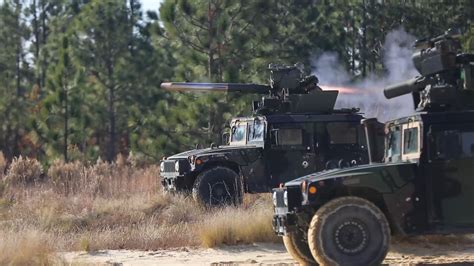
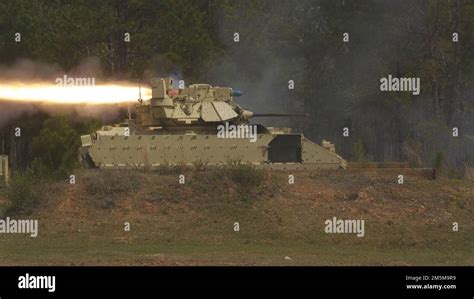
The TOW system’s endurance is also tied to its flexibility in deployment. Dismounted infantry units can employ the missile from tripod-mounted launchers to control chokepoints, overwatch urban avenues, or dominate ridgelines. Vehicle-mounted configurations on platforms such as the Bradley Fighting Vehicle, JLTV-based launchers, and legacy HMMWVs allow mechanized units to maintain constant anti-armor overwatch.
When fired, a single TOW shot can halt an armored advance, force vehicles to maneuver under pressure, or deny access to key terrain. Even when not fired, the known presence of TOW teams imposes caution on opposing armored formations.
Combat experience has repeatedly shown that manual reload requirements and deliberate engagement processes are not liabilities when employed with proper tactics. Teams operate under cover, coordinate fires, and use terrain to offset exposure, maintaining effectiveness even in dense urban or complex environments.
Strategic Signals for the Future of Anti-Tank Warfare
The decision to sustain TOW production sends a clear message about how the U.S. Army views the future of ground combat. While new missile technologies, loitering munitions, and autonomous systems continue to evolve, proven anti-tank guided missiles remain indispensable.
Recent conflicts have reinforced that armored vehicles are not disappearing from battlefields. They continue to shape maneuver, protect infantry, and absorb punishment. Correspondingly, the need for reliable, immediately available weapons capable of destroying or deterring them remains constant.
Command-guided systems like TOW offer a form of resilience that complements fire-and-forget missiles rather than competing with them. In contested electromagnetic environments, simplicity becomes sophistication. The Army’s continued investment reflects a balanced approach that values innovation without discarding systems that consistently deliver results.
By extending TOW missile production through the end of the decade, the U.S. Army is not preserving a relic. It is reinforcing a durable pillar of anti-armor capability, ensuring that American and allied forces retain the means to counter armored threats decisively, regardless of how the technological landscape evolves.