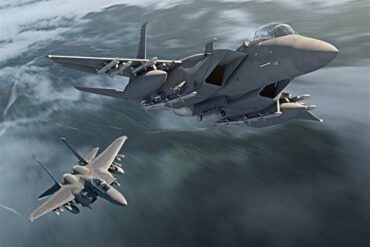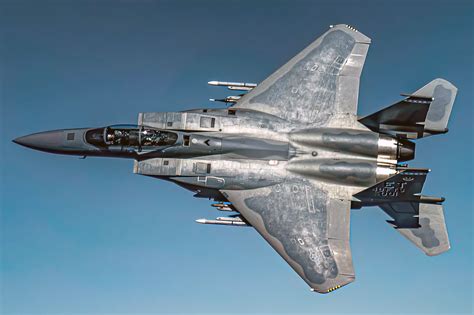
The F-15EX Eagle II and F-16 Fighting Falcon represent two very different approaches to modern fighter aviation. One is a large, twin-engine air superiority platform built to carry an enormous weapons load and generate exceptional speed and altitude. The other is a compact, single-engine multirole fighter designed around lower weight, flexibility, and relatively economical operation. Yet when the Pentagon’s latest flight-hour figures are examined, the difference between them is surprisingly modest.
According to Fiscal Year 2025 Department of Defense cost data, an F-15EX averages about $15,250 per flight hour, while an F-16C/D averages approximately $13,561. That puts the Eagle II roughly 12% above the Fighting Falcon on an hourly basis. Given the substantial difference in size, propulsion, payload capacity, and performance, the relatively narrow gap raises an important question: what exactly is the Air Force getting for those additional dollars?
The answer becomes clearer when operating cost is separated from capability. The F-16 is cheaper to fly, but the F-15EX is designed to perform missions requiring capabilities that a lightweight fighter cannot easily reproduce. The Eagle II can fly faster, higher, and farther while carrying substantially more weapons, and its structure is designed for a much longer service life. The cost difference therefore cannot be evaluated simply by asking which aircraft has the lower hourly bill.
F-15EX and F-16 Flight-Hour Costs Reveal a Surprisingly Small Gap
At first glance, the F-15EX should be dramatically more expensive to operate than the F-16. The Eagle II uses two General Electric F110-GE-129 engines, while the F-16 relies on a single F100 or F110 engine. The F-15EX is also considerably larger and carries almost twice the maximum payload of the F-16C/D.
Yet the Pentagon’s figures show that these physical differences do not translate into a proportional increase in operating expense. At $15,250 per hour, the F-15EX costs $1,689 more to fly than the F-16C/D. For a combat aircraft with such a large capability difference, that is a relatively contained premium.
The numbers become even more interesting when older Eagle variants are included. The F-15C and F-15D average around $24,566 per flight hour, while the F-15E Strike Eagle is listed at approximately $26,243. In other words, the new F-15EX is dramatically cheaper to operate than the older F-15 family members it is replacing.
That difference highlights one of the most important factors in military aviation economics: age matters enormously. A fighter’s original purchase price may attract headlines, but decades of maintenance, parts replacement, structural inspections, component fatigue, and diminishing supply-chain efficiency can eventually dominate the cost of keeping an aircraft airborne.
The F-15EX benefits from being a modern production aircraft while retaining a mature design lineage. More than 70% of its parts are shared with earlier Eagles, allowing the Air Force to exploit existing maintenance equipment, facilities, training systems, and support infrastructure.
Why the F-15EX Can Be Relatively Cheap Despite Its Size
The F-15EX is not an entirely new aircraft architecture. It is a heavily modernized evolution of the Eagle family, and that distinction has major financial consequences. The Air Force does not need to construct an entirely new ecosystem around it.
Existing Eagle infrastructure can support the aircraft, while personnel already familiar with the F-15 family can transition without starting from zero. Maintenance organizations can also draw upon established processes and equipment. That familiarity helps reduce some of the costs normally associated with introducing a new fighter.
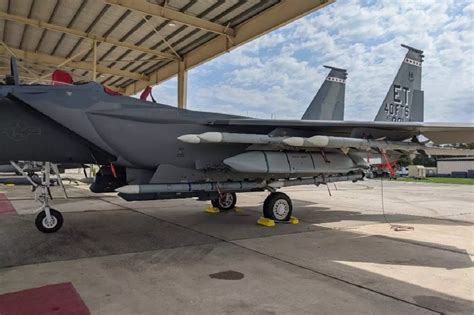
The aircraft’s size also provides capabilities that would otherwise require additional aircraft or weapons systems. The F-15EX can carry up to 29,500 pounds of payload, compared with approximately 17,200 pounds for the F-16C/D. Its maximum speed exceeds Mach 2.5, compared with roughly Mach 2 for the F-16, while its service ceiling reaches about 60,000 feet, versus approximately 50,000 feet for the smaller fighter.
Perhaps even more important is structural longevity. The F-15EX is designed around a service life of approximately 20,000 flight hours, while the F-16C/D has a nominal service-life figure around 12,000 hours. That does not mean every F-16 reaches exactly that number or that every F-15EX will do so without major maintenance. It does, however, demonstrate how the newer Eagle was designed with long-term fleet utilization in mind.
The F-16 Still Holds the Lower Operating Cost
Despite the F-15EX’s relatively strong economics, the F-16 remains the cheaper fighter to fly according to the latest figures. Its $13,561 hourly cost is lower by roughly $1,700.
That advantage matters because the F-16 has historically been used as a high-volume multirole workhorse. The Air Force operates the type across active-duty, Air National Guard, and Reserve units, while allied operators fly thousands more Vipers around the world.
For missions that do not require the F-15EX’s payload capacity or high-end air-superiority performance, operating the smaller fighter can make straightforward economic sense. A fleet that spends thousands of hours conducting routine training, patrols, air-defense missions, and other recurring activities accumulates enormous costs over decades. Even a relatively small difference in hourly operating expense becomes significant when multiplied across a large fleet.
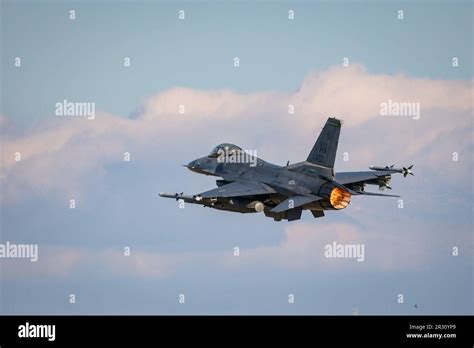
The F-16 also has an important advantage in mission flexibility. Its smaller size and established multirole design make it suitable for a wide range of tasks, from close air support and precision strike to air defense and suppression of enemy air defenses. Although the F-35A is gradually replacing many F-16 missions, the Viper remains an important component of US and allied tactical aviation.
The continued international production of advanced F-16 Block 70/72 aircraft also demonstrates that the basic architecture remains commercially and militarily relevant. New-build Vipers incorporate modern avionics and systems without abandoning the fundamental operating concept that made the F-16 successful.
F-15EX vs. F-16: The Capability Difference Changes the Equation
The biggest mistake in comparing these aircraft is treating them as direct substitutes. They overlap as multirole fighters, but their intended strengths are different.
The F-16 was conceived as a relatively lightweight fighter that could deliver strong performance without the size and expense of larger air-superiority aircraft. Its philosophy emphasizes agility, affordability, and versatility. The F-15 family, by contrast, was designed around air superiority and high-end performance, and the F-15EX retains that DNA while adding modern sensors, computing, electronic warfare capabilities, and weapons integration.
The Eagle II can carry substantially more weapons and external stores, allowing it to function as a large weapons truck for long-range strike missions. It can also carry heavy standoff weapons that would impose greater limitations on a smaller aircraft.
That capacity is particularly relevant in an era when the Air Force is increasingly focused on launching weapons from outside the densest layers of enemy air defenses. The F-15EX does not need to penetrate every threat environment itself to contribute significant combat power.
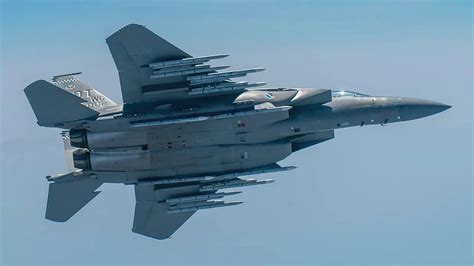
This creates an unusual economic calculation. An F-15EX might cost more per hour, but its larger payload can potentially allow fewer aircraft to deliver a particular quantity of weapons. Conversely, an F-16 may be the more economical choice when the mission does not require that additional capacity.
The right question is therefore not simply “Which fighter costs less?” but rather “How much combat capability does each dollar purchase?”
Why Older F-15s Cost So Much More
The operating-cost data also provide a strong argument for replacing aging fighters. The F-15C and F-15D variants cost approximately $24,566 per flight hour, substantially more than the F-15EX. The F-15E Strike Eagle is even more expensive at around $26,243 per hour.
That difference illustrates the financial burden of maintaining aging tactical aircraft. Older airframes accumulate fatigue, require increasingly intensive inspections, and can suffer from diminishing availability of replacement components. Maintenance personnel must spend more time keeping individual aircraft operational, while aircraft availability can decline.
The F-15EX offers the Air Force an opportunity to reset that cycle with a modern production aircraft while retaining much of the infrastructure associated with the existing Eagle fleet. In practical terms, replacing an expensive older fighter with a newer aircraft does not merely change the combat capability of the fleet. It can also alter the economics of every hour the aircraft spends in the air.
This is one reason the F-15EX became increasingly attractive as the Air Force confronted the condition of its aging fighter inventory.
Why the Air Force Expanded the F-15EX Program
The F-15EX program initially faced pressure from competing priorities. The Air Force had planned to emphasize stealth aircraft, particularly the F-35A, while using the Eagle II primarily to replace the most heavily fatigued F-15C/D aircraft.
The planned quantity was subsequently increased substantially, eventually reaching 268 aircraft. Several factors contributed to that change, including difficulties with the F-35 program and the deteriorating condition of older F-15E aircraft.
The decision reflects a broader reality in military procurement: an aircraft does not operate in isolation. The Air Force needs enough available fighters to maintain training, homeland defense, deployments, and combat readiness. If newer stealth aircraft cannot arrive quickly enough to replace retiring fourth-generation fighters, extending or expanding production of a mature fourth-generation-plus design becomes a practical option.
The F-15EX can also serve missions for which using a highly expensive stealth fighter may not always be necessary. The aircraft has been positioned for homeland defense and other missions where its speed, endurance, radar performance, weapons capacity, and long-range capabilities provide significant value.
Production Scale Could Change F-15EX Economics
The expanded F-15EX order introduces another economic variable: economies of scale.
Producing more aircraft allows manufacturers to spread fixed costs across a larger production run and maintain a more efficient supply chain. A larger fleet also creates opportunities to standardize spare parts, training, maintenance procedures, and technical expertise.
However, a larger order does not automatically guarantee lower lifetime costs. If production stretches deep into the 2030s, some components may become obsolete before the final aircraft are delivered. Radar systems, mission computers, electronic warfare equipment, and engine-related technologies may require redesigns or technical refreshes.
Those upgrades could increase acquisition costs even as the larger fleet eventually reduces some recurring support expenses.
For the F-16, the situation is different. The US Air Force is largely managing an aging domestic fleet while international customers continue purchasing new-generation Vipers. That means the industrial base remains active, but the economic calculation for the US fleet increasingly involves whether existing aircraft can be sustained economically until replacement aircraft arrive.
Which Fighter Actually Costs Less to Fly?
The answer from the Pentagon’s hourly cost figures is straightforward: the F-16 costs less to fly.
At approximately $13,561 per flight hour, the F-16C/D maintains a clear operating-cost advantage over the F-15EX at roughly $15,250. The difference is not insignificant, especially across thousands of annual flight hours, but it is considerably smaller than the aircraft’s physical differences might suggest.
The F-15EX’s higher hourly cost buys a much larger fighter with two engines, a nearly 30,000-pound maximum payload, higher speed, greater altitude capability, and a substantially longer designed service life. More importantly, the Eagle II is dramatically cheaper to operate than the older F-15 aircraft it is intended to replace.
That makes the debate less about finding a single winner and more about fleet composition. The F-16 remains the economical workhorse for missions it can perform effectively, while the F-15EX provides heavier capacity and high-end performance at a surprisingly manageable operating cost.
The most revealing figure may therefore be neither $13,561 nor $15,250. It is the much higher cost of keeping aging fighters alive. The Pentagon’s numbers suggest that modernizing the fleet can sometimes reduce operating expenses even when the replacement aircraft is larger and more capable. For the Air Force, that may ultimately be more important than the relatively narrow gap between the F-15EX and F-16.