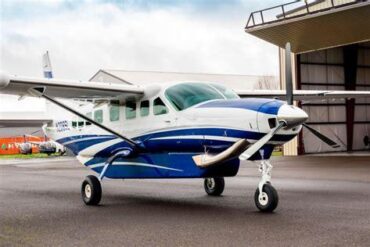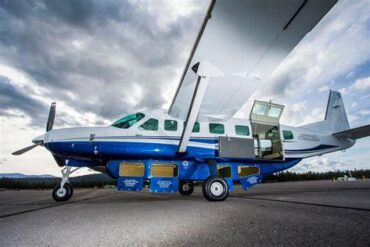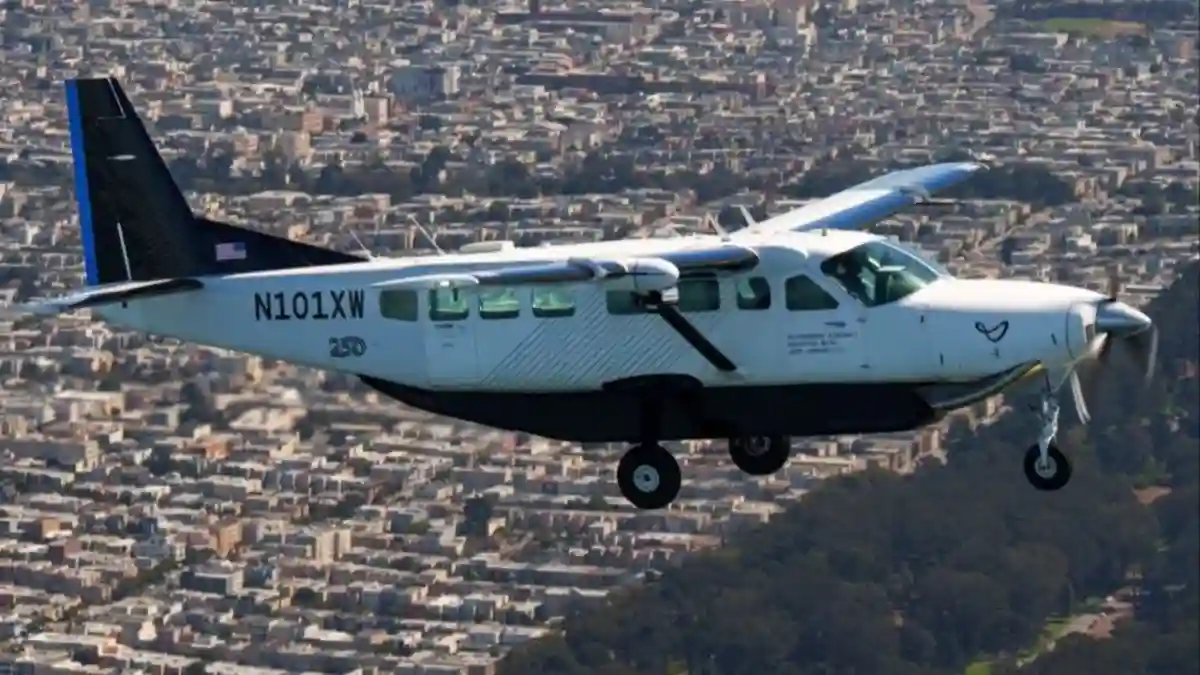
On September 7, 2026, an aircraft departed Buchanan Field in Concord, California, and began one of the most unusual cross-country journeys in modern aviation. There was a pilot sitting inside the cockpit, but he did not actually fly the airplane. The converted Cessna 208B Grand Caravan taxied, took off, navigated, responded to changing conditions, rerouted around severe weather, and landed without a single control input from the safety pilot.
The aircraft, designated the J208 by Joby Aviation and registered as N101XW, eventually reached Dare County Regional Airport in North Carolina’s Outer Banks on September 14. Over the journey, it covered 3,199 miles (5,148 kilometers) across the United States. The significance was not simply the distance. It was the fact that the aircraft completed the entire operation using an autonomous flight system while human operators supervised it remotely from the ground.
That makes the flight an important demonstration of where autonomous aviation could be heading. Instead of putting a pilot inside every aircraft, future operations could potentially place much of the decision-making and control inside software, with trained personnel supervising aircraft from dedicated ground stations.
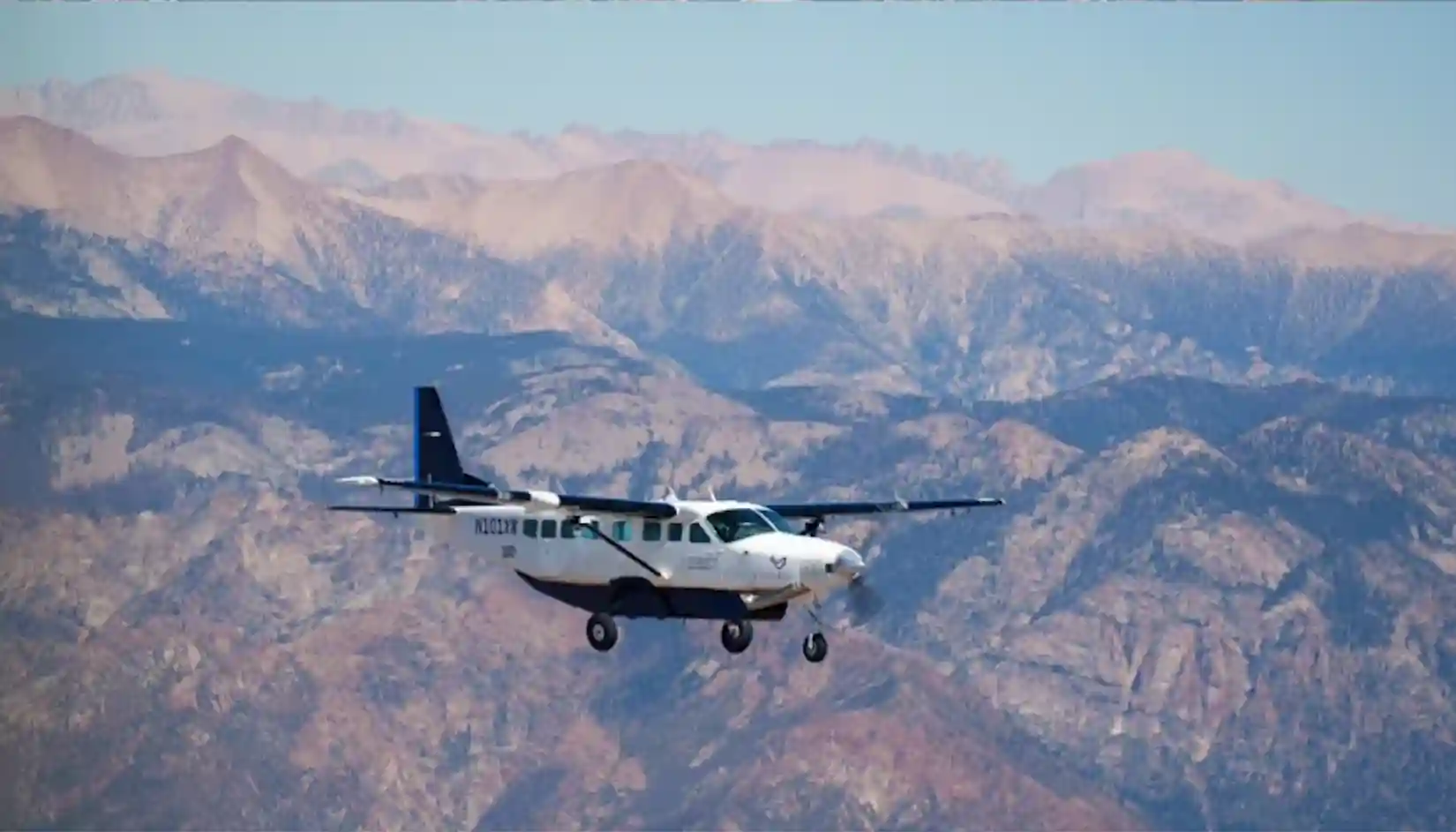
The journey was conducted by Joby Aviation, a company better known for developing electric vertical-takeoff-and-landing aircraft for future air-taxi services. The autonomous Caravan therefore represents a fascinating departure from the company’s better-known eVTOL program. It also provided Joby with a way to demonstrate autonomy using a conventional aircraft before attempting to apply similar technology to more advanced aircraft.
A 3,199-Mile Flight Without Pilot Control
Joby announced on September 18 that its autonomous aircraft had completed what the company described as the first fully autonomous flight across the United States. The aircraft departed Concord, California, on September 7 and reached Dare County Regional Airport in North Carolina seven days later.
A safety pilot remained aboard throughout the journey, but the distinction is critical: the pilot did not provide control inputs. The aircraft’s autonomy system handled the functions normally performed by a human pilot, including taxiing, takeoff, navigation, route changes, and landing.
The safety pilot’s presence was primarily part of the test and safety architecture rather than conventional aircraft operation. If something unexpected had occurred, a human was available to intervene. During the successful crossing, however, no intervention was required.
The aircraft also demonstrated an ability that is considerably more complicated than simply following a predetermined route. Severe weather and thunderstorms developed along portions of the journey, requiring the aircraft to reroute in real time. The autonomy system adjusted its flight path while remaining under remote supervision.
Ground teams monitored the aircraft from Joby’s Autonomy Headquarters in California and from Shaw Air Force Base in South Carolina. At its greatest separation, the aircraft was as much as 2,323 miles (3,739 kilometers) from the relevant remote supervision location.
That makes the flight more significant than an automated demonstration conducted in a controlled test area. The aircraft had to operate over a large geographic area, encounter changing weather, communicate within the existing aviation environment, and arrive at airports it had not previously experienced.
Four Stops, Four Different Autonomous Aviation Challenges
The cross-country flight was structured around several intermediate airports, and the stops were not merely convenient refueling locations. Each one gave Joby an opportunity to test a different operational requirement for autonomous aircraft.
The first major stop was Phoenix Deer Valley Airport in Arizona, one of the busiest general aviation airports in the United States. An autonomous aircraft operating at such an airport has to deal with a much more complicated environment than it would encounter at an isolated test field.
There can be flight-school aircraft, private airplanes, business jets, helicopters, and other traffic moving through different phases of flight. The autonomous system therefore had to integrate itself into a busy aviation environment while communicating with air traffic control.
The importance of the test goes beyond simply avoiding other aircraft. A commercially useful autonomous system has to understand where it is, determine how to execute its mission, respond to instructions and restrictions, and maintain a safe trajectory when conditions change.
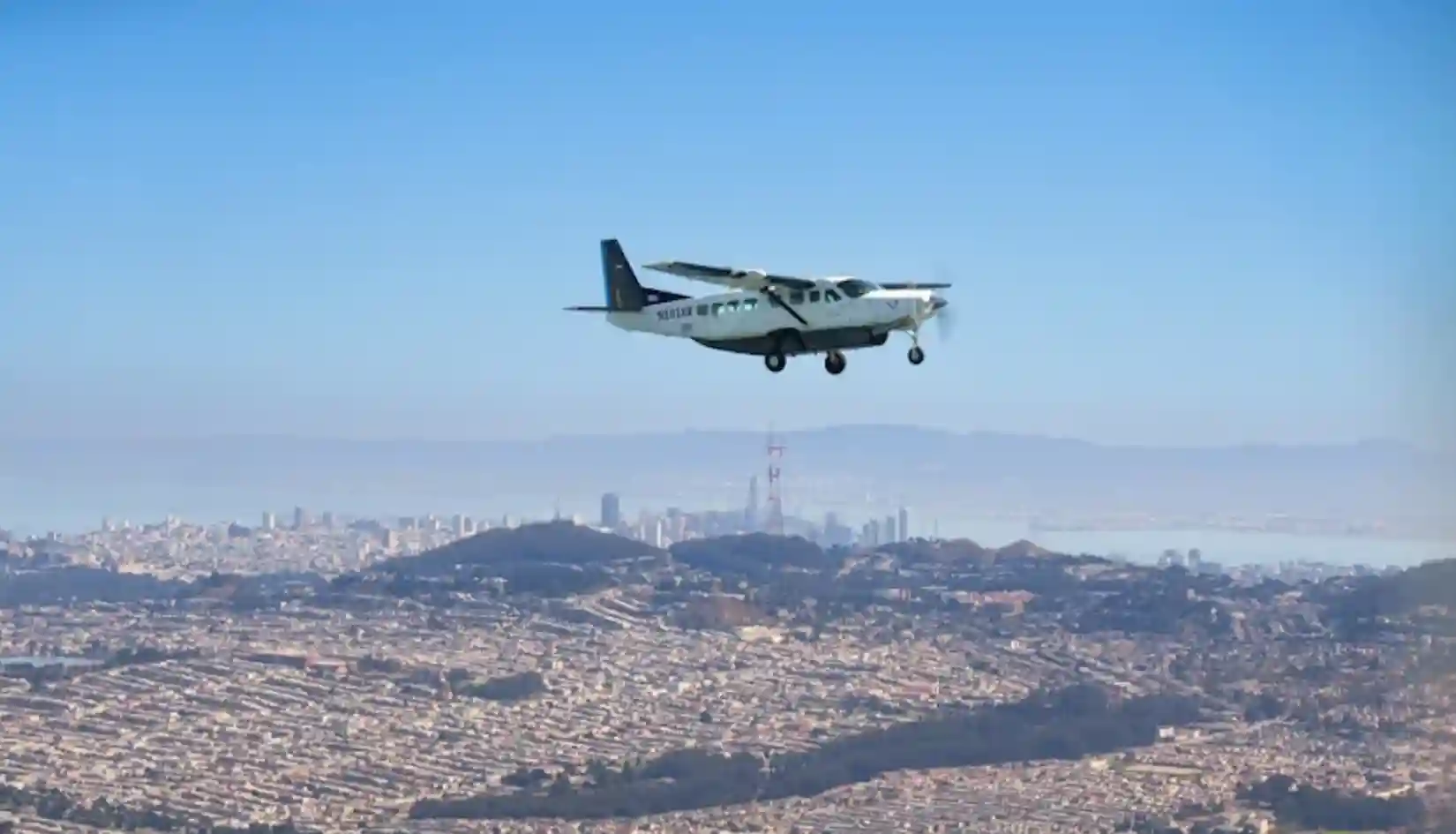
The aircraft then continued to Fort Worth Alliance Airport in Texas, a major industrial and logistics center. This stop was particularly relevant to Joby’s plans for autonomous freight operations.
A conventional pilot is expensive, especially for relatively small cargo missions where the aircraft itself may carry only a modest payload. If autonomous technology can eventually remove the need for an onboard pilot while maintaining an acceptable level of safety and regulatory oversight, operators could potentially use smaller aircraft for more point-to-point logistics missions.
Fort Worth also provided an unusual opportunity for Joby because the company was demonstrating two different parts of its aviation strategy at the same location. On the same day, Joby conducted its first air-taxi flight in Texas under the White House-backed eIPP program, with U.S. Transportation Secretary Sean Duffy and Texas Senator Ted Cruz present.
The contrast was striking. One Joby aircraft represented the company’s piloted electric future, while the autonomous Caravan demonstrated how conventional aircraft could potentially become remotely supervised cargo platforms.
Shaw Air Force Base Added a Military Dimension
The stop at Shaw Air Force Base in South Carolina added another layer to the demonstration. Joby describes the military portion of the journey as a capability demonstration involving representative military flight operations and tactical defense readiness.
Shaw also had a practical role because it served as a second remote supervision location. Air Force personnel could observe the ground-control architecture and see how an autonomous aircraft could be monitored from a location separated from the aircraft itself.
This is particularly relevant to military logistics. Armed forces routinely move equipment, supplies, medical materials, and personnel across large distances. Some missions require aircraft to operate in environments where sending a pilot may be undesirable or inefficient.
An autonomous cargo aircraft would not necessarily need to be a futuristic stealth platform. A rugged, established aircraft such as the Caravan could potentially carry supplies into smaller airfields while reducing the personnel requirements associated with traditional operations.
The technology also had a military track record before this transcontinental flight. Xwing, the company from which Joby acquired the autonomy technology, received an Air Force Military Flight Release in 2024. The same aircraft had also participated in the Air Force’s Agile Flag 24-1 exercise, where it flew approximately 2,800 miles and landed at eight public and military airports.
Joby Acquired the Autonomy Technology From Xwing
One of the most interesting details about the aircraft is that the technology behind the flight was not developed entirely from scratch by Joby.
In June 2024, Joby acquired Xwing’s autonomy division, including its technology, engineering personnel, and the Caravan airframe used for autonomous flight development. The acquisition gave Joby access to years of testing that had already been conducted on autonomous aircraft.
Xwing was founded in 2016 and began autonomous flight testing in 2020. Its Superpilot system was designed to provide what the company described as fully autonomous gate-to-gate flight capability.
By the time Joby acquired the division, Xwing had completed hundreds of autonomous flights and more than 500 automated landings. It had also accumulated regulatory experience that was highly valuable for a company attempting to move autonomous aviation toward commercial applications.
In April 2023, Xwing became the first company to receive an official FAA project designation for certification of a large unmanned aircraft system. The following year, its aircraft received the Air Force Military Flight Release.
Those milestones matter because autonomous aviation is not simply a software problem. The system has to demonstrate that it can safely interact with real aircraft, airspace, weather, airports, communications systems, and unexpected situations.
Xwing’s technology addressed many of those challenges through a combination of computer vision, detect-and-avoid systems, mission management, trajectory planning, real-time route updates, decision-making software, remote ground control, artificial intelligence, and machine learning.
The transcontinental flight therefore represented the culmination of years of incremental development rather than a single technological breakthrough.
Why Joby Chose a 33-Year-Old Cessna Caravan
Perhaps the most surprising aspect of the project is the age of the aircraft.
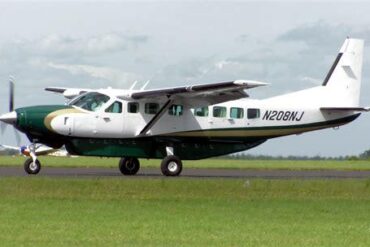
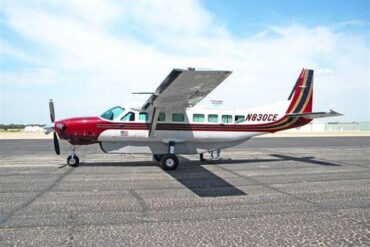
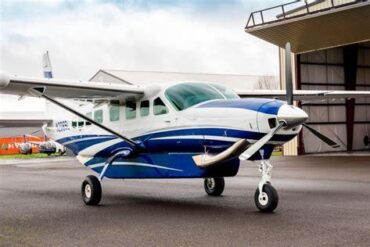
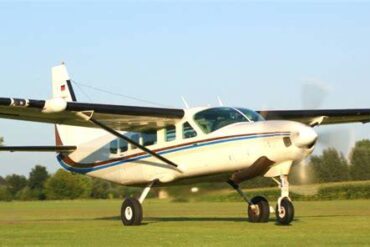
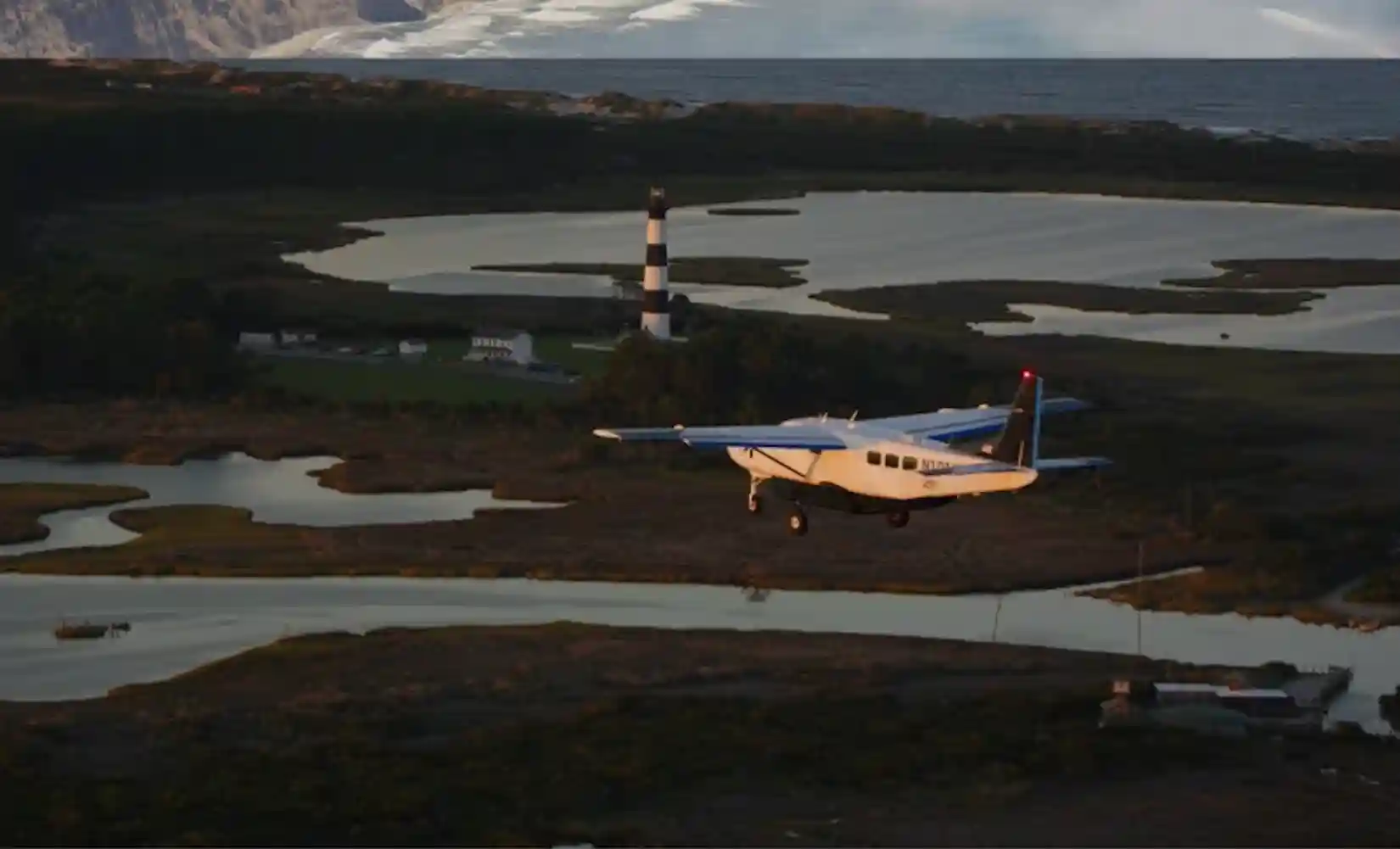
FAA registry information identifies N101XW as a 1993 Cessna 208B Grand Caravan, with serial number 208B0382. Joby Aero registered the aircraft in July 2024, and it operates under an experimental airworthiness certificate for research and development.
The Grand Caravan itself is an established aircraft design. Its type certificate dates back to 1984, and the aircraft has spent decades performing utility, passenger, and cargo missions around the world.
Using an older aircraft was not a disadvantage. It was central to Joby’s strategy.
Developing an entirely new autonomous aircraft would require regulators to evaluate both the aircraft and its autonomy architecture as part of a new configuration. By contrast, putting autonomous technology onto an established aircraft gives engineers a known airframe with a substantial operational history.
The Caravan also has another major advantage: existing infrastructure.
Cargo operators already know how to maintain the aircraft. Parts, technicians, pilots, operators, airports, and established procedures already exist. If autonomous technology eventually becomes commercially certified for retrofit applications, operators could potentially add autonomy to aircraft that are already in service rather than replacing entire fleets.
That approach could make autonomous aviation significantly more practical. The challenge is no longer necessarily building an entirely new aircraft. Instead, the technology could be treated as a new operational layer added to aircraft that already perform useful work.
The strategy also distinguishes Joby’s approach from companies developing entirely new autonomous aircraft. Rather than making autonomy inseparable from a new airframe, Joby is demonstrating that autonomous systems can potentially operate independently of a specific new aircraft design.
The Historic Connection to Kitty Hawk
The destination was carefully chosen.
Before landing at Dare County Regional Airport, the autonomous Caravan made a low pass near the First Flight Monument at Kitty Hawk, where Orville and Wilbur Wright conducted the first powered flight in 1903.
The aircraft then continued toward Dare County Regional Airport, passing near Bodie Island Lighthouse during its approach.
The symbolism was difficult to miss. More than a century after the Wright brothers demonstrated that a heavier-than-air machine could fly under its own power, another aircraft arrived in the same region after crossing the United States without a pilot controlling it.
The two achievements are separated by enormous technological differences. The Wright Flyer required direct human control and flew for only a short distance. The J208 relied on sensors, computing systems, navigation software, automated decision-making, and remote supervision to cover thousands of miles.
Yet the connection illustrates how quickly aviation has evolved. The first powered flight proved that controlled powered flight was possible. Joby’s flight asks a different question: how much of that control can eventually be performed by machines?
Autonomous Aircraft Could Change Medical and Cargo Logistics
Joby is not presenting the J208 simply as a technological curiosity. The company sees autonomous aircraft as potential tools for practical transportation.
Remote communities can be difficult and expensive to serve by conventional air transportation. A relatively small aircraft capable of operating from short runways could potentially move medical supplies, emergency equipment, food, or other critical cargo without requiring a pilot to travel with every shipment.
The North Carolina portion of the project supported the state’s eLIFT-NC initiative, which is examining how aviation could improve healthcare logistics.
The broader tour also supported the multi-state uFLY coalition, led by the Utah Department of Transportation, which is studying the integration of aircraft into high-altitude and extreme-environment airspace.
These applications are important because autonomous aviation does not need to begin with passenger transportation. Cargo and logistics missions may provide a more realistic early market because there is no passenger onboard whose safety depends on the system during initial commercial deployment.
The Flight Was a Beginning, Not the End
The 3,199-mile journey was a major milestone, but it did not represent the completion of Joby’s autonomy program.
After reaching North Carolina, the J208 began a return journey westward. Planned stops included Raleigh, Fredericksburg, Louisville, Wichita, Oklahoma City, Salt Lake City, and Portland.
Every additional airport gives engineers more operational data. Every new weather system, terrain type, traffic environment, runway, and airspace structure can contribute to the evidence required to demonstrate that the autonomy system works consistently rather than only under carefully selected conditions.
That distinction will become increasingly important as Joby moves toward regulatory certification.
A successful demonstration proves that an aircraft can perform a mission. Certification requires regulators to establish that the system can perform its required functions safely and predictably across a defined range of circumstances.
The difference between those two stages is enormous.
From Experimental Caravan to Autonomous Aviation Network
The most important aspect of Joby’s historic flight may therefore be what the aircraft represents rather than the flight itself.
The J208 is an old aircraft equipped with new technology. Its 1993 airframe is almost the opposite of the futuristic image often associated with autonomous aviation. There are no exotic engines or radically shaped wings. Instead, the transformation is happening through sensors, software, computing, communications, and remote supervision.
That could ultimately prove more important than building an entirely new autonomous aircraft.
If autonomy can be certified and deployed on existing utility aircraft, operators could gain access to a new category of aviation without waiting for a completely new generation of airframes. Cargo carriers, emergency agencies, military organizations, healthcare networks, and remote communities could potentially use autonomous aircraft for missions that are currently limited by pilot availability or operating costs.
The September 2026 crossing showed that such a system can already be tested over thousands of miles in real American airspace.
And the image of a Cessna Caravan crossing the United States with nobody actually flying it may prove to be one of the clearest snapshots yet of aviation’s next technological transition.