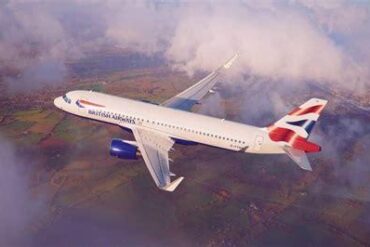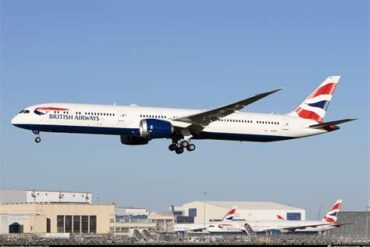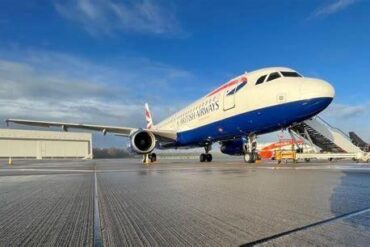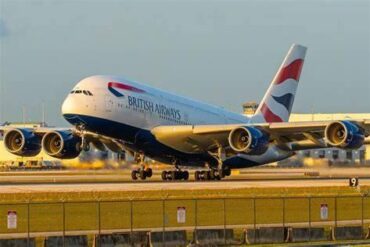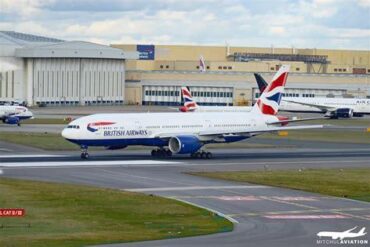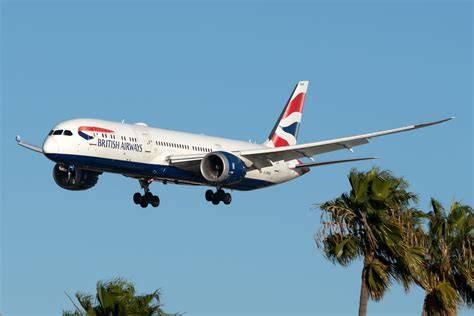
British Airways is bringing its Boeing 787 Dreamliner fleet to one of its shortest international routes this winter, deploying the widebody aircraft between London Heathrow Airport (LHR) and Adolfo Suárez Madrid–Barajas Airport (MAD). The route normally relies on narrowbody aircraft, making the arrival of a long-haul twinjet a notable change for passengers traveling between the UK and Spain.
The 787 will operate on the Heathrow–Madrid corridor from late October 2026 through late March 2027, coinciding with British Airways’ transition from its IATA summer schedule to the winter schedule. Rather than being driven purely by passenger demand, the deployment also reflects Madrid’s importance as a connection point for Iberia’s extensive Latin American network.
For travelers, the change means a roughly two-hour flight could take place aboard an aircraft designed for journeys lasting many hours. British Airways’ Dreamliners feature larger cabins, modern lighting, quieter interiors and systems intended to improve passenger comfort. The airline describes the 787 as one of the most technologically advanced aircraft in its fleet, making its appearance on this short European sector particularly unusual.
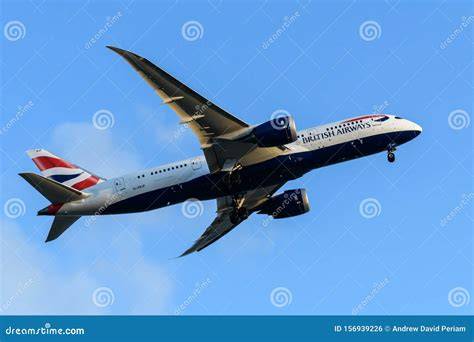
Why British Airways Is Flying Boeing 787s to Madrid
The most important reason behind the unusual aircraft deployment is not simply the number of passengers traveling between London and Madrid. Cargo capacity is a major factor. Madrid serves as an important hub for Iberia, British Airways’ oneworld partner, particularly for connections onward to destinations across Latin America.
A Boeing 787 has substantially more belly cargo capability than the Airbus A320-family aircraft that normally operates much of the route. By positioning a Dreamliner on the short European sector, British Airways can move additional cargo into Madrid, where it can subsequently connect with Iberia’s Latin American services.
This gives the aircraft deployment a strategic purpose beyond the passenger cabin. A widebody may appear excessive for a journey of only a couple of hours, but the aircraft’s value is determined by what it can carry across the entire network, including freight and connecting traffic.
All Three British Airways 787 Variants Will Appear
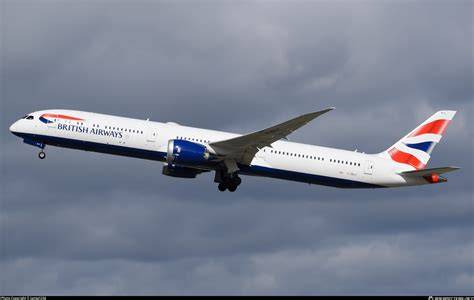
British Airways is unusual among airlines because it operates all three Boeing 787 variants. Its fleet includes the 787-8, 787-9 and larger 787-10, giving the carrier considerable flexibility when assigning aircraft to different routes.
During the October-to-March period, all three versions are scheduled to appear on the Madrid route. According to the referenced Cirium scheduling data, British Airways plans 114 Boeing 787 services between Heathrow and Madrid during the winter period.
The 787-10 will account for the largest share, with 63 flights, representing about 55% of the scheduled 787 operations. The 787-8 will operate another 33 flights, while the 787-9 is scheduled for 18 flights and will begin appearing from November.
| Boeing 787 variant | Scheduled flights |
|---|---|
| Boeing 787-8 | 33 |
| Boeing 787-9 | 18 |
| Boeing 787-10 | 63 |
The distribution also highlights the role of the 787-10 in British Airways’ network. Although it is the largest and shortest-range member of the family, its substantial passenger capacity makes it particularly useful on routes where demand and cargo requirements justify a widebody aircraft.
Six Widebody Flights Each Week
The Dreamliner operation will not mean that every Heathrow–Madrid service becomes a widebody flight. British Airways is planning to maintain a regular pattern of six twin-aisle rotations per week throughout the winter, with Boeing 787 aircraft supplemented by occasional Boeing 777-200ER operations.
The 777-200ER has already become familiar on this corridor, having started operating between Heathrow and Madrid in late March 2026. Its continued presence provides British Airways with additional flexibility while the three Dreamliner variants rotate through the route.
Boeing 777-200ER Returns to Daily Madrid Service
The widebody strategy will change again when the winter schedule ends. From the last Sunday in March 2027, British Airways is expected to withdraw all three 787 variants from the Madrid route and return to regular 777-200ER operations.
Current scheduling data extends through at least August 31, 2027, showing the 777-200ER operating the Heathrow–Madrid route daily from March 28. That represents an increase in regular summer widebody coverage compared with the winter arrangement.
The switch demonstrates how British Airways uses its widebody fleet according to seasonal network requirements. The same Madrid route can therefore see different aircraft types depending on the period of the year, cargo needs and wider fleet scheduling.
For passengers, the biggest surprise will simply be finding a long-haul Boeing 787 on a two-hour European flight. For British Airways, however, the deployment makes commercial sense: Madrid is not merely an endpoint but an important gateway into Iberia’s Latin American network, giving the Dreamliner a useful role well beyond the short distance between London and Spain.