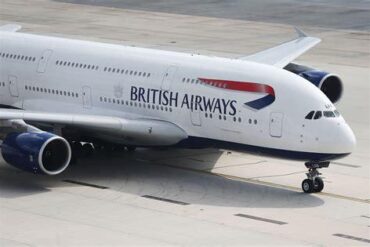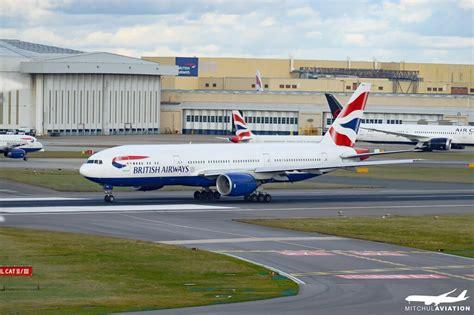
British Airways is setting the stage for a significant network refresh in 2026, unveiling three new routes from London Heathrow that strengthen both its long-haul and short-haul footprint. The carrier’s strategy blends premium-demand transatlantic expansion with niche European additions, showcasing a careful recalibration of capacity, profitability, and strategic relevance amid shifting international demand patterns.
A Strategic Push Into High-Value Transatlantic Traffic: Heathrow–St. Louis
The most notable addition in this trio is the return of nonstop service between London Heathrow and St. Louis, a route beginning on April 19. The move is underpinned by persistent premium-class demand and a sizable daily flow of more than 800 round-trip passengers traveling between St. Louis and major destinations across Europe, the Middle East, and South Asia. For years, Heathrow stood out as the city’s largest unserved long-haul market—a gap BA intends to fill decisively.
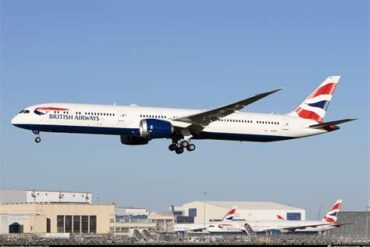
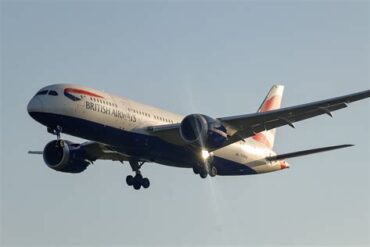
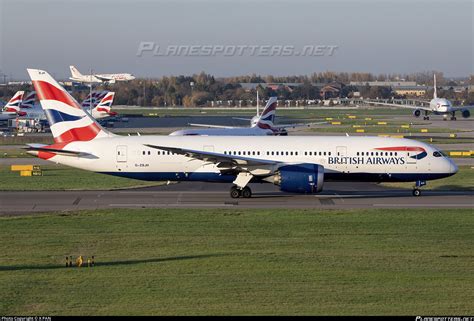
Service will launch with four weekly flights aboard the Boeing 787-8, a 204-seat widebody equipped with Club Suites, giving the route the kind of premium cabin product needed to compete for the lucrative corporate and connection-focused segment. St. Louis, with a metro population of more than three million, a roster of Fortune 500 headquarters, and a 2023 GDP of $227 billion, offers the kind of robust commercial base airlines covet when evaluating new long-haul destinations.
Growth in GDP per capita—the fastest of any U.S. metro in recent years—adds yet another layer of confidence that the market will supply the high-yield passengers crucial for long-term viability.
Resuming a Historic Link: Heathrow–Guernsey Returns After 45 Years
On the same day St. Louis service begins, British Airways will also reinstate a long-dormant connection to Guernsey, resuming a route absent from the Heathrow schedule since the late 1970s. While BA CityFlyer briefly linked Gatwick and Guernsey until 2003, and Flybe attempted a subsidized Heathrow–Guernsey service for a year before ceasing operations in 2020, BA’s 2026 return represents a renewed test of this very short but strategically intriguing route.
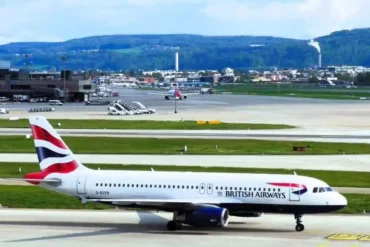
At just 148 nautical miles, Guernsey becomes Heathrow’s second-shortest route after Manchester. Daily flights will be operated by the Airbus A319, the carrier’s smallest mainline jet with 123 seats. The midday schedule positions the flight primarily as a point-to-point service rather than a connector, making performance difficult to predict but ensuring strong appeal among leisure travelers and island visitors.
Strengthening Summer Leisure Demand: Heathrow–Tivat Adds Mediterranean Flair
British Airways will also expand into Montenegro, launching seasonal service to Tivat on May 14. This destination, a growing hotspot on the Adriatic, has seen massive popularity among U.K. holidaymakers. The airline’s entry onto the route strengthens Britain’s position as Tivat’s largest inbound market.
Flights will operate three times weekly using the A320, seating 180 passengers. The route marks the second known attempt to serve Heathrow–Tivat, following Air Serbia’s operation two decades ago. With Montenegro’s tourism sector booming and Tivat increasingly viewed as a luxury getaway rivaling nearby Croatian destinations, British Airways is clearly positioning itself to capture peak summer demand.
Balancing Growth With Retrenchment: Cologne, Riga, and Stuttgart Exit the Network
Network expansion often comes paired with contraction, and 2026 is no exception. British Airways will discontinue service to Cologne, Riga, and Stuttgart, all of which face intense low-cost competition from rival airports across London.
Riga is served multiple times daily by airBaltic from Gatwick and extensively by Ryanair from Stansted. BA’s limited four-weekly Heathrow flights struggled to achieve more than a 70% load factor across early 2025, despite the advantage of being positioned for long-haul connections.
Cologne and Stuttgart also face heavy pressure from Eurowings, which operates from Heathrow to both cities, while Ryanair maintains its own presence from Stansted. Given these dynamics, BA’s comparatively small schedules during the December 5–11 period—four weekly flights to Riga and up to 12 weekly for Cologne—highlight the challenge of sustaining competitive frequencies.
A Forward-Looking View of BA’s Heathrow Strategy
The three new routes underscore a broader strategy: focusing on markets where Heathrow’s premium connectivity and BA’s network strengths actually move the needle. St. Louis fits that ambition perfectly, while Guernsey and Tivat serve different but complementary roles—one reinforcing British domestic ties and the other capitalizing on seasonal Mediterranean demand.
As British Airways fine-tunes its Heathrow portfolio, the picture that emerges is one of deliberate recalibration rather than wide-scale expansion. The carrier is pruning underperformers while planting new seeds in areas where business demand, leisure appeal, or competitive gaps create meaningful opportunity.
The airline’s 2026 network is a living illustration of how major flag carriers now operate: precise, data-driven, and keenly responsive to the shifting currents of global travel.