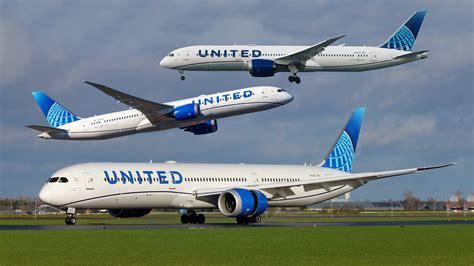
The Boeing 787 Dreamliner stands as one of the most transformative widebody aircraft families in modern aviation history. With its composite construction, revolutionary fuel efficiency, and flexible range capabilities, the Dreamliner has reshaped long-haul travel across the globe. The family comprises three main variants — the 787-8, 787-9, and 787-10 — each tailored to different operational niches. However, only a handful of global airlines have embraced the full spectrum of this aircraft lineup, integrating all three variants into their fleet strategy. This elite group includes All Nippon Airways (ANA), British Airways, and United Airlines, each deploying the aircraft to meet specific regional and intercontinental demands.
Understanding The Three Variants Of The Boeing 787
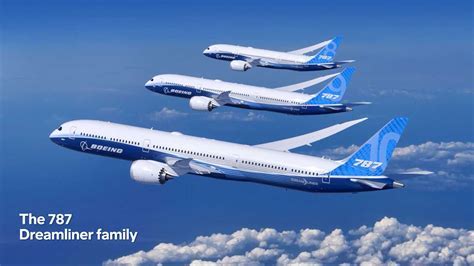
The 787 Dreamliner family was engineered to meet varying market needs with distinct size and range characteristics. The 787-8, the first model launched in 2011, was followed by the more capable 787-9, and finally the stretched 787-10.
The 787-8 offers a range of approximately 7,305 nautical miles, with a seating capacity that typically ranges from 242 to 290 passengers, depending on airline configuration. The 787-9, by far the most popular model, boosts range to 7,565 nautical miles and passenger capacity up to 296–330 seats. The final variant, the 787-10, sacrifices some range — topping out at 6,330 nautical miles — in exchange for a capacity of up to 318 passengers, making it ideal for dense regional and transcontinental routes.
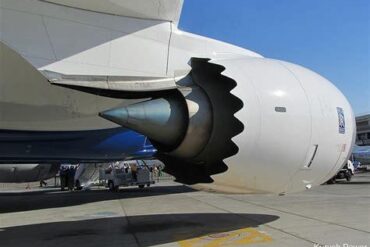
Each model is powered by either the General Electric GEnx-1B or the Rolls-Royce Trent 1000, offering fuel efficiency and reduced environmental impact compared to legacy widebodies.
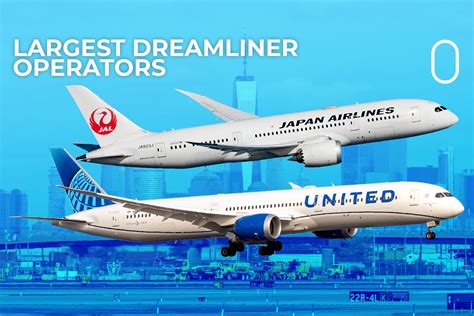
All Nippon Airways (ANA): The 787’s Launch Customer And Flagbearer
When All Nippon Airways (ANA) became the launch customer for the Boeing 787 Dreamliner, it committed not just to innovation but to a long-term partnership with Boeing that transformed its long-haul and domestic operations. Today, ANA operates an astounding 87 Dreamliners, comprising:
- 33 Boeing 787-8s
- 44 Boeing 787-9s
- 10 Boeing 787-10s
ANA’s deployment strategy is intricate, with each variant fine-tuned to a specific market role.
The 787-8, while initially central to ANA’s expansion, now serves thinner long-haul and regional international routes — destinations like Jakarta, Vienna, and Stockholm. These aircraft are often configured with 32 or 42 business class seats, striking a balance between comfort and density. There’s also a dedicated domestic layout, maximizing economy seats to handle high-capacity routes across Japan.
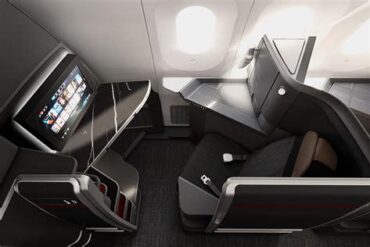
The 787-9, the fleet’s workhorse, handles high-yield routes including North America and Europe, and some are outfitted with the luxurious ‘The Room’ business class suites, offering 48 business class seats and an elevated premium cabin experience. Notably, this aircraft is ANA’s tool of choice for premium-heavy, ultra-long-haul missions.
The 787-10, although range-limited, plays a critical role in regional Asia services — flying high-demand leisure and business routes such as Bangkok and Ho Chi Minh City. Configured with 38 business class seats in its international version and over 400 economy seats domestically, it is ANA’s ultra-efficient, high-density people mover.
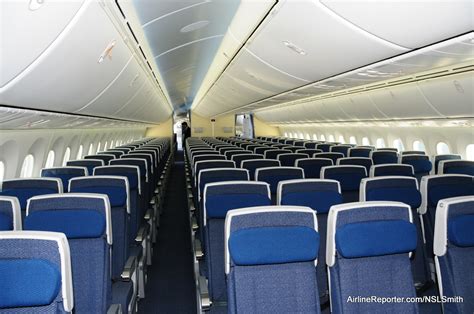
British Airways: Leveraging The Dreamliner For Premium Versatility
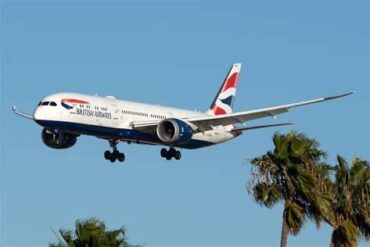
At the heart of British Airways’ fleet strategy lies London Heathrow, and its widebody backbone includes a carefully balanced Dreamliner operation. BA operates 42 Boeing 787s, broken down into:
- 12 Boeing 787-8s
- 18 Boeing 787-9s
- 12 Boeing 787-10s
The 787-8s, while less prevalent in new deliveries, serve lower-demand international routes. These aircraft are equipped with Club World business, World Traveller Plus (premium economy), and World Traveller (economy) cabins — ideal for thinner city pairs.
In contrast, the 787-9s and 787-10s feature enhanced premium offerings. The 787-9s include eight First Class suites, making them suitable for elite markets with high-revenue passengers. They are often seen on routes such as Delhi, Toronto, and Cape Town, where premium demand exists without the need for a larger aircraft like the 777-300ER.
The 787-10, the largest of BA’s Dreamliners, is a core player on transatlantic and Middle East routes. It connects Heathrow to New York JFK, Chicago O’Hare, Dubai, and Doha, offering a perfect balance between premium density and efficiency. With 318 seats and lower per-seat costs, it maximizes revenue on high-traffic city pairs.
BA’s forward-looking fleet plan includes 38 more 787-10s on order, which will eventually dominate their Dreamliner operations — a testament to its operational efficiency and fleet modernization focus.
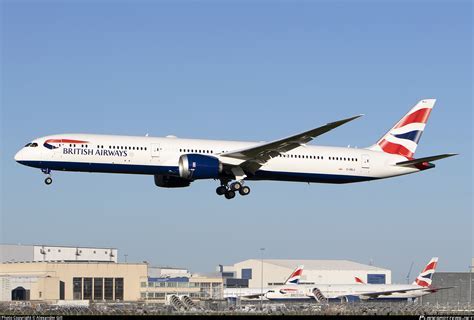
United Airlines: The World’s Second Largest 787 Operator
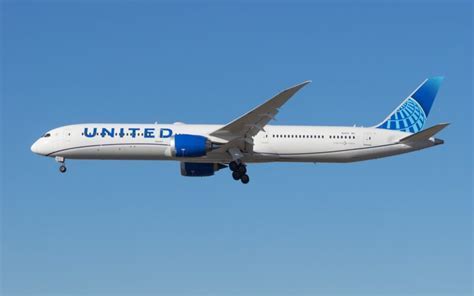
No airline has integrated the Dreamliner into every operational corner quite like United Airlines. With 76 Dreamliners in service and a staggering 145 more on order, United’s investment in this aircraft family is unmatched in North America. Their current 787 fleet includes:
- 12 Boeing 787-8s
- 45 Boeing 787-9s
- 21 Boeing 787-10s
United deploys the 787 family across all seven of its domestic hubs — Newark, Washington Dulles, Chicago O’Hare, Houston, Denver, San Francisco, and Los Angeles — offering unparalleled network flexibility.
The 787-8s, compact and dense, are primarily used for transatlantic and African routes from hubs like Chicago and Washington-Dulles. These aircraft feature 28 Polaris business class seats, reflecting their role in moderate demand, medium-range missions.
The 787-9 is the core of United’s long-haul strategy. With 48 Polaris seats, generous premium economy, and long-haul range, they fly flagship routes such as San Francisco–Singapore, Houston–Sydney, and Los Angeles–Frankfurt. This variant offers the ideal mix of range, capacity, and cost-per-seat efficiency.
The 787-10, although often associated with shorter-haul missions, is stretched to its limits by United. Deployed on busy transatlantic routes to Europe, it also serves the world’s longest scheduled 787-10 route: Chicago O’Hare to Tokyo-Haneda — a true feat for this stretched variant.
Why Only These Airlines Operate All Three Variants
Out of more than 60 airlines operating the Boeing 787, only ANA, British Airways, and United currently utilize all three variants in regular commercial service. Several factors explain this rarity:
- Fleet Strategy Alignment: Operating three aircraft types from the same family enables flexibility, but requires significant investment in training, maintenance, and infrastructure. Only airlines with robust long-haul networks and varied demand profiles can justify this.
- Hub Connectivity: These carriers possess multiple global hubs or high-frequency city pairs that demand different configurations and range capabilities. They can fine-tune aircraft deployment to route requirements — something a point-to-point operator like Qatar Airways or Air New Zealand may not need.
- Historical Orders: ANA’s role as launch customer meant early access to the 787-8 and 787-9, while British Airways and United leveraged Boeing’s production cadence and favorable contracts to expand into all three variants over time.
Meanwhile, airlines such as Air Canada, while operating the 787-8 and 787-9, only have orders for the 787-10. Other notable carriers like Qatar Airways and Singapore Airlines operate the 787-9 and 787-10, skipping the 787-8 entirely.
Market Outlook: Future Of The 787-10 And Dreamliner Family
As of 2025, over 2,200 Dreamliners have been ordered, with the 787-9 leading in popularity by a significant margin. Of the 1,198 delivered:
- 397 are 787-8s
- 676 are 787-9s
- 124 are 787-10s
While the 787-8 has seen a taper in new orders due to its limited economics compared to the 787-9, it remains important for legacy operators. The 787-10, once limited by range, has recently benefited from MTOW (Maximum Takeoff Weight) increases, pushing its capabilities closer to long-haul territory and making it increasingly attractive to global carriers.
With more airlines placing orders for the 787-10 and revisiting fleet planning strategies post-pandemic, it’s likely we’ll see more carriers graduating into the “triple variant club.” But for now, ANA, British Airways, and United Airlines remain the standard-bearers of comprehensive Dreamliner operations, showcasing the aircraft’s full versatility and strategic value.
Conclusion: Dreamliner Mastery And Operational Precision
In the ever-evolving landscape of commercial aviation, few aircraft families offer the same strategic advantages as the Boeing 787. By operating all three variants, ANA, British Airways, and United demonstrate not only scale but also an exceptional command of fleet optimization.
These carriers exemplify how thoughtful deployment of aircraft — matching capacity, range, and cabin configuration with route profiles — can deliver both operational efficiency and premium passenger experience. The Dreamliner is not just a marvel of engineering; in the hands of these airlines, it’s a powerful competitive asset shaping the future of global travel.