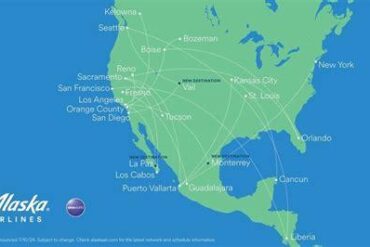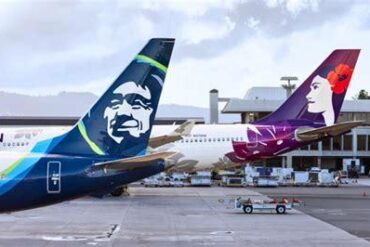
Alaska Airlines is a carrier whose very name evokes glaciers, rugged coastlines, and the far reaches of North America. Yet its operational heart beats thousands of miles south in Seattle, where it has built one of the most geographically concentrated airline networks in the United States. From its dominant Pacific Northwest stronghold, the airline has historically focused on West Coast connectivity, linking cities like Portland, San Francisco, Los Angeles, and San Diego with both regional and transcontinental markets.
Given that orientation, the sight of an Alaska Airlines international departure from St. Louis Lambert International Airport feels, at first glance, almost like a cartographic error. St. Louis is neither coastal nor a hub for the airline. It is a Midwestern city better known as a former Trans World Airlines fortress and, in modern times, a stronghold of Southwest Airlines. So why would a West Coast-centric airline plant an international flag there—specifically on a leisure route to Puerto Vallarta, Mexico?
The answer lives at the intersection of seasonal demand economics, fleet utilization strategy, and tour operator partnerships—three forces that quietly shape airline route maps far more than geography alone.
Alaska Airlines’ Network Identity: A West Coast Powerhouse
Alaska Airlines has spent decades refining a network built around regional dominance rather than nationwide saturation. Seattle–Tacoma International Airport serves as its primary hub, functioning as both a domestic gateway and an international launch point. Anchorage anchors its Alaskan operations, while Portland acts as a reliever hub that absorbs overflow demand and improves connectivity.
Further south, focus cities in California—San Diego, San Francisco, and Los Angeles—extend the airline’s reach down the Pacific seaboard. The acquisition of Hawaiian Airlines has only reinforced this western gravitational pull, expanding leisure connectivity across the Pacific rather than inland.
Against that backdrop, a Midwestern international route looks anomalous. But anomalies in aviation often signal opportunity rather than error.
The Winter 2025 Seasonal Route Experiment
In January 2025, Alaska Airlines rolled out 10 new seasonal routes timed specifically for winter demand patterns. Many additions made intuitive sense. Routes like New Orleans–Portland and Orlando–Boise linked established leisure and visiting-friends-and-relatives markets with Alaska’s existing focus cities.
Others, however, stood out. The airline launched services from:
- Kansas City to Cancun
- Sacramento to Puerto Vallarta
- New York JFK to Puerto Vallarta
- St. Louis to Puerto Vallarta
Some of these routes operated only once weekly, typically on Saturdays, using the Boeing 737 MAX 9, the largest narrowbody aircraft in Alaska’s fleet. Low frequency reduced financial risk while still capturing peak leisure demand.
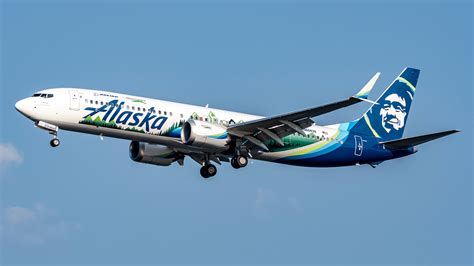
The Kansas City–Puerto Vallarta service did not return the following winter, but St. Louis survived the seasonal cull—an indication that performance met or exceeded expectations.
Seasonality: The Invisible Hand of Airline Scheduling
Airline networks are not static maps; they are living organisms that expand and contract with human travel behavior. Winter demand varies dramatically by region.
In the Pacific Northwest and Alaska, winter brings shorter days, harsher weather, and reduced tourism. Aircraft that are fully booked in July can sit underutilized in January. Airlines face three options:
- Accept lower passenger loads
- Park aircraft temporarily
- Redeploy planes to stronger seasonal markets
The third option is where creativity—and profit—enter the equation.
Latin America, particularly Mexican beach destinations, experiences inverse seasonality. Demand from U.S. travelers surges in winter as vacationers seek warmth. Airlines across the country add capacity to Cancun, Cabo San Lucas, and Puerto Vallarta to meet that surge.
For Alaska Airlines, whose core hubs generate less Latin America demand than mega-hubs like Dallas or Atlanta, the solution is to source passengers from elsewhere.
Why St. Louis Specifically? The Tour Operator Equation
The St. Louis–Puerto Vallarta route exists less because of local airline network logic and more because of tourism packaging economics.
Alaska Airlines reportedly partners with Apple Vacations, a major U.S. tour operator. Companies like Apple Vacations pre-purchase large seat blocks on flights, bundling them into vacation packages that include hotels, transfers, and excursions.
This arrangement transforms the economics of a route:
- A significant portion of seats are sold in advance
- Revenue is guaranteed regardless of last-minute demand
- Marketing costs shift to the tour operator
- Load factor risk drops dramatically
In essence, the flight launches with built-in passengers.

Alaska retains a smaller inventory of seats for direct sale, generating additional upside if independent travelers book. But profitability does not hinge on those sales. The bulk revenue is contractually secured.
This model explains why Alaska is willing to operate from non-hub cities with minimal connecting traffic.
Low Frequency, Low Risk: The Saturday Strategy
Operating once weekly may sound operationally awkward, but it is financially elegant.
Leisure travelers overwhelmingly prefer Saturday departures and returns, aligning with hotel check-in cycles and standard vacation durations. By concentrating capacity on peak travel days, Alaska maximizes aircraft productivity while minimizing exposure.
Using the 737 MAX 9 further sharpens efficiency. With 178 seats in Alaska’s configuration, the aircraft balances capacity with operating cost, making it ideal for medium-haul leisure routes that do not justify widebody deployment.
Competitive Landscape in St. Louis
Alaska Airlines’ footprint in St. Louis is otherwise minimal. The carrier operates flights to:
- Seattle (year-round)
- Portland (limited service)
Southwest Airlines dominates the airport with roughly 65% market share, operating an extensive domestic and near-international network. It also connects St. Louis to multiple Mexican destinations, including seasonal Puerto Vallarta service—placing it in direct competition with Alaska during overlapping periods.
Legacy carriers maintain hub-feeding routes:
- American Airlines to Cancun and major hubs
- Delta and United primarily to their own network centers
Frontier Airlines adds ultra-low-cost competition with flights to Cancun and Punta Cana.

Despite St. Louis experiencing long-term population decline, Lambert International Airport has rebounded in passenger numbers, surpassing pre-2019 traffic levels. Airport authorities have aggressively pursued new international service, creating fertile ground for experimental routes.
Aircraft Utilization: Making Idle Jets Earn Their Keep
Airlines possess finite fleets. Every aircraft sitting idle represents lost revenue potential. During peak summer, Alaska deploys its fleet intensely across transcontinental and West Coast routes. Winter slack creates scheduling gaps.
Seasonal international flying fills those gaps efficiently:
- Aircraft remain active
- Crews maintain utilization hours
- Fixed ownership costs are offset
- Brand visibility expands in new markets
Tour operator partnerships further sweeten the equation by ensuring predictable cash flow even in secondary cities.
This is less about building a permanent Midwest presence and more about extracting value from otherwise underused assets.
The Curious Case of New York JFK
If St. Louis is unusual, New York JFK is perplexing.
Alaska Airlines lacks the brand recognition on the East Coast that it enjoys in the Pacific Northwest. Yet it operates a seasonal JFK–Puerto Vallarta route with limited direct competition—primarily United Airlines from nearby Newark.
The strategic lever here is alliance connectivity. Alaska is a member of the oneworld alliance, maintaining a deep partnership with American Airlines.
American’s large AAdvantage loyalty base in the New York region provides feeder traffic. Frequent flyers can book Puerto Vallarta itineraries on Alaska while earning loyalty benefits, effectively outsourcing demand generation.
The route’s return for subsequent winter seasons suggests that alliance feed compensates for Alaska’s otherwise modest East Coast footprint.
Onboard Experience: Product Consistency Across Markets
Passengers flying from St. Louis receive the same onboard product found across Alaska’s network. The airline operates an all-Boeing 737 narrowbody fleet for these routes, primarily:
- 737-900ER
- 737 MAX 9
Both feature:
- 16 First Class seats
- 162 Economy seats
- 30 extra-legroom Premium seats
Alaska’s First Class stands out for offering 40–41 inches of seat pitch, among the most spacious domestic narrowbody configurations in the United States.
While the airline does not install seatback entertainment screens, passengers access streaming content on personal devices. Wi-Fi is widely available, with fleetwide Starlink satellite internet rollout underway.
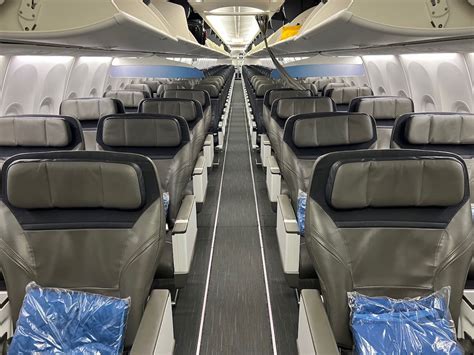
Service quality remains a differentiator. Alaska consistently ranks highly in customer satisfaction surveys, driven by attentive cabin crews and regionally inspired meal options on longer flights.
Why Puerto Vallarta Instead of Cancun?
Cancun dominates U.S.–Mexico leisure traffic, functioning almost as an extension of the American resort economy. Puerto Vallarta, by contrast, is a secondary leisure destination—smaller but culturally richer, with a blend of beach tourism and historic charm.
From an airline strategy perspective, secondary destinations offer advantages:
- Less direct competition
- Higher package-tour penetration
- Strong appeal among repeat leisure travelers
- Lower airport congestion costs
For tour operators like Apple Vacations, Puerto Vallarta packages often yield higher margins than mass-market Cancun offerings. Airlines benefit indirectly through stable contracted demand.
Network Strategy, Not Network Expansion
It is tempting to interpret these routes as signals of Alaska Airlines expanding eastward. Evidence suggests otherwise.
The St. Louis international flight is best understood as:
- Seasonal rather than permanent
- Leisure-driven rather than business-driven
- Partnership-supported rather than network-fed
Alaska is not building a Midwest hub. It is opportunistically monetizing winter aircraft availability.
This distinction matters. True network expansion requires sustained frequency, connecting banks, and corporate travel contracts. The St. Louis flight has none of these structural markers.
The Broader Industry Pattern
Alaska is not alone in this playbook. Airlines across North America deploy similar strategies:
- Charter-like scheduled flights
- Tour operator block bookings
- Once-weekly leisure routes
- Secondary city international flying
These flights blur the line between charter and scheduled service. They appear in booking systems like normal flights but operate with pre-secured passenger bases.
It is aviation’s version of pop-up retail—temporary, targeted, and ruthlessly data-driven.
Economic Logic Over Geographic Logic
When viewed through a purely geographic lens, Alaska Airlines flying internationally from St. Louis feels illogical. When viewed through an economic lens, it becomes almost inevitable.
Winter demand troughs in the Pacific Northwest create surplus aircraft capacity. Mexican leisure markets surge simultaneously. Tour operators guarantee baseline revenue. Secondary U.S. cities offer untapped vacation demand with manageable competition.
Layer those variables together and the route stops looking strange. It starts looking efficient.
Airline route maps are not expressions of identity; they are expressions of math—seasonal demand curves, fleet utilization ratios, partnership contracts, and competitive positioning equations rendered in asphalt and jet fuel.
The St. Louis–Puerto Vallarta flight is simply what happens when those equations balance in just the right way.