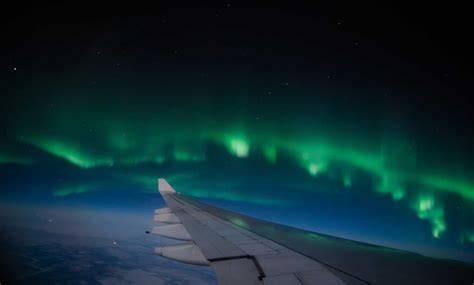
A commercial airliner cruising at 35,000 feet appears to be operating in one of the most precisely regulated environments on Earth. Its altitude is displayed within a few dozen feet, its route is planned across thousands of miles, its position is monitored and reported, and its crew operates under an enormous collection of international and national rules. Yet there is a surprisingly important question for which international law still has no universally accepted answer: where does sovereign airspace actually end?
The answer becomes especially interesting when an aircraft leaves the territory of one country and crosses an ocean. A Boeing 777 flying from New York to London, for example, eventually leaves U.S. sovereign airspace, crosses the Atlantic, and later enters the airspace associated with the United Kingdom. During the middle portion of the journey, however, the aircraft is not flying through airspace owned by another country. It is operating within an internationally coordinated system above the high seas.
That does not mean the aircraft is flying through a legal vacuum. Quite the opposite is true. International aviation is surrounded by rules, procedures, treaties, navigation requirements, communication standards, and air traffic services. The remarkable part is that these systems function even though international law has never established a universally binding altitude at which sovereign airspace ends and outer space begins.
The Chicago Convention Established Sovereignty But Not an Upper Limit
The starting point for understanding the issue is the 1944 Chicago Convention, the foundational treaty behind modern international civil aviation. The convention established a principle that remains central to international air law: every state has complete and exclusive sovereignty over the airspace above its territory.
That principle sounds straightforward until one asks a deceptively simple follow-up question: how high does that sovereign airspace extend?
The Chicago Convention did not provide a universally accepted altitude. It established the existence of state sovereignty over national airspace without defining a precise upper boundary separating that airspace from outer space. That omission was relatively easy to overlook when aviation consisted primarily of aircraft operating at comparatively low altitudes, while rockets and spacecraft belonged to an entirely different technological category.
Modern aerospace technology has made the distinction considerably less comfortable.
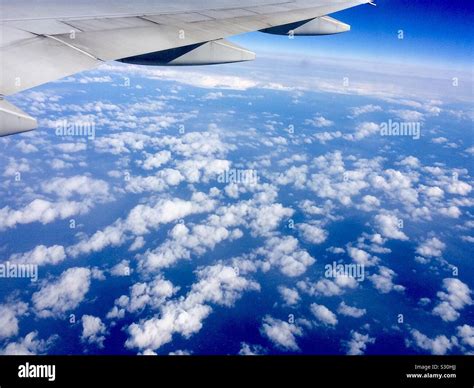
A typical long-haul airliner cruises around 29,000 to 41,000 feet, depending on aircraft type, weight, route, winds, and operational requirements. At 35,000 feet, or approximately 10.7 kilometers, the aircraft is unquestionably treated as operating within the aviation environment. It is subject to air traffic rules, flight planning requirements, aircraft certification standards, and national or international aviation procedures.
The unresolved issue exists much higher. The question is not whether a Boeing 787 at 35,000 feet is legally considered an aircraft operating in airspace. It is. The deeper question is where that airspace ultimately stops.
Why the Kármán Line Does Not Solve the Legal Problem
The Kármán Line, commonly placed at 100 kilometers, or about 62 miles, above sea level, is often presented as the boundary between Earth’s atmosphere and outer space. It is an extremely useful reference point in science and aerospace discussions, but it is not a universally binding boundary under international law.
The distinction matters because a scientific convention and a legal boundary are not the same thing.
The Kármán Line is associated with the altitude at which conventional aerodynamic flight becomes increasingly impractical because the atmosphere becomes too thin to provide sufficient lift in the conventional manner. It therefore provides a useful conceptual division between aviation and astronautics. But no universally ratified international treaty simply declares that sovereign airspace ends at exactly 100 kilometers.
The United States has also used a different practical threshold. The commonly cited U.S. definition places the beginning of space at 50 miles, approximately 80 kilometers, particularly for certain domestic and administrative purposes. That produces a difference between the 80-kilometer and 100-kilometer concepts.
Neither figure, however, establishes a universally accepted international boundary.
The result is an unusual legal situation. International law recognizes national sovereignty over airspace and separately recognizes principles governing outer space, including the prohibition against national appropriation of outer space. But there is no universally agreed altitude that cleanly separates those two legal regimes.
For an airliner at 35,000 feet, this unresolved boundary is far above the aircraft. The jet is nowhere near the controversial zone. Nevertheless, its existence reveals a fundamental unfinished question in international aerospace law.
Outer Space Law Also Avoided Defining Where Space Begins
The problem did not disappear when humanity entered the space age. In fact, the arrival of satellites and crewed spacecraft made the question considerably more important.
The 1967 Outer Space Treaty established several fundamental principles governing activity beyond Earth. Among other provisions, it established that outer space is not subject to national appropriation and should remain available for exploration and use in accordance with international law.
Yet the treaty did not establish a universally accepted altitude at which outer space begins.
This was not simply an accidental omission. Defining a boundary would have consequences extending far beyond commercial aviation. A precise dividing line could affect the legal treatment of spacecraft, military systems, reconnaissance vehicles, ballistic trajectories, suborbital vehicles, and future transportation technologies.
During the early space age, governments had strong reasons to avoid creating a rigid rule before the implications were fully understood.
That caution has become even more relevant as aerospace technology has developed. Modern vehicles increasingly operate between categories that were once easy to separate. Suborbital spacecraft can travel through the atmosphere before reaching space and then return. Hypersonic vehicles may operate at altitudes dramatically higher than conventional aircraft. Reusable spacecraft can repeatedly cross the atmosphere-space interface.
The legal system therefore faces a problem that is becoming increasingly practical: what exactly happens when a vehicle crosses an altitude that has no universally recognized legal boundary?
Over the Atlantic, Nobody Owns the Airspace
The situation becomes even more fascinating when a commercial aircraft crosses the open ocean.
A country’s sovereignty generally extends over its land territory and its territorial sea, which reaches approximately 12 nautical miles from its coastline under the international law of the sea. Beyond that lies the high seas, where no individual country possesses territorial sovereignty in the same manner that it does over its land territory and territorial waters.
The airspace above the high seas is consequently not national airspace belonging to the nearest country.
Consider a flight traveling from North America to Europe. Once the aircraft moves beyond the relevant territorial limits, it is no longer flying through U.S. or Canadian sovereign airspace simply because those countries are geographically nearby. Eventually, it enters the operational structures associated with European states, but the central Atlantic remains international airspace.
This does not mean that nothing regulates the aircraft.
Instead, aviation has developed a sophisticated system of international coordination. Countries and air navigation authorities provide services across designated regions, while international organizations establish standards and procedures that allow aircraft from different nations to operate safely within the same global network.
The key distinction is between sovereignty and responsibility.
A state may be responsible for providing air traffic services in a particular region without thereby acquiring sovereignty over that airspace. An aircraft can therefore receive instructions, file flight plans, communicate with controllers, and comply with navigation procedures without the controlling authority becoming the territorial owner of the sky.
Flight Information Regions Make International Airspace Work
One of the most important concepts in oceanic aviation is the Flight Information Region, commonly abbreviated as FIR.
FIRs divide the world’s airspace into areas in which designated authorities provide flight information and alerting services. The boundaries of these regions are operational rather than simple expressions of territorial ownership.
That distinction is easy to miss because passengers experience aviation through national borders. A flight leaves one country, enters another, and appears to move through a continuous legal map. In reality, the organization of air traffic is more complicated.
The North Atlantic provides an excellent example. Thousands of flights cross the region every day, and much of the ocean does not have the continuous radar coverage available over densely populated land areas. Aircraft therefore depend heavily on satellite navigation, communication systems, standardized procedures, and carefully coordinated separation methods.
Controllers need to know where aircraft are, where they are going, and how much space or time should separate them. None of that requires a sovereign country to own the entire oceanic airspace.
The system instead demonstrates how international aviation can operate through cooperation without requiring territorial ownership.
The North Atlantic Shows How Procedure Can Replace Direct Surveillance
The North Atlantic has historically required particularly sophisticated procedures because conventional radar surveillance cannot cover the enormous distances involved.
Aircraft operating on transatlantic routes therefore use precise navigation systems and follow carefully managed procedures. Depending on the portion of the route and current operational requirements, aircraft may follow organized track systems, communicate their positions, and maintain assigned flight levels and routes.
Modern aircraft have made this process far more accurate than it was in earlier decades.
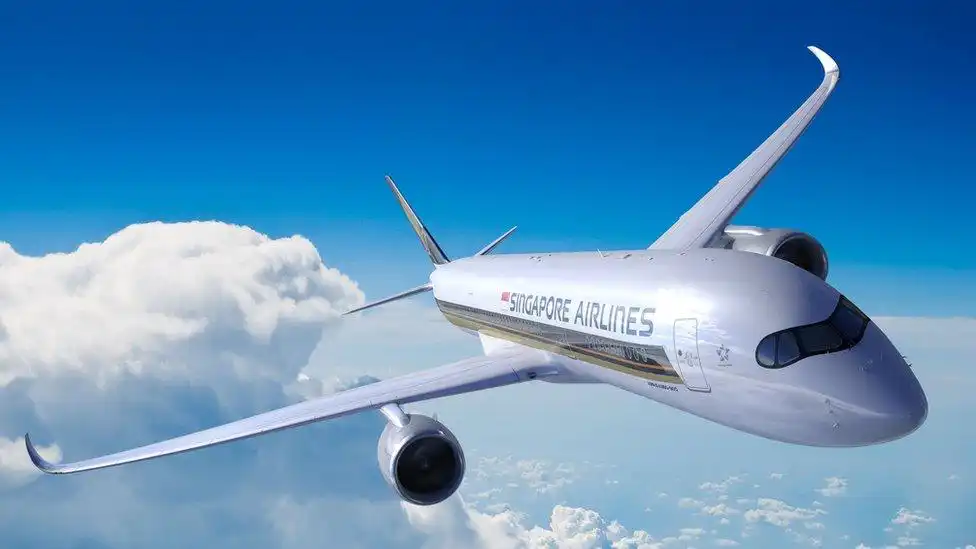
An Airbus A350 or Boeing 787 can use advanced flight management and satellite navigation systems to maintain a highly precise course across thousands of miles. Crews and controllers coordinate through established communication procedures, while separation standards are designed around the capabilities of the aircraft and navigation infrastructure.
The important point is that none of these procedures depends on solving the unresolved question of where outer space legally begins.
A Boeing 777 at 35,000 feet does not need its crew to determine whether it is 10 kilometers, 50 kilometers, or 100 kilometers below a theoretical legal boundary. The aircraft is operating comfortably within the conventional aviation environment.
The legal ambiguity is therefore largely invisible to passengers because operational certainty is much greater than theoretical legal certainty.
Why 35,000 Feet Is Not Actually a Legal No-Man’s-Land
The provocative idea that an airliner at 35,000 feet is flying through airspace that “doesn’t legally exist” needs an important qualification.
At that altitude, commercial aircraft are not operating in some undefined legal void. Their operation is governed by extensive aviation law. National governments regulate aircraft within their sovereign airspace, while international rules and procedures govern flights across international regions.
The unresolved issue concerns the ultimate upper boundary of airspace, not the legal existence of the airspace surrounding an aircraft at 35,000 feet.
This distinction is crucial.
A passenger sitting aboard an aircraft at 35,000 feet is not traveling through legally nonexistent space. The aircraft’s operation is recognized, regulated, and subject to numerous enforceable rules. If the aircraft violates an applicable requirement, the absence of a universally defined upper boundary does not make the violation legally meaningless.
The more accurate description is that international law has never definitively established how far sovereign airspace extends upward.
That sounds less dramatic than saying an aircraft is flying through nonexistent airspace, but it is also much more accurate. The unusual legal situation is still fascinating without exaggeration.
The Problem Could Become Bigger With Hypersonic Flight
For today’s airline industry, the ambiguity is mostly theoretical. Future aerospace vehicles could make it considerably more important.
Imagine a passenger vehicle capable of departing from one continent, climbing far higher than a conventional airliner, briefly following a suborbital trajectory, and then returning to Earth thousands of miles away. Such a vehicle would cross multiple legal and operational regimes during a single journey.
At some point, the vehicle would transition from conventional atmospheric flight toward spaceflight. But without a universally accepted legal boundary, governments could potentially disagree about which legal regime applies at particular stages of the journey.
This issue could become especially significant for hypersonic transportation, reusable spacecraft, and other high-altitude vehicles that do not fit neatly into traditional categories.
The aviation industry was built around aircraft that remain within the atmosphere. The space industry developed around vehicles designed to leave it. Future transportation systems could occupy the middle ground.
That is where the unresolved boundary becomes much more than an academic question.
The Same Legal Tension Reaches Beyond Earth
The question of Earth’s airspace is also connected to a much larger principle governing space law: the tension between national sovereignty and shared access.
Countries have sovereign rights over their territory and the airspace associated with it. Outer space, meanwhile, operates under a fundamentally different legal philosophy. The Outer Space Treaty rejects national appropriation of outer space and celestial bodies.
That distinction becomes increasingly important as humanity considers long-term lunar exploration, commercial space stations, and future missions beyond Earth.
The irony is difficult to miss. Humanity has developed spacecraft capable of traveling hundreds of thousands of miles through space, yet it has never universally agreed on the exact altitude at which Earth’s sovereign airspace ends.
For commercial aviation, this contradiction has little practical effect today. A jet at 35,000 feet remains firmly inside the operational world of aviation. But the legal uncertainty becomes increasingly relevant as technological boundaries disappear.
Aviation Works Because Cooperation Is More Precise Than the Law
The modern aviation system offers a remarkable lesson in international cooperation. The legal framework is not perfectly complete, yet the operational framework is extraordinarily detailed.
Airlines know how to plan routes across oceans. Controllers know how to separate aircraft. Crews know which procedures apply. Navigation systems know where the aircraft is supposed to go. International organizations establish standards that allow aircraft from different countries to share the same global network.
All of this works without every square mile of sky having a sovereign owner.
At 35,000 feet, therefore, a commercial aircraft is not flying through a nonexistent legal realm. It is flying through an extensively regulated aviation environment whose ultimate upper boundary remains undefined by international law. Over an ocean, the situation becomes more unusual because the aircraft may be traveling through international airspace that no country owns as sovereign territory.
That combination produces one of aviation’s strangest legal realities: the rules governing a flight can be extremely precise even when the ultimate boundaries of the legal domain are not.
For decades, that arrangement has been sufficient. Commercial aircraft remain far below the altitude where the airspace-versus-space debate becomes operationally significant, while international procedures handle flights over areas beyond national sovereignty.
But aviation is changing. Hypersonic aircraft, suborbital transportation, reusable spacecraft, and increasingly ambitious space operations are bringing atmospheric flight and spaceflight closer together. Eventually, the distinction that has remained largely theoretical may become a practical issue.
Until then, the next time a passenger looks at a flight-tracking screen and sees an airliner cruising serenely at 35,000 feet over the Atlantic, there is a fascinating detail hidden behind that simple altitude number. The aircraft is operating within one of the most carefully coordinated transportation systems ever created, yet the international legal system still has no universally accepted answer to the seemingly basic question of where sovereign airspace finally ends.