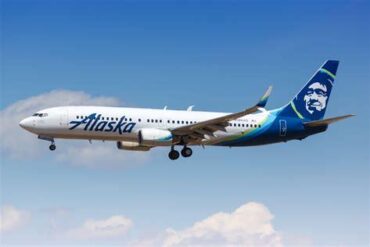
Alaska Airlines is entering a phase of transformation that could fundamentally change its position among major U.S. carriers. For decades, the airline built its strength around the Pacific Northwest, with Seattle-Tacoma International Airport serving as the center of a network that connects a huge number of domestic destinations. Now, following its acquisition of Hawaiian Airlines, Alaska is trying to extend that domestic strength into the long-haul international market and create what it describes as a more global, premium and diversified airline.
The scale of the opportunity is particularly clear at Seattle-Tacoma International Airport (SEA). In 2025, Alaska Air Group handled 50.7% of all passengers at SEA, including 56.4% of domestic passengers. Delta Air Lines, its most significant competitor at the airport, accounted for 24.1% of total passengers and 24.0% of domestic passengers. Internationally, however, the picture was dramatically different. Alaska held only 14.7% of international passenger traffic, compared with Delta’s 24.8%.
That gap explains much of the thinking behind Alaska’s international expansion. The airline already has an enormous base of passengers who trust it for domestic travel, but many of those customers historically switched to other airlines when traveling outside North America. Alaska CEO Ben Minicucci has described the problem directly: when Pacific Northwest customers travel internationally, they have often given their loyalty to another airline. The company’s goal is therefore not simply to become another enormous global carrier, but to keep more of those existing customers inside the Alaska network when their journeys become international.
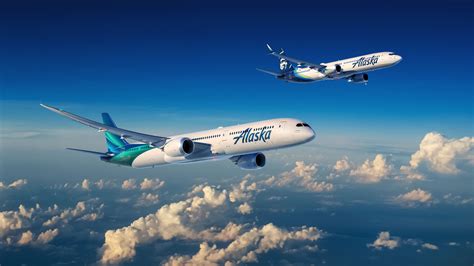
Alaska Airlines Has a Powerful Seattle Advantage
The most important asset behind Alaska’s global ambitions may not be its Boeing 787 fleet or even the acquisition of Hawaiian Airlines. It is the airline’s extraordinary position in Seattle. Approximately 70% of passengers traveling through SEA begin or end their journey in the Seattle area, rather than merely connecting through the airport. That creates a large local customer base that can support international flights even before Alaska adds passengers connecting from other cities.
The airline’s domestic network gives this advantage additional depth. SEA offers nonstop service to 96 domestic destinations, while Alaska carried 56.4% of domestic passengers at the airport in 2025. A traveler departing from Spokane, Anchorage, Portland or another Western U.S. market can therefore use Alaska’s established network to reach Seattle before continuing onto a long-haul flight.
This is important because international routes can be difficult to sustain if an airline must depend almost entirely on connecting traffic. Alaska has the opposite starting position. It can potentially combine local Seattle demand, domestic connecting passengers, corporate travelers, leisure traffic and international connections. A London flight, for example, does not have to rely solely on people living in Seattle. Passengers from across Alaska’s wider network can feed the route.
The strategy also gives Alaska a clear reason to expand internationally rather than simply adding more domestic capacity. If a customer already chooses Alaska for a flight from Portland to Seattle, the airline wants that relationship to continue when the same passenger travels from Seattle to London, Tokyo, Paris or Seoul.
Hawaiian Airlines Gave Alaska a Shortcut Into Long-Haul Aviation
Before acquiring Hawaiian Airlines in September 2024, Alaska was overwhelmingly a narrowbody operator. Building a genuine long-haul network from scratch would have required far more than purchasing widebody aircraft. It would have meant developing new operational expertise, maintenance capabilities, crew experience, airport infrastructure and international commercial relationships.
The Hawaiian acquisition dramatically shortened that process.
At the time the transaction closed, the combined group brought together Hawaiian’s Boeing 787 and Airbus A330 operations, along with its established international network across Asia and the South Pacific. Hawaiian already possessed decades of experience operating widebody aircraft on long-distance routes, giving Alaska access to capabilities that would have taken years to develop independently.

The combined fleet is now becoming increasingly important to Alaska’s strategy. As of July 2026, Alaska Air Group operated five Boeing 787-9s and 24 passenger A330s, alongside ten A330-300 freighters. The group is also awaiting seven additional 787-9s and five 787-10s.
The division of labor is becoming relatively clear. Hawaiian’s A330 aircraft remain primarily associated with Honolulu and the Hawaiian brand, while the Boeing 787 is becoming the central tool for Alaska’s international expansion from Seattle. The Dreamliner provides the range and efficiency needed to connect Seattle with major overseas markets without requiring the airline to build an enormous widebody fleet.
This matters because Alaska is not attempting to transform its entire operation overnight. Instead, Hawaiian has provided the long-haul foundation while Alaska builds the international network around Seattle.
Alaska Accelerate Is Moving From Foundation to Expansion
Alaska’s international ambitions are part of its broader Alaska Accelerate strategy. At its September 29 Investor Day, the company said much of the foundation-building work associated with the program was substantially complete. Alaska had originally targeted approximately $1 billion in incremental profit from the transformation, and the company said roughly two-thirds of that target had already been captured.
The next stage is focused more heavily on growth.
Long-haul flying is expected to increase from approximately 8% of group capacity today to around 15% by 2030. Alaska has also increased its target for Seattle’s long-haul network to 15 destinations by 2030, three more than its previous target.
That expansion is closely connected to another major objective: increasing the proportion of revenue generated outside the traditional economy cabin. Alaska wants premium revenue to exceed 40% of total revenue by 2030, compared with approximately 35% today.
The company is therefore not simply adding international routes. It is trying to build an airline that earns more revenue from premium passengers, loyalty, cargo and other businesses while reducing its dependence on basic main-cabin ticket sales.
Alaska Is Building a Much More Premium International Product
The international expansion would be less meaningful if Alaska simply transported existing customers in standard economy cabins. The airline is instead investing heavily in premium products intended to make its long-haul proposition competitive with established international carriers.
The Alaska brand’s new premium experience is being developed under Alaska Aurora, while Hawaiian is developing its own Leihōkū premium experience. Alaska says these concepts extend beyond the seat itself, covering the passenger journey from booking through the airport and onboard experience.
That philosophy will become particularly visible on the Boeing 787-9. By 2030, Alaska expects approximately 46% of seats on its 787-9 aircraft to be in premium cabins, compared with 38% today. The carrier is also introducing Premium Reserve, giving passengers a genuine premium-economy product rather than simply a better standard economy seat.
The transformation is not limited to widebody aircraft. At least 25 Boeing 737 MAX 10s are planned to receive 12 lie-flat business-class seats as well as the new premium-economy product. That could create a more consistent premium proposition across Alaska’s network and make connecting domestic segments more attractive to international business travelers.

The premium strategy also extends to airports. Alaska is investing in lounges and airport facilities, including a major Seattle lounge development and new Hawaiian premium facilities in Honolulu. The objective is to create a connected premium journey rather than relying on an upgraded seat as the sole selling point.
Alaska’s Seattle Long-Haul Network Is Growing Quickly
By summer 2027, Alaska plans to serve seven intercontinental destinations nonstop from Seattle. The network already illustrates how selective the airline’s strategy is.
Tokyo Narita will operate daily year-round with the Boeing 787-9, while Seoul Incheon will operate five times weekly. London Heathrow will also receive daily year-round service on the 787-9. Rome, Athens and Paris are primarily seasonal European additions, while Reykjavík is particularly notable because Alaska can operate the route using a Boeing 737-8 MAX instead of consuming one of its relatively scarce Dreamliners.
Athens will become Alaska’s longest route when it launches, operating three times weekly. Paris Charles de Gaulle will receive five weekly flights through October 2027.
The network is therefore being assembled around several different types of demand. London can combine strong Seattle corporate demand with connections from Alaska’s domestic network and onward opportunities through oneworld partner British Airways. Tokyo and Seoul connect Alaska’s Pacific Northwest customer base with major Asian economic centers. Rome and Athens tap into powerful summer leisure demand, while Reykjavík allows Alaska to test an international market with a narrowbody aircraft.
This diversification could become important as the network expands. Not every destination needs to perform identically. Some routes can be primarily corporate, others heavily leisure-oriented, while still others can depend more strongly on connecting passengers.
Early Tokyo and Seoul Results Offer an Important Signal
The initial performance of Alaska’s international expansion provides some evidence that the strategy can work, although it is too early to determine how the full network will perform.
Seattle-Tokyo Narita became profitable in March 2026, less than a year after launching. During the first quarter, Tokyo and Seoul both recorded load factors above 90%.
High load factors alone do not guarantee that a long-haul route will generate attractive returns. Aircraft ownership costs, fuel, labor, airport fees, premium-cabin revenue and cargo performance all influence profitability. Nevertheless, the results suggest Alaska can build passenger demand relatively quickly when its new international destinations overlap with the travel patterns of its existing customer base.
That is arguably the most important test for the company’s strategy. Alaska does not need to prove that Seattle can support international flights in general. Other airlines have already demonstrated that. It needs to demonstrate that Alaska customers will choose Alaska for those international journeys.
Eight More Seattle Long-Haul Destinations Are Still Possible
If Alaska reaches its goal of 15 long-haul destinations from Seattle by 2030, at least eight additional markets remain to be announced beyond the seven planned for summer 2027.
Potential markets discussed in industry analysis include Ho Chi Minh City, Madrid and Sydney, although these remain possibilities rather than confirmed Alaska routes. Vietnam would provide another major Southeast Asian destination, while Madrid would offer an additional oneworld connection point. Sydney would extend Alaska’s international network deep into the South Pacific.
India is another market that could theoretically fit the broader strategy because of Seattle’s technology industry and substantial U.S.-India travel demand. However, Alaska has not confirmed such a destination, so its inclusion remains speculative.
The eventual network will reveal how selective Alaska intends to be. Fifteen destinations would still be a relatively small long-haul network compared with the enormous international systems operated by Delta, United Airlines or American Airlines. Yet network size alone is not necessarily the measure Alaska is pursuing.
Alaska Does Not Need to Become Another Delta or United
The most interesting part of Alaska’s strategy is that it does not necessarily require the airline to imitate the largest U.S. global carriers. Delta and United have enormous international networks supported by multiple hubs, extensive widebody fleets and large numbers of connecting passengers. Alaska’s model can remain much more focused.
Its competitive advantage is rooted in regional dominance. The airline already has an unusually strong relationship with customers across the Pacific Northwest and Western United States. The international expansion is an attempt to extend that relationship rather than replace it.
This creates a potentially different type of global airline. Alaska could have a relatively concentrated international network while still being a significant global carrier because its domestic network feeds passengers into that international operation. Instead of offering flights to almost everywhere, it can focus on destinations where its existing customer base provides a strong foundation.
The challenge is that the transformation involves several complicated projects at once. Alaska is integrating Hawaiian, expanding its Boeing 787 operation, developing new premium products, upgrading lounges, growing cargo and loyalty revenue, and entering international markets where competitors have operated for decades.
Its financial diversification goals are equally ambitious. Alaska wants revenue generated outside the main cabin to increase from 53% today to 60% by 2030. Atmos Rewards is expected to generate nearly $4 billion in annual cash flow by then, while cargo revenue is targeted at approximately $750 million, more than double the current business. Cargo revenue has already increased about 60% since 2024.
The result is a transformation that goes well beyond adding a few overseas routes. Alaska Airlines is attempting to turn its Pacific Northwest dominance into a broader global network, using Hawaiian’s long-haul expertise, Seattle’s enormous local market, a growing 787 fleet, premium products and a stronger loyalty ecosystem.
Whether Alaska ultimately becomes America’s next major global carrier will depend on how successfully these pieces work together. But the strategy is already clear: it does not need to build the biggest international network in the United States. It needs to build a network large enough that when its customers leave North America, they no longer have a compelling reason to leave Alaska behind.