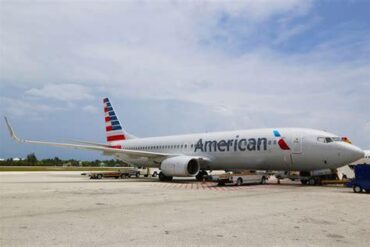
American Airlines is reportedly preparing to expand Starlink onboard Wi-Fi beyond its Airbus fleet and across its entire mainline operation, including Boeing 737, 777, and 787 aircraft. The reported plan would represent a major expansion of the Fort Worth-based carrier’s connectivity strategy and could significantly change the internet experience for passengers on both domestic and international flights.
The development was first reported by aviation insider JonNYC, with View From The Wing subsequently reporting that American intends to bring Starlink to its Boeing aircraft. American Airlines has not publicly confirmed the reported expansion, so the details remain subject to change. If implemented as reported, however, the plan would remove the current divide between American’s Airbus aircraft and its Boeing fleet.
The move is particularly significant because American had previously announced that Starlink would be installed on its Airbus A320 family, leaving many Boeing aircraft dependent on older satellite connectivity. Expanding the service to the rest of the mainline fleet would turn what initially appeared to be a limited fleet program into a much broader transformation of the airline’s onboard internet system.

Starlink Could Cover American Airlines Boeing Fleet
The reported expansion would potentially bring Starlink to a substantial portion of American’s Boeing operation. Aircraft expected to be included are the 737-800, 737 MAX 8, 777-200ER, 777-300ER, 787-8, and 787-9 Dreamliner, in addition to the Airbus aircraft already included in the carrier’s Starlink plans.
That would give American a consistent connectivity platform across much of its mainline fleet instead of requiring passengers to experience different internet systems depending on the aircraft assigned to their flight. For an airline operating one of the world’s largest commercial fleets, that consistency could become an important part of the overall passenger experience.
American’s existing domestic satellite service, operated through Panasonic, has historically provided connectivity on portions of the fleet. Starlink’s Low Earth Orbit satellite network is designed to reduce latency because its satellites operate much closer to Earth than traditional geostationary satellites.
The difference is important for everyday internet use. Lower latency can make activities such as messaging, browsing, cloud applications, video calls, and other interactive services feel considerably more responsive than connections that rely on satellites positioned much farther from the planet.
American Airlines Starlink Could Change Long-Haul Connectivity
For passengers, the biggest change would not simply be having Wi-Fi available, but having a connection capable of supporting more demanding online activities. Travelers could potentially send large work files, access cloud-based documents, communicate through messaging services, and remain connected to family throughout a flight.
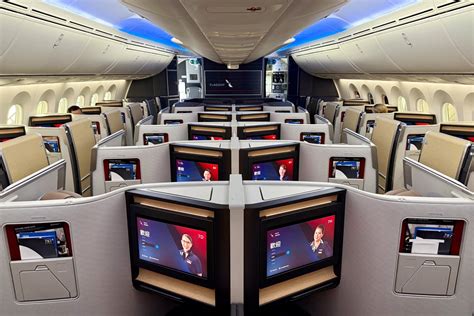
On long-haul routes operated by the Boeing 777 and 787 Dreamliner, this could be especially valuable. International passengers can spend many hours away from conventional mobile networks, making onboard connectivity the primary way to remain digitally connected while crossing oceans.
Starlink’s technical architecture also differs from conventional satellite systems. An electronically steered phased-array antenna installed on the aircraft communicates with moving satellites, while Starlink’s network can use laser links between satellites to move data before it reaches an appropriate ground gateway. Inside the aircraft, the connection is distributed through the cabin as a Wi-Fi network.
For passengers, those technical differences ultimately matter because they can translate into faster response times and a more practical internet connection. Instead of Wi-Fi being useful mainly for lightweight browsing and messaging, a stronger connection can make it more suitable for work, entertainment, and other activities.
American Airlines Faces Growing Connectivity Competition
American’s reported strategy comes as free and reliable onboard Wi-Fi becomes increasingly important among major US airlines. United Airlines is already rolling out Starlink across its fleet, including mainline and regional aircraft, while offering the service free to MileagePlus members.
United has been pursuing a particularly large Starlink deployment, with the airline targeting connectivity across more than 1,000 aircraft. American’s reported decision to expand Starlink to its Boeing fleet would therefore put the carrier more directly into the same technology race.
Delta Air Lines has taken a different path. Rather than Starlink, Delta has partnered with Amazon Leo, formerly known as Project Kuiper, with its service planned for deployment beginning in 2028. That creates a significant strategic split among the major US carriers as airlines select different satellite providers for their future connectivity systems.
Starlink Could Strengthen American’s Passenger Experience
A fleetwide Starlink strategy could also help American address broader expectations surrounding its onboard product. The airline has been working to improve the passenger experience, including changes involving seatback entertainment, while connectivity has become an increasingly normal expectation rather than an optional premium feature.
Reliable Wi-Fi can also serve operational purposes. Flight crews can use connectivity for access to weather information and updated operational information, while passengers can remain connected throughout the journey.
If American ultimately proceeds with the reported Boeing installation program, Starlink could become a common feature across the carrier’s mainline fleet rather than an amenity limited to selected aircraft. That would give passengers a more predictable experience and make the aircraft type less important when choosing a flight based on connectivity.
The reported expansion has not yet been formally confirmed by American Airlines, but its potential scale is substantial. Moving Starlink beyond the 500-plus Airbus aircraft already associated with the carrier’s rollout and onto its Boeing fleet would mark a major step in American’s connectivity strategy, placing reliable high-speed internet at the center of its effort to modernize the onboard experience.