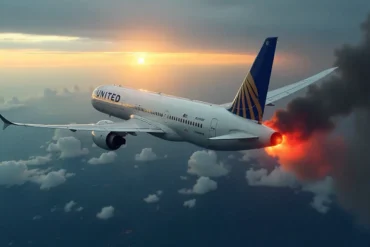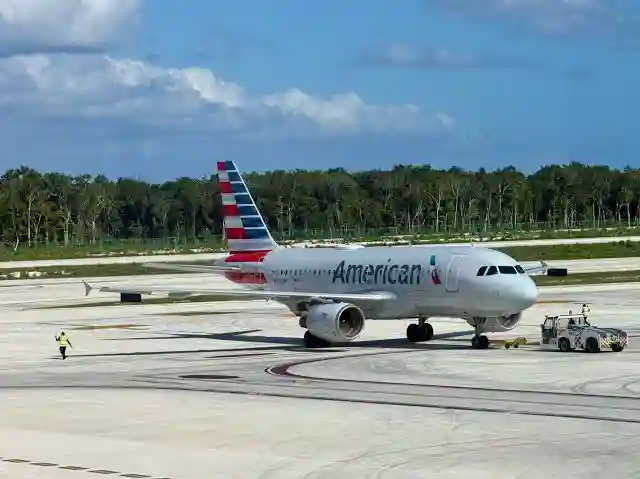
The routine climb out of Phoenix Sky Harbor International Airport turned into an unfolding emergency on Thursday afternoon when the pilots of American Airlines flight 3230 transmitted the most urgent call in aviation: “Mayday, Mayday, Mayday.” The trigger was not an instrument warning alone, but a pair of sharp eyes in the cockpit of a trailing aircraft. The flight crew of a SkyWest Airlines service behind the American jet reported seeing flames coming from one of its engines, radioed air traffic control, and effectively handed the crew of the affected aircraft the first clear picture of what was happening beneath them.
The SkyWest Warning That Changed the Flight
The sequence of events shows how quickly situational awareness can shift inside a busy departure corridor. The Airbus A319, operating the scheduled route from Phoenix (PHX) to Portland International Airport (PDX) as AA3230, had only just left the ground when the crew of the following SkyWest flight reached out to air traffic control (ATC). Their report of visible engine flames prompted controllers to act on information the American crew may not have had at the moment. Within moments, the pilots of AA3230 were on the frequency, and their transmission escalated the situation from a routine mechanical concern into a declared emergency.
The American crew had initially told ATC that the jet had experienced hydraulic problems shortly after departure and that the aircraft would need to return to Phoenix. That early advisory was then upgraded to a full Mayday call, with the pilots requesting vectors back to the airport. A vector is a specific compass heading issued by local controllers, who use surveillance data such as radar to guide an aircraft’s flight path. For a crew managing a possible engine fire, that kind of precise, ground-directed navigation removes workload at the exact moment when every second of attention matters.
Inside the Cockpit Response and the 20-Minute Return
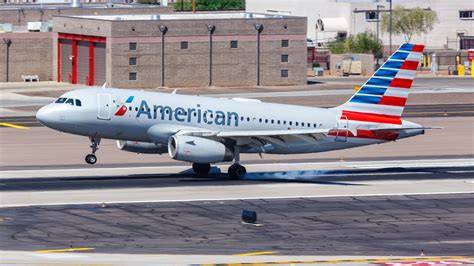
What followed was a textbook demonstration of coordinated emergency handling. As the Mayday was declared, ATC asked a series of questions, including whether the aircraft needed to burn off excess fuel before landing. The pilots confirmed that 120 people were onboard. The decision to land without delay, rather than extending the flight to shed weight, reflected the urgency of the reported flames and the crew’s confidence that the jet could be brought back safely.
Flight data from Simple Flying’s Flight Tracker shows AA3230 was expected to depart at 3:58 PM. The flight was briefly delayed and eventually pushed back from the gate at 4:14 PM, 16 minutes behind schedule. Taking off from the Arizona airport heading west, the jet spent a total of 20 minutes in the air before touching down safely in Phoenix at 4:34 PM. The aircraft landed normally and taxied to the gate under its own power, a strong indication that the situation never deteriorated beyond the crew’s ability to manage it.
What American Airlines Says About the Phoenix Incident
American confirmed the event in a statement, describing the return as the result of a mechanical issue. The carrier said the aircraft landed safely, taxied to the gate under its own power, and was taken out of service to be inspected by its maintenance team. Passengers deplaned normally and were scheduled to re-depart that evening on a new aircraft. American added that safety is its top priority, thanked its team members for their professionalism, and apologized to customers for the disruption to their travel plans.
The replacement service departed at 5:45 PM and arrived in Portland at 7:54 PM local time, meaning travelers reached their destination roughly three hours after their original schedule. That turnaround reflects the operational muscle behind a large hub carrier: a single aircraft can be pulled from service for inspection while a spare tail absorbs the route, keeping the wider network intact.
Aircraft History: N703UW and Its 28-Year Career
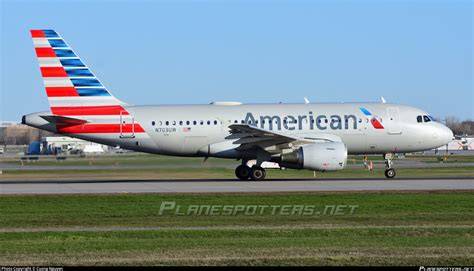
The jet at the center of the incident was N703UW, an Airbus A319-112 carrying serial number 904 and hex code A9618A. According to ch-aviation, the 28-year-old aircraft first flew on October 9, 1998, under the German test registration D-AVYI. It was delivered to US Airways on November 10, 1998, and then transferred to the American Airlines fleet on December 9, 2013, following the airline’s merger with US Airways. The aircraft is configured with up to 132 seats in a two-class layout, including Domestic First and Main Cabin.
Why the Trailing Crew’s Report Mattered
The value of the SkyWest crew’s observation cannot be overstated. Engine flames visible from an aircraft behind are sometimes the only external confirmation available to a flight crew, particularly when cockpit indications are ambiguous or when a hydraulic fault draws attention elsewhere. ATC became the relay point, converting a visual sighting into actionable intelligence for the pilots of AA3230. The American crew responded with rapid action and clear coordination, establishing critical emergency details early so that ground and air teams could work without delay, secure a prompt return to the runway, and protect everyone onboard.
For passengers, the outcome was an inconvenience measured in hours. For the crews involved, it was a reminder that aviation safety is a layered system in which a wingman’s glimpse, a controller’s vector, and a pilot’s Mayday call combine into a single, decisive response.