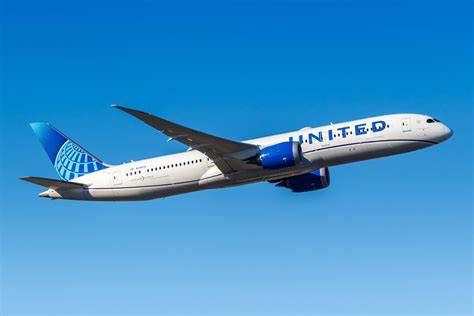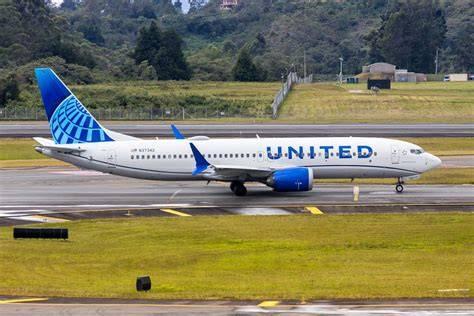
United Airlines has spent the better part of a decade trying to become the airline that premium travelers choose on purpose rather than by schedule. Starlink is now the most visible piece of that ambition. The SpaceX-built satellite internet service, announced in September 2024 with installations beginning in 2025, has already reached 705 of the 1,632 aircraft flying under the United and United Express banners. That works out to roughly 46% of the combined fleet retrofitted in a window short enough that the carrier’s own tracker sometimes looks like a live scoreboard. The number is remarkable on its own. The more revealing story sits in the photographs. On at least two Boeing 737s, spotters have caught aircraft carrying two Starlink antennas and a legacy Viasat radome at the same time, because United chose not to wait for the old hardware to come off before turning the new hardware on.
What United’s Starlink Tracker Reveals About Retrofit Progress
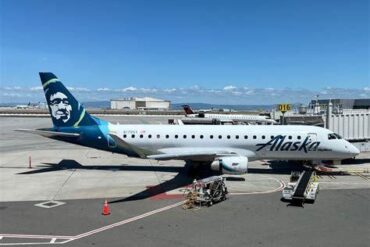
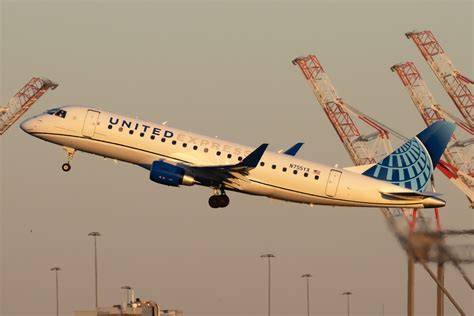
The official United Starlink tracker tells a story of brutal prioritization. Every Bombardier CRJ550 in the fleet, all 100 aircraft, carries the system. Every Embraer E175, all 252 aircraft, carries the system. Those two families alone account for more than half of the 705 completed retrofits, and their completion was not accidental. United Express flew under a WiFi service contract with an outside provider that was scheduled to expire, which made regional jets the natural beachhead: install Starlink now, let the legacy agreement lapse, and avoid paying for connectivity the airline no longer needed.
The narrowbody tally shows where the momentum has gone since. United has fitted Starlink to 68 of 76 Airbus A321neos and all three A321XLRs, a fleet that will eventually carry the airline’s premium ambitions on transatlantic routes. On the Boeing side, the numbers read 110 of 141 737-800s, 99 of 148 737-900s and 900ERs, 59 of 190 737 MAX 9s, and 9 of 123 737 MAX 8s. That adds up to 346 narrowbody aircraft, most of them flying the high-frequency domestic network where free, fast WiFi influences the most bookings. Widebodies remain comparatively untouched: four 777-200s and 200ERs out of 74, one 777-300ER out of 22, and two 787-8 Dreamliners out of 12, with the 787-9 and 787-10 still at zero.
The gaps are just as instructive as the wins. Nothing has been installed on United’s 72 Airbus A319-100s, 62 A320-200s, 40 Boeing 737-700s, 21 Boeing 757-300s, 40 Boeing 757-200s, 37 Boeing 767-300ERs, or 16 Boeing 767-400ERs. Some of those are older airframes with limited remaining service life; others, particularly the 767-300ER and 757-200, still fly transatlantic routes where passengers notice connectivity most.
Why Some United Jets Now Fly With Starlink and Viasat Antennas Together
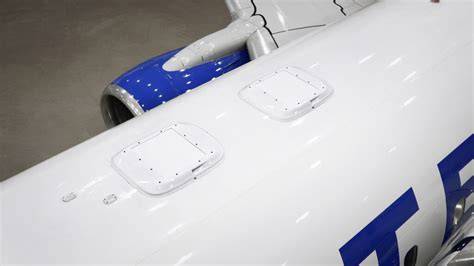
The dual-antenna sightings, first surfaced on X earlier this month, are the clearest evidence yet that speed has become United’s organizing principle. A 737-900ER parked at a gate was photographed with the airline’s standard two Starlink antennas along its fuselage alongside its older Viasat assembly. A 737-900 showed up in similar condition in a separate post. The aircraft registered N78438 and N37409 were reportedly returned to service with the Viasat system still bolted in place, a decision that trades dead weight and drag for days of availability.
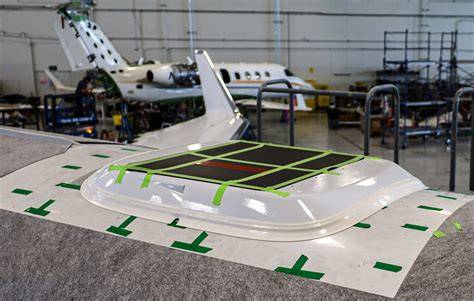
That trade-off matters because Starlink installation itself is fast. United and SpaceX advertise a clean install in as little as eight hours, a figure that beats every competing system on the market. The bottleneck is what comes after: extracting the old radome, pulling wiring, patching the fuselage, sealing panels, and recertifying the airframe. United puts the full retrofit, legacy removal included, at three to four days. Four days multiplied across more than 900 remaining aircraft is an enormous number of aircraft-days out of service, and every one of them is lost revenue. Leaving the Viasat hardware in place collapses that window to something closer to a single shift.
Whether the practice becomes fleet-wide policy is unresolved. United has not committed to a permanent dual-install program, and there are practical limits: a second radome adds weight and fuel burn on every flight, and the old system may keep drawing subscription costs once its contract terms are examined. What the sightings prove is narrower but significant. United’s end-of-2027 deadline is the binding constraint, and management is willing to bend the aesthetics of a clean installation to protect it.
Anatomy of a Four-Day Retrofit: The Hidden Cost of Removing Legacy WiFi
Understanding why the old antennas are still there requires understanding what a WiFi retrofit actually involves. Removing a legacy system means cutting the aircraft skin again after the new radome has been sealed, rerouting power and data lines through crown panels and cargo bays, and returning the airframe to conformity with a supplemental type certificate. Each step consumes hangar hours and licensed labor, and each one competes with scheduled heavy checks. United’s decision to install first and remove later effectively treats the legacy system as a temporary aerodynamic tax rather than a maintenance obligation.
There is a branding cost as well. A passenger who looks out the window and sees three radomes on a 737 has visual proof that the fleet is mid-transition, and an airline in the middle of moving upmarket prefers a polished story. Yet the arithmetic is unforgiving. At the pace implied by the tracker, United needs to retrofit roughly 300 aircraft per year through 2027 to complete the remaining balance, on top of the regular flow of new deliveries.
The Fleet-by-Fleet Roadmap Left Before the 2027 Deadline
The remaining work falls into three distinct buckets, each with its own difficulty. The largest is the widebody gap: 67 Boeing 787-9s, 21 787-10s, 39 777-200s, and 21 777-300ERs still run on Panasonic hardware, and those aircraft fly the long-haul routes where a ten-hour flight without fast internet is most conspicuous. The second bucket is the older narrowbody fleet, including the 737 MAX 8 at 9 of 123 and the entire A319 and A320 subfleets, aircraft that dominate the medium and long domestic stages where loyalty is won. The third is the transitional group, aircraft like the A321neo at 68 of 76 and the 737-800 at 110 of 141, where the finish line is visible but the last units are often the slowest.
Regional completion is United’s strongest story and its best marketing asset. Travelers on an E175 between a small city and a hub now experience the same connectivity a first-class passenger gets on a Barcelona-bound Dreamliner, at least for now. That inversion is temporary, and it is the kind of detail that shapes public perception.
How United’s Legacy Panasonic, Viasat, and Thales Systems Compare
United’s mixed fleet makes its connectivity reputation inconsistent in ways most passengers cannot predict. All non-Starlink widebodies carry Panasonic equipment. The narrowbody fleet alternates between Panasonic, Viasat, and Thales. Passengers on those aircraft generally pay for access, while Starlink is free, and none of the three legacy providers matches Starlink’s throughput. The result is an airline that simultaneously offers the fastest and the slowest inflight WiFi among the big three US carriers depending on which tail number a traveler draws.
The competitive backdrop sharpens the problem. American Airlines uses Viasat on most of its domestic fleet, complimentary for AAdvantage members, with Panasonic on many widebodies, and it has expanded Starlink to all mainline aircraft after initial plans limited it to the Airbus fleet. Delta Air Lines leans on Viasat and Hughes, both meaningfully faster than Panasonic and Thales, across nearly its entire fleet. Delta has no Starlink deal and has committed to Amazon’s forthcoming Leo constellation for roughly half its aircraft, with installation planned from 2028. Leo does not yet exist in service, which leaves Delta defending a competent product against a rival deploying the industry’s fastest one right now.
Starlink as a MileagePlus Acquisition Engine
The most commercially interesting part of United’s Starlink strategy is not the download speed. It is the login screen. Free WiFi is gated behind a MileagePlus account, which converts a leisure traveler’s idle browsing into a signed-up, identifiable member of the airline’s loyalty database. That account is the entry point to a ladder: a MileagePlus ID becomes a co-branded credit card application, the card becomes miles purchases, and the miles become the wholesale product United and its peers sell to card issuers at negligible marginal cost.
CEO Scott Kirby has framed Starlink as a deliberate bet against the industry consensus, arguing United waited while competitors committed to Viasat-class systems so it could leapfrog them. The strategy also fits the broader product push that has United chasing Delta’s premium positioning: a better cabin, better lounges, and now better connectivity that reinforces the same message. Delta first proved the model under former CEO Richard Anderson, who turned a post-merger airline into a brand travelers pay for, and United’s improving financials now track Delta’s closely enough that the gap in onboard connectivity reads as the obvious remaining weakness.
Speed as Strategy, and the Risk of Being Half Finished
A superior WiFi system alone rarely wins a business traveler’s booking, but it increasingly breaks ties, and it shapes the impression a customer carries into the next search. For United, the risk is not that Starlink fails. It is that a partial rollout produces an unpredictable passenger experience: the traveler who chose United because of free Starlink and boarded a 767 bound for Europe with Panasonic still installed becomes a louder critic than one who never expected the upgrade at all.
United still has just over a year before its end-of-2027 commitment, with more than half the fleet outstanding. The dual-antenna 737s suggest management understands how steep that climb is and is willing to accept visible compromise to keep the calendar intact. The question the coming months will answer is whether retaining legacy Viasat hardware remains a surgical exception on two aircraft or becomes an accepted phase of a national retrofit program moving at a pace the industry has never attempted.