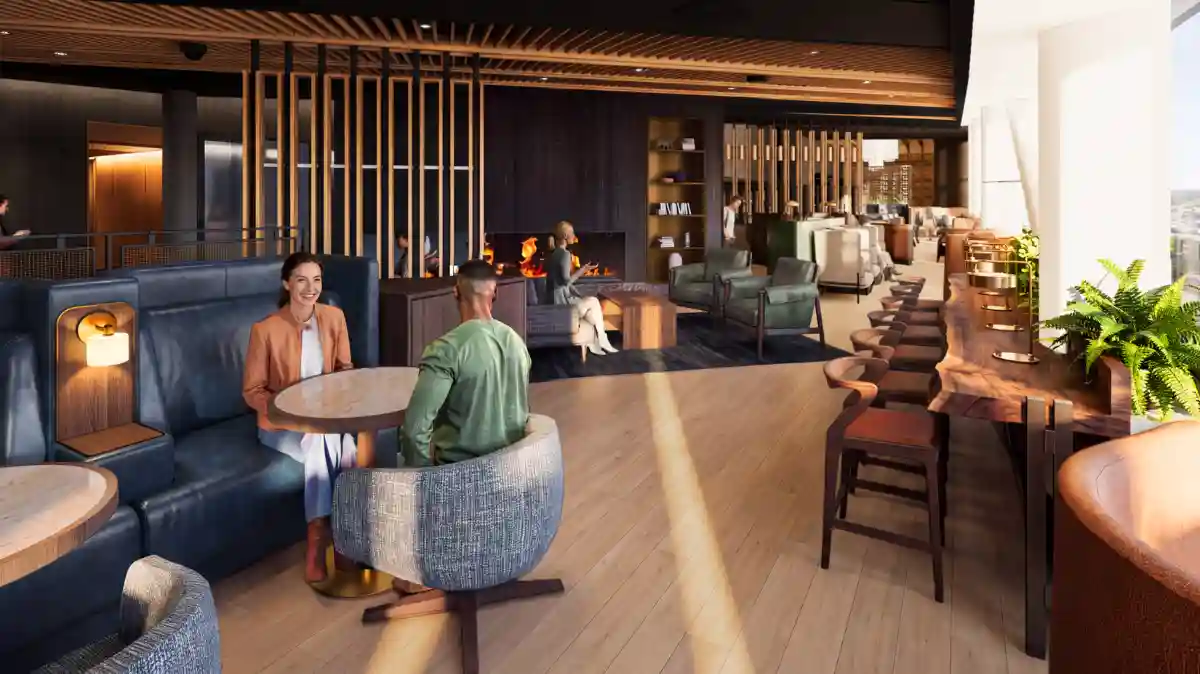
Alaska Airlines is preparing to make one of its biggest airport investments yet, with a nearly 41,000-square-foot lounge complex planned for Seattle-Tacoma International Airport and a new Hawaiian Airlines lounge coming to Honolulu in early 2028. The projects are central pieces of a broader premium strategy that is reshaping the two brands following Alaska Air Group’s acquisition of Hawaiian Airlines.
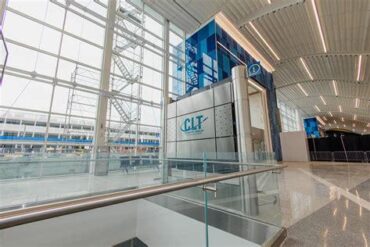
The Seattle project is scheduled to open in late 2027 on two levels of SEA’s expanded C Concourse. It will combine a 500-seat Alaska Lounge with a separate 200-seat Aurora Lounge, creating a 700-seat complex that will become the largest airline lounge at the airport. The scale also separates Alaska’s broader lounge offering from its most exclusive international premium product.
Alaska’s 41,000-Square-Foot Seattle Lounge Complex
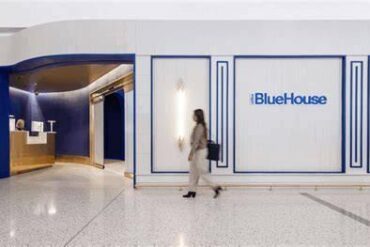
The main level will house the 500-seat Alaska Lounge, where access will continue to follow the airline’s existing lounge policies. Above it, the 200-seat Aurora Lounge will be reserved for passengers traveling in Aurora Suites on intercontinental flights. The arrangement gives Alaska a dedicated premium environment while retaining a much larger lounge for eligible customers across its wider network.
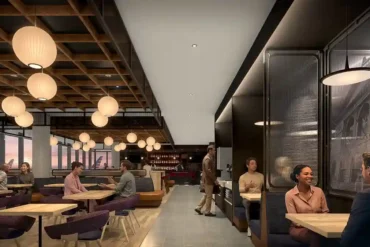
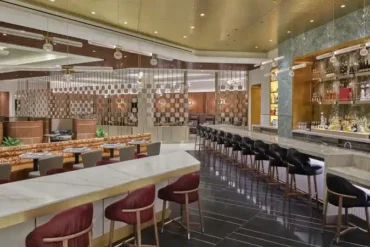
The complex will feature an outdoor patio with a fireplace, private work pods, seasonal food, fresh pastries and a pizza oven, alongside three premium bars spread through the facility. The Aurora Lounge will add made-to-order cuisine, à la carte dining and tableside service, while private shower suites and wellness spaces are planned for premium international travelers.
That approach reflects a significant change in Alaska’s definition of premium travel. The airline has historically been associated with domestic narrowbody operations and conventional recliner-style first-class seating. Its new strategy links the airport experience directly with upgraded aircraft cabins, premium dining, dedicated service and long-haul international flying.
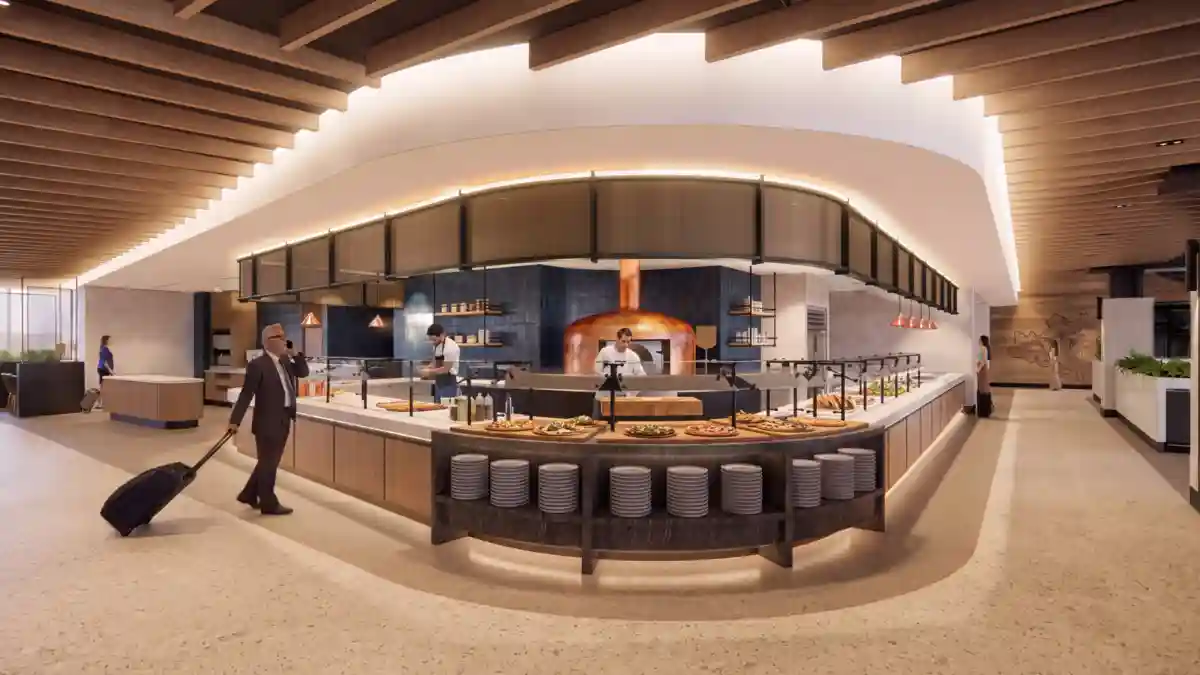
Alaska Aurora Lounge Takes Aim At Seattle’s Premium Market
The scale of the project also places Alaska in more direct competition with Delta Air Lines at its Seattle hub. Delta opened a connected Delta Sky Club and Delta One Lounge in 2025, occupying about 24,000 square feet across two levels. Its Sky Club has 180 seats, while the Delta One Lounge includes 150 indoor seats and 70 terrace seats.
Alaska’s planned complex will therefore be substantially larger, with about 41,000 square feet and 700 seats across the two lounge concepts. Seattle has become a critical battleground as both airlines expand international networks and invest in higher-value customers.
The premium experience will begin before passengers reach the lounge. Alaska opened a dedicated Seattle check-in area in April for Aurora Suites passengers and Atmos Rewards Titanium members, with access feeding into a TSA screening lane. Aurora travelers are also expected to receive dedicated check-in and concierge service, connecting the airport arrival, security process, lounge experience and aircraft product into a more continuous premium journey.
Alaska CEO Ben Minicucci has described the strategy as extending premium service beyond the seat itself. That philosophy is increasingly visible throughout Alaska’s international expansion across several of its most important premium gateways.
Hawaiian Airlines Plans A Major Honolulu Lounge Upgrade
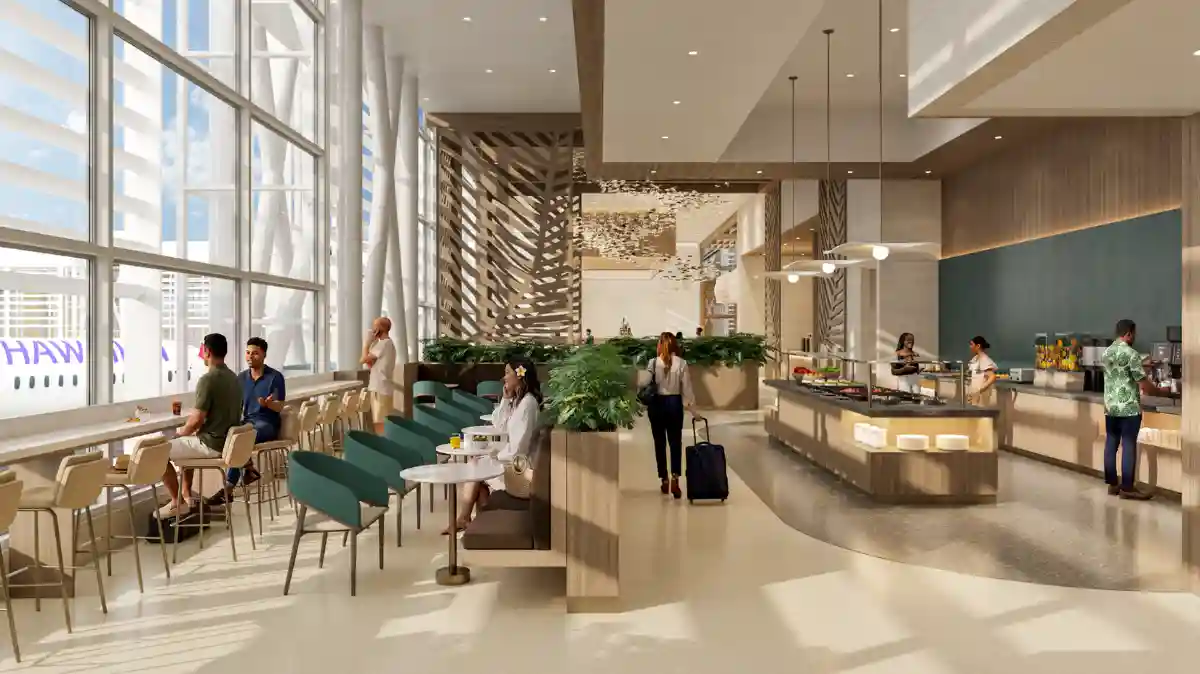
The second major project will arrive at Hawaiian Airlines’ home airport. A nearly 13,000-square-foot Hawaiian lounge is planned for Honolulu International Airport’s Terminal 1, with an opening targeted for early 2028. The facility will accommodate approximately 200 guests and will provide an experience intended to complement Hawaiian’s new premium cabin.
The planned lounge will offer locally inspired food and drinks, a signature local coffee experience, a full-service cocktail bar and private workspaces. Compared with Hawaiian’s existing Plumeria Lounge, which measures only a little over 3,000 square feet, the new facility represents a substantial increase in both space and premium capacity.
Hawaiian is also preparing a major transformation of its Airbus A330 cabins beginning in 2028. The airline’s 24 A330 aircraft are scheduled to receive entirely new interiors, including 22 enhanced Leihōkū Suites featuring lie-flat beds, privacy doors and direct aisle access.
Premium seating will also rise from roughly 30% to 40% of each A330’s seats. That increase matters because Hawaiian’s A330 fleet remains central to its long-haul operation, connecting Honolulu with destinations across North America, Asia and the South Pacific. The new lounge will give those passengers a substantially more complete premium experience on the ground.
Alaska’s 2028 Lounge Expansion Extends To San Diego
Seattle and Honolulu are not the only airports receiving major investment. Alaska plans to open a 14,000-square-foot proprietary lounge at San Diego International Airport in 2028, with construction expected to begin in early 2027.
The San Diego facility is expected to include Signature Loungers, private work areas, locally inspired food, a full cocktail bar and a barista station. Until the new lounge opens, eligible Lounge+ members can use the third-party Aspire Lounge at SAN.
Together, the Seattle, Honolulu and San Diego projects represent a significant expansion of Alaska’s physical premium infrastructure. The airline currently operates seven branded lounges across five airports, including three in Seattle and one each in Anchorage, Portland, Los Angeles and San Francisco.
That network has already been growing. Alaska opened an approximately 14,000-square-foot Portland lounge with more than 230 seats in June, following the introduction of an 11,000-square-foot facility at San Francisco International Airport in 2024. The next wave therefore builds on an established modernization program rather than representing an isolated investment.
Premium Lounges Support Alaska’s Long-Haul Expansion
Alaska is targeting 15 long-haul international destinations from Seattle by 2030, increasing its previous goal of 12. Tokyo Narita, Seoul, Rome, London Heathrow and Reykjavik are already operating, while Athens and Paris are scheduled to join the network in May 2027.
Aircraft are changing at the same time. Alaska’s Boeing 787 fleet is expected to receive 34 Aurora Suites, while at least 25 Boeing 737-10 aircraft are eventually planned to carry 12 lie-flat Aurora Suites for selected transcontinental services. Premium Reserve will also introduce a separate premium economy cabin on the 787, Airbus A330 and selected MAX 10 fleets.
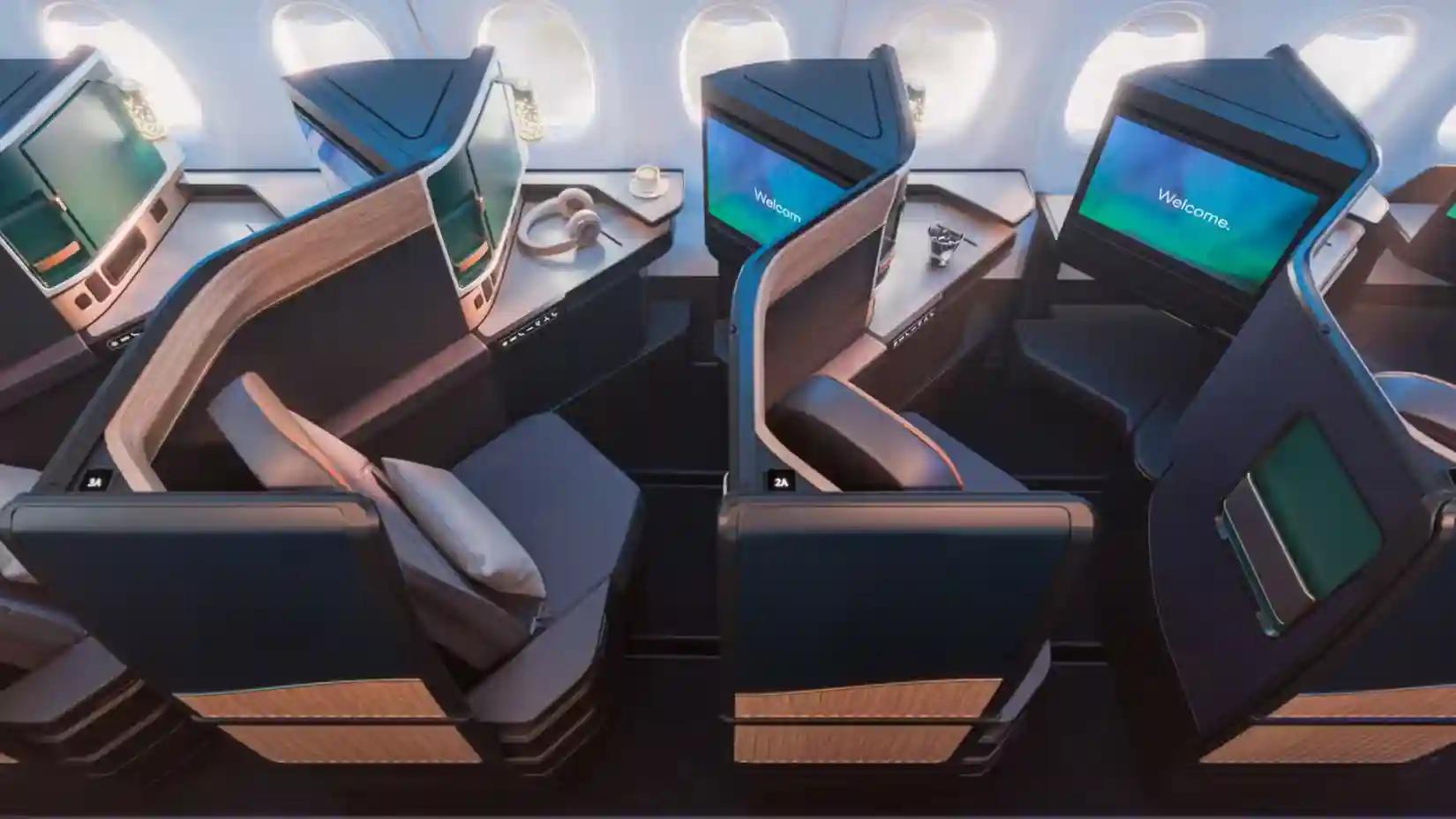
These investments are designed to create consistency between the aircraft and the airport. A passenger paying for an international premium suite increasingly expects more than a better seat. Dedicated check-in, lounge access, high-quality food, private work areas, showers and personalized service become part of the product.
The financial rationale is equally important. Reuters has reported that Alaska expects premium revenue to increase from about 36% of total revenue in 2026 to more than 40% by 2030. Management has estimated that its premium initiatives could eventually contribute $3 to $4 per share to earnings. Those targets help explain why the company is investing heavily in lounges at the same time it is upgrading aircraft and expanding long-haul routes.
A New Premium Identity For Alaska And Hawaiian
The Seattle Aurora Lounge, Hawaiian’s Honolulu facility and Alaska’s San Diego lounge are therefore pieces of the same transformation. Alaska is moving from a business model heavily associated with domestic narrowbody flying toward a broader network strategy built around international routes, widebody aircraft, premium cabins and stronger loyalty economics.
For Hawaiian, the Honolulu lounge will provide a physical counterpart to the Leihōkū Suites and redesigned A330 cabins. For Alaska, the Seattle complex will become a flagship expression of Aurora, while the broader lounge network gives premium customers more consistency at key airports.
The nearly 41,000-square-foot Seattle complex is the most visible part of that effort. When it opens in late 2027, passengers will encounter a lounge operation designed around two different levels of service rather than one undifferentiated space. By early 2028, Hawaiian passengers in Honolulu will receive a similarly substantial upgrade on the ground.
The result will be a much larger premium ecosystem spanning airport facilities, aircraft, loyalty, dining and international routes. As Alaska and Hawaiian continue integrating their brands and networks, these lounges will become important physical markers of how dramatically the combined group is changing its proposition for high-value travelers.